English
 Türkçe



In industrial plants, a large part of the electricity bill comes from electric motors. Pumps, fans, compressors, conveyors and countless machines run on motors that turn all day. Therefore the fastest and most lasting way to save energy is to set up and operate motor systems correctly. The good news: saving does not always require large investments; many gains are achieved with correct selection, correct maintenance and a few practical habits. In this article we present a practical and actionable 10-point energy saving checklist for facilities. Each item helps you run your motor both more efficiently and with longer life.
1. Use Efficient Motors (From IE3 to IE4/IE5)
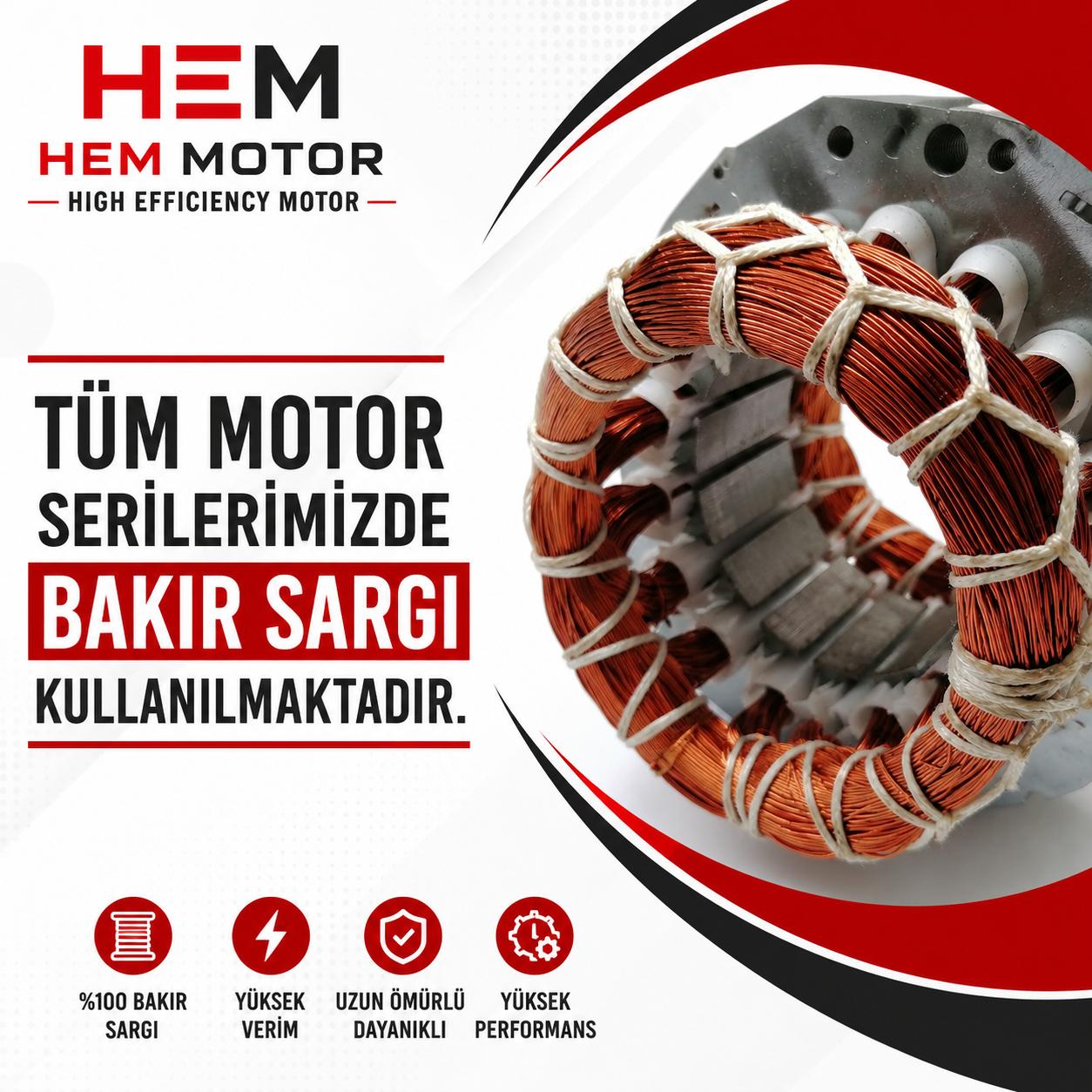
The basis of saving is using a motor in a high efficiency class. Efficiency shows how much of the electricity entering the motor is converted into useful work; a low-efficiency motor draws more electricity while doing the same job. IE3 is already the legal minimum; in heavily working applications, moving to IE4 or IE5 makes a marked difference on the bill. We covered the decision between efficiency classes in our IE3 vs IE4 electric motor investment article. We examined the payback of replacing an old motor with IE4 in our replacing the old motor with IE4 article.
2. Size the Motor Correctly
A common mistake is choosing a motor larger than necessary "just in case." Yet an oversized motor runs at part load and its efficiency drops; its power factor also deteriorates. The correct approach is to select the motor according to its real load. We covered the load ratio and correct sizing in our motor load ratio and correct sizing article, and part-load efficiency behavior in our efficiency-load curve (% load) article.
3. Use a Variable Frequency Drive (VFD)
In variable-flow applications such as pumps and fans, throttling the flow with a valve or damper is a major waste of energy. Instead, adjusting the motor speed with a frequency drive (VFD) ensures only as much energy as needed is drawn. We explained savings with a VFD in pumps and fans in our VFD pump-fan savings article, and when a VFD is needed in our frequency drive (VFD) with an asynchronous motor article.
4. Do Not Neglect Maintenance, Lubrication and Alignment
A poorly lubricated bearing, a dirty cooling channel and faulty alignment lead to both energy loss and early failure. Regular maintenance preserves the motor's efficiency. We covered the maintenance schedule in our maintenance and periodic check schedule article, and bearing greasing and lubrication in our bearing greasing and lubrication article.
5. Set Up the Belt and Coupling Connection Correctly
The transmission between the motor and the machine is also a source of energy loss. A loose or over-tightened belt and a misaligned coupling lose power and produce vibration. We covered shaft alignment and coupling selection in our coupling selection and shaft alignment article, and speed, sheave diameter and tension in belt-pulley drives in our V-belt-pulley drive article.
6. Correct the Power Factor (cos phi)
Asynchronous motors running at part load draw reactive power from the grid; this lowers the power factor and leads to unnecessary current circulation. Correcting the power factor with compensation (capacitors) both reduces the penalty risk and relieves the system. We covered the power factor and correction in our power factor (cos phi) and correction article, and power factor behavior in high-efficiency motors in our power factor in high-efficiency motors article.
7. Do Not Run the Motor Idle
A motor turning without load also draws electricity; moreover, its efficiency at no load is very low. Motors turning unnecessarily during breaks, waiting or while waiting for product is an invisible but continuous waste. With operational discipline (automatic stop, sensor-based control) this loss is easily eliminated. Not running idle is one of the cheapest saving items, requiring no investment.
Idle running means not only energy but also unnecessary operating hours, which leads to early wear of bearings. So not running idle lowers both the energy bill and the maintenance cost. On conveyor and line motors, pausing the motor with product-sensing sensors is an effective method, provided it stays within the heating limit caused by frequent start-stop; we covered the starts per hour limit in our starts per hour article.
8. Monitor Harmonics and Voltage Quality
Imbalance and harmonic distortion in the grid voltage create extra heating and efficiency loss in the motor. We covered the motor's power reduction (derating) under voltage unbalance in our derating under voltage unbalance article, and extra heating caused by VFD and harmonics in our extra heating caused by VFD and harmonics article. A clean supply provides both savings and long life.
9. Measure: You Cannot Manage What You Do Not See
Saving begins with measurement. Without knowing how much each motor draws, it is impossible to tell which is inefficient. Nameplate efficiency and field efficiency are not always the same; measuring real consumption ensures the right decision. We covered this difference in our nameplate vs field efficiency difference article, and how efficiency is measured in our efficiency measurement in an IE3 motor (IEC 60034-2-1) article.
10. Create a Motor Inventory and Prioritize
Creating an inventory of all the motors in the plant lets you see those that draw the most energy and are the most inefficient. Then you can prioritize and renew them in stages. We covered the efficiency audit and motor inventory in our energy efficiency audit and motor inventory article, and the lifecycle cost (TCO) logic in our IE5, IE4 and IE3 TCO comparison article.
Effect of Pole Count and Speed Selection on Efficiency
An often overlooked saving opportunity is the correct pole count and speed selection. Choosing a motor with a higher speed than necessary in an application and then mechanically reducing the speed (with a belt-pulley or throttling) produces unnecessary loss. Selecting a motor at the speed suited to the need both reduces transmission losses and simplifies the system. We covered the relationship between pole count and efficiency in our efficiency and pole count (2/4/6/8) article, and the correct pole selection in our asynchronous motor pole selection article.
In low-speed (6 and 8 pole) applications, correctly establishing the balance of efficiency and torque is especially important; we examined this in our efficiency and torque in low-speed 6/8 pole motors article. The correct speed selection raises the total efficiency of the system by avoiding unnecessary mechanical arrangements.
Applying the Saving Items Together
These 10 items are valuable one by one; but when applied together, their effects multiply. For example, a pump motor that is correctly sized, in the IE4 efficiency class, with a VFD and regularly maintained draws the least energy and gives the longest life. We examined the sectors in which efficient motors are a priority in our IE3 motor use areas article, and the IE4 threshold in pumps, fans and compressors in our IE4 threshold in pumps, fans and compressors article.
Making Saving Sustainable: Measurement and Tracking
Saving measures applied once can wear off over time; settings drift, maintenance is neglected, newly added machines do not enter the inventory. That is why energy saving is not a one-off project but a continuous discipline. Regular measurement and tracking make the gains permanent. Periodically monitoring the consumption data shows early which motor draws more than expected and provides the opportunity to intervene before the problem grows.
A simple method for tracking is to record the current and power each important motor draws at regular intervals and compare it with reference values. An unexpected increase is often the first sign of a mechanical problem (poor alignment, worn bearing, clogged cooling). This early warning prevents both energy loss and major failure. We covered understanding the problem early from fault symptoms in our fault symptoms diagnosis guide article, and the maintenance schedule in our maintenance and periodic check schedule article.
New Investment and Renewal Plan
Some of the saving items (efficient motor, VFD) require investment; timing this investment correctly is important. The most inefficient and most-running motors should be renewed first, following a phased plan. Instead of rewinding an old and inefficient motor over and over, moving to a new and efficient motor is usually more sensible; we covered this decision in our rewind or buy new article.
When making a renewal plan, the fast availability of the right motor is also important; keeping stock in the most-used powers and speeds prevents being forced into a temporary fix with an inefficient motor at the moment of failure. We compiled the most sought-after power-speed combinations of IE3 motors in our IE3 motor stock guide article, and the TCO comparison between efficiency classes in our IE5, IE4 and IE3 TCO comparison article. A well-planned renewal both accelerates the saving and makes it permanent.
Frequently Asked Questions
Which item gives the fastest return for energy saving?
The fastest gains usually come from two places: moving to a higher efficiency class and using a VFD in variable-flow pump-fan applications. Because these two items directly and continuously reduce energy draw in continuously running motors. In addition, items requiring no investment, such as not running idle, provide instant savings.
Why is choosing a large motor a waste of energy?
An oversized motor runs below its real load, that is, at part load. The efficiency and power factor of asynchronous motors drop at part load; the motor produces more loss than necessary while doing the same job. Therefore selecting the motor to suit its real load both preserves efficiency and improves the power factor. Choosing the correct speed and pole count for the application, instead of reducing speed mechanically afterwards, also avoids unnecessary transmission losses.
Is a large investment always required for saving?
No. Some items require investment (efficient motor, VFD), but many are only correct operation and maintenance discipline: lubrication, alignment, not running idle, power factor correction and measurement. These practical items are applied at low cost and provide measurable savings.
Get a Quote
To achieve energy savings in your facility, let us select together motors in the right efficiency class, correctly sized and with a VFD if needed. We evaluate your existing motor inventory and recommend a prioritized renewal plan. For a fast quote call our line at +90 (532) 345 49 86 or reach us through our contact page. You can review our full product range from our home page and efficient motor options from our IE3 motors category.
10-Point Energy Saving Checklist
- Use motors in a high efficiency class (move from IE3 to IE4/IE5).
- Size the motor correctly to its real load; do not choose it oversized.
- Use a VFD in variable-flow pump-fan applications.
- Carry out maintenance, lubrication and alignment regularly.
- Set up the belt and coupling connection correctly and adjust the tension.
- Correct the power factor (cos phi) with compensation.
- Do not run motors idle unnecessarily.
- Monitor harmonics and voltage quality, and eliminate imbalance.
- Measure consumption; compare nameplate efficiency with field efficiency.
- Create a motor inventory across the plant and prioritize inefficient ones.