English
 Türkçe

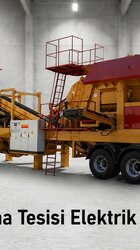
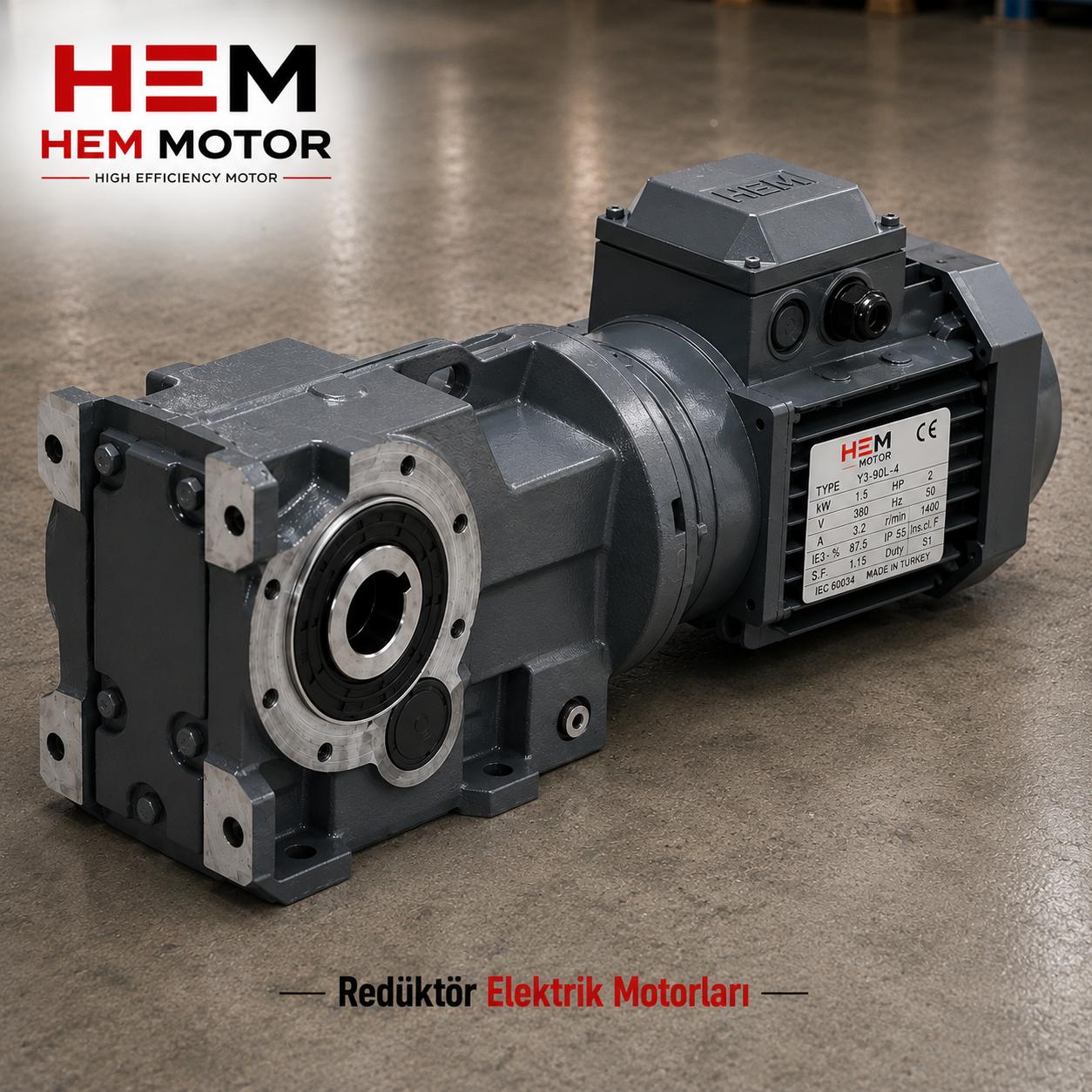

In crusher and stone-crushing plants, the main crusher is usually driven by a V-belt and pulley system rather than a direct coupling. There are two reasons for this: the crusher shaft generally needs to turn at a different speed than the motor, and the belt-pulley system absorbs some of the sudden shock loads, protecting the motor and bearings. However, setting up this drive correctly requires getting several interrelated parameters right at once: motor speed, pulley diameter ratio, belt profile, number of belts and belt tension. An incorrect pulley ratio runs the crusher too fast or too slow; insufficient tension causes belt slip and wear, while excessive tension leads to premature failure of the bearings on both the motor and crusher shafts. This article walks through the entire calculation logic of V-belt-pulley drive and how to make the correct motor selection step by step.
Why V-Belt-Pulley Drive? Difference from Coupling
Most jaw, impact and cone crushers are driven by V-belts. A directly coupled drive transmits the motor speed one-to-one to the crusher shaft, whereas a crusher usually wants to turn slower than the motor. For example, a 4-pole motor runs at 1500 rpm rated speed (about 1480 rpm in reality due to slip), but a jaw crusher flywheel in most applications should turn at 250-350 rpm. The belt-pulley system provides this speed reduction mechanically while also absorbing some of the shock load.
The second advantage of the V-belt-pulley system is that it can slip slightly during a sudden jam, protecting the motor and gearbox from excessive shock. We detail this in our article on impact load motor selection, flywheel and inertia. Directly coupled drive is preferred on large crushers with high inertia that need a liquid resistance starter, which we examined in our liquid resistance starter and slip-ring motor article.
Speed Ratio: Motor Speed ÷ Pulley Diameter Ratio = Crusher Speed
The fundamental calculation rule of V-belt-pulley drive is simple: the crusher speed is found by applying the pulley diameter ratio to the motor speed. The formula is:
Crusher speed = Motor speed × (Motor pulley diameter ÷ Crusher pulley diameter)
Here the diameter ratio between the small pulley (motor side) and the large pulley (crusher side) determines the speed reduction ratio. Let us do an example: we use a 4-pole motor with an actual speed of 1480 rpm. The motor pulley diameter is 200 mm and the crusher pulley diameter is 800 mm. The diameter ratio is 200 ÷ 800 = 0.25. Crusher speed = 1480 × 0.25 = 370 rpm. If the crusher manufacturer asks for 300 rpm, we must increase the crusher pulley (e.g. to 1000 mm) or reduce the motor pulley.
The critical point here is that you must use the actual (slip-adjusted) speed of the motor, not the rated synchronous speed. We explained the difference between the synchronous speed on the nameplate (1500 rpm) and the actual speed (about 1480 rpm) in our slip and actual speed in asynchronous motors article. Accounting for this slip when sizing pulleys prevents the crusher speed from coming out different than intended. For the general logic of speed adjustment with motor speed and pulley-belt, see our motor speed and pulley-belt speed adjustment article.
Relationship Between Pole Count and Pulley Ratio
The pole count of the motor directly affects which pulley ratio you will need. A 2-pole motor runs at 3000 rpm, 4-pole at 1500 rpm, 6-pole at 1000 rpm and 8-pole at 750 rpm rated speed. In crusher drives, 4 or 6-pole motors are generally preferred, because reaching the desired low crusher speed with a high-speed 2-pole motor requires a very large diameter ratio, leading to impractical pulley sizes. Our guide on which pole count for which job is a reference for the right pole-speed choice.
Belt Profile Selection: SPB, SPC and Classic Profiles
Since the transmitted power in crusher drives is high, narrow V-belt (wedge belt) profiles are preferred. The most common are SPA, SPB and SPC profiles. The main difference between them is the power a belt can carry and the pulley width:
- SPA profile: Medium-power applications, roughly 4-30 kW transmission per groove.
- SPB profile: The most commonly used profile in crushers; offers higher power transmission and a balanced number of grooves.
- SPC profile: For large-power crushers and mills; highest transmission capacity per groove.
Profile selection is made according to belt manufacturer tables that evaluate the power to be transmitted, the small pulley speed and the desired groove count together. On large main crushers, using an SPC profile with few grooves provides more even load distribution than using many small belts.
How Many Belts (Grooves) Are Needed?
The number of belts is found by dividing the total power the motor will transmit by the power a single belt can safely carry. A service factor is always added, because a crusher is a shock-loaded and variable-load application. We covered the topic of service factor in our service factor and overload capacity article. For shock loads such as crushers, the service factor is generally taken between 1.5 and 1.8, meaning a safety margin is added on top of the theoretical belt count. Belts must always be replaced as a set; replacing a single belt with a new one disrupts load distribution and overloads the new belt.
Belt Tension: The Balance Between Slip and Overload
Belt tension is the most critical adjustment parameter of the V-belt-pulley drive. Correct tension is balanced between two extremes:
- Insufficient tension: The belt slips on the pulley. Slip produces friction heat, wears the belt and pulley, causes power loss and reduces efficiency. Excessive slip can burn the belt and prevent the crusher from receiving enough torque.
- Excessive tension: The belt imposes excessive radial (side) load on the shaft. This load is transmitted directly to the bearings of the motor shaft and crusher shaft; the bearings fatigue and fail prematurely. Shaft bending and oil seal leakage may also occur.
Correct tension is measured using the belt manufacturer's deflection method: a defined force is applied to the belt and the amount of deflection is checked. In modern applications, frequency (vibration) meters can also verify tension. After operation begins, belts seat slightly within the first 24-48 hours and tension must be rechecked.
Shaft Side Load and Bearing Life
Belt tension loads the motor shaft as a radial (side) load. This is an additional load not present in directly coupled drives, and it must be considered in motor selection. An over-tensioned belt can push the motor bearing beyond the side-load limit allowed by the manufacturer. For this reason, crusher drive motors are mostly selected from cast-iron motors with reinforced bearings. We covered bearing life, shock and dust in detail in our bearing life in crusher and mill motors article. For shaft diameter, key and pulley compatibility, our motor shaft diameter and key dimensions guide must be checked before ordering.
Correct Motor Selection: Power, Frame and Shaft
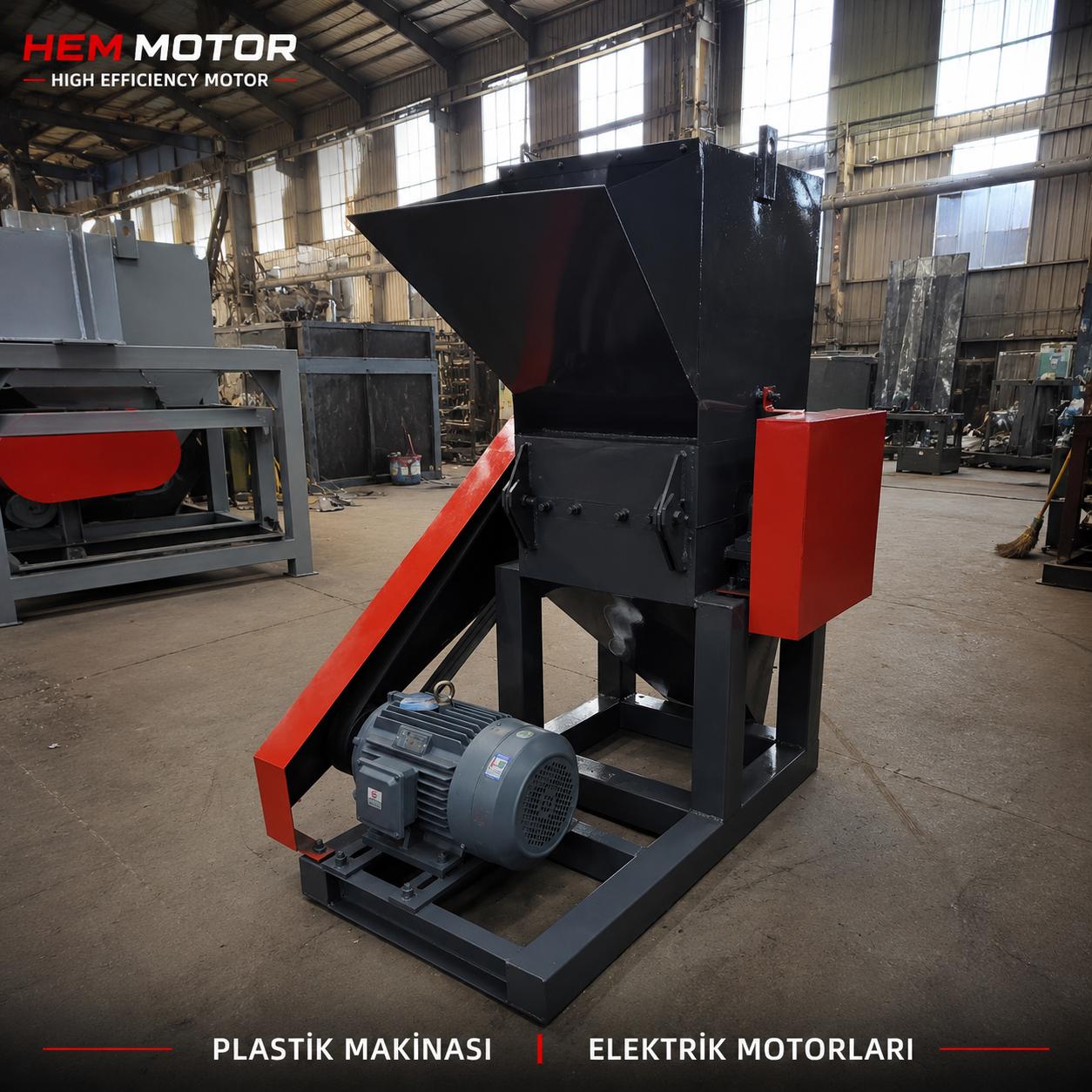
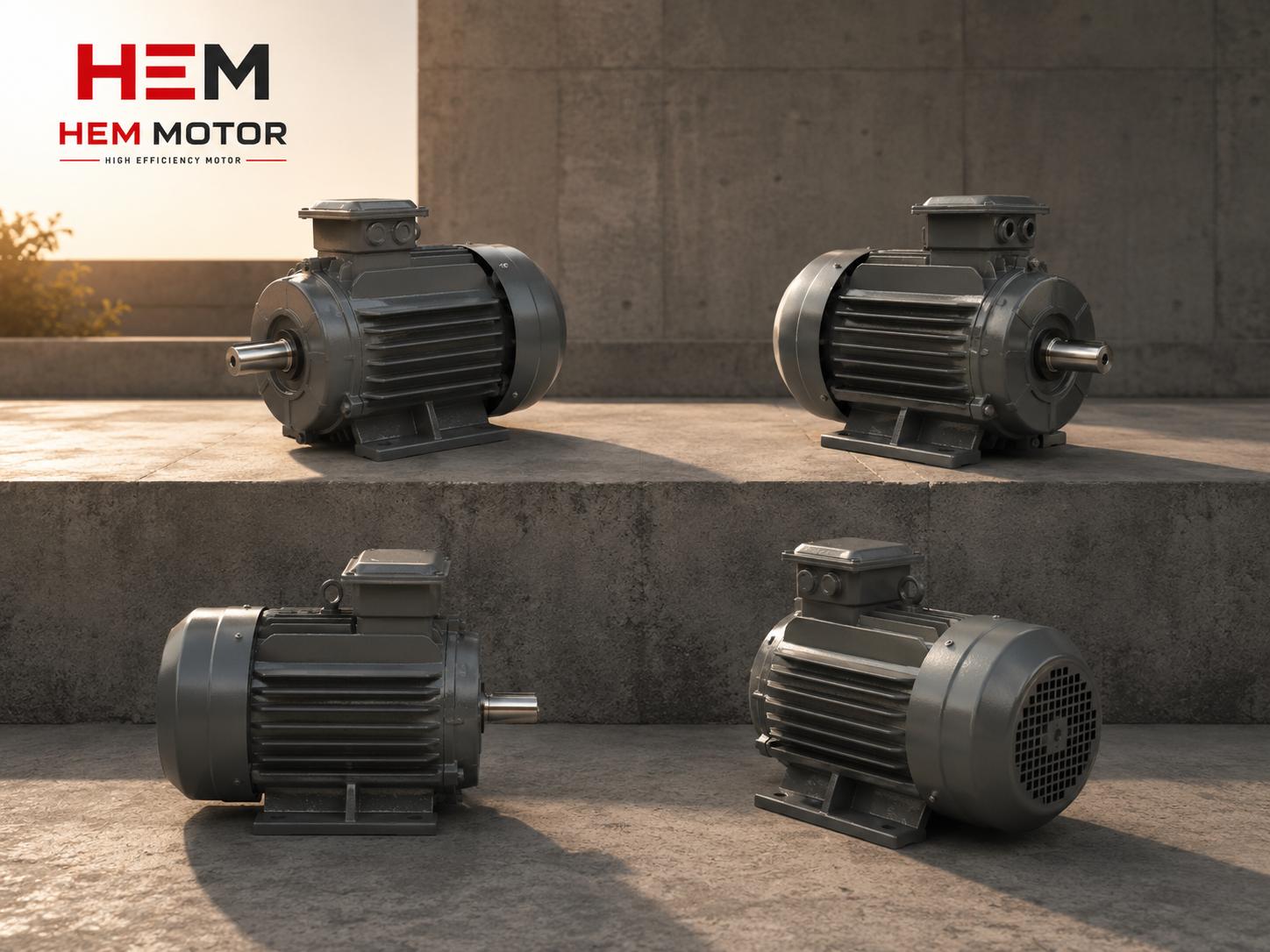
The following factors are decisive in motor selection for a V-belt-driven crusher. First, power: the power the crusher requires is selected accounting for the belt-pulley efficiency loss (2-5%) and the service factor. We detailed crusher kW selection by crusher type in our power for jaw, impact and cone crushers article. Second, frame material: since a crusher is a dusty, shock-loaded and heavy-duty environment, cast iron is preferred. We covered the impact resistance and frame rigidity advantages of cast iron in our impact resistance in cast-iron motors article.
Third, shaft and key: since the pulley mounts on the motor shaft, the shaft diameter and key dimensions must match the pulley hub. Fourth, mounting type: in V-belt drives the motor is usually foot-mounted (B3) on a slide base that allows tension adjustment. Fifth, protection class: at least IP55 is recommended for the dusty crusher environment, and IP65/IP66 in heavy-dust environments; we examined this in our dust sealing and IP65/IP66 in crusher motors article. You can find the general logic of crusher motor selection in our electric motor selection for crusher and stone-crushing plants article. To browse our product range, visit our crusher and stone-crushing motors category.
Belt Slip and Wear: Symptoms and Prevention
Slip and wear are the most common problems in V-belt-pulley systems. Symptoms of slip include a squealing noise from the belt area, a burnt smell on the belt and pulley, a drop in crusher speed under load, and excessive belt heating. Wear is recognized by the belt sitting at the bottom of the pulley groove (a sign the belt is worn), polishing of the groove edges, and thinning of the belt cross-section. To prevent these problems, pulley grooves should be inspected regularly for wear, belts should be replaced as a matched set, and tension should be verified periodically. The heating and cooling behavior of the motor should also be monitored in this process; our motor cooling and overheating in crusher plants article is a guide on this topic.
Starting and the Belt-Pulley Relationship
A crusher is a high-inertia load and demands high torque at start. The V-belt-pulley system may experience some slip during start; therefore the starting method must be considered together with belt tension and system inertia. We detailed the decision between star-delta, soft starter and direct-on-line starting in our starting a crusher motor article. You can also look at our soft starter compatibility in IE3 motors article. For the balance of starting torque and rated torque, our rated torque and starting torque guide is useful.
Frequently Asked Questions
What happens to the crusher speed if I reduce the motor pulley?
If you reduce the motor pulley, the diameter ratio (motor pulley ÷ crusher pulley) becomes smaller and the crusher speed drops. For example, if you reduce the motor pulley from 200 mm to 160 mm, the ratio with an 800 mm crusher pulley drops from 0.25 to 0.20, and with a 1480 rpm motor the crusher speed drops from 370 to 296 rpm. However, using a small pulley can cause the belt to work with a smaller wrap angle and reduce the power transmitted per groove; in that case you may need to increase the number of belts.
How often should I check belt tension?
Because newly fitted belts seat within the first 24-48 hours, tension must be rechecked at the end of that period. After that, in heavy-duty applications such as crushers, a weekly visual check and a monthly measured check are recommended. When symptoms such as slip noise, excessive heating or speed drop appear, tension should be verified without waiting for the scheduled check.
Is it possible to use a direct coupling instead of a V-belt?
It is possible in some crusher designs, but in most jaw and impact crushers a direct coupling is unsuitable because the crusher shaft needs to turn at a different speed than the motor. If a coupling is used, the motor must be selected with a pole count that directly provides the desired crusher speed, or a reducer must be placed between them. Also, a coupling does not absorb shock load as well as a belt; therefore in coupled drives the motor and gearbox are exposed to more shock load.
Get a Quote
If you would like support in selecting a cast-iron, reinforced-bearing motor suitable for V-belt-pulley drive for your crusher and crushing plant, our expert team will guide you on speed ratio, pulley diameter, belt profile and tension. Reach us through our contact page or by phone at +90 (532) 345 49 86, and let us determine the right motor for your needs together. For more technical content, you can review our home page and our crusher motors category.
Purchasing and Selection Checklist
- Find out the crusher shaft speed (rpm) required by the crusher manufacturer.
- Determine the motor pole count and actual (slip-adjusted) speed (4 or 6 pole is preferred).
- Calculate the diameter ratio: motor pulley diameter ÷ crusher pulley diameter = speed ratio.
- Select pulley diameters that achieve the desired crusher speed.
- Multiply the power to be transmitted by the service factor (1.5-1.8) and determine the belt profile (SPB/SPC) and groove count.
- Verify that the motor shaft diameter and key size match the pulley hub.
- Choose a cast-iron frame, at least IP55 (IP65/IP66 in dusty sites) and reinforced bearings.
- Plan a slide (foot/B3) motor base that allows tension adjustment.
- Verify belt tension at the end of the first 24-48 hours and periodically.
- Always replace belts as a matched set.