English
 Türkçe

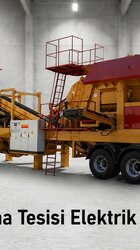
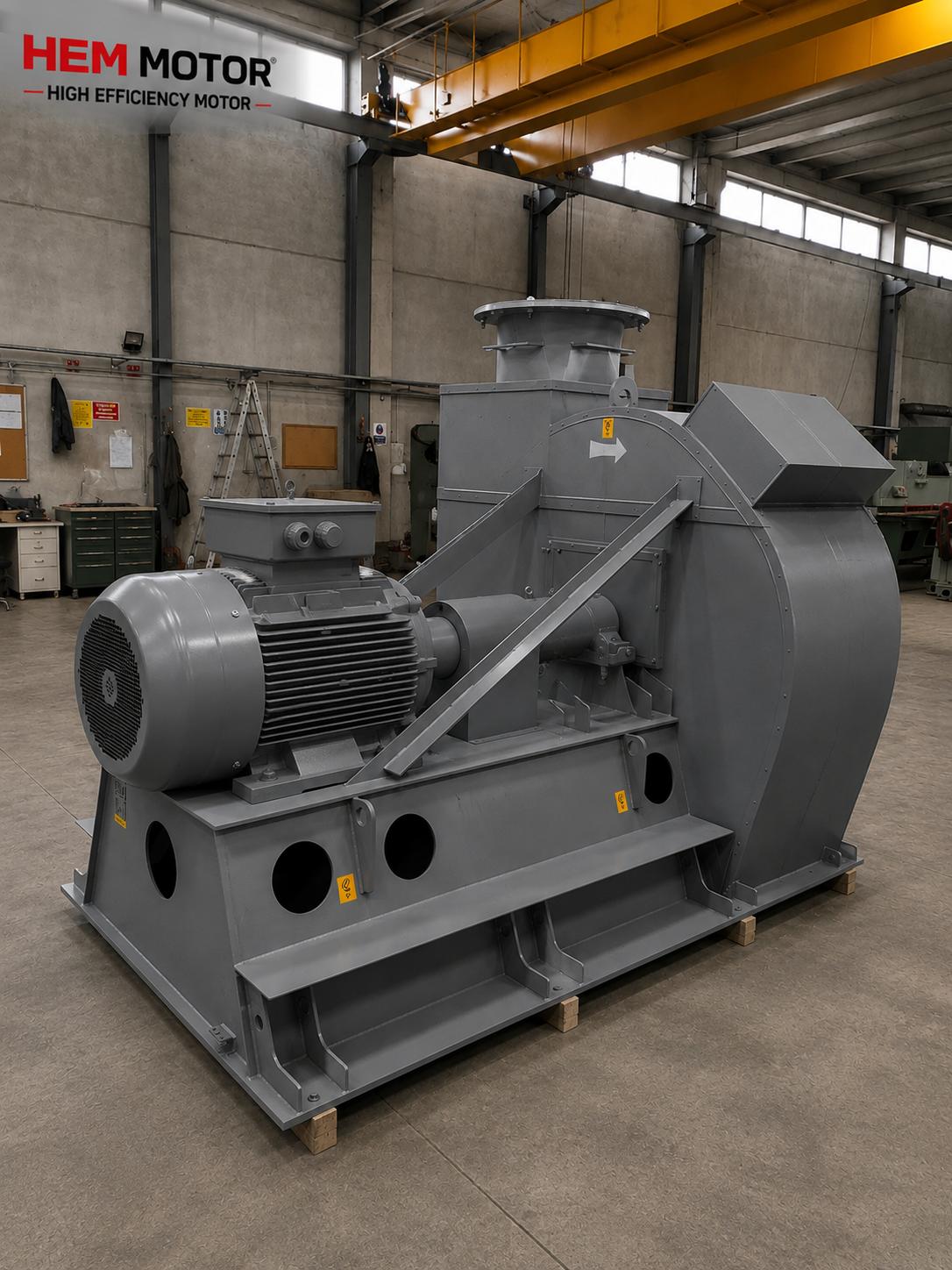

When a large crusher or mill is started up in the morning while it is cold and the hopper is full, the electrical infrastructure of that plant experiences its most demanding moment. This is because the first start after a stop demands a long and high torque from the motor due to the very high inertia (GD²) created by the rotating mass and the material inside it. When an ordinary squirrel-cage motor is forced to start directly from the grid (DOL) under this load, it draws a starting current reaching 6 to 8 times the rated current. On a weak grid, this current lowers the line voltage noticeably, affects the other loads in the vicinity, and may even cause the motor to fail to produce enough torque. It is exactly at this point that the slip-ring (wound-rotor) motor driven by a liquid resistance starter (LRS) comes into play.
In this article we address why slip-ring motors and liquid resistance starters are preferred in large crushers and mills, how a soft and controlled start is achieved at high inertia, the advantages of the system, and what must be taken into account for the right selection.
The Character of the Crusher Load: High Inertia and a Demanding First Start
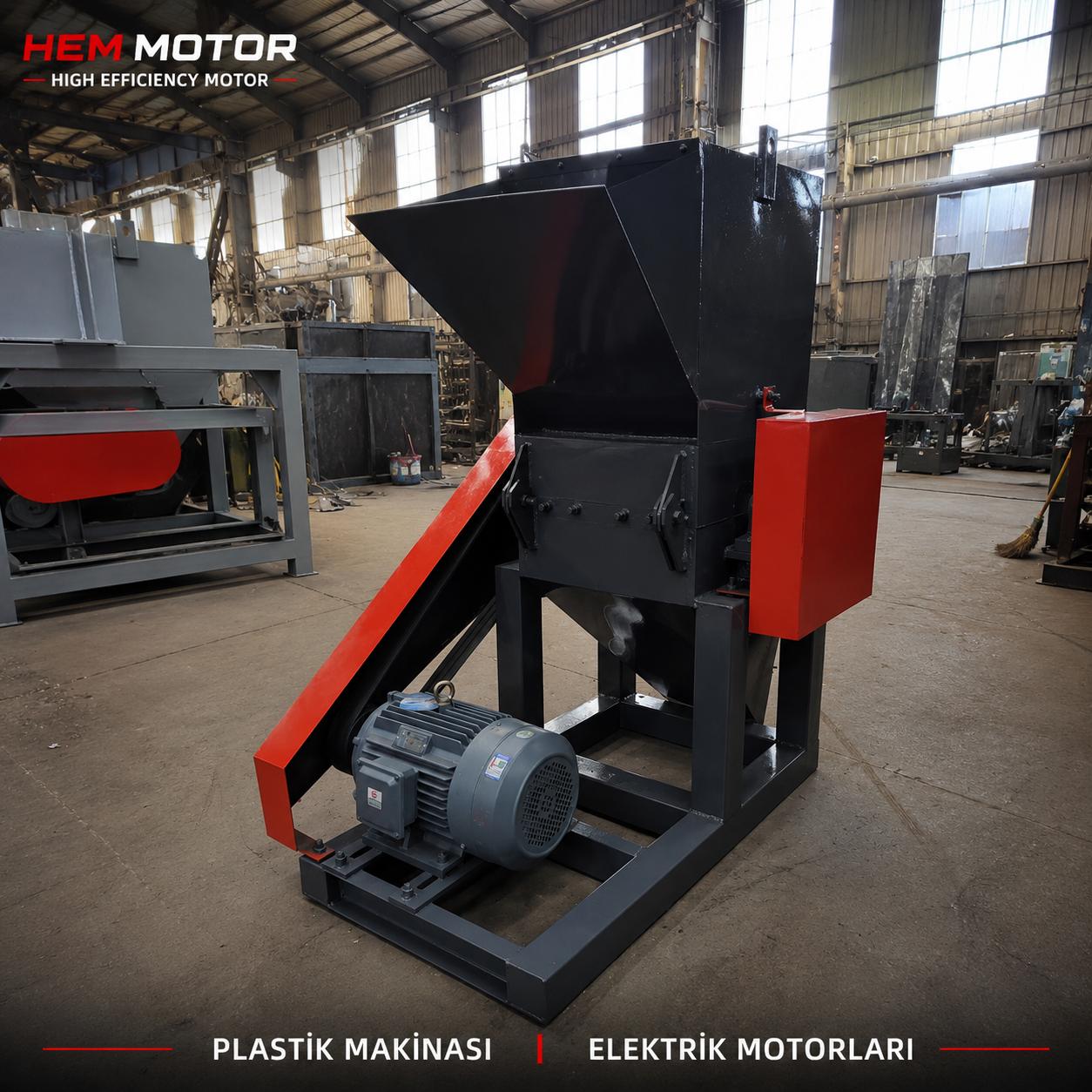
The load of a crusher or a mill is not gentle like that of a fan or a pump. The flywheel of a jaw crusher, the rotor of an impact crusher, or the grinding medium of a mill all mean a large rotating mass. The rotational inertia (GD²) of this mass is very high; for the motor to accelerate this inertia from a standstill to the rated speed takes long seconds, sometimes more than ten seconds. Throughout this long acceleration period, the motor draws high current and heats up. Moreover, in a crusher the first start usually takes place under load; if the hopper is full, the motor has to overcome not only the inertia but also the resistance of the material.
For this reason, in the selection of the main drive motor of a crusher or a mill, the question of "how many kW" alone is not sufficient; the load profile, the inertia, the frequency of engagement, and the starting method are evaluated together. We cover the general approach to crusher motor selection in full in our article on electric motor selection for a crusher and stone crushing plant.
The Limits of an Ordinary DOL Start
At low powers, starting a squirrel-cage motor directly from the grid (DOL) is the simplest and cheapest method. However, as the power grows and the inertia increases, the two major problems of DOL starting come to the fore:
- High starting current: Six to eight times the rated current causes a serious voltage collapse on a weak grid. This affects the other machines and the lighting fed from the same transformer.
- Limited starting torque: The starting torque of a squirrel-cage motor may be insufficient against high inertia and a full hopper; the motor "stalls" and cannot start, and the thermal protection trips.
Methods that start by reducing the voltage, such as star-delta or soft starter, reduce the starting current but also reduce the starting torque by the same ratio. In a crusher that requires high inertia and a loaded start, this is often insufficient. For a comparison of starting methods, our article on crusher motor starting: soft starter and star-delta offers a good comparison.
How Do the Slip-Ring Motor and the Liquid Resistance Starter (LRS) Work?
Unlike a squirrel-cage motor, in a slip-ring motor the rotor is wound, and the ends of this winding are brought outside through slip rings, allowing a resistance to be connected to the rotor circuit. This is the critical point: when you add an external resistance to the rotor circuit, the starting torque of the motor increases and at the same time the starting current decreases. In other words, starting with high torque and low current becomes possible; this is exactly the behavior that the crusher needs.
The liquid resistance starter (LRS) creates this rotor resistance with movable electrodes in a tank filled with electrolyte. At the beginning of the start, the electrodes are far apart and the resistance is high; the motor accelerates slowly with high torque and low current. As the motor gains speed, the electrodes are brought closer together steplessly, the resistance decreases, and the motor reaches the rated speed steplessly. Finally, the slip rings are short-circuited and the motor continues to run like a normal asynchronous motor.
Stepless and Smooth Acceleration
The greatest advantage of the LRS is that the resistance can change steplessly (continuously). Unlike stepped starters with fixed resistances, the liquid nature of the electrolyte provides a smooth and continuous transition in the resistance. In this way, a load with high inertia is accelerated in a controlled manner without jolts. Mechanically, this reduces the shock load on transmission elements such as belt-pulley, coupling, and gear, and extends the life of the entire drive line.
The Advantages of the Slip-Ring Motor + LRS System
- High starting torque: Thanks to the rotor resistance, the start of the motor is guaranteed even with a full hopper and high inertia.
- Low starting current: The voltage collapse on the grid is minimized; even on a weak grid, the surrounding loads are protected.
- Stepless acceleration: No shock is imposed on the mechanical transmission; bearing, coupling, and gear life is extended.
- Thermal comfort: During the long acceleration, a significant part of the heat is dissipated not inside the motor but in the electrolyte tank outside; the motor winding is less stressed.
- Frequent starting capability: When properly sized, it withstands frequent and heavy engagement conditions such as restarting after a blockage.
What Should Be Considered for the Right Selection?
The slip-ring motor and LRS system, as powerful as it is, also requires correct sizing. The main points to be considered in the selection are as follows: the real inertia value of the load (GD²), the required starting torque, the frequency of engagement, the ambient conditions, and the electrolyte volume and cooling capacity of the LRS tank. The volume of the tank and the electrolyte concentration are determined according to the energy to be absorbed per start and the starting frequency; an insufficient tank overheats during frequent starts.
In addition, the slip-ring motor requires periodic maintenance due to the brushes and slip rings; brush wear and the slip-ring surface must be checked regularly. In return, the controlled start and low grid impact it provides amply justify this maintenance in large crushers and mills. For a drive solution suitable for the inertia and torque needs of your plant, you can evaluate HEM's electric motors and its solutions for heavy-duty applications.
When a Slip-Ring Motor, When a VFD?
Today, an alternative for high-inertia loads is also a squirrel-cage motor driven by a variable frequency drive (VFD). The VFD offers stepless acceleration and speed control; however, at high powers its cost rises and it requires harmonic filtering. The slip-ring motor + LRS solution, on the other hand, is still a preferred option with its proven robustness and low initial cost, especially in conditions of very high inertia, frequent and heavy starts, and weak grids. The right decision is made according to the application's speed control needs, the starting frequency, and the grid strength.
Frequently Asked Questions
Why is a slip-ring motor preferred over a squirrel-cage motor in a large crusher?
Because the load of a crusher contains very high inertia and the first start usually takes place with a full hopper, that is, under load. The slip-ring motor combines high starting torque with low starting current through the resistance added to the rotor circuit; thus, a loaded and high-inertia start is successfully achieved without shaking the grid. This combination of strong torque and gentle current is difficult to obtain from any voltage-reducing method, which is precisely why the wound-rotor design has remained the workhorse of heavy crushing duty for so long.
What exactly does a liquid resistance starter (LRS) do?
The LRS connects a steplessly varying resistance to the rotor circuit with movable electrodes in a tank filled with electrolyte. At the beginning of the start, the resistance is high (high torque, low current); as the motor accelerates, the electrodes are brought closer together to reduce the resistance, and the motor reaches the rated speed without jolts. This soft start protects both the motor and the mechanical transmission, and because much of the start-up heat is dissipated in the electrolyte rather than in the windings, the thermal stress on the motor itself is greatly reduced.
Does the slip-ring motor system require a lot of maintenance?
Due to the brushes and slip rings, a slip-ring motor requires more regular inspection than a squirrel-cage motor; brush wear and the slip-ring surface must be monitored periodically. However, in large crushers and mills, the controlled start, low grid impact, and long transmission life it provides easily compensate for this additional maintenance. In practice, the maintenance routine is straightforward and predictable, and operators who run heavy crushing and grinding plants generally regard it as a small and well-understood price for the reliability and gentle starting behavior the system delivers.