English
 Türkçe

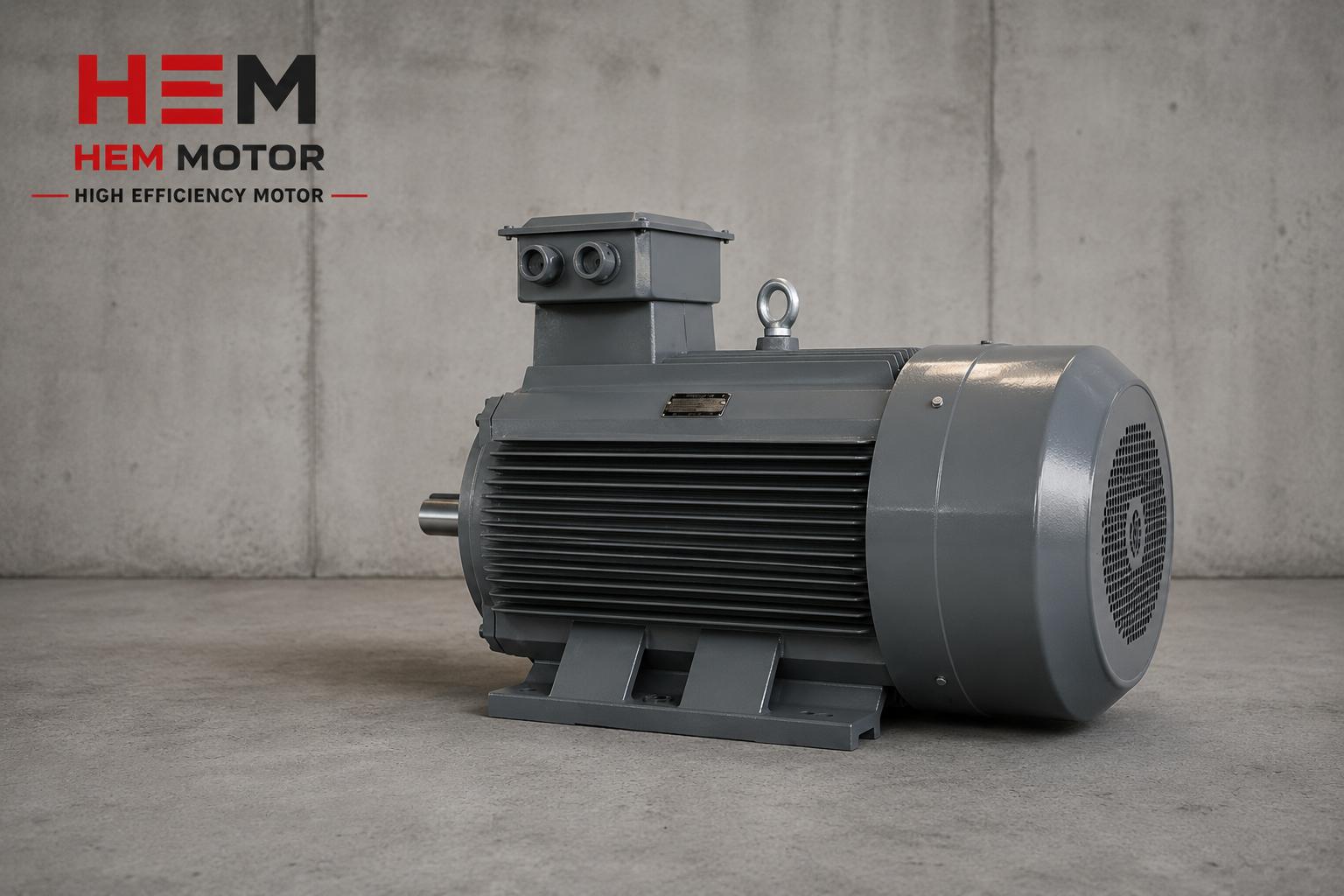

When electric motors are mentioned, large powers often come to mind; yet a very large part of industrial automation runs on motors in the smallest power class. The 0.12 kW (approximately 0.16 HP) micro power motor is the working power of countless small automation applications, from dosing pumps to small conveyors, from labeling machines to sample agitators. Being small does not make its selection easier; on the contrary, the correct frame size, flange type, speed and reducer input compatibility carry millimetric importance here. In this guide we address 0.12 kW micro power electric motor selection from IEC 56-63 frame size to B14/B5 flange, from reducer input to 2-4-6 pole speed selection and stock selection logic.
Where Is the 0.12 kW Micro Power Motor Used?
0.12 kW is the smallest of the standard IEC power steps (the first member of the 0.12 - 0.18 - 0.25 - 0.37 kW series). This power class is ideal for applications requiring precise and continuous low power rather than high torque. Recognizing typical use areas is the first step of correct selection.
Small Automation and Dosing
Dosing pumps, small agitators, labeling and coding machines, sampling systems and laboratory equipment run on 0.12 kW motors. In these applications, the motor is usually matched with a reducer and reduced to a low output speed. For comparison with micro motors one power step higher, the 0.18 and 0.25 kW micro power motor selection content is a useful reference.
Small Conveyor and Feeding
Desktop and short-haul conveyors, screw feeders, the drive of vibratory feeders and small belt systems are solved with motors in the 0.12 kW power class. Since the reducer input is critical in conveyor drives, frame-flange compatibility must be verified in advance. For general belt motor principles, the conveyor belt motors in the efficient electric motors category can be reviewed.
Reducer Input (Geared Motor)
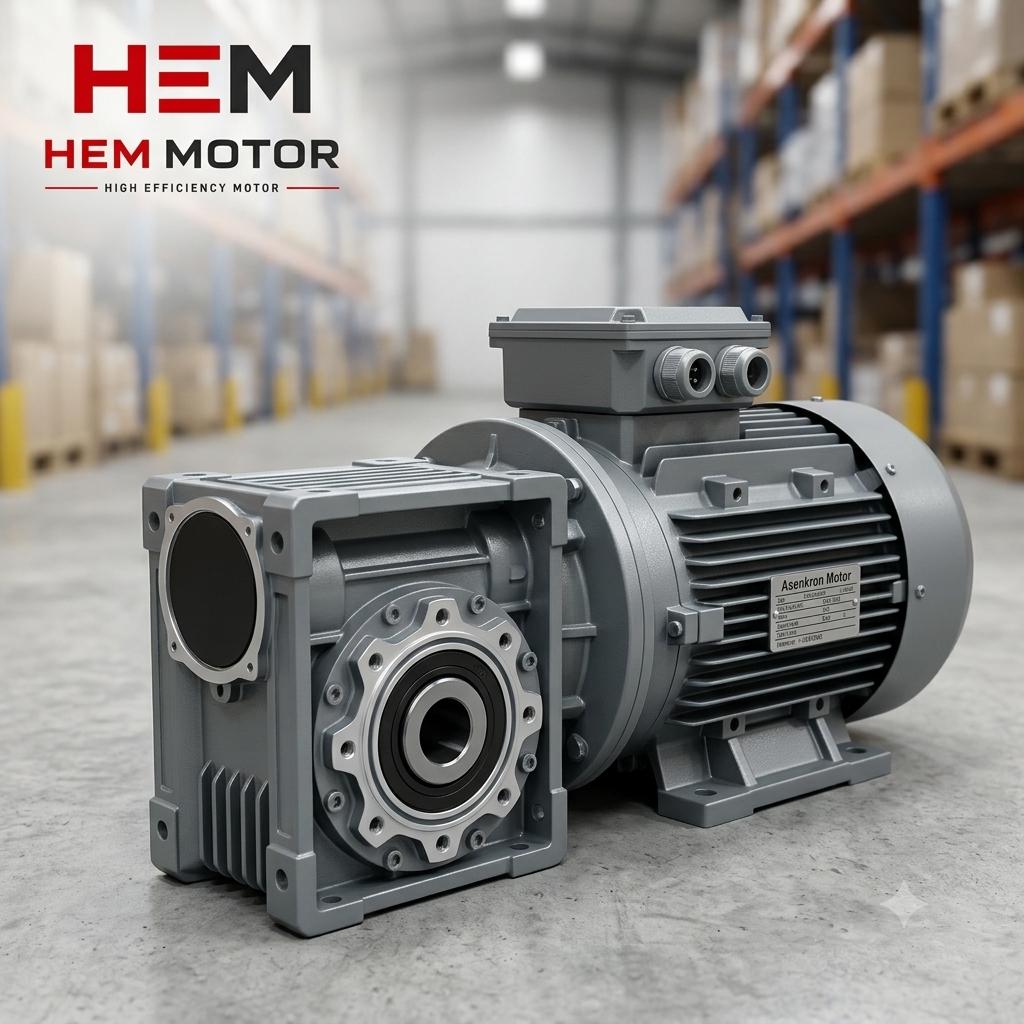
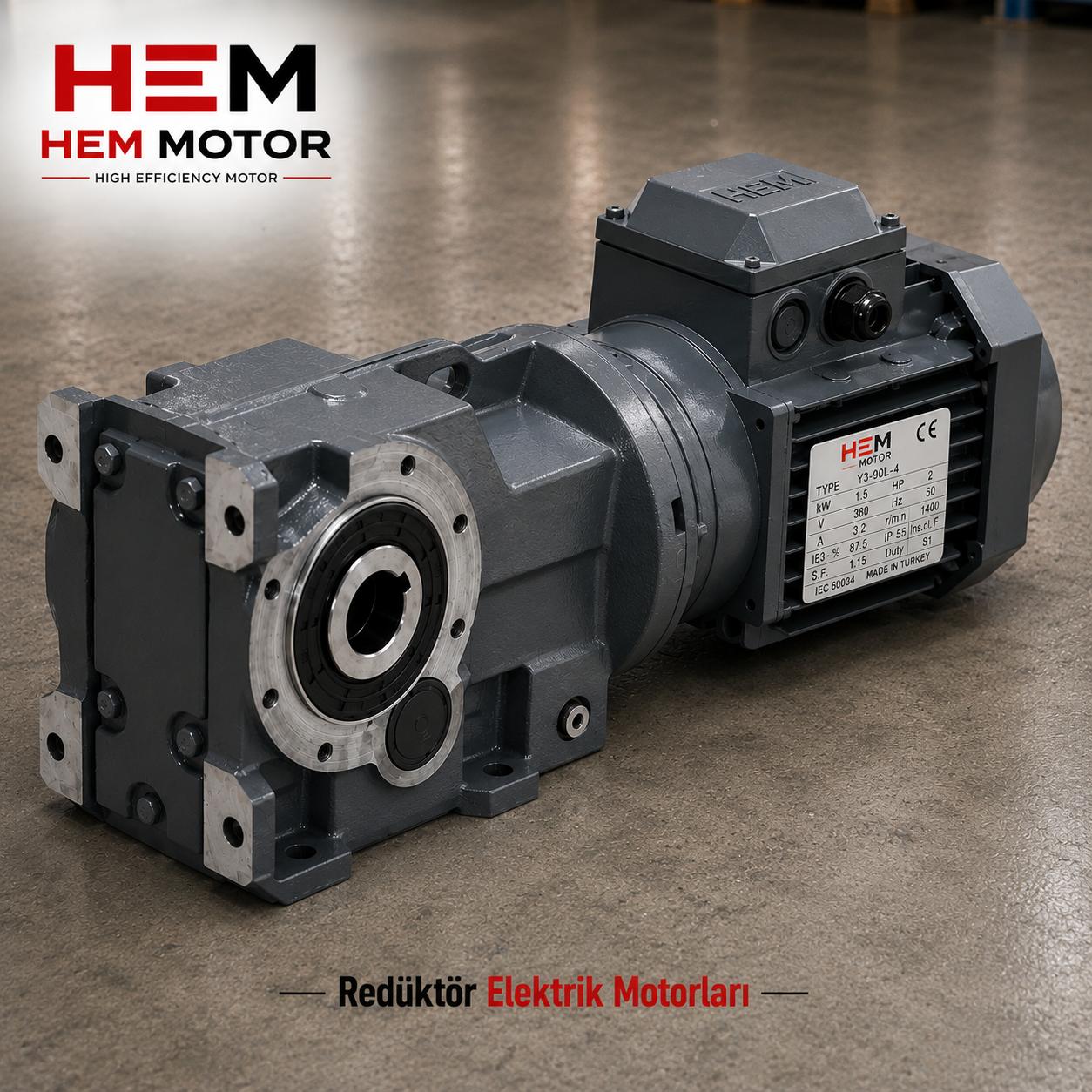
The most common use of the 0.12 kW motor is to obtain low speed-high torque by fitting it to a worm gear reducer. In the catalog, this power class is directly compatible with small-frame reducers (for example HEM30 and HEM40 frames). The HEM30 frame works with 0.06-0.18 kW, and the HEM40 frame with 0.12-0.37 kW motor powers. For reducer-motor matching, the IEC frame and flange matching for worm gear reducers guide is a direct reference; the worm gear reducers category shows the appropriate frame selection.
IEC Frame Size: 56 and 63
The 0.12 kW motor is produced in IEC standard 56 or 63 frame size. The frame size determines the motor's shaft height (height of the axis center from the foot base) and connection dimensions. The correct frame size ensures the motor physically fits the machine or reducer.
IEC 56 Frame
IEC 56 is the smallest standard frame; the shaft height is 56 mm. The 0.12 kW motor can be found in this frame in 2-pole (3000 rpm) and 4-pole (1500 rpm) variants. It is preferred for very compact applications and small reducer inputs. The 56 frame is usually produced with an aluminum body; this is common in small reducer applications.
IEC 63 Frame
IEC 63 is the next standard frame with a shaft height of 63 mm. The 0.12 kW motor can be produced in the 63 frame especially in the 6-pole (1000 rpm) variant or when a more robust mechanical connection is required. To understand the logic of frame size and power matching, the motor frame size and power matching content provides direction. For the aluminum or cast iron body choice, the cast iron vs aluminum body motor selection guide helps; at micro power, an aluminum body is mostly preferred.
Flange Type: B14 and B5 Connection
The most critical mechanical decision in micro power motors is the flange type. The 0.12 kW motor is usually connected directly to a machine or reducer via a flange; if the flange type and size do not match exactly, the motor cannot be fitted.
B14 Small Flange
B14 is a footless mounting type connected via the threaded holes on the small flange on the front cover. It is the most common choice for small reducer inputs and compact machine connections. In 0.12 kW motors, the B14 flange is directly compatible with small-frame worm gear reducers. For B14 details, the B5 vs B14 motor mounting type selection guide provides direction.
B5 Large Flange
B5 is a footless mounting type connected via through-holes on the large flange on the front cover. It is preferred for larger reducer inputs and pump connections. Both B5 and B14 options can be found in the 0.12 kW motor; the decision is made according to the flange type of the reducer or machine to which it will be connected.
B3 Foot-Mounted and Combined Types
In some applications, the motor is connected directly to the floor/chassis with feet (B3) or with both feet and flange (B34/B35). For correct mounting type selection, the connection types must be compared. As much as the flange dimensions matching the machine, the shaft diameter and key must also be compatible; the motor shaft diameter and key dimensions guide is critical for correct ordering.
Speed and Pole Selection: 2, 4, 6 Poles
The 0.12 kW motor is offered in three basic pole options, and the number of poles determines the output speed. The correct speed is selected according to the application's speed requirement and reducer ratio.
2 Poles (3000 rpm)
For small pump and fan applications requiring high speed, a 2-pole motor is selected. High speed also provides a high initial speed at the reducer input.
4 Poles (1500 rpm)
This is the most preferred speed; most small automation, conveyor and reducer input applications run on a 4-pole motor. Worm gear reducers are standardly calculated with a 1400-1500 rpm input speed; therefore the 4-pole motor is the default choice at the reducer input.
6 Poles (1000 rpm)
When lower input speed and smoother operation are required, a 6-pole motor is preferred. To clarify the effect of the number of poles on output speed, the 2/4/6 pole selection in asynchronous motors content is a reference. To understand how the actual operating speed changes with slip, the speed, slip and actual speed in asynchronous motors content helps. For output speed calculation with reducer ratio, the output speed and reduction ratio in geared motors content is complementary.
Voltage, Efficiency and Stock Selection Guide
In the 0.12 kW motor, voltage connection, efficiency regulation and stock selection are the final links of the purchasing decision.
230/400V Connection
The 0.12 kW three-phase motor usually has a 230/400V (delta/star) winding structure; this provides connection flexibility suitable for both 230V and 400V grids. A single-phase option is also available. On phase selection, the single-phase vs three-phase motor selection guide provides direction. To also understand the correct power in HP terms, the HP vs kW motor power understanding content is useful.
Efficiency Class
By regulation, a minimum IE2 efficiency class applies to motors in the 0.12-0.75 kW range; the IE3 mandate for this power class is not as strict as at higher powers. Still, to understand the general logic of the efficiency class, refer to the IE3/IE4 efficiency mandate regulation.
Stock Selection and Fast Supply
0.12 kW motors are a common spare part of small automation lines; therefore keeping frame (56/63), flange (B14/B5) and speed (2/4/6 pole) combinations in stock provides fast replacement. For critical spare planning, the critical spare motor list and stock planning content provides direction. When replacing an existing micro motor one-to-one, matching with nameplate details is essential; the avoid wrong motor delivery and old brand motor direct replacement contents help in this process. If series supply is involved for OEM machine manufacturers, the OEM motor supply agreements model is suitable.
Mechanical Compatibility, Replacement and Correct Ordering
The most common problem in micro power motors is receiving a motor of the correct power but the wrong mechanical size. In a 0.12 kW motor, the frame (56/63), flange (B14/B5), shaft diameter and key dimension must all match the machine or reducer exactly. When replacing an existing motor, the nameplate details must be read completely and matched one-to-one; the avoid wrong motor delivery and, for replacement from a different brand, the old brand motor direct replacement contents provide direction. To read the catalog correctly and select a model from the technical table, the how to read an electric motor catalog content is useful.
The 0.12 kW motor is often ordered together with a worm gear reducer. The reducer's input flange (for example 56B14, 63B14) must match the motor's flange exactly; otherwise the motor cannot be fitted to the reducer. For reducer selection and pricing logic, the factors affecting worm gear reducer prices content provides direction. On whether to prefer a monoblock geared motor or a separate motor plus reducer, the geared motor vs separate motor comparison is helpful.
Commissioning and Protection in Small Automation
Even though it is low power, correct protection of the 0.12 kW motor is important. A suitable motor protection switch or thermal relay must be selected against overload, phase loss or blockage; for protection device planning, the electric motor protection devices purchase content provides direction. For first start and rotation direction check, the commissioning and first startup checklist should be followed. Direct-on-line starting of a three-phase 0.12 kW motor instead of star-delta causes no problem at this power; starting is simple at low power.
Stock, Supply and Regional Delivery
0.12 kW motors are frequently requested items for machine manufacturers and maintenance teams; therefore keeping frame-flange-speed combinations in stock provides fast delivery. To speed up the supply process, the information required when requesting a quote content provides direction. To reduce cost in wholesale and series purchasing, the cost reduction in electric motor wholesale purchasing content is useful. For fast delivery in the Izmir and Aegean region, you can refer to the same-day delivery in Izmir and the Aegean content. You can reach our entire product range via our homepage.
Frequently Asked Questions
How many HP is a 0.12 kW motor and in which frame is it found?
0.12 kW corresponds to approximately 0.16 HP and is the smallest step of the standard IEC power series. It is usually produced in IEC 56 or 63 frame size, with 2/4/6 pole and B14/B5 flange options. The pole and flange combination is selected according to the application and the reducer to which it will be connected.
Which reducer can I fit a 0.12 kW motor to?
This power class is compatible with small-frame worm gear reducers. In the catalog, the HEM30 frame works with 0.06-0.18 kW and the HEM40 frame with 0.12-0.37 kW motor powers; that is, the 0.12 kW motor can be fitted to both frames. The motor's flange type (B14/B5) and IEC frame (56/63) must be perfectly compatible with the reducer input.
Should I choose B14 or B5 in a 0.12 kW motor?
The decision is made according to the flange type of the reducer or machine to which the motor will be connected. Small reducer inputs and compact machine connections mostly require a B14 small flange; connections requiring a larger flange surface use B5. The flange size, shaft diameter and key must match the machine exactly.
Get a Quote
For your small automation, dosing and reducer input applications, let us jointly determine the correct frame (56/63), flange (B14/B5) and speed (2/4/6 pole) combination in the 0.12 kW micro power motor. For fast supply from stock and reducer matching, contact us: +90 (532) 345 49 86. Share your application and reducer information and reach us via our contact page; we will prepare a quote the same day.
Purchasing and Selection Checklist
- Has the number of poles (2/4/6) and output speed been determined according to the application's speed requirement?
- Is the IEC frame size (56 / 63) suitable for the machine or reducer?
- Does the flange type (B14 / B5) match the reducer/machine to which it will be connected exactly?
- Have the shaft diameter and key dimensions been verified?
- Has IEC frame compatibility with the reducer input (e.g. HEM30 / HEM40) been checked?
- Has the voltage connection (230/400V three-phase or single-phase) been selected correctly?
- Has the frame-flange-speed combination been planned in stock for frequent replacement?
- Have nameplate details been checked one-to-one when replacing the existing motor?