English
 Türkçe

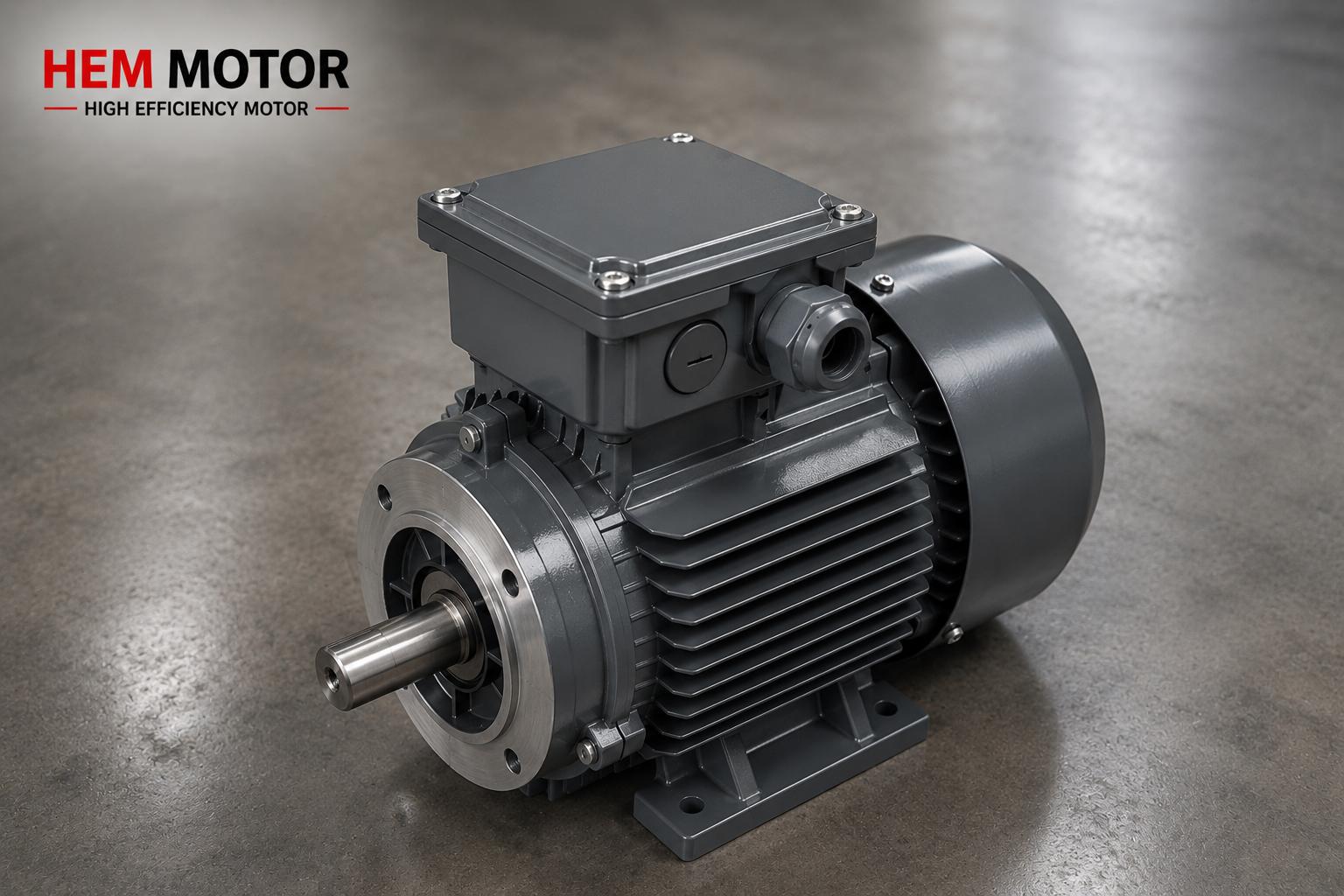

If you want a fan to run at two stages, "fast" and "slow," an elevator to slow down as it approaches a floor, or a conveyor to carry material at two different speeds, and you do not want to use a variable frequency drive for this, the answer is very often a dual-speed (Dahlander) two-speed motor. Dual-speed motors provide two different speeds directly from the grid without a drive; by changing the terminal connection, the motor is set to low or high speed. In this article we explain how the Dahlander connection works, the difference between single-winding and separate-winding dual-speed motors, the power-torque change at 2/4 and 4/8 pole ratios, and how terminal bridging is done. As HEM Motor, with our identity as both manufacturer and supplier, we provide dual-speed motors with the pole ratio and connection type suited to your application.
A standard single-speed motor has a fixed pole count and therefore a single synchronous speed. Yet many applications demand two different speeds: low and high flow in a fan, fast travel and slow floor approach in an elevator, fast conveying and slow positioning in a conveyor. This need can also be met with a variable frequency drive; but a drive adds extra cost and complexity. If two clear speeds are enough, a dual-speed motor is often the simpler and more economical solution.
How Does a Dual-Speed Motor Provide Two Speeds?
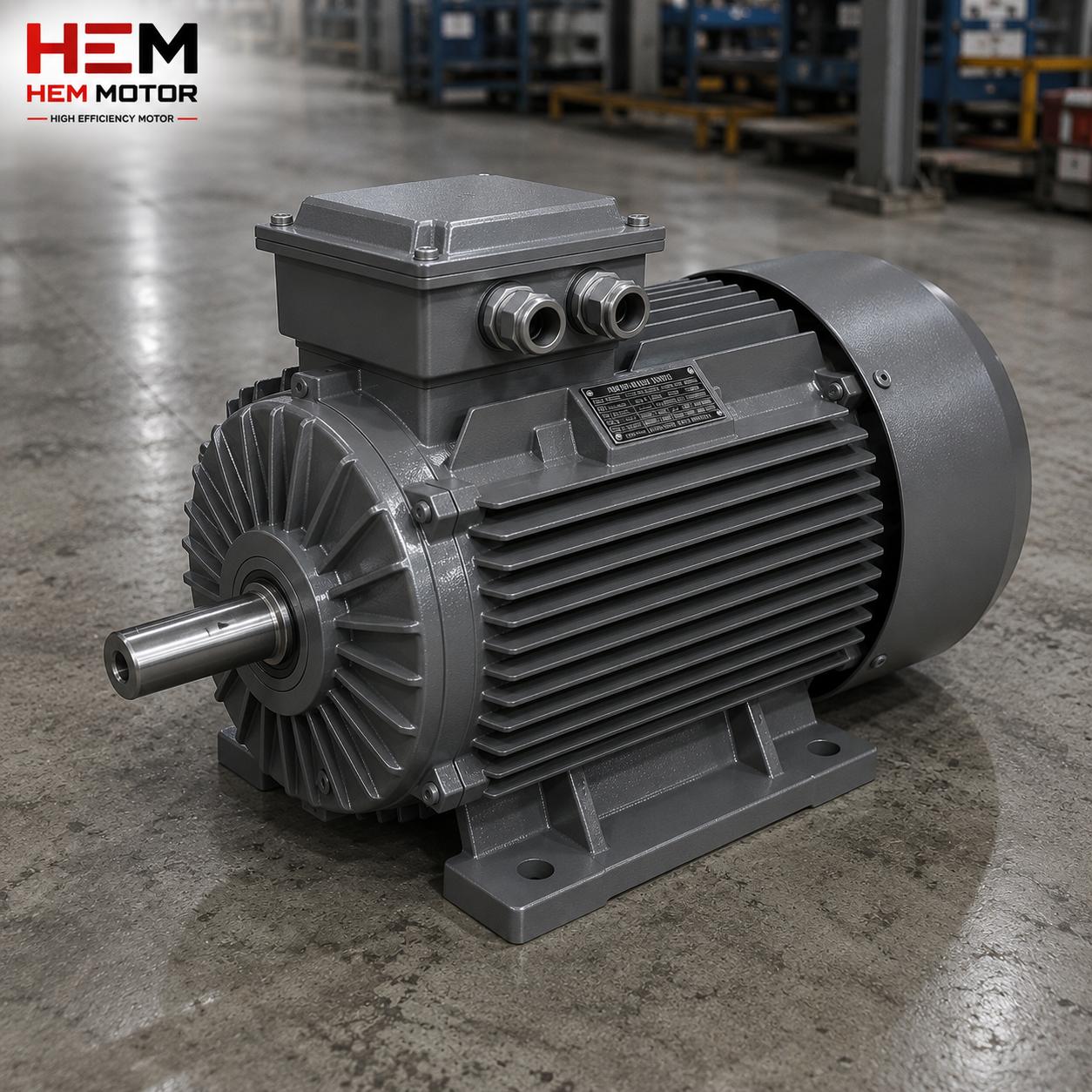
An asynchronous motor's speed is determined by the pole count; if you can change the pole count, you change the speed. Dual-speed motors do exactly this: by changing the winding connection, the motor's effective pole count is changed, and thus two different synchronous speeds are obtained. This is a speed change provided without a drive, using only the terminal connection and a contactor group. There are two basic methods: the single-winding Dahlander and the two separate-winding solution.
Single-Winding Dahlander Connection
The Dahlander connection is a clever wiring scheme that doubles the pole count using a single winding. By changing the bridging at the terminal, the winding runs either at a high pole count (low speed) or at half the pole count (high speed). This is why Dahlander always gives a 2:1 speed ratio; typical combinations are 2/4 poles (3000/1500 rpm) and 4/8 poles (1500/750 rpm). Because a single winding is used, the motor is more compact and offers a cost advantage. The disadvantage is that the speed ratio can only be 2:1; a ratio such as 3000/1000, for example, cannot be obtained with Dahlander.
Two Separate-Winding Dual-Speed Motor
In the second method the motor stator has two independent separate windings; one designed for one pole count, the other for another. Whichever speed is desired, that winding is energized. The advantage of this method is that it is not limited to 2:1; non-2:1 ratios such as 6/4 (1000/1500) or 8/6 (750/1000) can be obtained this way. The disadvantage is that two windings require a larger frame and a higher cost. The speed ratio the application demands directly determines the choice between these two methods.
Power-Torque Change by Pole Ratio
The most critical matter in a dual-speed motor is how power and torque change between the two speeds. This change differs depending on the application's load characteristic (constant torque or variable torque). The Dahlander connection can be designed in two different ways according to the pole ratio: constant power, constant torque, or variable torque (fan/pump) characteristic. This is a point that must be clarified when selecting the motor.
- Variable torque (fan/pump) connection: In loads such as fans and pumps, torque varies with the square of speed and power with the cube of speed. In these applications, power and torque drop sharply at low speed; this is the most common type for dual-speed fan motors.
- Constant torque connection: In constant-torque loads such as conveyors, the motor produces approximately the same torque at both speeds; power varies proportionally with speed. At low speed power drops to about half.
- Constant power connection: In some machine tool applications, the motor produces the same power at both speeds; in this case torque roughly doubles at low speed.
This difference explains why dual-speed motor selection is not just a "how many kW" question. A dual-speed motor selected without knowing the load characteristic will either produce insufficient torque at low speed or fail to meet the power at high speed. Making the correct selection by the load torque characteristic is just as decisive in dual-speed motors as in single-speed ones.
Terminal Bridging and Wiring
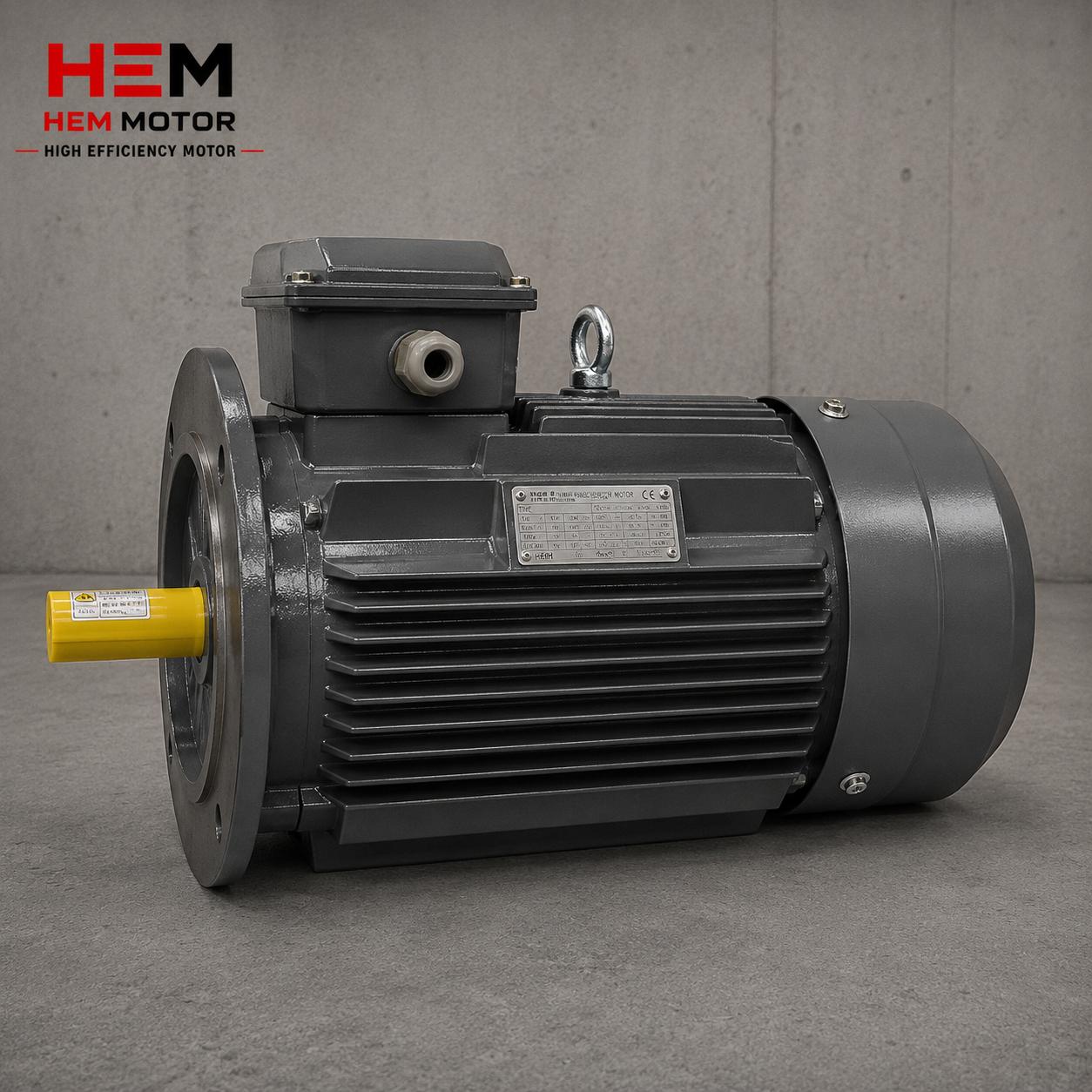
The terminal box of a dual-speed motor differs from that of a single-speed motor; it contains more terminals. The Dahlander connection usually has six terminals, and by bridging these terminals in specific ways, low or high speed is selected. At low speed the terminals are connected in one configuration (usually delta), and at high speed in another (usually double-star). This switching is done automatically by a control circuit made of contactors.
The critical point here is that the transition between speeds is done in the correct order. When switching from high speed to low speed, the motor must be allowed to slow down somewhat freely and then taken to the low-speed stage; otherwise a sudden transition stresses the motor and the mechanics. Correct design of the control circuit protects both the motor's life and the application's safety. To manage the high current at start-up and smooth the transitions, starting methods should also be considered; on this subject our article on star-delta and soft starter is complementary.
Typical Application Areas
Fans and Ventilation
The most common application of dual-speed motors is ventilation fans. In a facility, high air flow is needed in summer or during intensive production, and less flow in winter or at low load. A dual-speed fan motor offers full flow at high speed and reduced, energy-saving flow at low speed. Because of the variable torque characteristic, energy consumption drops sharply at low speed; this is why dual-speed fan motors are valuable for both comfort and savings.
Elevators and Escalators
In elevators, dual-speed motors are used so the car can stop smoothly and precisely as it approaches a floor. The car travels at high speed, switches to low speed as it nears the floor, slows down and stops precisely. This is important for both passenger comfort and stopping accuracy. This solution, which provides two speeds directly from the grid without a drive, is a classic method in many elevator and escalator applications.
Conveyors and Handling
In conveyors, dual-speed motors are used in applications requiring two different speeds, such as fast conveying and slow positioning. Material is conveyed quickly at high speed, and switched to low speed during precise positioning or loading. The constant torque connection ensures the conveyor produces sufficient pulling force at both speeds. In such applications, choosing the correct pole ratio and connection type directly affects both performance and motor life.
Points to Consider When Selecting a Dual-Speed Motor
When selecting a dual-speed motor, first clarify the two speeds the application demands and the ratio between them. If the ratio is 2:1, the single-winding Dahlander is an economical solution; if a non-2:1 ratio is needed, a two separate-winding motor is required. Then determine the load characteristic (fan/pump, constant torque or constant power), because the connection is designed according to this characteristic. Finally, correct terminal bridging and control circuit setup ensure the motor operates safely and for a long life. As HEM Motor, we supply dual-speed motors according to your application's speed ratio, load characteristic and connection requirement.
Comparison with a Variable Frequency Drive
It is worth comparing the dual-speed motor directly with a variable frequency drive (VFD), since both can provide more than one speed. A VFD offers continuous, stepless speed control across a wide range and can also bring energy savings on fan and pump loads by reducing speed precisely to the demand. However, a VFD adds cost, occupies panel space, requires cooling and introduces electronic components that need maintenance and protection. For an application that genuinely needs many speeds or fine speed regulation, the VFD is the right tool.
The dual-speed motor, by contrast, shines when exactly two clear speeds are enough. It needs no electronic drive, no special cabling and no additional cooling; the speed change is achieved purely by switching contactors. This makes it simpler to commission, easier to troubleshoot and more robust in dusty or harsh environments where electronics can struggle. In fans that run "high in summer, low in winter," in elevators that travel fast and approach floors slowly, and in conveyors that convey fast and position slowly, the dual-speed motor remains a classic, dependable and economical solution. The choice between the two ultimately comes down to a simple question: does the application need many speeds, or just two?
Frequently Asked Questions
What speed ratios can be obtained with the Dahlander connection?
The Dahlander connection doubles the pole count using a single winding; therefore it always gives a 2:1 speed ratio. The most common combinations are 2/4 poles (3000/1500 rpm) and 4/8 poles (1500/750 rpm). If a ratio other than 2:1 (for example 6/4 or 8/6) is needed, Dahlander is not sufficient; for this a two separate-winding dual-speed motor must be used.
Is it better to use a variable frequency drive instead of a dual-speed motor?
This depends on the application's need. A variable frequency drive lets you adjust the speed continuously and steplessly; this is ideal where many different speeds or precise speed control are needed. But if only two clear speeds are enough, a dual-speed motor is a simpler and more economical solution without a drive. In applications such as fans and elevators where two speeds suffice, a dual-speed motor is a classic and durable choice; where multi-step control is needed, a variable frequency drive stands out.
Why is the power different at the two speeds in a dual-speed motor?
A dual-speed motor's power and torque depend on the characteristic the connection is designed for. In a fan/pump (variable torque) connection, power drops sharply at low speed because in these loads power varies with the cube of speed. In a constant torque connection, power varies proportionally with speed, dropping to about half. In a constant power connection, the same power is produced at both speeds, but torque doubles at low speed. This is why the load characteristic must be clarified and the connection determined accordingly when selecting a dual-speed motor.
Let Us Determine the Right Dual-Speed Motor Together
A fan, elevator, escalator or conveyor; if your application demands two clear speeds without a drive, a dual-speed (Dahlander) motor is often the simplest and most economical solution. As HEM Motor, we evaluate your application's speed ratio, load characteristic and connection requirement together and determine the right dual-speed electric motor. Share the two speeds you want, the type of load and, if available, the nameplate details of your existing motor; let us determine together whether a single-winding Dahlander or a separate-winding solution is needed.