English
 Türkçe

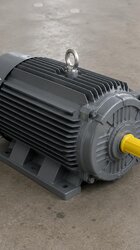
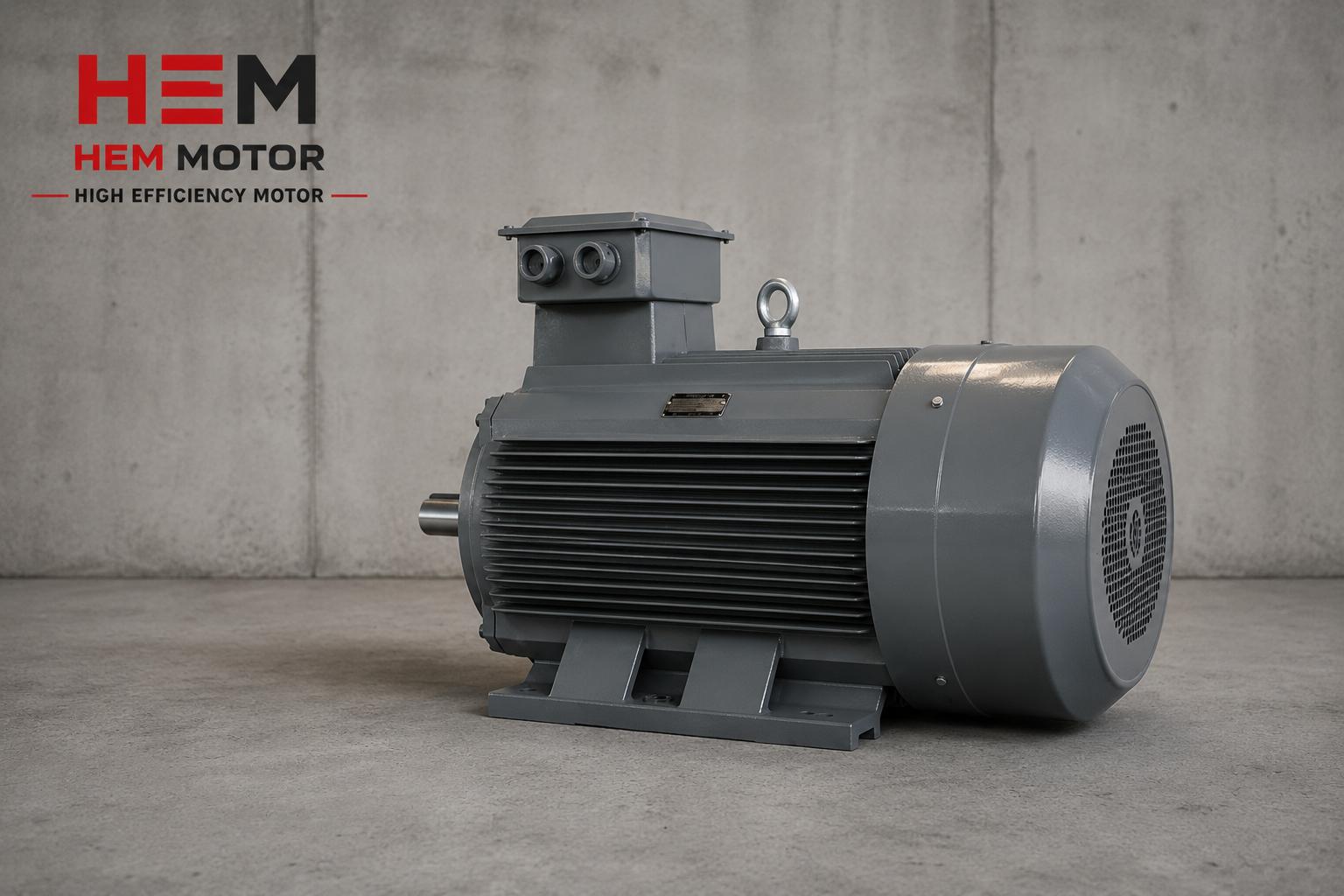

Geared motor selection looks confusing at first glance because the buyer often starts with the wrong question: "How many kW of motor do I need?" Yet in a geared motor the real determinant is not power but the output-shaft speed (rpm) and torque required. Especially in small-power applications running on 220V single-phase supply, finding the right combination has far more to do with the reduction ratio than with motor power. In this guide we walk step by step through how 0.18-1.5 kW single-phase motors are matched with worm gear reducers, how output speed and torque are calculated, and how to choose the right combination from stock.
The Real Determinant in a Geared Motor: Not kW, but Output Speed and Torque
When you want to turn a conveyor, a mixer or a feed screw, your machine must rotate at a certain speed and a certain torque. The motor's kW rating alone does not give this information. Because a motor of the same power can produce completely different output speeds and torques with different reduction ratios. That is why, in geared motor selection, the order is as follows:
- Output speed (rpm) first: Determine how many revolutions per minute the output shaft of your machine must turn.
- Output torque (Nm) next: Calculate the moment required to turn the load.
- Power (kW) last: Once speed and torque are set, the required motor power emerges by itself.
When this order is reversed, that is, when kW is chosen first, the output speed ends up either too high or too low and the machine does not run correctly. The right approach is to work backward from the machine's need.
0.18-1.5 kW Single-Phase Motors and Worm Gear Reducers
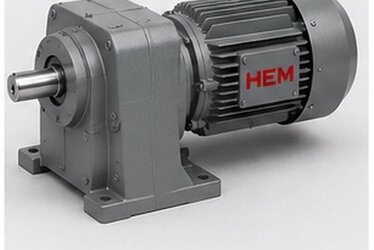
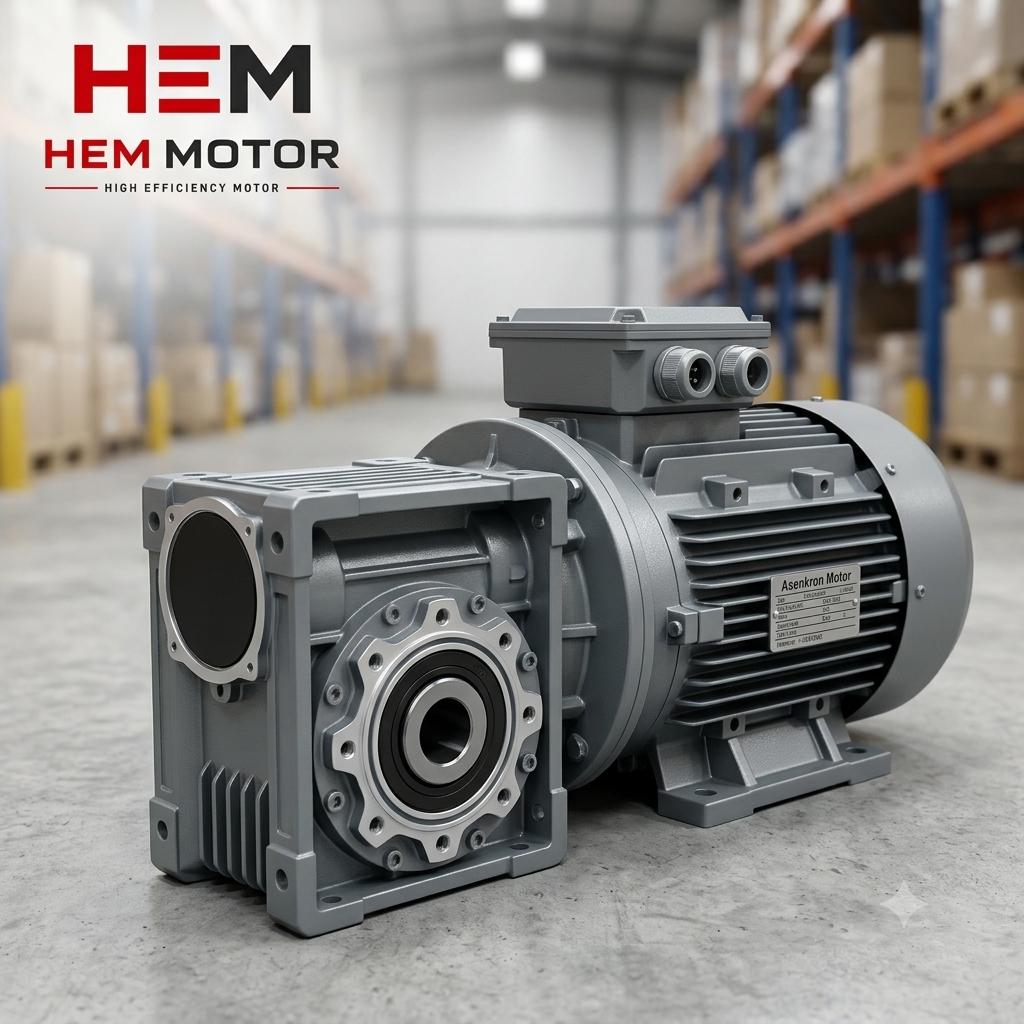
In small-power applications, that is, single-phase motors between 0.18 kW and 1.5 kW, are generally matched with worm gear reducers. Worm gear reducers are very common in this power range because they provide a high reduction ratio in a single stage, have a compact structure and often offer a self-locking feature. Fed from a 220V single-phase mains, these motors are preferred in workshops without three-phase supply, food machinery, small conveyors and dosing systems.
An important advantage of the worm gear reducer is its flexibility to position the output shaft in different orientations (horizontal, vertical) and its quiet operation. Thanks to the self-locking feature, the load does not run back when the motor stops; this provides safety especially in lifting and positioning applications. In single-phase geared motor selection, these features should be evaluated according to the application's requirements.
How Does the Reduction Ratio Determine Output Speed and Torque?
The reduction ratio is the heart of geared motor selection. The logic is simple: the reducer lowers the motor's high speed and in return raises the torque. For example, a 4-pole single-phase motor turns at around 1400 rpm; when a certain reduction ratio is applied to this motor, the output speed is divided by that ratio and the torque is multiplied by approximately the same ratio.
- High reduction ratio: Low output speed, high output torque. For applications that need slow and powerful motion.
- Low reduction ratio: High output speed, low output torque. For fast but light-load applications.
For this reason, output speed and output torque are inversely proportional: raising one lowers the other. The right choice is finding the ratio that meets the machine's required speed and torque at the same time. When this balance is struck, the motor runs efficiently and with long life. For different ratio and power options you can request a quick quote via electric motor prices.
Choosing the Right Combination From Stock
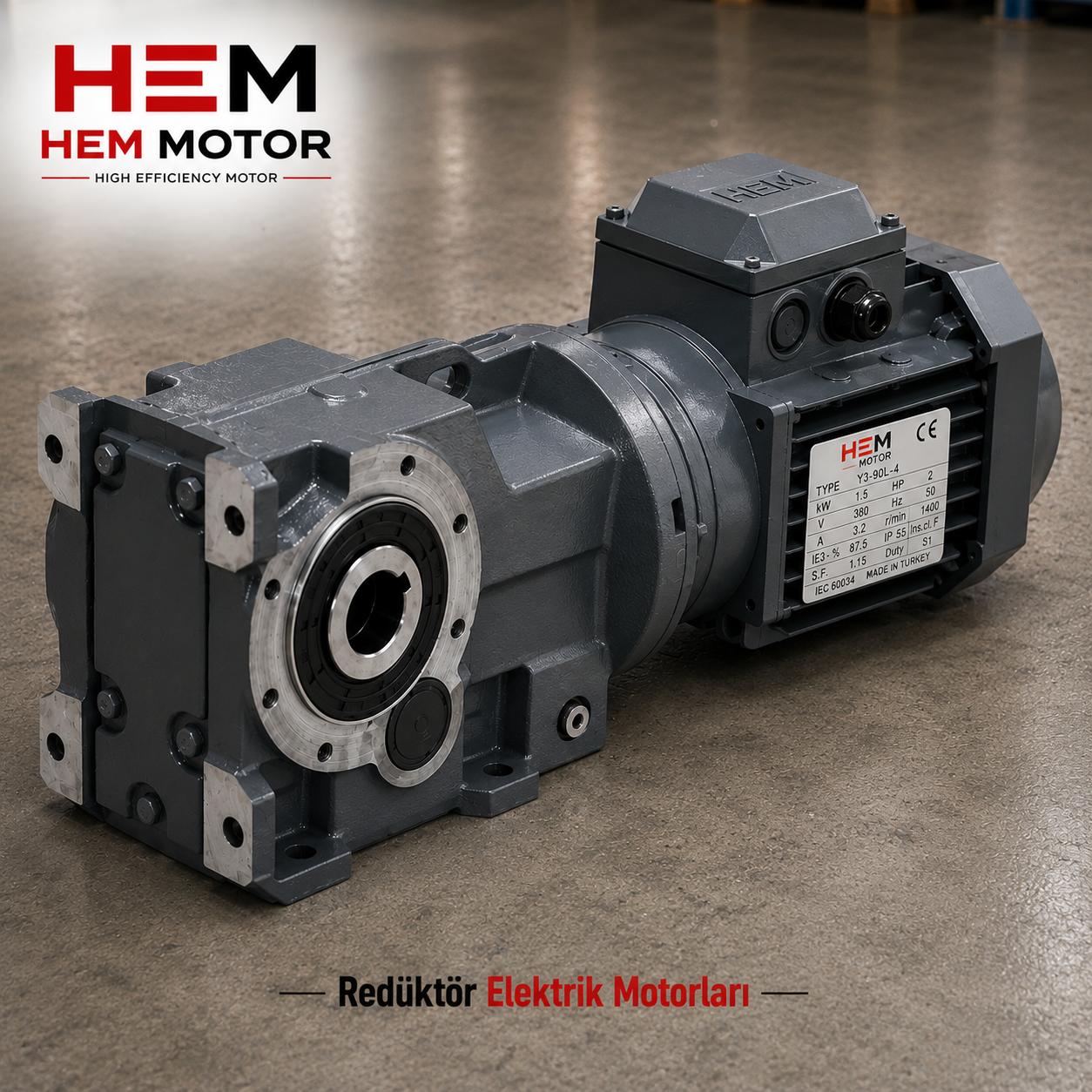
The final step in geared motor selection is finding the right motor and the right reducer ratio as a combination ready in stock. Because applications in this power range generally expect fast delivery; no one wants to wait months for a food machine or a small conveyor. That is why holding 0.18-1.5 kW single-phase geared motors in common ratios in stock is the most important factor in speeding up a project.
When choosing the right combination, follow these steps:
- Determine the required speed (rpm) at your machine's output shaft.
- Calculate the torque (Nm) required to turn the load.
- Choose the reduction ratio that meets this speed and torque.
- Determine the single-phase motor power (0.18-1.5 kW) compatible with the ratio.
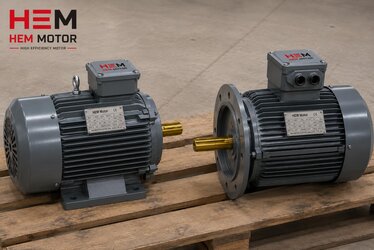
- Clarify the output shaft orientation and mounting type (foot, flange).
Manufacturer Assurance and Fast Supply
Small-power geared motors, modest as they may look, take a small machine completely out of service when they stop. That is why the right supplier is one that offers both a wide ratio and power stock and manufacturer assurance together. HEM Motor offers 220V single-phase geared motors in common reduction ratios with fast shipment from strong stock, so you do not have to wait for the right output speed and torque. For a combination and quote suited to your needs, review the electric motor prices page.
Frequently Asked Questions
What should I base my decision on when selecting a geared motor?
You should decide based not on the kW rating but on the output-shaft speed (rpm) and torque required. Determine the required output speed and torque first; the necessary motor power and reduction ratio follow from these two.
Which reducer are 0.18-1.5 kW single-phase motors matched with?
Single-phase motors in this power range are generally matched with worm gear reducers. Worm gear reducers are common in these applications for their compact structure, high single-stage ratios and self-locking feature.
What happens when the reduction ratio rises?
As the reduction ratio rises, the output speed drops and the output torque increases. So a higher ratio provides slower but more powerful motion. The right ratio is the one that meets your machine's speed and torque needs at the same time.