When a need arises for a low-speed, high-torque drive, the buyer has two roads ahead: buying the motor and reducer as a single body combined at the factory (a geared motor), or buying a standard electric motor and the reducer as separate items and joining them on the machine. Both roads do the same job; the difference shows up in the purchasing process, in stock, in installation labour and — most of all — on the day of a breakdown. This article handles that decision from the purchasing and operating perspective, for machine manufacturers and maintenance teams. As an electric motor and reducer manufacturer producing since 1979, HEM Motor supplies both configurations; that is why we can explain the strengths and weaknesses of each side over the usage scenario, without the worry of pushing a product.
The Structural Difference Between the Two Configurations
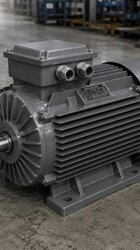
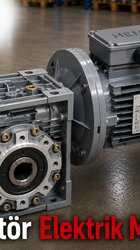
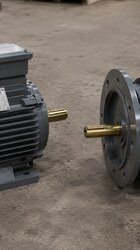
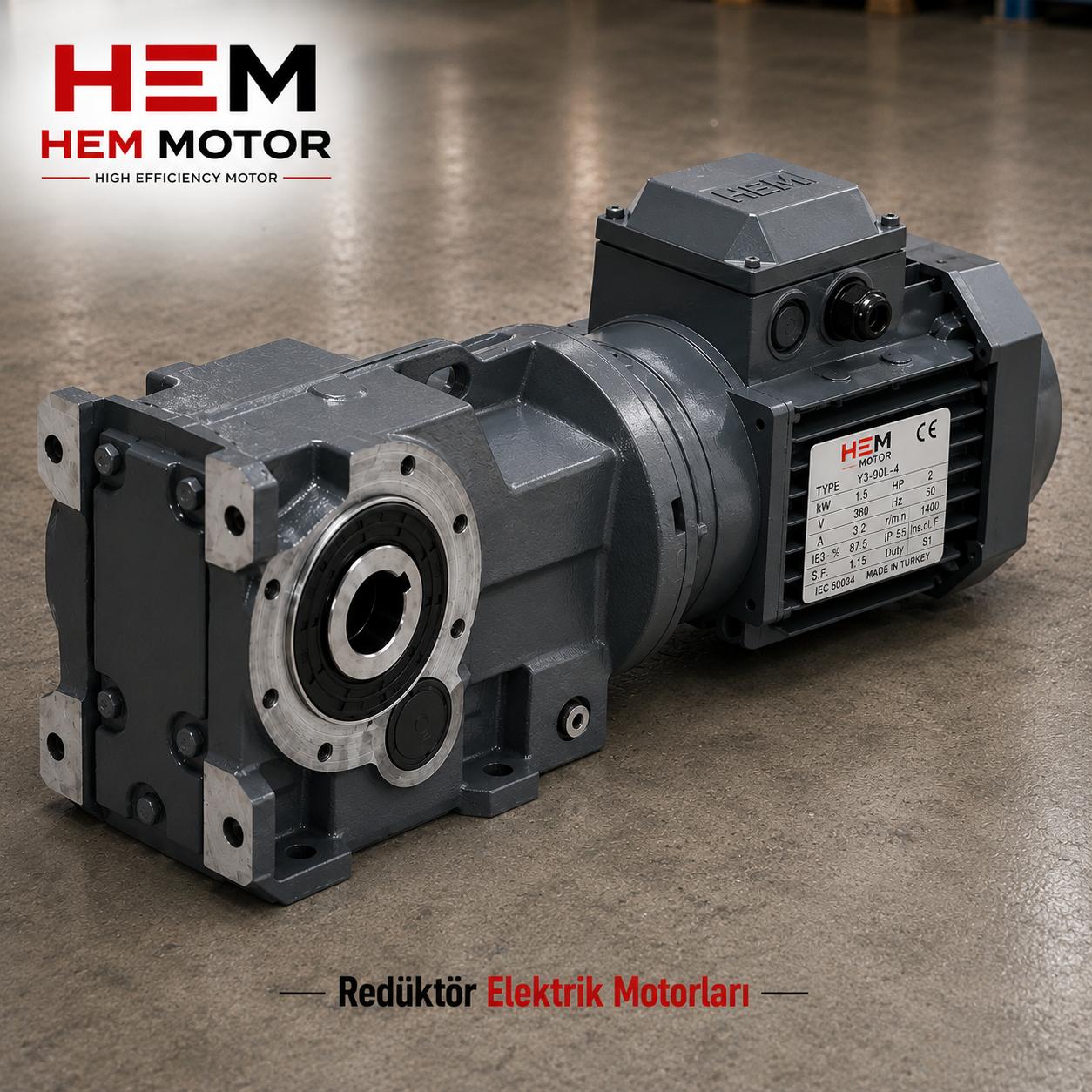
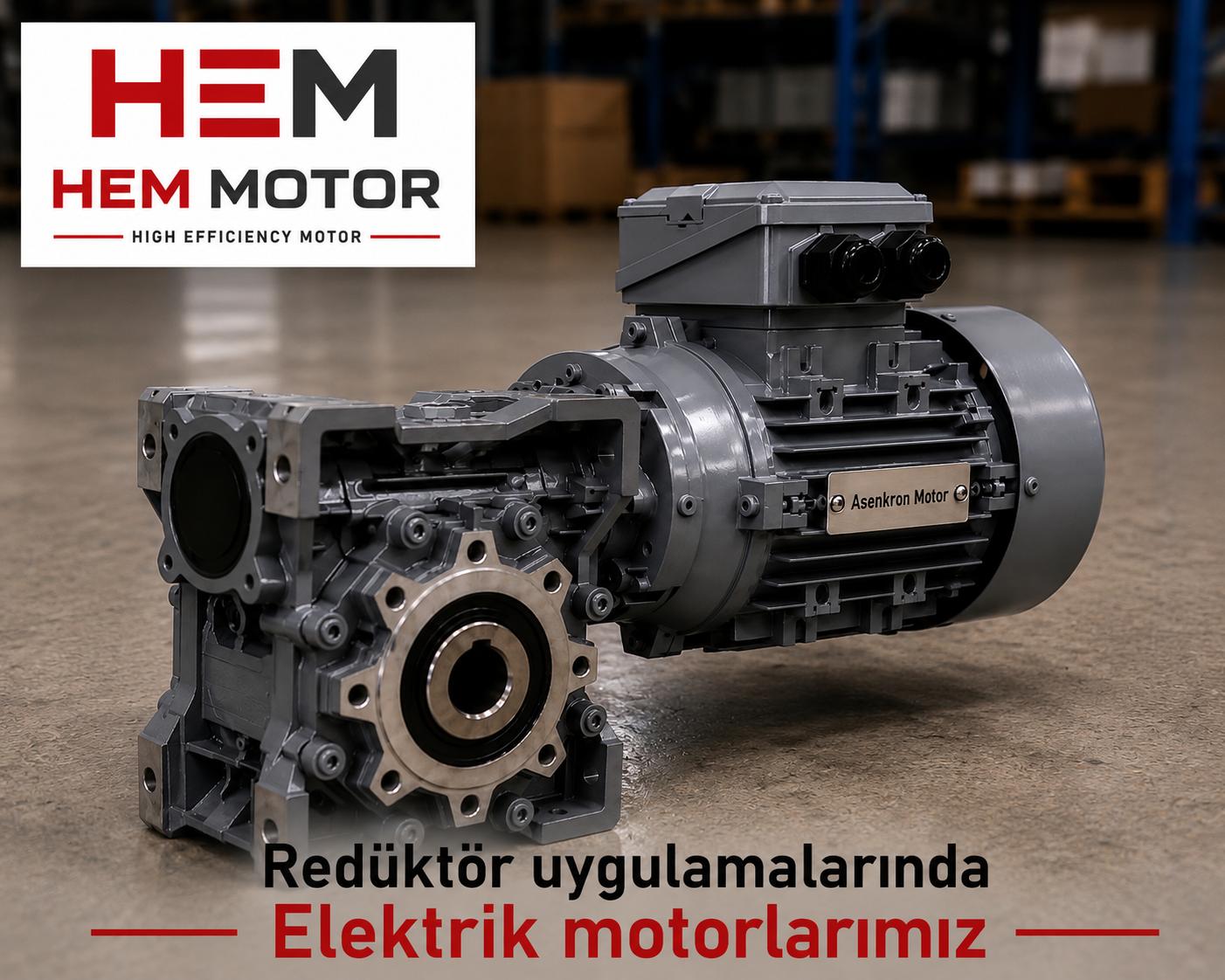
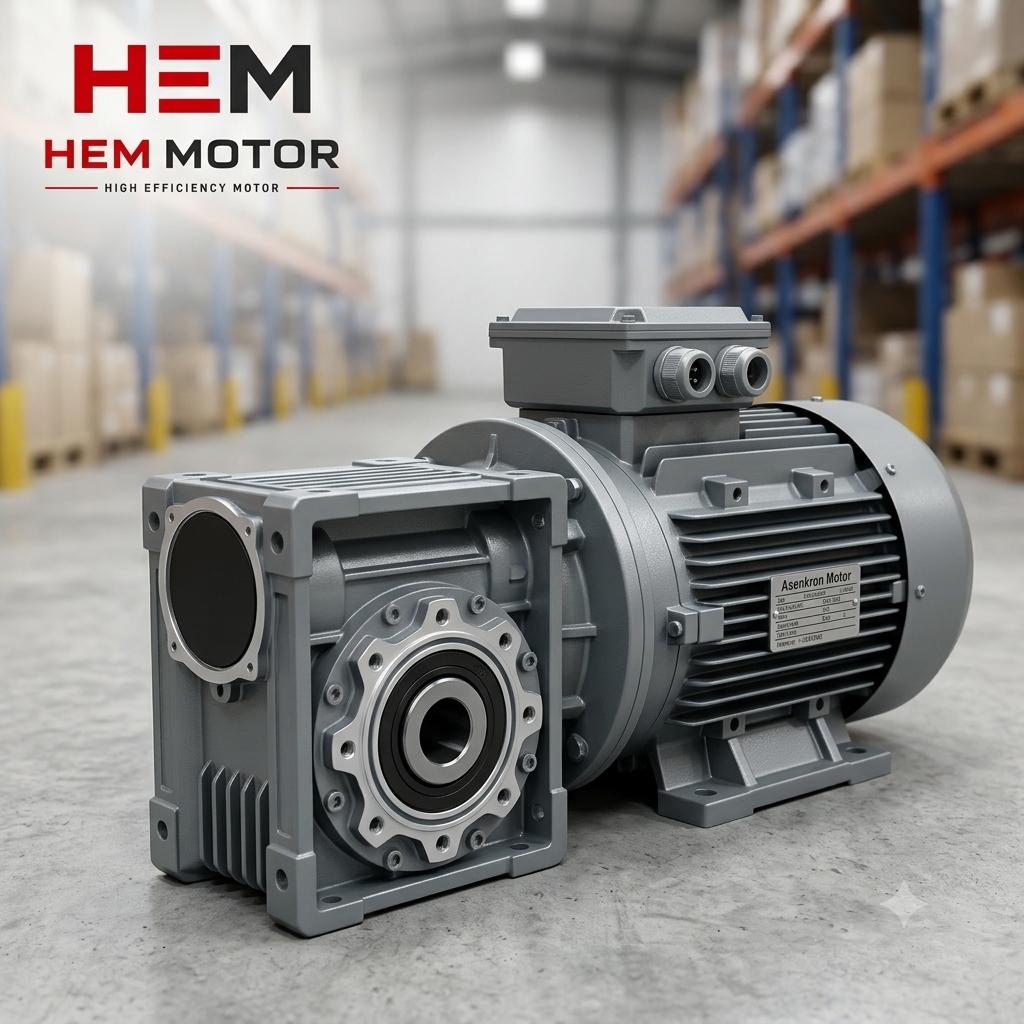
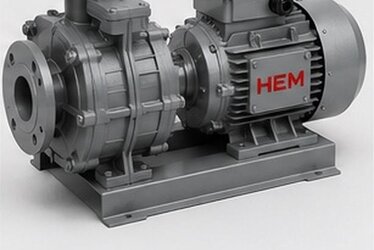
A geared motor (gearmotor) is a product in which the motor and the gearbox are combined as a single unit; the motor flange connects directly to the reducer input cover, and the motor shaft drives the reducer's input gear. In the separate combination, a standard IEC-frame motor mounts to the reducer's PAM (motor-mounting) flange through a B5 or B14 flange, or a foot-mounted motor and the reducer are joined by a coupling on a common base. The most widespread solution in Turkey's manufacturing industry is mounting a standard motor on the PAM flange of a worm-gear reducer; this model in fact combines the advantages of the two approaches, because the product runs compactly like a geared motor in the field, yet because the motor is standard it is found everywhere.
The first question when deciding is this: how much room is there for the drive unit on your machine, and who will install it? The geared motor and the PAM-flanged combination are compact, require no alignment, and their assembly is merely tightening bolts. The coupled separate combination takes up more room and demands serious installation labour; in return, at very high powers, in special reducer types, or where the motor must be kept away from vibration or heat, it may be the only option. How to choose the flange type is a separate topic; we have explained the B5/B14 distinction by frame size in detail in our article on B5 versus B14 motor mounting type selection.

Coupling and Alignment: The Invisible Labour of the Separate Combination
When you join the motor and reducer with a coupling, the axes of the two shafts must be precisely matched. An alignment error does not show itself on the first day; within weeks it surfaces as abnormal wear of the coupling rubbers, rising bearing temperature and vibration. A proper alignment done with a dial gauge or laser is a job of hours even for a competent maintenance technician, and it must be redone every time the motor is changed. Add to this that the coupling itself is also a spare-part item: the rubber elements are replaced periodically, and a wrongly sized coupling damages the shaft ends.
In flange-connected configurations (geared motor or PAM-flanged combination), this labour disappears entirely; the flange itself matches the axes. For operations with limited maintenance staff, machines on remote sites, and manufacturers that sell machines as OEMs and ship them across Turkey, this difference is critical: the equipment and experience to align on the spot where the machine is installed are usually absent. In the purchasing decision, the answer to "who will install, who will replace" most often points to the flanged solution.
Spare-Part Flexibility and Stock Availability
This is where the two approaches diverge most sharply from the purchasing standpoint. In the standard IEC motor + PAM-flanged reducer combination, the motor is an industry standard with an equivalent everywhere in the world: a 90-frame B5-flanged 4-pole motor is found today, in ten years, in whichever city you are. The reducer side, defined by frame size and ratio, can also be substituted separately. In integrated geared motors, the motor part is a special design in most brands: the shaft end is machined to the reducer input gear, the flange dimension is brand-specific, and in a breakdown you can obtain the motor only from that brand's service, with that brand's lead time. In imported-brand integrated units, this lead time can reach weeks, and the cost — through exchange-rate and customs effects — unpredictable levels.
For this reason, plants that will run many machines for long years — food lines, packaging facilities, warehouse conveyors — build their stock policy on standard parts: a few frame sizes of standard motor and a few frames of reducer are kept in stock, and whichever fails is replaced. HEM Motor feeds this model from two products: PAM-flanged reducer electric motors and worm-gear reducers with a frame series ranging from HEM30 to HEM130. Both are dispatched from manufacturer stock, with flange dimensions compatible with each other; the factors that determine the reducer frame choice and the price we have handled separately in our article on the factors affecting worm-gear reducer prices, so we do not repeat them here.
Breakdown Day: Single-Item or Double-Item Replacement?
The strongest argument of the integrated geared motor's defenders is the simplicity on breakdown day: four bolts are undone, the unit is replaced complete, the line runs. This is true — if you have the spare unit on hand. If there is no spare, the other side of the coin appears: even if only the motor winding burns, you replace the whole unit whose reducer is sound, that is, you pay for the sound part too; and if the special unit is not in stock, the line's downtime stretches as long as the lead time. In the separate combination, only the item on the faulty side is replaced: a standard motor with a burned winding is found the same day from the market or manufacturer stock, and the reducer stays in place. If there is gear wear, the reducer is replaced and the motor stays.
The right decision is made by the operation honestly constructing its breakdown scenario. In an operation running a single shift that can tolerate a few hours of downtime, the integrated unit + one spare unit model is perfectly sound. In lines running three shifts with high downtime cost, the standard motor + PAM-flanged reducer model both cheapens the spare stock and gives the assurance that "every part is found everywhere". A mixed model is also common: standardization is pursued on the dozens of small drives along the line, an integrated unit is accepted in the odd special position, and its spare is secured by contract.

Make the Downtime Calculation With Field Realities
When constructing a breakdown scenario, look not at the lead times on paper but at field realities. The sentence "the spare unit arrives in 48 hours" does not cover the scenarios where the breakdown happens on the Saturday night shift, where the unit comes not from the central warehouse in Istanbul but from a factory abroad, or where it waits at customs. The power of the standard part appears exactly here: a 4 kW 4-pole B5-flanged motor can be found from a regional hardware-motor seller even at the weekend; even if it cannot, it is on the courier from manufacturer stock the next morning. Write into your purchasing file, for each drive position, the answer to "in the worst-case scenario, in how many hours is this part installed again"; this single line often makes the configuration decision by itself.
Daily Life From the Maintenance Side: Oil, Sealing and the Service Contact
In the operating period the maintenance routine of the two configurations is similar, but the responsibility map is different. On the reducer side the periodic check items are oil level and sealing; most worm-gear reducers come lubricated for life, yet whether there is a leak from the seals is watched. On the motor side, bearing noise, winding temperature and current are tracked. In the integrated unit, since these two worlds are combined in one product, the service contact is single; this is an advantage, until the distance to the manufacturer's service or the lead time turns into a problem. In the separate combination, if you bought the motor from one place and the reducer from another, two contacts may arise in a breakdown dispute: the motor seller says "the reducer was overstrained", the reducer seller says "the motor vibrated".
The cleanest solution to this risk is buying both items from the same manufacturer. When the motor and reducer come from the same roof, the responsibility for compatibility is gathered under one roof too: products whose flange and shaft tolerances have been checked against each other are dispatched, and a single phone number is called when a problem arises in the field. In combinations HEM Motor builds with its own motor and its own reducer, the customer gets the "single contact" comfort of the integrated unit together with the "found everywhere" flexibility of standard parts.
A Total Cost of Ownership View in the Purchasing Process
Comparing the two configurations only over the price label of the purchase is misleading; the decision should be made over the items of the total cost of ownership. Let us list these items. First, installation labour: in the coupled combination, the base, coupling and alignment labour are the invisible part of the initial investment; in flanged solutions this item is almost zero. Second, stock cost: a plant using integrated units must keep a separate spare for each different unit type; in the standardized motor + reducer model a few standard motors become the spare for dozens of different positions, and the money tied up in the store shrinks. Third, downtime cost: in how many hours the part can be found and installed at the moment of breakdown is, in most operations, a larger cost item than the price of the product. Fourth, staff knowledge: the standard part the maintenance team is used to, requiring no training, is always replaced faster and without error.
These four items carry different weight from operation to operation; that is why two different right answers can be given to the same question in two neighbouring factories. What matters is that the decision is made by looking at this table, not at the label price. When you request a quote from your supplier, ask in writing not only about the product price but also about spare-part lead time and stock policy; a serious manufacturer gives a clear answer to both questions.
The Decision Through the Eyes of a Machine Manufacturer (OEM)
For a manufacturer producing serial machines, the decision criteria are a little different from the end user's. For the OEM, unit cost and assembly-line speed come first: the flanged combination is fitted within minutes on the assembly line and requires no alignment qualification. But what the OEM really must think about is the machine's life after it is sold. When your machine is sold to a workshop in some province of Anatolia, the local user being able to find a part with local means in a drive breakdown directly reduces your brand's service burden and customer dissatisfaction. A machine using a standard IEC motor does not produce the "machine whose spare cannot be found" complaint in the field. For this reason, the large majority of machine manufacturers selling for export and nationwide build their drive design on a standard motor + PAM-flanged reducer and make a framework agreement with the manufacturer over annual quantities. HEM Motor works with OEM customers in this model: motor and reducer stock is reserved according to the manufacturer's annual program, and machine delivery dates do not wait on supply.
Decision Table: Which Model for Which Operation?
Let us summarize the comparison in purchasing language. Prefer the integrated geared motor: if your number of drives is small and your in-machine room is tight, if the crew who will install and replace is unqualified, if the manufacturer's spare-unit lead time is within your downtime tolerance. Prefer the standard motor + PAM-flanged reducer combination: if there are many drives in the plant and you want stock standardization, if your downtime cost is high and you seek the "same-day motor" assurance, if you sell your machines nationwide or for export and want the end user to find a spare in every city. Prefer the coupled separate combination: if the power and torque are above the standard PAM-flanged solutions, or if there is a special situation requiring you to physically separate the motor from the reducer.
Whichever model you choose, explain the application to your supplier at the quote stage: the driven machine, running time, environment and load character. Two combinations of the same ratio and power can be quoted with a different frame and service factor according to the load character; giving this information from the start lets you get both the right product and a realistic lead time.
Frequently Asked Questions
The motor of my integrated geared motor burned out; must I replace the whole unit?
Not always. First the dimensions of the motor flange and the shaft end are taken; in some integrated units the motor part is close to standard PAM dimensions and substitution with a standard motor is possible. If the dimensions are special, two roads remain: waiting for the motor part from the same brand, or replacing the unit complete with a standard motor + worm-gear reducer combination. HEM Motor quickly produces the substitution-combination recommendation over the dimension and nameplate information.
Which motors can be mounted on a PAM-flanged reducer?
The PAM flange is defined according to IEC standard frame dimensions; for example, on a reducer with a PAM 90 B5 input, any standard motor with a 90 frame and B5 flange can be mounted. What matters is that the flange diameter, shaft diameter and keyway dimension match the reducer input. When ordering, sharing the PAM information on the reducer's nameplate ensures the correct motor arrives on the first try.
If I buy the motor and reducer from separate brands, how does the warranty work?
Each item is subject to its own manufacturer's warranty; the problem arises when the source of the fault is disputed. Buying the two items from the same manufacturer removes this risk: both the responsibility for compatibility and the warranty contact become single. In combinations built with the motor and reducer HEM Motor produces itself, we present the two items under a single warranty roof.
Get a Quote
Whether you are looking for an integrated solution or a motor + reducer combination, explain your application to us: let us recommend the soundest configuration through a manufacturer's eyes, over the ratio, power, load type and mounting position. Motors and reducers are dispatched quickly from our strong Turkey stock. You can reach us at +90 (532) 345 49 86 or start the quote process the same day by sending your machine information through our contact us page.