English
 Türkçe


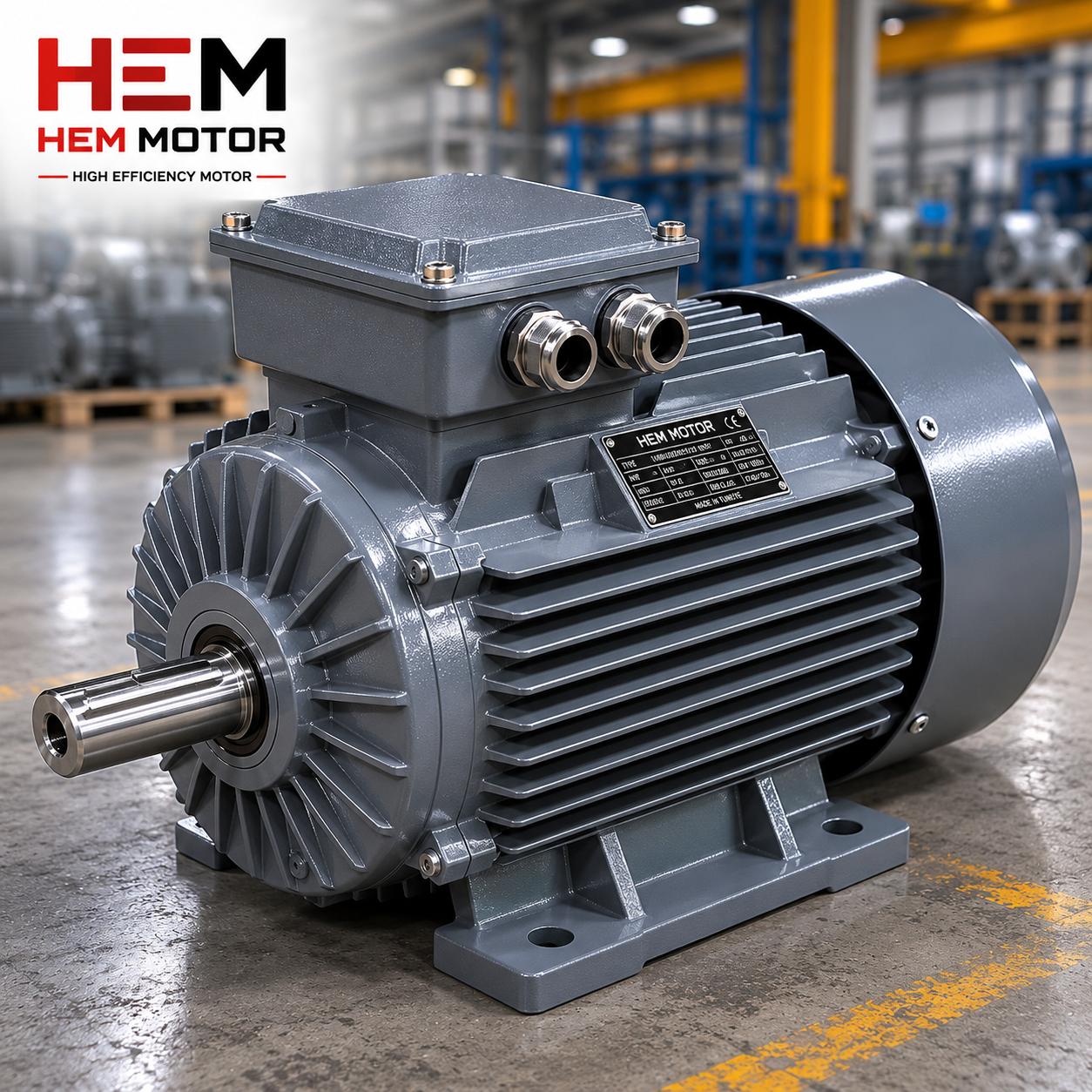

Textile dyehouses and finishing plants are among the most demanding electromechanical environments in a textile factory: high temperature, dense steam, chemical vapors and constant humidity all occur together. The stenter (ram) furnace circulation fans, drying cylinder drive motors and dye bath circulation pumps operating in these conditions fail early when selected incorrectly and stop the entire production line. The right electric motor selection begins with matching the insulation class, protection class, duty type and mechanical strength decisions exactly to the environment. In this article we address the three critical machine groups of a dyehouse and finishing plant (stenter circulation fan, drying cylinder drive, dye bath circulation pump) separately, and explain how to select the right motor for each in terms of power (kW), speed, pole count, insulation (F/H), protection class (IP55) and frame type. The aim is to provide a technical decision map you can use directly at the purchasing and replacement stage. HEM Motor, an electric motor factory manufacturing since 1979, supplies motors suited to the high temperature and humidity conditions of textile finishing lines from Türkiye stock with fast delivery.
Why Are Environmental Conditions Decisive in a Dyehouse and Finishing Plant?
The conditions a motor faces in the finishing and dyeing department are completely different from a standard industrial workshop. Around the stenter furnace the ambient temperature can rise to 50-70 °C; where the fan works inside the hot air itself, the temperature at the shaft end is even higher. On drying and fixation lines the humidity in the air is close to saturation; in the dye bath and washing sections the motor is in constant contact with water spray and chemical vapor. When these three factors (temperature, humidity, chemicals) come together, two basic properties of the motor come to the fore: the winding insulation class and the body protection class. The insulation class determines how much internal heating the motor can withstand, while the protection class determines how well it is protected against dust and water from outside. Making these two decisions correctly directly determines the life of a dyehouse motor.
Another critical issue on textile finishing lines is continuity and low vibration. Dyehouses and finishing departments generally run uninterrupted in multiple shifts; a single motor failure can stop the whole batch and ruin the half-processed fabric. For this reason the motors must be suited to continuous operation (S1 duty type), with 100% copper windings and a balanced rotor structure for low vibration. Our article on textile plants motor replacement and speed selection, which addresses in detail the effect of speed selection on yarn breakage and fabric tension, is a complementary resource for replacement planning. Our textile and spinning machinery motor requirement list, which addresses the whole machine group machine by machine, guides plant-wide supply planning.
Stenter (Ram) Furnace Circulation Fan Motors
The stenter machine is the heart of the line that stretches, dries and fixes the fabric after dyeing. The circulation fans that move hot air over the fabric inside the furnace are this machine''s most critical electric motors. Since these fans work directly inside the hot air stream, the decisive factor in motor selection is the insulation class. Standard F-class insulation withstands a winding temperature up to 155 °C; however, for fans operating in the high-temperature zones of the stenter furnace, H-class insulation (up to 180 °C) is a much safer choice. You can find how the insulation class affects life in a hot and harsh environment in our article on hot and dusty environment motor insulation class and cast iron body, and the difference between F and H class in our article on winding and insulation class (F/H) in IE3 motors.
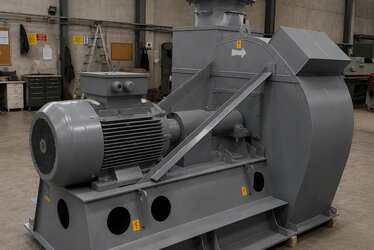
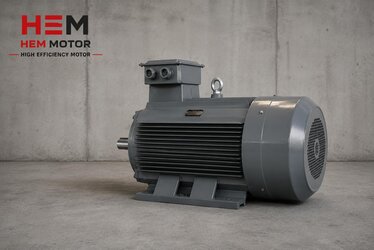
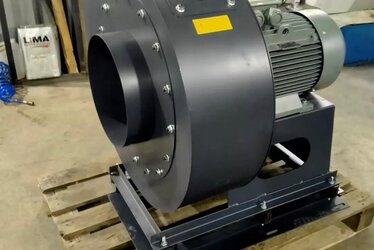
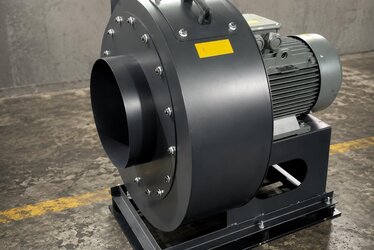
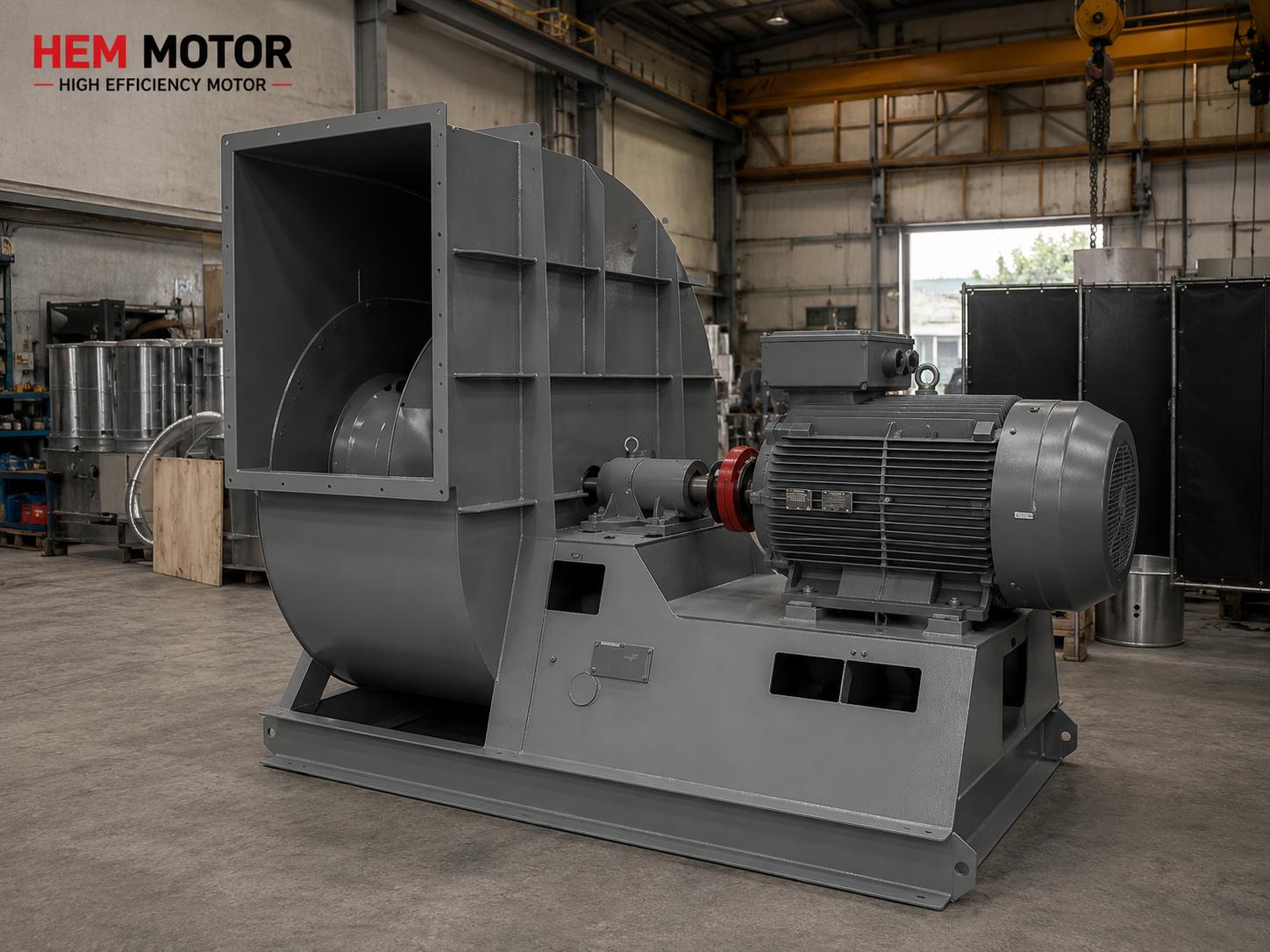
Stenter circulation fans are generally in the medium and large power band. On a typical stenter line, fan motors of 4-15 kW are used for each chamber; on wide lines the total fan power reaches dozens of kW. The fan diameter and the required air flow are decisive in speed selection: 1500 rpm (4-pole) is common in high-flow, large-diameter fans; where higher pressure is needed, 3000 rpm (2-pole) may be preferred. The fan motor must be suited to S1 continuous operation and come with IP55 protection and a cast iron body. In frame type, B5 flange or B35 (foot + flange) mounting is preferred in applications where the fan impeller is directly mounted on the shaft. Our article on centrifugal and axial fan motor selection, which addresses the right power and supply by centrifugal and axial fan type, is a practical guide for matching the motor to the fan type.
Another important point in the stenter furnace is that the motor heats up not only from the conduction and radiation heat coming from the furnace body but also from its own load. For this reason the motor''s cooling fan and fins must be kept clean and the lint and fiber accumulation in the environment cleaned regularly. Selecting the motor with its rated power slightly reduced (derating) at high ambient temperature is also a correct approach; we explained the power reduction calculation at high temperature and altitude in our article on motor selection and derating for high altitude and hot environments. The efficiency class of the fan motor is also important: on continuously running fans, an IE4 super premium motor provides significant energy savings throughout the year. We clarified which application requires IE4 in our article on the IE4 threshold in pumps, fans and compressors.
Drying Cylinder and Calender Drive Motors
On the finishing and dyeing line, the fabric is dried by passing over steam-heated drying cylinders (calenders). The drive motors that turn these cylinders require a stable, low-vibration speed; because a fluctuation in cylinder speed disturbs the fabric tension and leads to quality defects. The drying cylinder drive is typically provided by a geared motor: the motor''s high speed is reduced by the gearbox to the cylinder''s desired peripheral speed. Here the motor power is determined by the fabric tension, the number of cylinders and the line speed; motors of 1.5-11 kW are common in typical cylinder drives. For speed control, a variable frequency drive (VFD) is used on almost every modern finishing line; thus the line speed is adjusted steplessly according to the fabric type. We addressed how to select an asynchronous motor to work with a VFD and what to watch for in our article on asynchronous motor with a frequency drive (VFD).
In gearbox selection, the output speed and torque required to reach the fabric line speed are decisive. In low-speed, high-torque drives, a worm gear reducer or a bevel helical reducer is preferred; we explained matching the IEC frame and flange to the reducer in our article on which electric motor fits a worm gear and NMRV reducer. The motor''s duty type should again be S1 continuous operation; you can find the difference between continuous and intermittent operation and the right duty type selection in our article on electric motor duty type (S1-S6) selection. Since humidity and temperature are also high around the drying cylinder, these motors should also be selected with at least IP55 protection and F (preferably H) insulation class.
Dye Bath Circulation Pump and Washing Motors
In the wet section of the dyehouse, circulation pumps that move the dye bath and washing waters operate. These pump motors work under constant water spray, chemical solutions and high humidity. For this reason the protection class is critically important: while IP55 is accepted as the minimum in standard dyehouse pumps, IP65/IP66 protection should be preferred directly under water or in intense washing zones. We addressed in detail what IP protection classes mean and which is required in which environment in our article on IP protection class selection in electric motors (IP55, IP65, IP66). Protecting the cast iron body against chemical and salty environments with cataphoresis coating and special painting also extends its life.
The power of the circulation pump motor is determined by the required flow and head. In dyehouse circulation pumps, motors of 1.5-22 kW at 1500 or 3000 rpm are generally used; a 2-pole (3000 rpm) motor is preferred in applications requiring high pressure. We explained step by step how the right power is calculated according to flow and head in pump motor selection in our article on centrifugal pump motor selection: flow, head and power matching. B5 flange or B35 mounting is generally used in the pump connection; connection options suited to vertical and horizontal systems are available. Blower and agitator motors may also be needed for the wastewater and washing line in the dyehouse; our article on water treatment and wastewater plant motors is complementary on this subject.
Given the humidity and chemical load of the dyehouse, a cast iron body is far more advantageous than aluminum: both its mechanical strength and corrosion protection are higher. We compared the choice between cast iron and aluminum body according to environmental conditions in our article on cast iron or aluminum frame motor selection. We also addressed the choice of a cast iron body for low vibration and continuous line operation in textile machines in our article on cast iron motor selection for weaving and knitting textile machines. For the extraction lines that collect lint and dust around the dyehouse, our article on aspirator and dust collection fan motor selection is useful.
Dyehouse and Finishing Plant Motor Selection Checklist
- Insulation class: Choose H-class (180 °C) in stenter circulation fans and hot zones; at least F-class (155 °C) insulation on other lines.
- Protection class: Minimum IP55 in dry zones; prefer IP65/IP66 in direct water spray and washing zones.
- Duty type: S1 continuous duty type is essential on all continuously running motors.
- Body material: Prefer a cast iron body + cataphoresis/special painting due to humidity, steam and chemicals.
- Efficiency class: Choose IE3, and IE4 super premium where possible, due to the high annual operating hours.
- Speed/pole: 1500/3000 rpm by flow on fans; low speed via gearbox on drying cylinders; 1500/3000 rpm by pressure on pumps.
- Mounting type: B5/B35 on fans and pumps; IEC-compatible flange on geared cylinder drives.
- VFD compatibility: Request a motor with reinforced insulation suited to a frequency drive for line speed control.
- Spare plan: Keep critical fan and pump motors in stock as spares; archive the nameplate information in advance.
Frequently Asked Questions
Is F or H insulation required in a stenter furnace circulation fan?
In the high-temperature zones of the stenter furnace, H-class insulation (up to 180 °C) is recommended because the fan motor works directly under the effect of hot air. In the outer-chamber or cooling zones where the ambient temperature is lower, F-class (155 °C) insulation may be sufficient. When deciding, it is best to measure the actual operating temperature of the point where the motor will be mounted; in borderline cases, H-class insulation significantly extends the motor''s life and reduces the risk of early winding failure.
Is IP55 sufficient for a dye bath pump, or should I get IP65?
It depends on the position of the pump motor. At standard circulation points with water spray but not directly under water, IP55 is generally sufficient. However, where the motor is in a zone with a risk of intense washing, overflow or a direct water jet, IP65 (dust-tight + resistant to water jets from every direction) or IP66 should be preferred. In dyehouses with dense chemical vapor, a cast iron body and cataphoresis coating additionally increase corrosion protection.
Why is a VFD (frequency drive) used in the drying cylinder drive?
On a finishing line, the line speed must be adjusted steplessly according to the fabric type and process. The frequency drive enables precise control of the cylinder speed by lowering and raising the asynchronous motor''s speed to the desired value; this keeps the fabric tension constant and reduces quality defects. On motors that will run with a VFD, requesting reinforced winding insulation and, if necessary, forced cooling (a separate fan) guarantees sufficient cooling at low speed.
Get a Quote
For your dyehouse and finishing plant we supply stenter circulation fan, drying cylinder drive and circulation pump motors with the right insulation and protection class, from Türkiye stock with fast delivery. By sharing the nameplate information of your existing motor (kW, speed, frame size, mounting type, shaft diameter) you can get a fast and accurate quote for an exactly equivalent motor; we collected the information to provide when requesting a quote in our article on the 8 pieces of information to provide when requesting an electric motor quote. You can review our high-efficiency and durable motor family on our efficient electric motors and IE4 electric motor pages. To get a quote now, contact us at +90 (532) 345 49 86 or through our contact page.