English
 Türkçe


A standard electric motor has a single shaft end, and all torque is transmitted from that end. In some applications, however, an output is also needed at the rear of the motor: a second pulley, a fan, an encoder or a second drive arm. This is where the “double shaft” (DS) option comes in. In the IE4 Super Premium motor range, this option can also be specially ordered together with features such as shaft-end diameter and key dimension. In this article we cover what a double shaft is, the purposes the second output serves, the shaft-end diameter and key dimension, custom shaft length/diameter requests, the option logic within the IE4 range, the order code and the double-sided drive application.
What Is a Double Shaft (DS)?
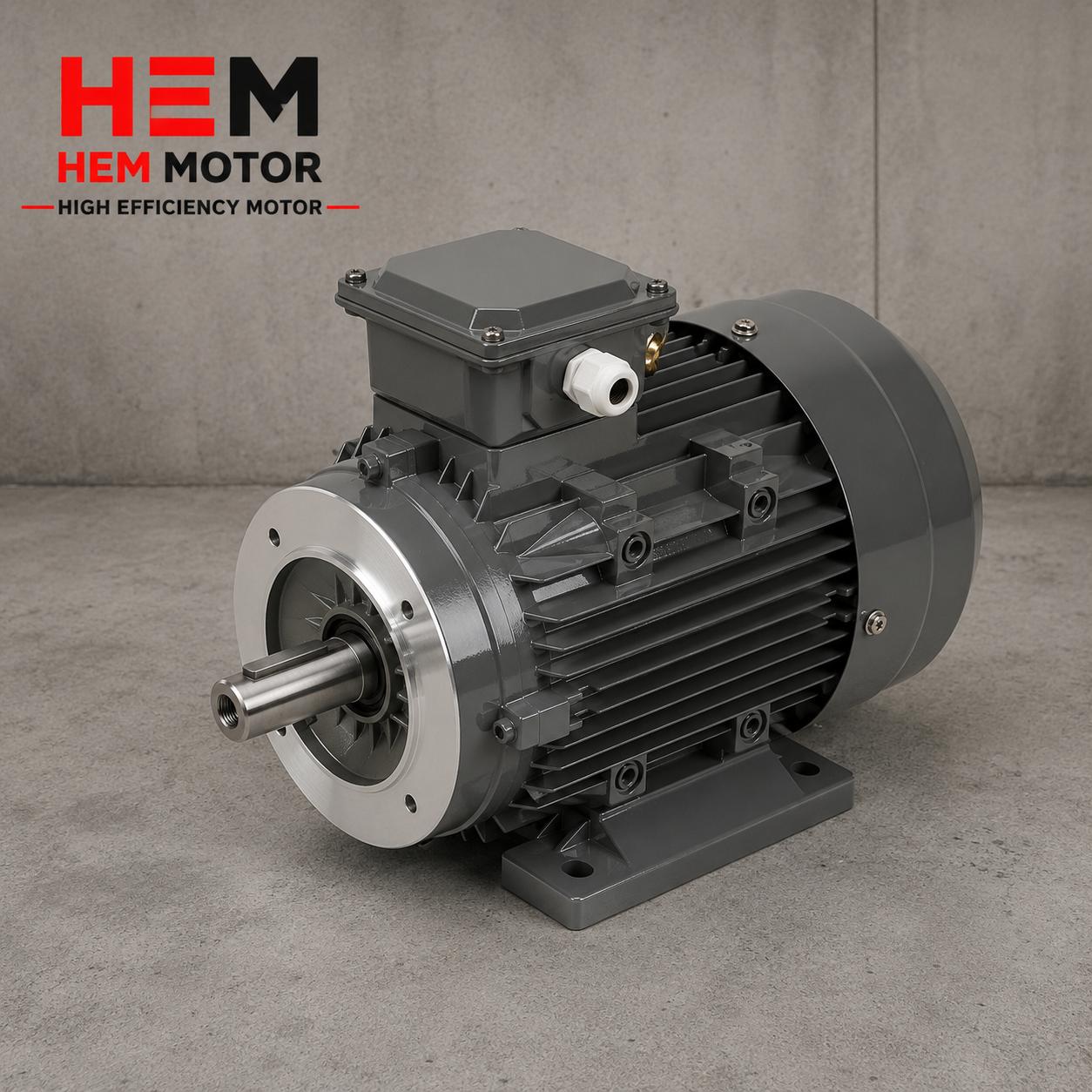
A double shaft means the motor has a shaft that protrudes from both the front (D end, drive) and the rear (N end, fan side). While a standard motor has a shaft end only at the front, a double-shaft motor also offers a second shaft end at the rear. This lets the motor transmit motion from two separate points. We explained motor mounting codes and the general structure in Reading the Motor IM Mounting Code, and the basic logic of shaft-end dimensions in Motor Shaft Diameter and Key Dimensions.
A double shaft is an option that must be specifically requested from the manufacturer; it is usually not present on standard stock motors. In the IE4 range too, it is a variant specified in the order code.
What Is the Second Output For?
The second shaft end at the rear is used for various purposes:
- Second pulley / second drive: When two separate machines or stages are to be driven by the same motor.
- Encoder connection: An encoder is fitted to the rear end for speed and position feedback; this is common especially in drive-fed (VFD) and precision-controlled applications.
- External (forced) cooling fan: In motors running continuously at low speed, the rear end can be used for forced cooling; we covered this in External Forced Cooling Fan on an IE4 Motor.
- Hand wheel / manual turning: To turn the motor by hand during commissioning or maintenance.
We explained what to watch when ordering accessory options like encoders and forced fans in Accessory Options on an IE3 Motor: Brake, Encoder and Forced Cooling Fan; the same principles apply to IE4.
Shaft-End Diameter and Key Dimension
The shaft-end diameter (Ø) is standardized according to the motor frame size; for example, in a given IEC frame the shaft diameter and length are set by the IEC standard. The key dimension is also standard for that diameter. An important point in a double-shaft motor is whether the rear shaft-end diameter will be the same as, or different from, the front end:
- Symmetric double shaft: The rear end has the same diameter and key dimension as the front end.
- Asymmetric (small rear end) double shaft: If the rear end is only for an encoder or hand wheel, it can be a smaller diameter.
We covered the frame-shaft-diameter relationship with IEC tables in Shaft Diameter and Frame Table (IEC 56-355) on an IE3 Motor, and the role of shaft material in torque transmission in Shaft Material and Steel Grade in a Cast Iron Motor.
Custom Shaft Length and Diameter Requests
In some applications the standard shaft-end diameter or length is not enough; the machine design requires a special dimension. In that case a custom shaft can be requested from the manufacturer:
- Custom length: A longer or shorter shaft end (e.g. for a long pulley or multiple connections).
- Custom diameter: A non-standard diameter to fit an existing coupling or pulley.
- Second keyway or different key type: For an application-specific connection.
- Threaded shaft end: In some pump and fan applications.
A custom shaft request means the motor leaves stock and goes into special manufacture; we covered its lead-time and cost impact in Stock Standard Motor or Special Manufacture?. We explained the importance of coupling and shaft alignment in Flexible or Rigid Coupling?.
The Double Shaft Option in the IE4 Range
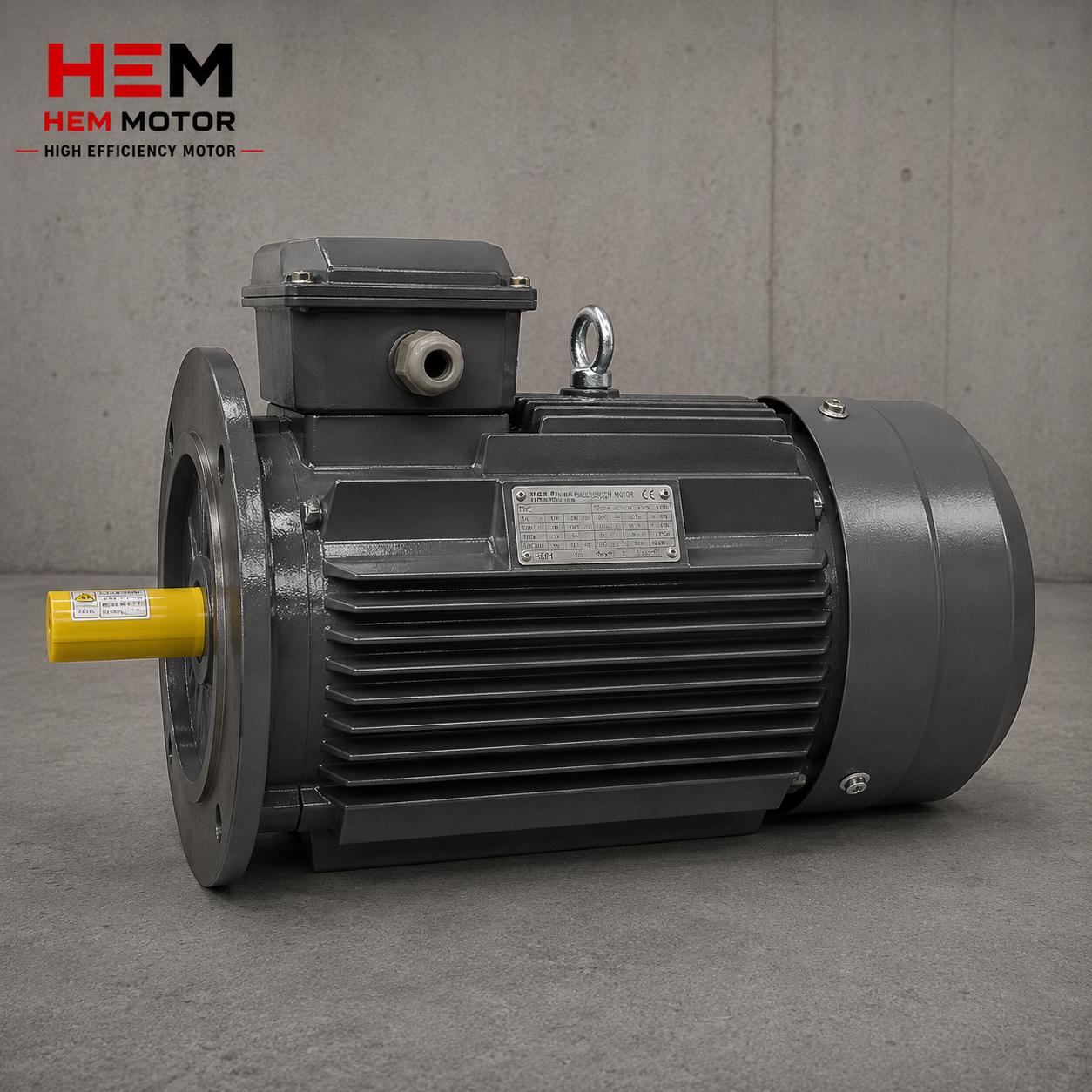
IE4 Super Premium motors are offered in the 0.25 kW – 355 kW power range with foot (B3), flange (B5) and combined (B35) mounting types. The double-shaft option can be added on most frame sizes; however:
- A double shaft can affect the rear fan cowl and cooling arrangement; therefore an external fan or special cowl may be needed in some cases.
- The mounting type (B3/B5/B35) must be evaluated together with the double shaft. We explained the mounting range in B5, B14 and B35 Flange and Mounting Range on an IE4 Motor.
- Mechanical compatibility matters when switching to IE4; are the frame, foot and shaft dimensions the same as your old motor? We covered this in Mechanical Compatibility When Switching to IE4.
We explained which power and speed ratings are quickly available from the IE4 stock range in IE4 Motor Stock Range, and nameplate reading in Reading the Nameplate of an IE4 Electric Motor.
Order Code and the Correct Request
Double-shaft and custom-shaft requests must be clearly stated in the motor order code. The following information is usually given:
- Standard or double shaft (DS)?
- Rear-end diameter and length (symmetric, or small rear end)?
- Key dimension and number of keyways.
- Is there a rear-end accessory such as an encoder, external fan or hand wheel?
- Mounting type (B3/B5/B35) and frame size.
To avoid receiving the wrong motor, we explained the importance of nameplate and dimension matching before ordering in Avoid Receiving the Wrong Motor, and gathered the information to provide when requesting a quote in Information to Provide When Requesting an Electric Motor Quote.
The Double-Sided Drive Application
In a double-sided drive the same motor feeds two separate loads or two separate stages. Example applications:
- Transmitting motion to two machines with two separate pulley-belt systems.
- Main drive at the front end, an auxiliary aspirator or small fan at the rear end.
- Tandem drive in conveyor systems. We covered torque and durability selection in conveyor drive in Cast Iron Heavy-Duty Conveyor Drive Motor.
In a double-sided drive, the sum of the torque drawn from both ends must not exceed the motor rated torque; we explained the torque calculation in Rated Torque Calculation on an IE3 Motor.
The Effect of a Double Shaft on Cooling and Fan Arrangement
A standard motor has a cooling fan fitted to the shaft end at the rear and a fan cowl covering it. Air is drawn in by this fan and passed over the body to cool the motor. When a double shaft is ordered, this arrangement can change because the shaft protrudes from the rear end:
- Special fan cowl: A cowl with a hole through which the rear shaft end passes is needed; this cowl must both maintain cooling and provide protection.
- Need for an external (forced) fan: In some applications a separately supplied forced cooling fan is used instead of the standard fan; this is needed especially in drive-fed motors running continuously at low speed.
- Cooling capacity check: If the cooling arrangement has changed due to the double shaft, it must be evaluated whether derating of the motor rated power is required.
We covered the role of the forced cooling fan at low speed in External Forced Cooling Fan on an IE4 Motor, and the effect of cooling fan design on efficiency in Cooling and Fan Design in IE4 Motors. The cooling plan must always be queried when ordering a double shaft.
Rear-End Selection for Encoder Connection
In drive-fed (VFD) and precision-controlled applications, an encoder is fitted to the rear end of the motor to obtain speed and position feedback. In this case it matters how the double shaft is defined:
- Encoder shaft (small rear end): Since the encoder only reads position and does not transmit torque, the rear end can be a smaller diameter suited to a standard encoder connection.
- Encoder cover and protection: A special cover or housing may be needed to protect the encoder from external influences.
- Closed-loop control: If full torque at zero speed or precise positioning is required, encoder (closed-loop) control is essential.
We explained the ordering logic of accessory options such as encoders in Accessory Options on an IE3 Motor: Brake, Encoder and Forced Cooling Fan. An encoder is one of the most common reasons for using a double shaft.
Torque Sharing: Drawing from Two Ends
If torque is drawn from the front and rear ends of the motor at the same time in a double-sided drive, the point to watch is the total load. The motor rated torque must meet the sum of the torques drawn from the two ends; otherwise the motor is overloaded, heats up and its life is shortened. Also:
- The starting torques of the two loads add up; the motor must not struggle at start.
- If one of the loads is impactive, that impact is reflected onto the motor and the load at the other end too.
- The shaft and key must be strong enough to transmit the total torque safely.
We covered the rated torque calculation in Rated Torque Calculation on an IE3 Motor, and starting torque and load-based selection in Rated and Starting Torque on an IE3 Motor.
Lead Time and Cost in a Custom Shaft Order
Double-shaft and custom-shaft requests require the motor to leave stock and enter special manufacture. This has two consequences: the lead time lengthens and the cost rises. Answering the following questions before ordering speeds up the process:
- Does a standard shaft end fit your machine? If so, fast supply from stock is more economical.
- Is the custom-shaft reason truly necessary, or can it be solved with an adapter or coupling?
- Does your schedule allow for the special-manufacture time?
We covered the cost and lead-time difference between a stock standard motor and special manufacture in Stock Standard Motor or Special Manufacture?, and the information to provide when requesting a quote in Information to Provide When Requesting an Electric Motor Quote.
Frequently Asked Questions
Can a double shaft be added to any IE4 motor?
A double shaft option can be offered on most frame sizes, but it is a special request and must be stated in the order code. Since the rear fan and cooling arrangement may be affected, a special cowl or external fan may be needed in some cases. Double shafts are usually not present on standard stock motors.
Will the rear shaft end be the same diameter as the front?
There are two options. In a symmetric double shaft the rear end has the same diameter and key as the front; this suits a second drive. If it is only for an encoder or hand wheel, a smaller (asymmetric) rear end may be preferred. Clarify your request in the order code.
Does a custom shaft request affect lead time?
Yes. A custom shaft length, diameter or second keyway means the motor leaves stock and enters special manufacture, which affects lead time and cost. If a standard shaft end fits your machine, supplying from stock is faster and more economical.
Get a Quote for a Double Shaft and Custom Shaft
If your application requires a second output, encoder, external fan or a custom shaft dimension, let us plan your IE4 motor with the correct order code. Share your mounting type, frame size and the shaft features you want, and we will offer a suitable solution. The HEM Motor team is at your side for custom-shaft and double-shaft requests.
Phone: +90 (532) 345 49 86 — reach us via our Get a Quote page; review the IE4 range in our IE4 Electric Motors category and all products on our home page.
Checklist: IE4 Double Shaft / Custom Shaft Order
- Standard single shaft or double shaft (DS)?
- Is the rear end symmetric or small-diameter (encoder/hand wheel)?
- Have the shaft-end diameter, length and key dimension been clarified?
- Will there be an encoder, external fan or hand wheel at the rear end?
- Have the mounting type (B3/B5/B35) and frame size been specified?
- For a custom shaft, is the lead-time and cost impact considered?
- Does the total torque drawn from both ends stay within the motor rated torque?
- Does the order code clearly include all these options?