English
 Türkçe


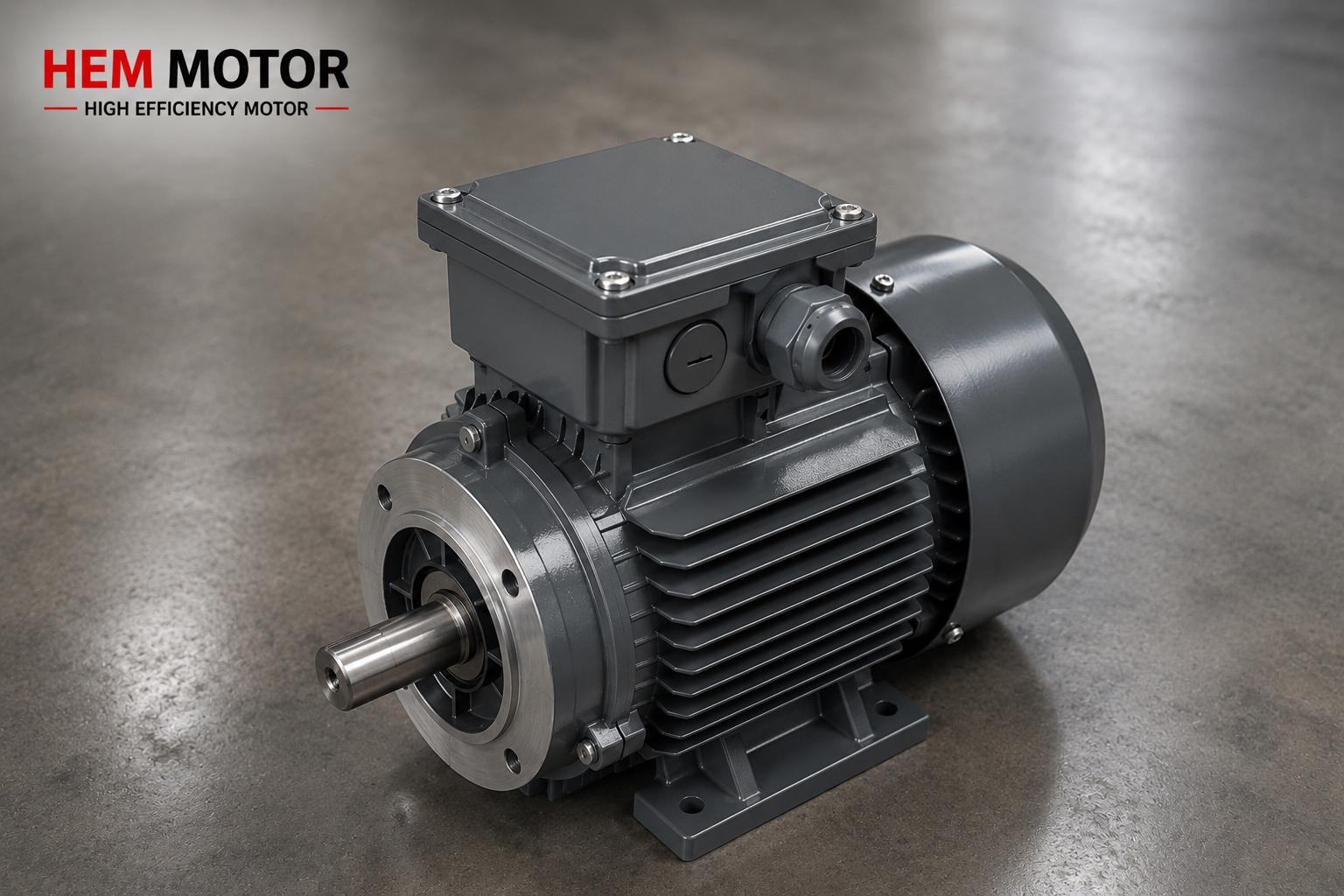

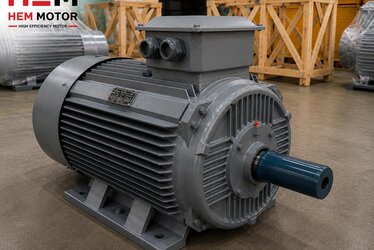
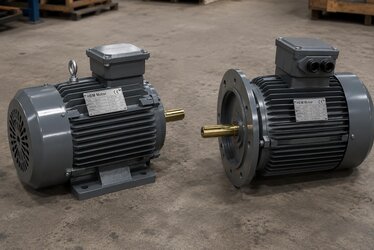
Even when a cast iron electric motor looks rugged on the outside, the part that actually transmits torque to the machine is the shaft. The shaft is the lifeline that carries the motor’s torque to the coupling, pulley or gearbox input, and the quality of the steel it is made from directly determines how reliably the motor works under heavy load. In this article we look, from a buyer’s perspective, at shaft material in cast iron motors — the difference between the most common C45 (1.0503) quenched-and-tempered steel and alloy steels, yield/tensile strength, the keyway, fatigue behaviour and the need for an alloy shaft at high power. Unlike a discussion of shaft diameter and key dimensions, this article focuses directly on material and steel grade.
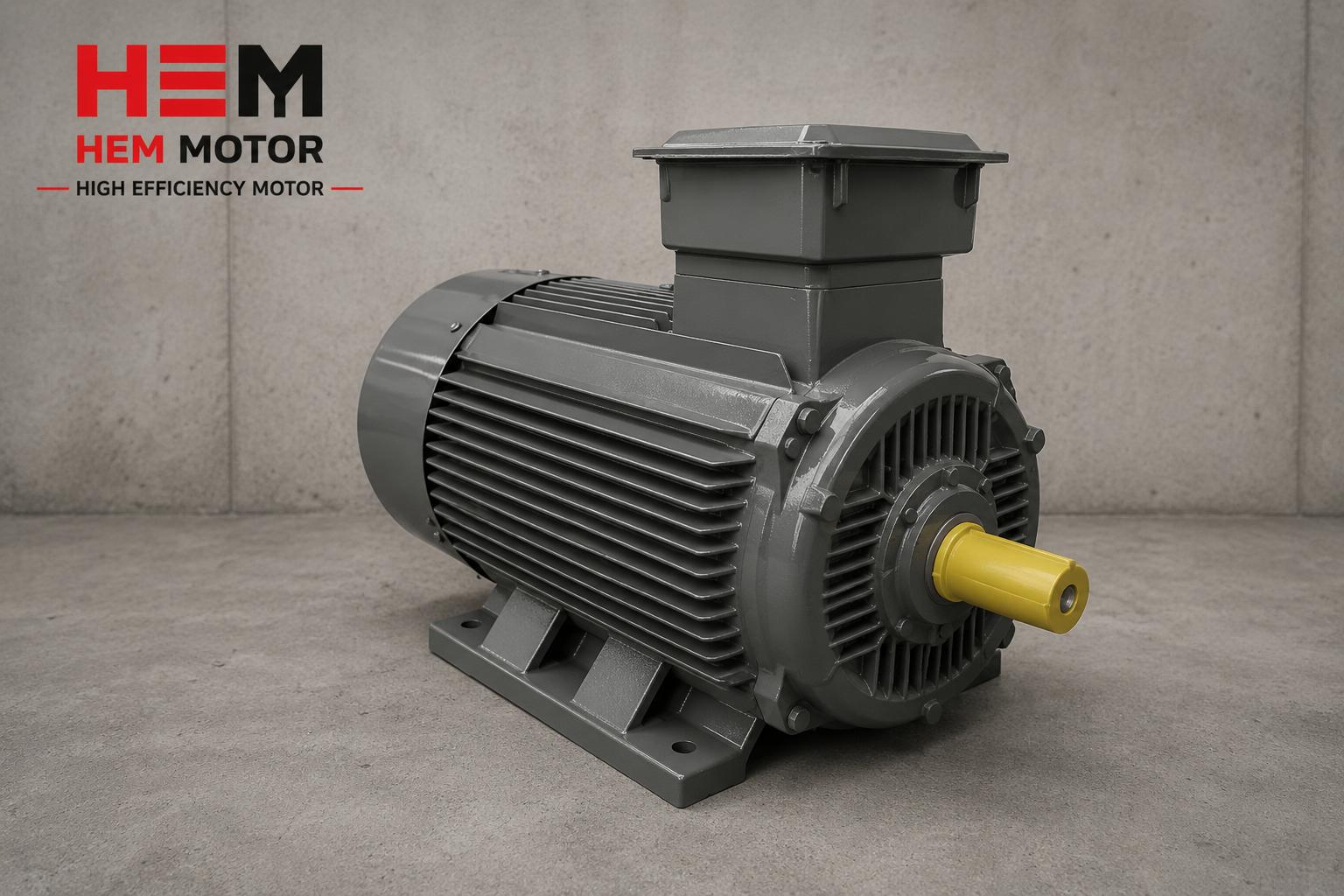
Why Is the Motor Shaft a Critical Part?
The shaft bears all of it: torque transmission, coupling/pulley loads, key pressure and the radial-axial forces carried by the bearings. No matter how rugged a motor’s frame is, if its shaft is made of inadequate steel it can twist under heavy load, the keyway can crush, or it can break from a fatigue crack. For the rigidity and impact resistance the cast iron frame provides, see impact resistance and rigidity in cast iron frames; for the shaft’s mechanical matching (diameter, key, coupling), the complementary cast iron motor shaft diameter, key and coupling. Here we focus on the steel itself.
What Is C45 (1.0503) Quenched-and-Tempered Steel?
In electric motors the standard shaft material is usually C45 grade carbon steel (DIN 1.0503, roughly equivalent to AISI 1045). C45 is a medium-carbon “quench & temper” steel; its strength and toughness can be raised in a balanced way through quenching and tempering. As a result it:
- offers good yield and tensile strength,
- has a keyway and shaft surface of machinable quality,
- has a high cost/performance balance,
- provides sufficient safety for the great majority of standard and medium-power motors.
For this reason C45 is the common shaft material in IEC standard frames. Independently of efficiency class — whether IE3 or IE4 — the shaft steel is selected with the same engineering logic.
Yield and Tensile Strength: What Do They Mean for Torque Transmission?
When the shaft transmits torque, a torsional (shear) stress forms in its body. The steel’s yield strength sets the shaft’s resistance to permanent deformation (twisting out of true), while tensile strength sets the ultimate limit against rupture. When C45 is heat-treated, its yield strength rises markedly — meaning more torque can be transmitted at the same diameter. To understand the torque-power-speed relationship and what the shaft carries, see IE3 motor rated torque calculation and asynchronous motor torque classes. Under high starting torque and pulsating load in particular, the shaft sees peak loads well above rated torque.
The Keyway: The Most Stressed Region
Torque is usually transferred from shaft to coupling/pulley through a key. The corners of the keyway are where the shaft sees the highest stress concentration (notch effect), and fatigue cracks usually start here. In poor or low-strength steel:
- the keyway edges crush over time and clearance grows,
- as clearance grows, impact loading occurs and the crack propagates,
- ultimately the shaft can break at the keyway.
Therefore keyway workmanship and shaft steel quality must be evaluated together. How coupling choice affects the load on the shaft is covered in flexible vs rigid coupling selection, which also covers the effect of alignment on fatigue. For radial load on the shaft in belt-pulley drives, see motor speed and pulley-belt ratio adjustment.
Fatigue: The Real Cause of Silent Failure
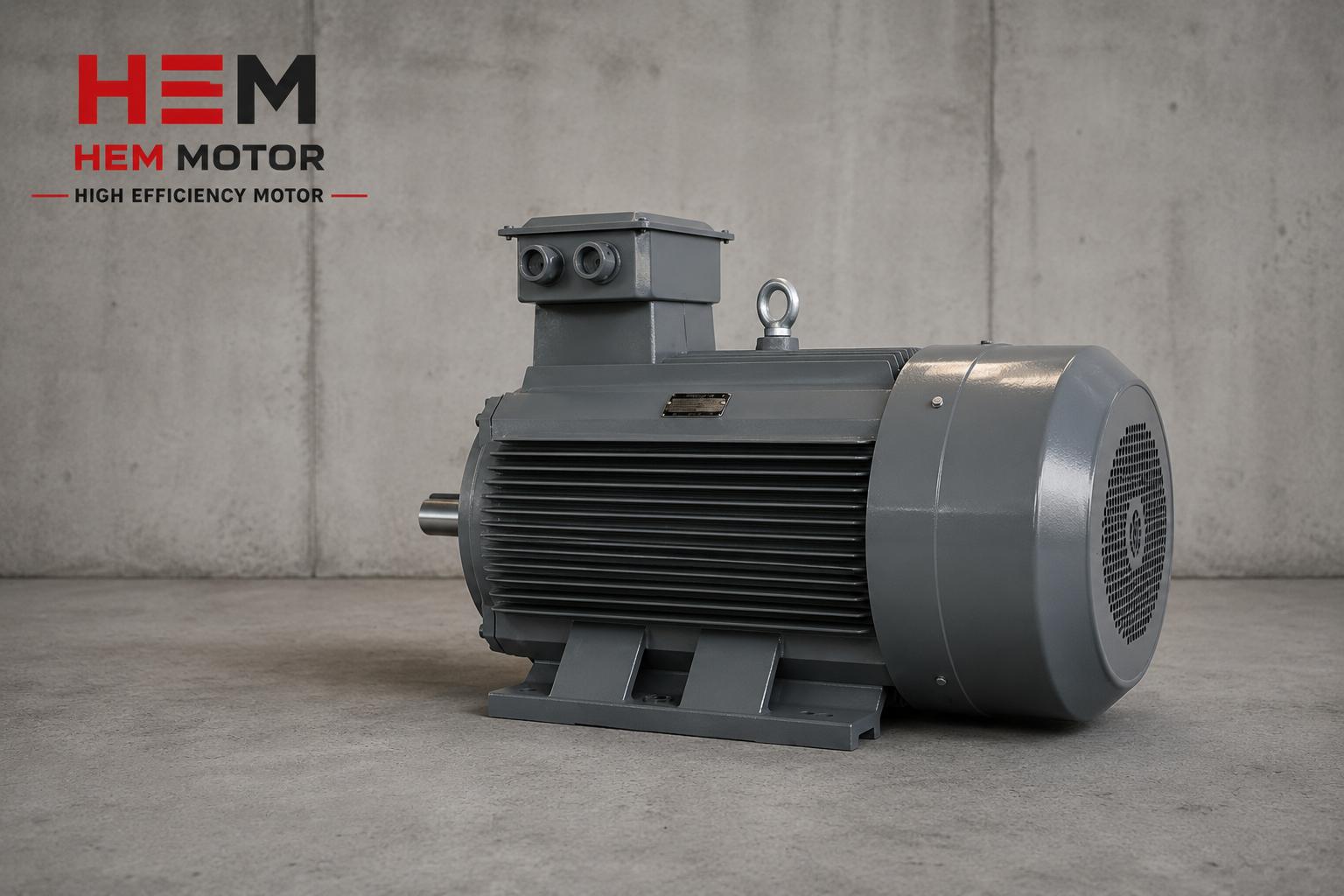
As the motor shaft rotates under the radial load of a pulley/coupling, the stress reverses direction on every revolution — this is “rotating bending” loading. Even if the shaft never reaches the rupture limit at any instant, a fatigue crack can form after millions of cycles. Fatigue strength depends on the steel quality, surface workmanship (scratch-free, smooth surface), notch regions (key, diameter transitions, grooves) and heat treatment. A well heat-treated C45 or alloy steel with a properly machined surface gives much higher fatigue life. Vibration and imbalance accelerate fatigue; hence vibration and balance (ISO 10816/20816) and squirrel cage vs slip ring are important for quality control.
When Is an Alloy Steel Shaft Required?
While C45 is sufficient for many applications, alloy (e.g. chromium-molybdenum, 42CrMo4 / 1.7225 grade) quenched-and-tempered steel is preferred in these cases:
- At high power: as power rises, torque multiplies at the same speed; in large-frame motors shaft diameter and material strength become critical. See high-power motor supply above 90 kW.
- Under high starting torque / pulsating load: in crushers, mills and presses the shaft must withstand peak torques. See ball and rod mill main drive motor and crusher motor kW selection.
- Low speed-high torque: in 6/8-pole low-speed motors the torque is larger at the same power. See torque in low-speed 6/8-pole motors.
- Frequent start-stop and reversing: fatigue risk is high on lines with intense cyclic loading.
Alloy steel offers higher yield strength and better fatigue life, giving a safety margin at high power and in heavy duty.
The Risks and Cost of a Poor Shaft
A low-quality or incorrectly heat-treated shaft is the motor’s weak link even if the frame looks solid. Possible outcomes: keyway crushing, a bent shaft causing vibration, premature bearing failure and — worst of all — unexpected production downtime from a broken shaft. On a conveyor or critical-line motor, the cost of this downtime is many times the material difference of the shaft. We covered downtime cost and replacement planning in motor failure and downtime cost and conveyor belt motor emergency replacement.
As a Buyer, How Do You Check Shaft Quality?
Shaft steel cannot be fully judged by eye; information must be requested from the supplier:
- Is the shaft material stated? (C45 / 1.0503 or alloy, e.g. 42CrMo4)
- Has quench & temper been applied?
- Is an alloy shaft option offered for high power / heavy duty?
- Is the keyway workmanship and surface quality (notch, burr) clean?
- Are there visible cracks, dents or pitting on the shaft?
The acceptance inspection on delivery is covered in electric motor incoming acceptance inspection, and general quality marks in electric motor lifespan and early-failure causes. For more models, see our cast iron body motors category and our home page for all products.
The Effect of Shaft-End Workmanship and Surface Quality on Fatigue
As much as the steel quality, how the shaft is machined also determines fatigue life. Sharp corners at diameter transitions, deep turning marks, burred keyway edges and corrosion pits act like “notches”, locally raising the stress and becoming the crack initiation point. In a good shaft, diameter transitions are made with smooth radii, the surface is machined smooth and the keyway corners are clean. Therefore even two shafts made from the same C45 steel can give very different fatigue lives due to the difference in workmanship. As a buyer, inspecting the shaft end by eye for sharp corners, deep marks and burrs is a practical way to gauge quality. The machining and tolerance quality on the frame side is covered in frame machining, tolerance and concentricity, and the shaft-bearing relationship in bearing and journal life.
The Shaft in Vertical Mounting and Axial Load
The shaft carries not only torsion (torque) but also axial and radial forces depending on the mounting type. In vertically mounted (shaft-down, V1/V5) motors, the axial load on the shaft affects the bearing and shaft design; in these applications the shaft material and bearing selection are evaluated together. Vertical mounting selection is covered in vertical motor selection (V1/V5), and lifting and pre-installation checks in lifting eyebolt and safe handling. The importance of flange type and connection dimensions for correct ordering is found in flange type (FF/FT) and hole dimensions.
Sector Examples: In Which Application Is the Shaft Most Stressed?
Applications where shaft strength becomes critical usually involve high torque, impact and continuous heavy duty. In heavy-duty conveyor drives the shaft continuously transmits high torque; see heavy-duty conveyor drive motor. In textile and weaving machines, low vibration and a continuous line matter; see cast iron motor for textile machines. In pulsating applications such as presses, crushers and mills, an alloy steel shaft is preferred because the shaft is exposed to peak loads well above rated torque; see hammer mill motor selection. Whether to choose a cast iron frame or fabricated steel is a separate decision at high power; see cast iron vs fabricated steel.
Frequently Asked Questions
Is a C45 shaft enough for every motor?
For the great majority of standard and medium-power applications, a well heat-treated C45 shaft is sufficient and safe. However, for high power, high starting torque, heavy pulsating load or intense start-stop applications, an alloy steel shaft provides a higher safety margin.
Can I tell an alloy shaft from a C45 shaft externally?
It is not possible to tell reliably by eye; the material should be confirmed from the supplier’s technical documentation. So the best practice is to clearly ask for the shaft material and heat treatment at the quotation stage.
Why does the shaft mostly break at the keyway?
The keyway corners are where the highest stress concentration occurs due to the notch effect, and fatigue cracks usually start there. A properly machined keyway, quality steel and correct coupling/alignment markedly reduce this risk.
Get a Quote
Let us together determine the cast iron motor with the right shaft material (C45 or alloy) for your application’s power, speed and load profile. Share your needs and we will recommend a motor with a shaft that is safe in torque transmission. For a fast quote, call +90 (532) 345 49 86 or write to us via our contact page.
Purchasing and Selection Checklist
- Is the shaft material stated? (C45 / 1.0503 or alloy)
- Has quench & temper been applied?
- Is the application high power / heavy duty? Is an alloy shaft needed?
- Has the torque to be transmitted (rated + peak/starting) been calculated?
- Have the keyway workmanship and shaft surface been inspected?
- Have coupling/pulley load and shaft alignment been planned?
- Have vibration/balance acceptance values been defined?
- If a critical line, is there a spare/replacement motor plan?