English
 Türkçe


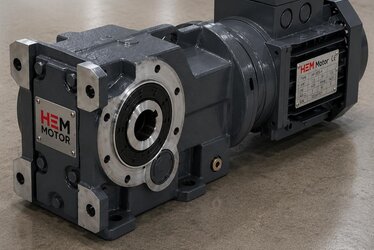
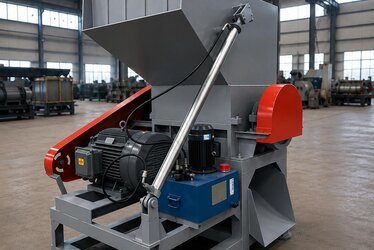
Selecting the main drive motor of a ball or rod mill in a mineral processing plant, cement factory or ore grinding line is very different from an ordinary motor selection. A mill load does not behave like a conveyor or fan load; tons of grinding media (balls or rods) and ore charge, together with the rotating drum, create an enormous inertia (GD²). For this reason the main drive motor must be selected to overcome both the high torque at start-up and this large inertia, and moreover to run continuously at full load (S1) throughout production. A wrongly selected mill motor either struggles at start-up and burns its winding, or overheats in continuous operation and shortens its life. In this article we explain why a mill load is demanding, how starting torque and inertia are handled, and how the correct starting method protects the motor. As HEM Motor, we supply motors for heavy-duty applications according to your real load profile.
Ball and rod mills work on the principle that the grinding media inside a large rotating drum crushes and refines the ore. As the drum turns, the balls or rods rise and fall, grinding the material. Behind this simple principle lies an extremely demanding load for the motor: setting the heavy charge in motion from standstill and meeting the continuous high torque. This is why the mill main drive motor is one of the most critical pieces of equipment in the plant.
Why Is a Mill Load Different?
In a fan or pump load, torque rises smoothly with speed; the motor starts with low torque and torque increases as it reaches speed. In a conveyor load, torque is almost constant. But a mill load is different from both and far heavier. When the mill is at standstill, the heavy grinding media and ore charge accumulated on one side of the drum create a large starting torque the motor must overcome. Moreover, because the mass of this charge is very large, the system's inertia (GD²) is extremely high even while in motion.
Inertia is a measure of the resistance a rotating mass shows to changes in its speed. In a large-mass and large-diameter system like a mill, inertia is very high; this means bringing the mill from standstill to operating speed is a long and demanding process for the motor. Throughout the starting period the motor draws continuously high current and heats up. This is exactly why, when selecting a mill main drive motor, not only power but also starting torque, inertia (GD²) and starting time must be evaluated together.
Starting Torque and Breakdown Torque
The torque a mill motor must produce at start-up is far higher than the rated torque. The mill demands a high starting torque to set the heavy charge in motion from standstill. In addition, the motor must have sufficient breakdown torque reserve while accelerating the load throughout the start; otherwise the motor gets stuck below the breakdown point and cannot lift the mill at all. This is why mill motors are often selected in a torque class that produces high starting torque.
- High starting torque: Required to set the heavy charge in motion from standstill. A standard motor may not produce this torque.
- High breakdown torque: Provides the reserve needed so the motor does not stall while accelerating the load throughout the start.
- High inertia (GD²) capacity: The motor must withstand the long starting time and the large rotating mass.
- S1 continuous duty: The mill turns without stopping throughout production; the motor must be suited to continuous full-load operation.
Continuous Heavy Duty: Why Is S1 Duty Essential?
A mill runs without stopping throughout the production shift, and in most plants for days and weeks on end. This makes it essential that the motor be suited to S1 continuous duty, one of the most demanding operating regimes. S1 expresses that the motor can run continuously at its rated power until it reaches thermal equilibrium. A motor designed for intermittent duty cannot maintain thermal balance in a continuously running mill; its winding overheats and it fails prematurely.
In continuous heavy duty, the motor's cooling, bearing structure and insulation class (usually F or H) are critically important. The heat produced by a motor running continuously at full load can only be safely managed with correct cooling and a high insulation class. Furthermore, because a mill stoppage directly means production loss, the motor's reliability and durability are among the most important criteria of the investment. On the subject of motor protection in a quarry and mine environment, our article on quarry and mine motor protection offers complementary information.
The Correct Starting Method Protects the Motor
Perhaps the most critical matter in mill motor selection is the correct starting method. Because the mill's high inertia lengthens the starting time, and throughout this time the motor draws continuously high current. The direct-on-line (DOL) method overstresses both the motor and the grid on such a high-inertia load; the high starting current drops the line voltage, and the long starting time heats the motor. This is why controlled starting methods are preferred on high-inertia loads like a mill.
A soft starter, star-delta, or in the most demanding applications a slip-ring (wound rotor) motor with a liquid resistance starter (LRS) is used. These methods, by limiting the starting current and applying torque gradually, protect the motor from the long and demanding acceleration period at start-up and relieve the grid. On very high-inertia large mills, the combination of a slip-ring motor and LRS is the classic solution for soft, controlled starting. On this subject, our articles on starting current (LRA) reduction and crusher motor starting cover the difference between methods in detail.
Starting Method Selection Criteria
- Inertia (GD²): The higher the inertia, the longer and more demanding the start; the more important controlled starting becomes.
- Grid capacity: On a weak grid, high starting current drops the line voltage; in this case soft starting is essential.
- Starting frequency: In a mill that stops and starts often, heat build-up increases; the starting method must be chosen accordingly.
- Motor type: On very high-inertia large mills, a slip-ring motor and LRS provide a more controlled start than a squirrel-cage motor.
Protection in a Dusty and Abrasive Environment
A mill main drive motor operates in a demanding environment not only mechanically but also environmentally. Ore grinding and mineral processing plants contain heavy dust, fine particles and often moisture. Dust entering the motor insulates the windings, blocks cooling and abrades the bearings. This is why a protection class (at least IP55) is a standard requirement for mill motors; in more demanding environments, classes above IP55 may be preferred. A cast iron frame is widely chosen in these applications both for mechanical strength and for long life in a dusty and abrasive environment.
Abrasive dust and moisture affect not only the motor's outer surface but also its bearings. This is why the bearing structure and lubrication system must also be carefully selected in mill motors. The bearings of a motor running in continuous heavy duty must carry both the high load and the long running time. Periodic lubrication and temperature monitoring (for example PT100 sensors) extend bearing life and prevent unexpected failures. The correct protection class and a robust bearing structure ensure the mill motor runs safely for many years in a demanding environment.
The Cost of Mill Downtime and Reliability
The failure of a mill's main drive motor is not just a motor replacement cost; it often means a production loss far beyond that. When the ore grinding line stops, the whole plant can pause and daily production targets are missed. This is why, in mill motor selection, reliability and durability are often more decisive than the initial investment cost. A correctly sized motor, in the correct protection class and suited to continuous heavy duty, minimizes unexpected stoppages.
Redundancy planning is also important for a critical mill motor. Many plants keep a spare of critical motors in stock to quickly resume production in case of an unexpected failure. Recording the motor's nameplate details and technical specifications in advance ensures the correct motor can be quickly supplied in an emergency replacement. A reliable supply relationship is an important part of minimizing downtime on critical equipment such as a mill.
Mill Main Drive Motor Selection Steps
The following steps are followed when selecting a mill main drive motor: first, the shaft power and operating speed the mill requires are determined. Then the load's inertia value (GD²) and the required starting torque are calculated. According to these values, the motor's torque class and starting capacity are selected. For continuous operation, the S1 duty type, correct insulation class and suitable protection class (at least IP55 for dusty and abrasive environments) are determined. Finally, the controlled starting method required by the inertia is selected. As HEM Motor, we supply mill main drive motors according to your real load profile, inertia and starting requirement.
Frequently Asked Questions
Why is kW alone not enough when selecting a mill motor?
Because a mill load involves, besides power, a very high starting torque and a very large inertia (GD²). A standard motor of the same kW may not produce the starting torque to lift the mill's heavy charge from standstill, or may overheat during the long starting time. This is why, when selecting a mill motor, power, starting torque, breakdown torque, inertia and S1 continuous duty must be evaluated together. Looking at kW alone leads to a motor that struggles at start-up or fails prematurely.
Which starting method is suitable for a high-inertia mill?
The starting method depends on the mill's inertia, the grid's strength and the motor type. On medium-sized mills, a soft starter or star-delta method may be enough to limit the starting current. On very high-inertia large mills, the combination of a slip-ring (wound rotor) motor with a liquid resistance starter (LRS) provides a soft and safe start by controlling the starting current and applying torque gradually. The correct method protects the motor from the long and demanding starting time.
Why must a mill motor be suited to S1 continuous duty?
Mills turn without stopping throughout production; in most plants they run for days without interruption. The S1 duty type indicates the motor can run continuously at its rated power until it reaches thermal equilibrium. A motor designed for intermittent duty cannot maintain thermal balance in a continuously running mill, and its winding overheats and fails prematurely. This is why a mill main drive motor must have S1 continuous duty, the correct insulation class and adequate cooling.
Let Us Determine the Right Mill Motor Together
Your ball or rod mill is a critical piece of equipment demanding high starting torque, large inertia and continuous heavy duty. As HEM Motor, we determine the mill main drive motor according to your real shaft power, inertia value (GD²), required starting torque and starting requirement. Share your mill's technical details and, if available, the nameplate of your existing motor; let us select together the right mill main drive motor that will run safely in continuous heavy duty.