English
 Türkçe


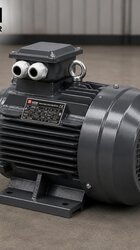
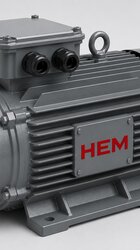


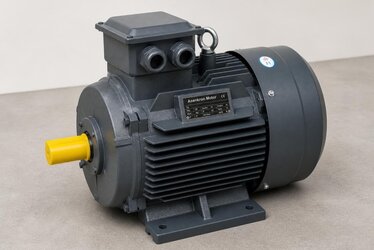
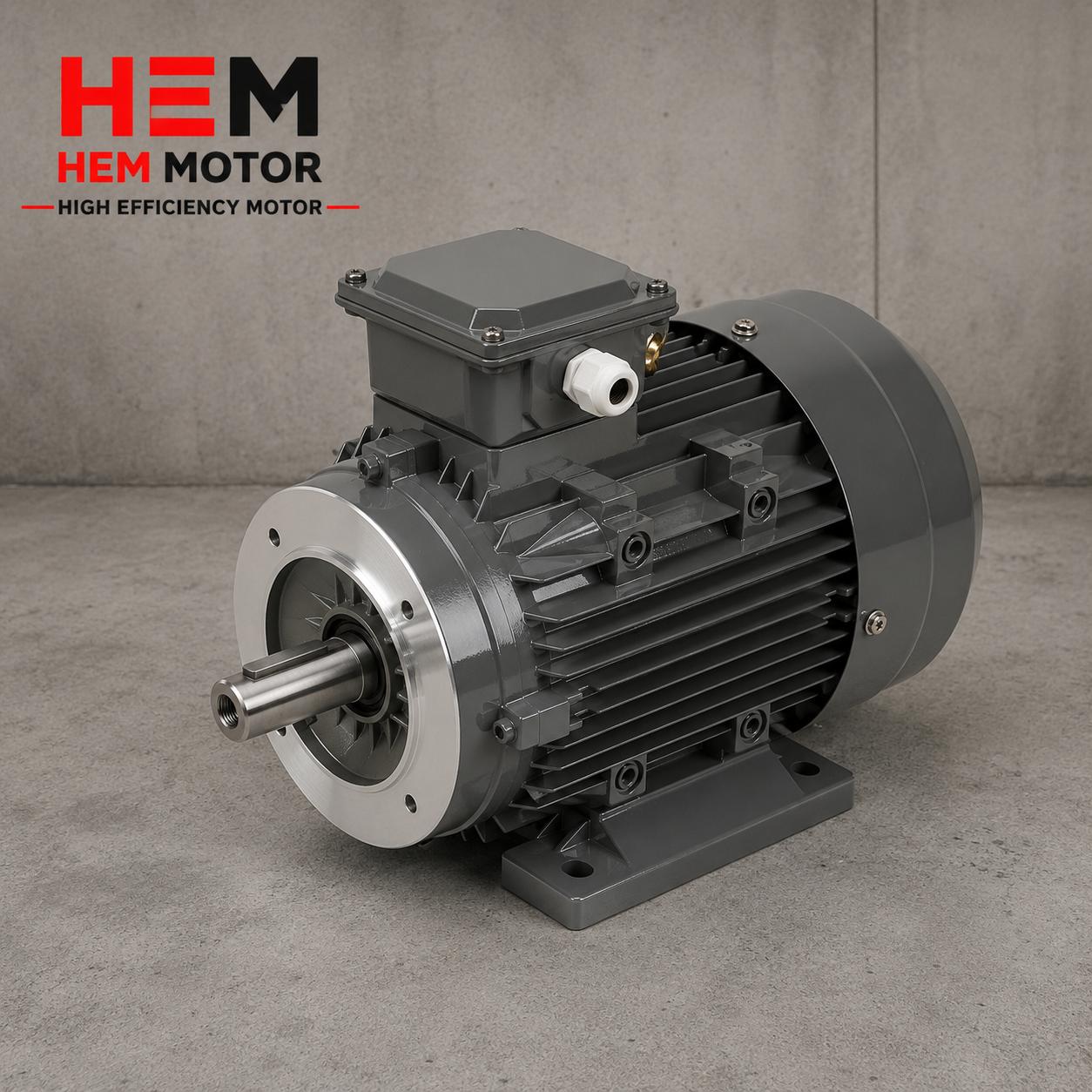
When an IE4 super premium motor fails, the first question is usually the same: "Should I rewind it or buy a new one?" On a standard motor, rewinding is often a reasonable option; but with a high efficiency class motor like the IE4 the equation changes. Because the precise design that keeps the IE4 in its efficiency class is easily damaged during stripping and rewinding, the motor may never regain its original nameplate efficiency after a rewind. In this article we examine conceptually why post-rewind efficiency loss occurs in an IE4 motor, why the IE4 is more sensitive than the IE3, why rewinding becomes uneconomical at small powers, and how to compare a new IE4 purchase with a rewind in terms of life cycle cost (LCC).
Why Does Efficiency Drop After a Rewind?
Most of the losses that determine a motor's efficiency occur in the stator core (iron loss) and the winding (copper loss). During rewinding both regions are at risk:
1. Damage to the stator core (lamination stack)
To strip the old winding, the winding is often heated in an oven to burn off the insulation. If this heat treatment is done uncontrolled or at excessive temperature, the insulation between the thin silicon steel sheets degrades and unwanted currents (eddy currents) between the sheets increase. The result is higher iron loss and lower efficiency. Because the IE4 already achieves minimal iron loss through a precise design, disturbing this delicate balance affects efficiency disproportionately.
2. Change in winding geometry
The original winding is optimised with a specific wire cross-section, number of turns and slot fill. If the wire cross-section, winding technique or slot fill cannot be reproduced exactly in the rewind, copper loss increases. Hand winding struggles to match series production precision. The IE4's low-loss target is far more sensitive to these small deviations.
3. Mechanical and air-gap tolerances
Even small changes in the rotor-stator air gap during disassembly and reassembly affect magnetic performance. Because IE4 motors are produced to tight tolerances, these deviations reduce efficiency.
Why Is the IE4 More Sensitive Than the IE3?
The IE4 super premium class targets lower losses than the IE3, achieved with higher quality steel, a higher copper fill ratio and tighter tolerances. So the "efficiency margin" in an IE4 is very thin. When an IE3 motor is rewound, even if it loses some efficiency it can often still remain in an acceptable class; but when an IE4 motor is rewound, the few points lost can drop it to IE3 or even IE2 level. In that case the premium you paid for IE4 is wasted: the motor looks like an IE4 but does not consume like one. We covered the loss difference between IE4 and IE3 in detail in our IE4 motor efficiency losses article. You can find the IE3-side rewind decision in our rewinding an IE3 motor article.
Why Is Rewinding Uneconomical at Small Powers?
Rewinding labour requires a certain workload regardless of motor power; stripping, oven-baking, winding, varnishing and drying, and testing take similar effort on a small motor as on a large one. So on small-power motors (for example in the lower frame sizes) the value of the rewind labour comes very close to, and sometimes exceeds, the value of a new motor. Moreover, the post-rewind efficiency loss on a small IE4 motor also eats into the already low absolute saving. So the general rule at small powers is clear: replacing with new is more correct both technically and operationally. In industry practice, renewing small-frame motors instead of repairing them is a common approach; we covered this decision together with motor life in our motor life and early failure article. You can find the general rewind-versus-renew comparison in our rewind or buy new article.
LCC (Life Cycle Cost) Comparison: New IE4 Purchase vs Rewind
The right decision is made by looking not only at the upfront cost but at the energy the motor will consume over its entire life. By far the largest part of an electric motor's total lifetime cost is not the purchase but the energy consumption. The LCC logic is set up as follows:
- The rewound motor's efficiency drops: A few points of post-rewind efficiency loss means the motor draws a little more energy every operating hour.
- Efficiency loss accumulates over the life: On a continuously running motor, even a small efficiency difference turns into a large energy difference over the years.
- A new IE4 guarantees the nameplate efficiency: The new motor delivers IE4 efficiency with its certificate and is usually under warranty.
Therefore, in an application that runs a lot and where efficiency matters, the low efficiency of a rewound IE4 usually justifies the energy advantage of a new IE4. We covered the TCO/LCC logic in depth in our high efficiency motor TCO article and our IE5/IE4/IE3 TCO comparison article. You can find the difference between nameplate and field efficiency in our nameplate vs field efficiency article.
When Might Rewinding Still Be Considered?
Renewing is not always the only right answer. Rewinding can be considered under these conditions: the motor is very high power and special/long lead time; the fault is mechanical (for example a bearing) rather than in the winding and the core is sound; or the motor runs little (so the energy loss stays small). But if a rewind is done, the condition of the core must be measured (core loss test) and the efficiency must be verified to IEC 60034-2-1 after the rewind; otherwise the IE4 nameplate loses its meaning. We explained the efficiency measurement method in our efficiency measurement and IEC 60034-2-1 article. For bearing-related faults, our bearing replacement article may be a more suitable solution; in that case the motor can be saved by renewing only the bearing without rewinding.
The Effect of Rewind Quality on Efficiency: Not Every Rewind Is Equal
A fact often missed when assessing the rewind decision is that rewind quality varies greatly from workshop to workshop. A well-equipped winding workshop uses controlled low-temperature ovens that protect the core during stripping, measures the soundness of the core with a core loss test, reproduces the original wire cross-section and number of turns exactly, and reinforces the insulation with vacuum-pressure impregnation (VPI) after winding. A motor rewound in such a workshop may keep its efficiency loss relatively limited. By contrast, in a workshop that burns at uncontrolled high temperature and estimates the wire cross-section by eye, the same motor loses far more efficiency. So the answer to "can an IE4 be rewound?" depends partly on the workshop's capability; but even in the best workshop it is hard to fully reach the original series-production precision.
For this reason, if you decide to have a rewind done, always request the following from the workshop: the core loss test result before and after stripping, a record of the wire cross-section and number of turns used, and an efficiency measurement report to IEC 60034-2-1 after the rewind. Without these documents it is not possible to claim that the motor is still IE4. Requesting documents makes both the rewind quality and the motor's real efficiency class transparent. In an undocumented rewind, even if the nameplate says IE4, no one can know which class the motor is really in.
Stock Advantage and Downtime Cost
The rewind decision should be assessed not only on efficiency but on downtime. When a motor fails, the rewind process can take days, sometimes weeks; during this time the line is down and the downtime cost is often far more expensive than the motor itself. A new IE4 motor deliverable from stock, on the other hand, brings the line back online much faster. Especially in facilities running continuous production where downtime is expensive, this speed advantage becomes decisive in favour of a new motor. So on critical motors, keeping a spare or identifying a quickly available equivalent in advance is much wiser than waiting for a rewind.
A new motor also offers the advantage of warranty and known performance: the nameplate efficiency is documented, the expected life is predictable, and the warranty applies in case of failure. With a rewound motor, both efficiency and life are uncertain and usually outside warranty. When deciding, you should weigh the motor's criticality, the line's downtime cost and the new motor's lead time together. In most heavily running IE4 applications, a new motor delivered quickly from stock is more valuable than the uncertainty and downtime risk a rewind brings.
Decision Flow: Rewind or Renew an IE4?
- Small power + heavy running: Buy a new IE4. Rewind labour is close to new, and efficiency loss eats the saving.
- Winding burnt + core at risk: Buy a new IE4. Post-rewind efficiency cannot be guaranteed.
- High power + mechanical fault + sound core: Repair/bearing replacement can be considered.
- Low-running, low-priority motor: Rewinding may be more economical, but efficiency must be verified.
We covered the move to IE4 and replacing the old motor in our replacing your old motor with IE4 article and the mechanical compatibility issue in our mechanical compatibility in the IE4 transition article. For equivalent selection you can use our IE4 equivalent selection article.
Frequently Asked Questions
Does an IE4 motor return to its old efficiency after a rewind?
Usually not exactly. The heat treatment during stripping can damage the lamination insulation, the winding geometry may not be reproduced exactly, and air-gap tolerances may change. Because the IE4's efficiency margin is very thin, these small deviations can drop the motor to IE3 or even IE2 level. Only an efficiency measurement to IEC 60034-2-1 after the rewind proves that efficiency has been preserved.
Why is rewinding not recommended on small-power IE4 motors?
Rewinding labour takes similar effort regardless of how small the power is; so the rewind cost on a small motor comes very close to a new motor. Moreover, the post-rewind efficiency loss also wipes out the small motor's already low energy advantage. So at small powers, buying a new IE4 is generally more correct both technically and operationally.
What should I base the rewind decision on?
Look not only at the upfront cost but at the motor's lifetime energy consumption (LCC). On a motor that runs a lot, even a small efficiency difference becomes a large energy difference over the years. The general rule: a new IE4 for small power and intensive running; repair is considered for high power, mechanical (bearing) faults and a sound core. Efficiency must always be verified after any rewind.
Get a Quote for Your IE4 Renewal Decision
Let us assess together whether replacing your failed IE4 motor with a new IE4 instead of rewinding makes sense for your application. Share the motor's power, speed, operating hours and fault type; we will recommend the right new IE4 motor and a delivery plan. Reach us now on +90 (532) 345 49 86 or via our contact page. Explore our IE4 motor range on our IE4 electric motor page, and all products on our homepage and our IE4 blog category.
Purchasing and Decision Checklist
- Is the motor power small? (If small, a new IE4 stands out.)
- Is the fault in the winding or mechanical? (If mechanical, repair can be considered.)
- Has the condition of the stator core been tested?
- Have the motor's annual operating hours and energy importance been taken into account?
- If rewound, will efficiency be verified to IEC 60034-2-1?
- Have the new IE4's nameplate efficiency and warranty been compared?
- Is the decision made by LCC rather than upfront cost alone?