English
 Türkçe



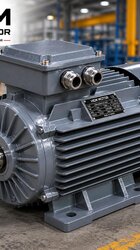
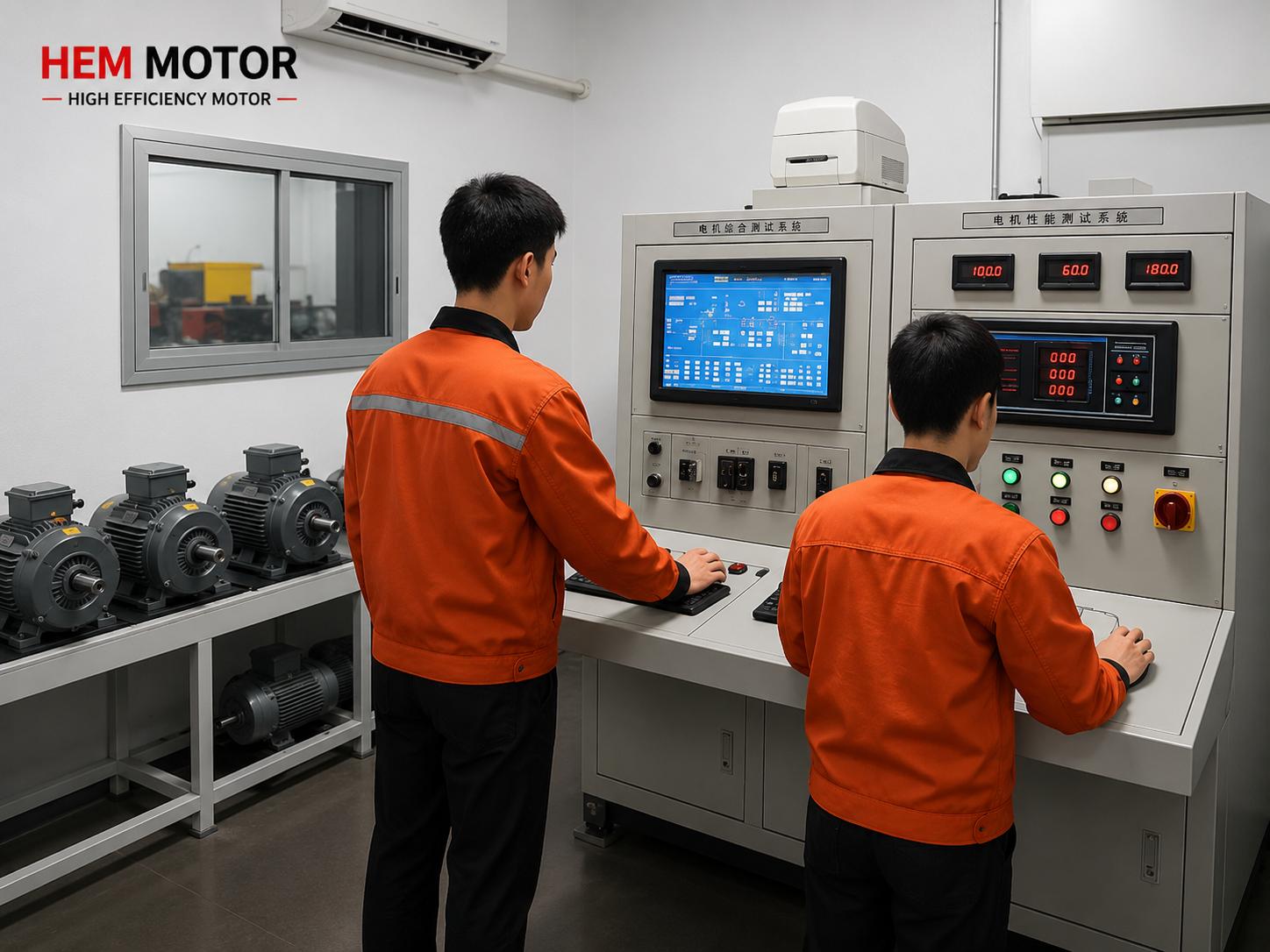

Even an electric motor in the highest efficiency class cannot convert all electrical energy into mechanical work. No matter how high the efficiency, some energy emerges as loss, and almost all of this loss turns into heat. Using a high-efficiency motor reduces this loss but cannot eliminate it. This is where smart facilities look at a second opportunity: recovering the waste heat produced by the motor, compressor or process and using the facility energy a second time. In this article we examine conceptually how the inevitable motor loss turns into a usable heat source, the logic of waste heat recovery, and how you can raise the total facility efficiency together with IE4/IE5 efficient motors.
Loss Is Inevitable Even in an Efficient Motor
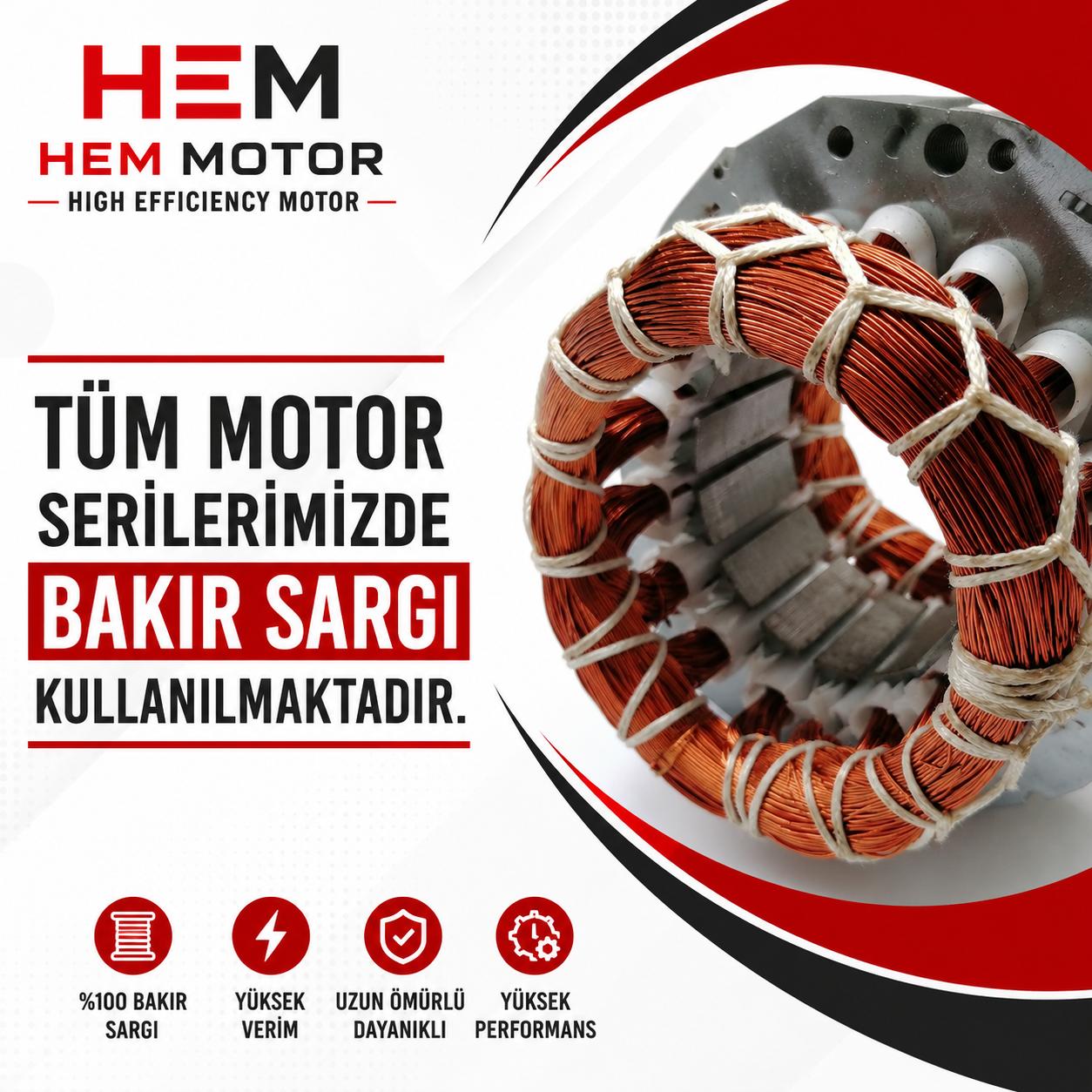
The efficiency of a motor is the ratio of output mechanical power to input electrical power. Efficiency not being 100% means the difference is spent as loss. These losses fall into four main groups: copper (winding) loss, iron (lamination) loss, friction-windage loss and load loss. We explained in detail where these losses occur and how they decrease in an efficient motor in our article on efficiency losses in an IE4 motor.
The important point is this: all these losses ultimately turn into heat. An efficient motor heats up less, but it still heats up. The difference between nameplate efficiency and real field efficiency also affects this heat amount; we examined this topic in our article on the difference between nameplate and field efficiency. Transitioning to an efficient motor is the first and most important step to reduce loss; our article on replacing an old motor with IE4 makes this step concrete.
What Is Waste Heat and Where Does It Come From?
Waste heat is heat that is not the actual purpose of a process, emerges as a by-product and is usually released into the environment. The main sources of waste heat in a facility are:
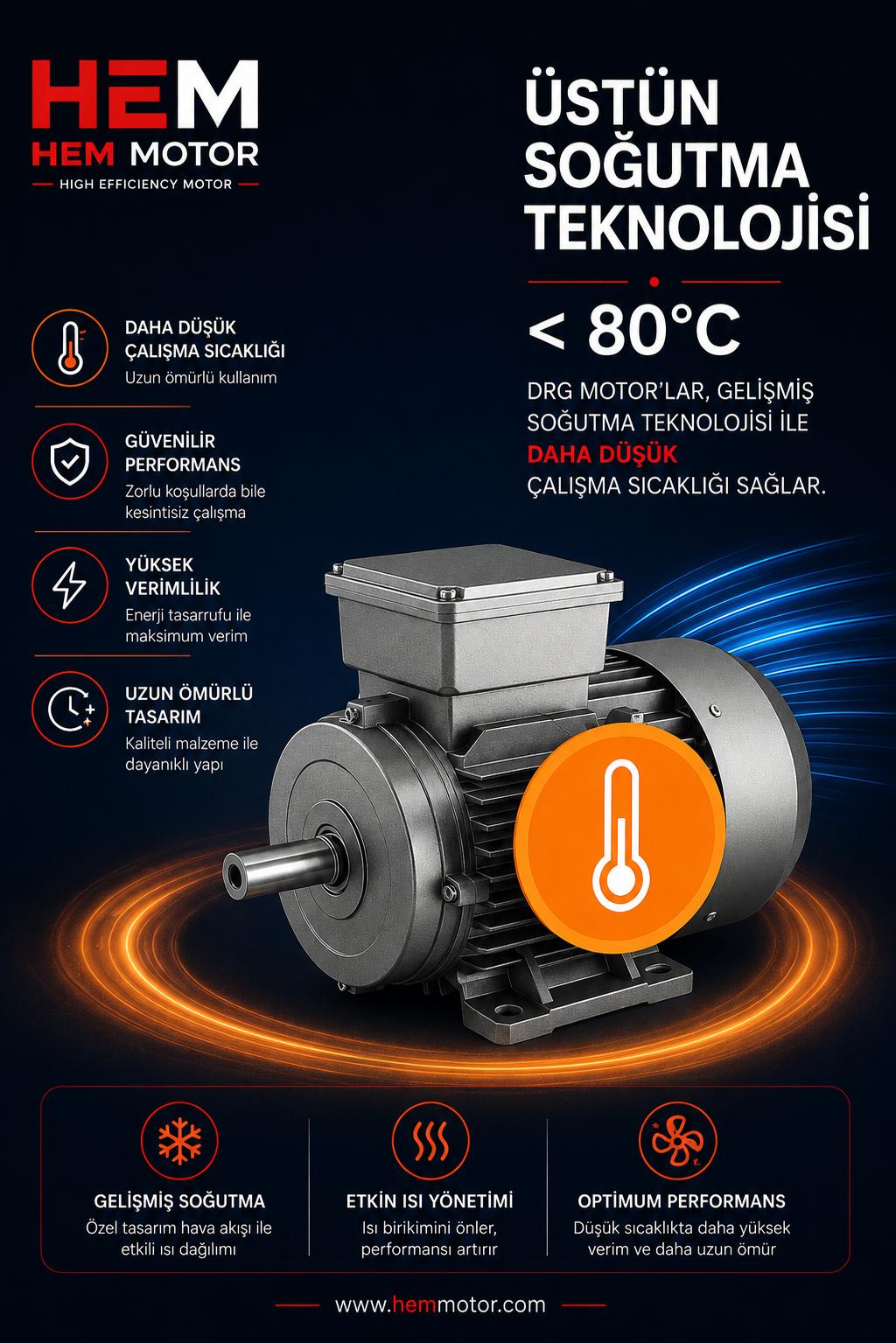
- Motor losses: Heat dissipated through the motor frame and cooling air. We covered motor cooling methods in our article on cooling methods (IC411/IC416).
- Compressor heat: Air compression produces heat; in screw compressors this heat is one of the most efficient sources of recovery. Our article on compressed air and screw compressor motors introduces this application.
- Process heat: High-temperature waste heat from processes such as furnaces, dryers and flue gas.
This heat can be captured with a proper heat recovery system and made reusable in the facility.
The Logic of Waste Heat Recovery
The basic principle of waste heat recovery is to transfer heat wasted in one place to a heating load needed elsewhere. This transfer is usually done with a heat recovery exchanger. The exchanger brings a hot fluid (motor cooling air, compressor oil, flue gas) into heat exchange with a cold fluid (process water, supply air, domestic hot water) without mixing them directly.
Typical Uses of Recovered Heat
- Preheating: Preheating boiler feed water or process air lowers the load of the main heater. For boiler room applications, see our article on boiler room and circulation pump motors.
- Domestic hot water: Hot water obtained from compressor waste heat is used for cleaning and process needs.
- Space heating: In cold seasons the recovered heat is used for workshop or warehouse heating.
Heat Recovery Exchanger and System Components
The heart of a waste heat recovery system is the exchanger. The exchanger is a device that brings hot and cold fluids into heat exchange without mixing them. For compressor waste heat, an oil-water or air-water exchanger is usually used; for flue gas, special exchangers resistant to higher temperatures are needed. The efficient operation of the system depends on the correct sizing of the exchanger and the correct selection of the pumps and fans that carry the hot fluid to the exchanger.
The circulation pumps and fans that carry the recovered heat also run on electric motors; these motors themselves must be efficient too, so that the savings from recovery are not eaten up by the transport energy. For circulation pump motors, see our article on in-line and circulation pump motor selection. In flue gas and ID fan applications, high temperature and dust resistance are important; we addressed this in our article on flue gas and ID fan motor selection.
Efficient Motor + Recovery: Two-Layer Savings
An efficient motor and waste heat recovery are two complementary strategies. The efficient motor reduces the loss (that is, the waste heat) produced from the start. Recovery converts a part of the inevitably remaining loss into useful heat, meeting another energy need of the facility. When these two layers are applied together, a clear improvement is achieved in the total energy efficiency of the facility.
IE4 and IE5 motors give the highest return on large continuously running loads; these applications are also the most suitable candidates for waste heat recovery because they provide a continuous and predictable heat flow. Our article on savings under continuous load in pumps, fans and compressors with IE5 supports this synergy. We addressed lowering facility energy intensity with motor efficiency in our article on facility energy intensity (SEC) and motor efficiency.
Linking Recovery to the Facility Energy Strategy
Waste heat recovery gives the highest value not on its own but as part of a holistic energy management approach. An energy management system such as ISO 50001 helps prioritize which waste heat source to use first; on this topic our article on ISO 50001 and motor efficiency guides you. To increase self-consumption together with solar energy, see our article on high-efficiency motors and solar energy. On the carbon footprint reduction side, our article on the carbon footprint of high-efficiency motors is complementary.
Which Facilities Are More Suitable?
Waste heat recovery gives the fastest return in facilities that produce continuous and intense heat: continuously running compressor stations, boiler rooms, drying and furnace processes, continuous process lines. Paper and textile lines in continuous process and plastic extruder and process lines are examples of this class. To draw up the facility motor inventory and determine which machines are candidates for both an efficient motor and recovery, our article on energy efficiency audit and motor inventory defines the first step.
Drive, Affinity Law and Recovery Together
Waste heat recovery should not be evaluated on its own; it must be considered together with the other methods in the facility energy savings toolkit. In pump and fan applications, reducing speed with a variable frequency drive (VFD) provides a cubic reduction in power according to the affinity law. This lowers the energy consumed in the first place and therefore the waste heat produced. We addressed the real gain of the affinity law in our article on the affinity law in pumps and fans with VFD.
There is a balance here: reducing the load with a VFD also lowers the amount of waste heat. Therefore, before making a recovery investment, it should be evaluated whether reducing consumption through speed reduction is the higher priority. The general rule is this: first reduce the loss at the source (efficient motor + VFD), then recover the waste heat that inevitably remains. This hierarchy ensures the investment gives the highest return. Returning braking energy to the grid with regenerative drives is a similar recovery logic; we examined this in our article on regenerative energy recovery.
Measurement, Verification and Payback
The value of a waste heat recovery project must be proven with concrete measurement. Without measuring the amount of recovered heat and the fuel/electricity savings it replaces, the payback of the investment cannot be calculated. It is necessary to monitor the energy flows in the facility and document how much heat is recovered at which point. We addressed the method of measuring and documenting annual savings in high-efficiency motors in our article on measuring and documenting annual energy savings.
Verifying field efficiency with a power analyzer and proving real savings with M&V (measurement and verification) methods supports both the investment decision and incentive applications. On this topic our article on verifying field efficiency with a power analyzer guides you. You can also determine which machine should be addressed first by logging the motor load profile; our article on motor load profile and data logging introduces this approach. For more, you can review our electric motors blog homepage.
Frequently Asked Questions
If I use an efficient motor, do I still need waste heat recovery?
An efficient motor reduces the loss produced from the start and this is the most important step. However, no motor is 100% efficient; the remaining loss turns into heat. Moreover, the largest waste heat source in a facility is often not the motor itself but the compressor or process. Therefore an efficient motor and waste heat recovery are not conflicting but complementary strategies; together they maximize the total facility efficiency.
Which is the easiest waste heat source to recover?
Generally the heat produced by screw compressors is conceptually the easiest and most continuous recovery source, because the compressor runs continuously and its heat is carried over a consistent fluid. This heat can be used for domestic hot water or preheating via an exchanger. Process and flue gas heat may be at a higher temperature but usually requires more complex equipment.
How does waste heat recovery affect total facility efficiency?
Total facility efficiency is measured by how much of the consumed energy turns into useful work and useful heat. Waste heat recovery raises this ratio by bringing heat that would normally be released into the environment back into use in the facility. When combined with an efficient motor, both the input energy decreases and part of the loss is recovered; this provides a two-layer improvement.
Get a Quote
If you would like support in transitioning to an efficient motor and energy-savings-focused motor selection in your facility, our team is by your side. For motor supply with the right power, speed and efficiency class for your continuously running applications, contact us at +90 (532) 345 49 86 or reach us via our contact page.
Waste Heat Recovery and Efficient Motor Checklist
- List the waste heat sources in your facility: motor, compressor, process, flue gas.
- Evaluate the continuity of each source; continuous flow is more suitable for recovery.
- Determine the load where the recovered heat will be used: preheating, hot water, space heating.
- Plan to reduce the loss first by transitioning to an efficient motor (IE4/IE5).
- Prioritize large continuously running loads for both efficiency and recovery.
- Link recovery to an energy management framework such as ISO 50001.
- Identify candidate machines by drawing up a motor inventory.