English
 Türkçe


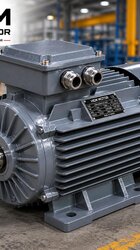
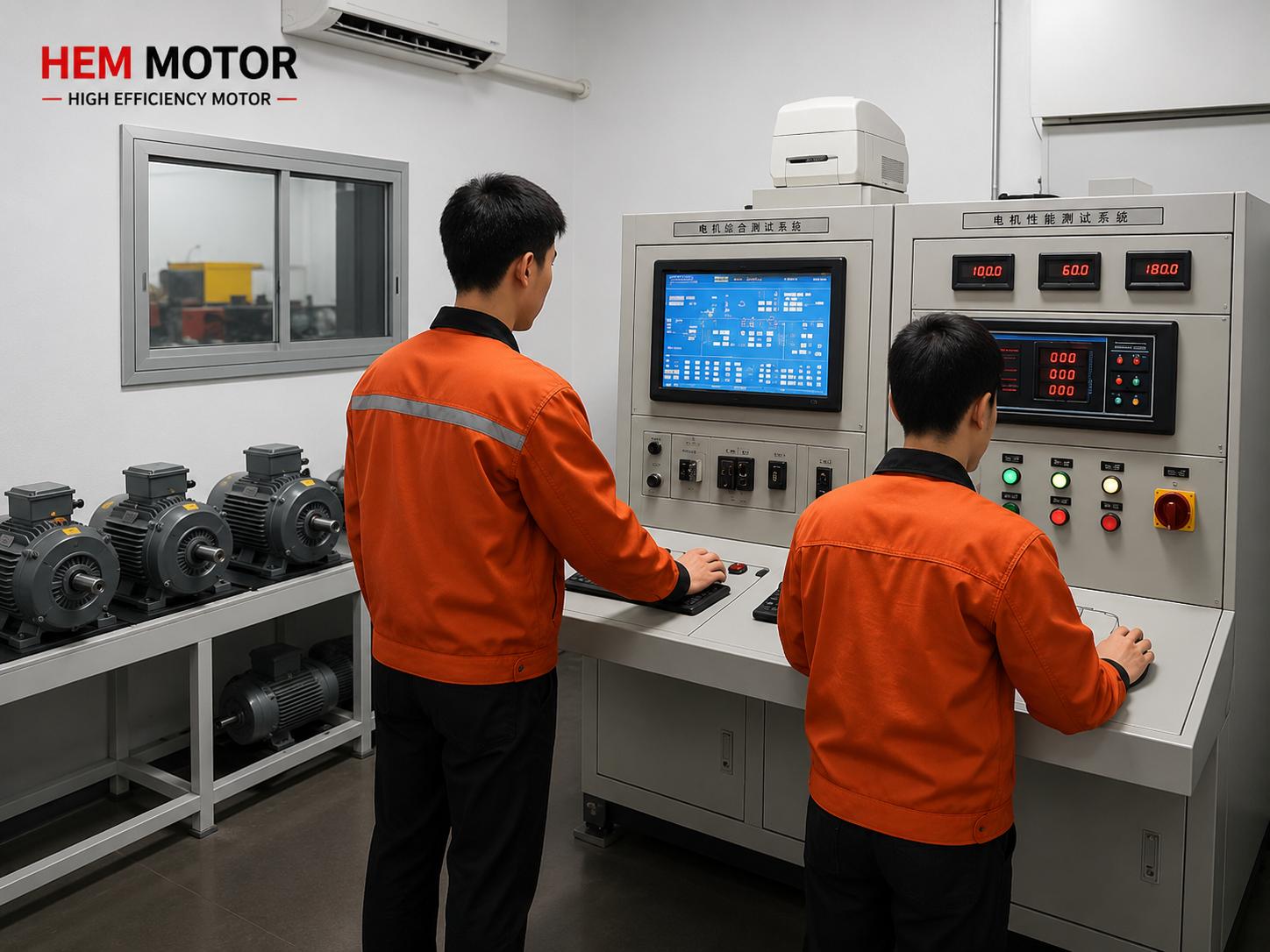

Assessing a facility's energy performance by looking at the efficiency of a single motor falls short; the right measure is the energy spent per unit of product produced. This measure is called specific energy consumption (SEC) and is usually expressed in kWh/ton or kWh/unit of product. Because electric motors account for the vast majority of the electricity consumed in industrial facilities, the most direct route to lowering SEC runs through the motor and drive system. In this article we examine conceptually the concept of energy intensity (SEC), the share of motors in facility energy, how to cut SEC with efficient motors and variable frequency drives (VFD), the logic of benchmarking, and its link with the ISO 50001 energy management system.

What Is Specific Energy Consumption (SEC)?
SEC is found by dividing the total energy a facility (or a line/machine) consumes in a given period by the amount of product it produces in the same period:
SEC = Total Energy (kWh) / Production Quantity (tons or units)
For example, if a facility consumed 500,000 kWh over a month and produced 10,000 tons of product, SEC = 50 kWh/ton. The power of SEC lies here: absolute consumption (total kWh) naturally rises as production increases and can be misleading; SEC, normalised by production, shows the facility's true energy efficiency. If SEC is falling, you are producing the same product with less energy, a direct gain for both cost and carbon footprint. We covered the carbon footprint link in our high efficiency motor and carbon footprint article.
The Share of Motors in Facility Energy
In industry, electric motors are responsible for the large majority of the electricity consumed. Pumps, fans, compressors, conveyors and process drives run continuously or for long hours; this determines the weight of the motor system in the total energy bill. So the biggest lever affecting SEC is motors. The starting point for anyone wanting to lower a facility's SEC is to compile the motor inventory and see how much each motor runs and which efficiency class it is in. We covered this inventory work in detail in our energy efficiency audit and motor inventory article, and which motor should be changed in our motor load profile logging article.
Cutting SEC with an Efficient Motor
A motor's efficiency shows how much of the electrical energy it draws it converts into useful mechanical work. A higher efficiency class (IE3, IE4, IE5) motor does the same work with less electricity, which directly lowers SEC. As the efficiency class rises, the iron, copper and friction losses in the motor decrease. Especially on process motors running continuously and at high load, raising the efficiency class creates a permanent improvement in SEC. You can find the mandatory timetable of efficiency classes in our IE3 and IE4 efficiency mandate article, and the effect of correct sizing on efficiency in our efficiency class and correct sizing article. We covered how oversizing eats the saving in our part-load efficiency article.

Cutting SEC with a Variable Frequency Drive (VFD)
An efficient motor alone is not enough; the motor does not need to run at full load all the time either. In variable-load applications such as pumps and fans, adjusting the motor speed to the real demand with a VFD lowers SEC dramatically. The reason is the affinity law: in a pump or fan, power consumption varies roughly with the cube of speed. So when you reduce speed by 20 percent, energy consumption drops by a much larger proportion. Reducing speed with a VFD instead of throttling flow with a valve at fixed speed significantly reduces the energy per unit produced (SEC). We detailed the real gain of the affinity law in our VFD pump fan energy savings article, and VFD selection in our frequency drive with motor article. To address pump system efficiency holistically, see our pump system efficiency article.
SEC Benchmarking Logic
The most powerful use of SEC is benchmarking. There are two types:
- Internal benchmark (your own history): You compare this month's SEC with last month's or last year's. As improvements are made you watch SEC fall, proving that the investment really works.
- External benchmark (sector): You compare with the SEC values of facilities producing similar products in the same sector. If your SEC is above the sector average, you have serious improvement potential.
Benchmarking also shows which line or which motor to prioritise. The line with the highest SEC is the biggest saving opportunity. We covered this prioritisation in our ISO 50001 and investment prioritisation article. You can find the method of measuring and documenting savings in our annual savings measurement and documentation article.
The Link with the ISO 50001 Energy Management System
SEC directly overlaps with the concepts at the heart of the ISO 50001 energy management system. ISO 50001 requires facilities to continuously measure, set targets for and improve their energy performance. Two core tools are used in this system: the energy performance indicator (EnPI) and the baseline. SEC is one of the most common EnPIs; because it is normalised by production it is a fair performance indicator. The ISO 50001 cycle works as follows: first a baseline is established by measuring the current SEC; then improvements such as efficient motors and VFDs are applied; then the new SEC is measured to verify the real gain. This structure makes motor efficiency investments concrete, measurable and reportable. We covered financing the investment with energy performance contracts (EPC/ESCO) in our EPC/ESCO article, and verifying field efficiency in our power analyzer field efficiency verification article.
Hidden Losses That Spoil SEC: Factors That Eat the Saving
Fitting efficient motors and VFDs is the foundation of lowering SEC; but real savings also require managing many hidden losses that are not visible to the eye. These losses keep raising SEC unnoticed:
- Oversizing: An oversized motor runs at low efficiency at low load and its power factor degrades. It draws unnecessary energy per unit of product.
- Transmission losses: A loose or wrong belt, a poorly aligned coupling and worn gears convert part of the energy the motor produces into heat, raising SEC.
- Idle running: Motors that keep running while there is no production directly spoil SEC because they consume energy without producing any product. Idle-running loss is a large item that goes unnoticed in most facilities.
- Harmonics and power quality problems: Distortions in the grid create extra loss in motors.
To see these hidden losses, load profile measurement and power quality analysis are needed. We covered idle-running loss and the shutdown decision in our idle and standby loss article, and transmission losses in our belt and coupling selection article. You can find the effect of power factor at partial load in our power factor (cos phi) article.
Investment Prioritisation with SEC: Which Motor Should Change First?
A facility may have dozens or even hundreds of motors; renewing them all at once is neither necessary nor possible. SEC is a powerful tool that directs a limited budget to the motors that will provide the highest return. The logic of prioritisation is simple: the most-running and lowest-efficiency motors are the biggest saving opportunity. An old, low-efficiency process motor running thousands of hours a year makes the biggest contribution to SEC when renewed; whereas renewing a motor that runs only a few hundred hours a year, even if correct, has a low return.
So the motor renewal programme should be ranked by operating hours and current efficiency class. A simple table for each motor including its annual operating hours, load ratio and efficiency class clarifies which motor should change first. This approach lowers the facility's SEC step by step and measurably, starting with the motors that pay back fastest. This gradual programme, starting with a single motor and spreading to the whole fleet, builds a lasting energy efficiency culture without straining the budget. The key is to base the decision on measurement rather than guesswork: renewal done without knowing how much each motor consumes risks spending resources in the wrong place.
Steps to Lower SEC
- Measure: Record total energy and production at facility and line level, calculate the current SEC (baseline).
- Prioritise: Identify the most-running and lowest-efficiency motors; focus on the line with the highest SEC.
- Improve: Move to efficient motors (IE4/IE5), apply VFDs on variable load, size the motor correctly.
- Verify: Measure the new SEC, compare with the baseline, document the gain.
- Sustain: Preserve efficiency with maintenance; loose belts, poor alignment and dirty cooling raise SEC.
You can find the effect of maintenance on efficiency in our maintenance impact on motor efficiency article, and savings scaling from a single motor to a fleet in our single motor to fleet savings article.
Frequently Asked Questions
What is the difference between SEC and total energy consumption?
Total energy consumption (kWh) naturally rises as production increases and can be misleading about efficiency on its own. SEC normalises total energy by dividing it by the production quantity (kWh/ton or kWh/unit). This shows the true energy efficiency independent of production volume. If SEC is falling, you are producing the same product with less energy.
How much does motor efficiency affect SEC?
Because the majority of electricity in industry is consumed by motors, the biggest lever on SEC is motors. A higher efficiency class (IE4/IE5) motor does the same work with less electricity, directly lowering SEC. Adding a VFD on variable load provides a much larger improvement in SEC, especially on pumps and fans, thanks to the affinity law.
How is SEC related to ISO 50001?
SEC is a commonly used energy performance indicator (EnPI) in ISO 50001. In the ISO 50001 cycle, a baseline is first established with the current SEC, then improvements are applied, and the new SEC is measured to verify the real gain. This structure makes motor efficiency investments measurable and reportable.
Get a Quote to Lower Your Facility's SEC
Let us plan efficient motor and VFD solutions together to lower your facility's specific energy consumption (SEC). Share your lines' energy and production data and the power and speed of your most-running motors; we will recommend the motor renewal plan that lowers SEC the most. Reach us now on +90 (532) 345 49 86 or via our contact page. Explore our efficient motor range on our efficient electric motors page, and all products on our homepage and our high efficiency motors blog category.
SEC Improvement Checklist
- Has the current SEC (kWh/ton or kWh/unit) been calculated at facility and line level?
- Have the most-running and lowest-efficiency motors been identified?
- Has a priority order been set for moving to efficient motors (IE4/IE5)?
- Has VFD application on variable load (pump/fan) been assessed?
- Are the motors correctly sized (any oversized motors)?
- Has comparison with internal and sector benchmarks been done?
- Has a baseline been established and will SEC be verified after improvement (ISO 50001)?