English
 Türkçe


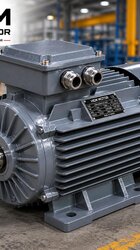
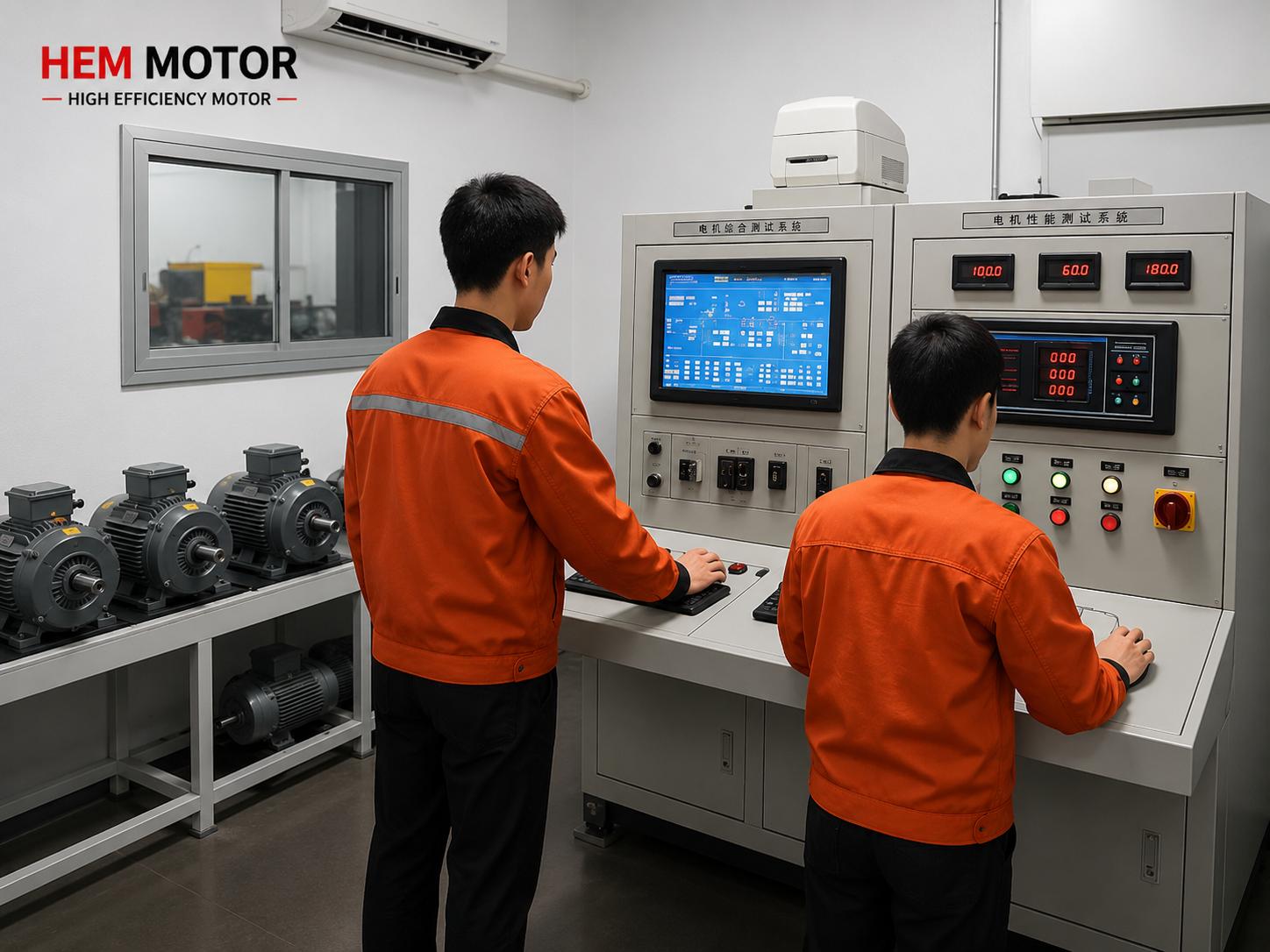

The biggest obstacle to transitioning to high-efficiency motors is often not technical but financial. A facility knows that when it replaces its old standard motors with IE3 or IE4 it will achieve significant energy savings over the years; however, setting aside this investment from the budget in one go can be difficult. This is exactly where the energy performance contract (EPC) and the ESCO model come in: a structure that finances the motor renewal investment from the guaranteed energy savings it will provide. In this article we conceptually address how the EPC/ESCO model works, why measurement and verification (M&V) is the backbone, how risks are shared, and which facility is suitable for this model.
What Is an Energy Performance Contract (EPC)?
An energy performance contract is a type of contract in which the cost of an energy efficiency investment is repaid from the energy savings the investment provides. In this model, instead of making a large capital expenditure up front, the facility pays from the savings achieved over a certain period. The party that carries out the investment and often guarantees the savings is called an ESCO (Energy Service Company).
On the motor side, this means: the old, low-efficiency motors in the facility are replaced with IE3 or IE4 motors; the resulting energy savings are measured and part of these savings is used to repay the investment. We covered the energy gain of transitioning to high-efficiency motors in replacing an old standard motor with IE4: payback period and in terms of total cost of ownership in TCO in high-efficiency motors.
How Does the ESCO Model Work?
In the ESCO model, the process generally follows these steps:
- Energy audit: The facility’s current motor inventory is compiled, efficiency classes are identified, and running hours and load profiles are analysed. We explained the basis of this step in preparing for an energy efficiency audit: motor inventory.
- Savings potential calculation: Which motors will be replaced, how much savings they will provide, and the payback period are calculated. We addressed which motor should be replaced first in motor load profile and data logging.
- Investment and implementation: The ESCO or the facility supplies and commissions the high-efficiency motors.
- Measurement and verification (M&V): The realised savings are measured regularly and compared with the value committed in the contract.
- Repayment: The gain obtained from the savings is used to repay the investment according to the agreement.
Measurement and Verification (M&V): The Backbone of the Model
The reliability of the EPC/ESCO model depends on the savings being genuinely measurable. Measurement & Verification (M&V) is the objective comparison of energy consumption before and after the motor replacement. The most critical point here is that field efficiency, not nameplate efficiency, is taken as the basis; because real savings emerge at the motor’s actual load and running hours. We detailed the difference between nameplate and field efficiency in the difference between nameplate and field efficiency and the method of measuring and documenting annual savings in measuring and documenting annual savings in high-efficiency motors.
In the M&V process, the motor’s running hours, load ratio and power draw are logged; the baseline (current state) is compared with the new state. Therefore EPC contracts are usually carried out together with an energy management system discipline. We addressed prioritising motor efficiency investments with the ISO 50001 energy management system in ISO 50001 and motor efficiency.

Risk Sharing: Guaranteed Savings vs. Shared Savings
EPC contracts can be structured in different ways in terms of risk sharing:
- Guaranteed savings: The ESCO commits to a certain energy saving. If the committed saving is not realised, the ESCO covers the difference. In this model the performance risk is largely on the ESCO.
- Shared savings: The savings achieved are shared between the parties at a predetermined ratio. In this model both the gain and the risk are shared.
Which model is chosen depends on the facility’s capital situation, risk appetite and the size of the investment. To understand the amortisation of the motor investment, you can examine IE3 or IE4: investment with amortisation calculation and scalable savings in the transition in scalable savings from a single motor to a fleet.
How Is the Baseline Established?
The precondition for being able to measure savings in the EPC/ESCO model is establishing a solid baseline. The baseline is the energy consumption state before the motor replacement; that is, the answer to the question “how much energy would we have spent if we had done nothing”. If the baseline is established incorrectly, the savings measured later will also be incorrect, and a dispute arises between the parties.
For a solid baseline, the motors’ actual running hours, load ratio and power draw must be logged over a certain period. Production volume, number of shifts and seasonal changes must also be recorded; because a motor’s consumption changes with production volume. For example, a cooling fan that runs more in summer gives a misleading result if compared with a winter baseline. We addressed identifying which motor to replace with data logging in motor load profile and data logging and the effect of correct sizing on savings in efficiency class and correct sizing.
Maintenance and the Continuity of Performance
In an EPC contract, maintaining the savings over time is also important. Even if an efficient motor is fitted, if its maintenance is neglected its efficiency drops over time; bearing wear, misalignment and grease migration stress the motor and increase energy consumption. Therefore EPC contracts often include a maintenance discipline as well. We explained the effect of maintenance on motor efficiency in the effect of maintenance on motor efficiency and the periodic check schedule in electric motor maintenance and periodic check schedule.
Also, in pump- and fan-heavy facilities, motor efficiency alone is not enough; the efficiency of the pump, the pipe and the system must also be taken into account. We addressed thinking about system efficiency holistically in real efficiency in a pump system. You can find how power quality and harmonics can eat into real savings in high-efficiency motor harmonics and power quality.
Comparison of EPC With Classic Investment
When a facility transitions to high-efficiency motors, there are two basic paths: investing directly with its own capital, or financing from savings with the EPC/ESCO model. In direct investment the facility makes a large expenditure up front but all the savings remain with it. In the EPC model the facility does not make a large expenditure up front, but shares part of the savings during the contract period.
Which is more sensible depends on the facility’s cash situation, the size of the investment and its risk appetite. A facility with strong capital and a technical team may prefer direct investment; for a facility that wants to allocate its capital to other priorities or does not want to take technical risk, the EPC model may be more suitable. In both cases, the basis of the decision is a correctly calculated payback period. We detailed payback and amortisation in replacing an old motor with IE4: payback period and in terms of power-running hours-amortisation in IE4 or stay with IE3. You can find the additional benefit of lowering the carbon footprint in lower your carbon footprint with high-efficiency motors.
Which Facility Is It Suitable For?
The EPC/ESCO model is not equally suitable for every facility. For the model to be meaningful, the savings potential must be sufficiently large and measurable. In general, facilities with the following characteristics are more suitable for this model:
- Many long-running motors: In motors with high running hours, the efficiency difference turns into large savings. Continuous-process facilities are advantageous in this respect, such as paper and textile lines in continuous process.
- Old and low-efficiency motor fleet: The more inefficient the existing motors, the greater the savings the transition provides.
- Pump- and fan-heavy facilities: A high-efficiency motor with a frequency drive creates a multiplier effect in pumps and fans. We explained this in high-efficiency motor + frequency drive.
Government incentives and supports in the transition to high-efficiency motors also strengthen the model; we addressed these in incentives and supports in the transition to high-efficiency motors. You can find the priority of exporting facilities in terms of carbon footprint and border tax (CBAM) in CBAM and exporting facilities, and visit our home page for our product range.
Frequently Asked Questions
Who pays for the motor investment in an energy performance contract?
It depends on the structure of the model. In guaranteed or shared savings models, the investment is often made by the ESCO or through a financing institution and is repaid from the energy savings achieved over a certain period. Instead of making a large capital expenditure up front, the facility pays from the savings created. The payback period depends on the size of the savings and the contract terms.
Why is measurement and verification (M&V) so important?
Because in the EPC/ESCO model, payment depends on the realised savings. The savings must be measured objectively and impartially; otherwise the gain each party deserves remains uncertain. M&V documents the savings by comparing the pre-replacement baseline with the post-replacement state at the motor’s actual load and running hours. That is why field efficiency, not nameplate efficiency, is taken as the basis.
Which facilities are suitable for this model?
Facilities with many long-running motors, an old and low-efficiency existing motor fleet, that are pump-fan heavy or continuous-process are more suitable for this model. The larger and more measurable the savings potential, the more meaningful the EPC/ESCO model becomes.
Get a Quote
If you are considering replacing the old motors in your facility with high-efficiency IE3/IE4 motors and planning this transition, let us help you with motor inventory and selecting the appropriate high-efficiency model. Share your motor fleet, running hours and goals; let us determine the right high-efficiency motor solution together. To get a quote right away, call us on +90 (532) 345 49 86 or reach us through our contact page.
EPC/ESCO Preparation Checklist
- Is the facility’s motor inventory compiled and efficiency classes identified?
- Are the running hours and load profiles of the motors measured?
- Are the motors that will provide the most savings (longest-running, most inefficient) prioritised?
- Is the savings calculation based on field efficiency rather than nameplate efficiency?
- Is a baseline established for measurement and verification (M&V)?
- Is it decided whether a guaranteed or a shared savings model will be preferred?
- Are government incentives and supports evaluated?
- Is the gain calculated together with a frequency drive in pump-fan applications?
- Is the supply and delivery plan for the high-efficiency motors clarified?