English
 Türkçe



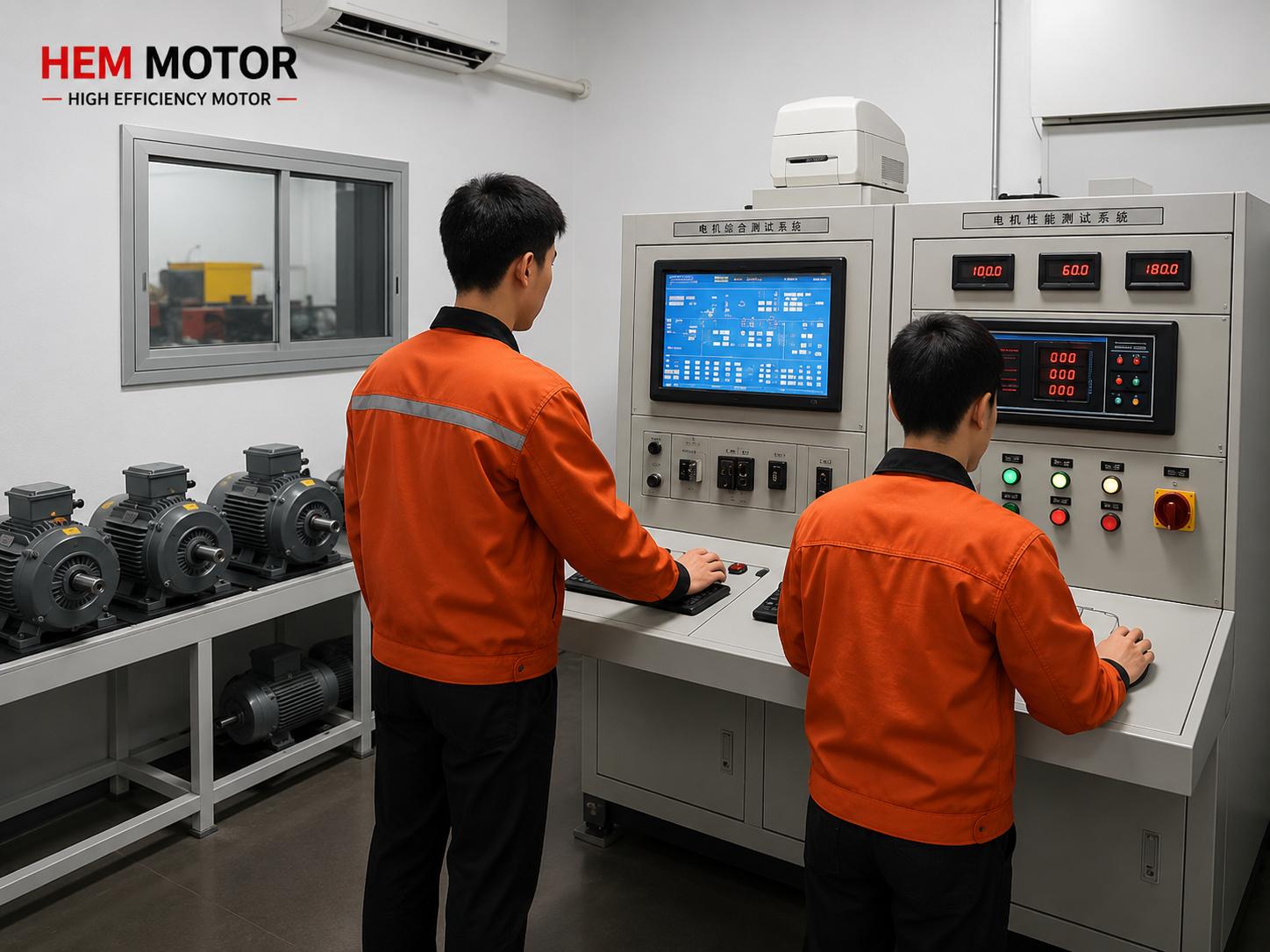

When deciding which motor to replace in a facility, most operators rely on guesswork: "This motor is old, it must be inefficient" or "This line must be drawing a lot of electricity." Yet the real savings opportunities are often hidden and only emerge through measurement. Current and power measurement with data logging shows how heavily a motor is actually loaded, how long it runs and how much energy it consumes. In this guide we explain conceptually how a motor load profile is built, how oversized (lightly loaded) and old low-efficiency motors are detected, and how to prioritise replacement.

Why Measurement, Not Guesswork?
A motor efficiency investment is wasted if you replace the wrong motor. With dozens of motors in a facility, renewing them all at once is neither economical nor necessary. The real issue is finding which motors truly carry a savings opportunity. The only reliable way to do this is measurement. A motor may be 30 kW on the nameplate, but if it actually runs continuously at 40% load it is both oversized and stuck on the low part of the efficiency curve. This situation can only be seen through measurement.
The first step in preparing for an energy efficiency audit is to compile the motor inventory and efficiency classes in the facility. We addressed this topic in our energy efficiency audit and motor inventory article. We explained the difference between nameplate efficiency and the real efficiency measured in the field in our nameplate vs field efficiency article.
What Is a Load Profile and How Is It Built?
A load profile is a graph showing how heavily a motor is loaded over time. At which hours of the day the motor runs at full load, at which hours it idles or runs at partial load, and how its load changes throughout the day, all appear in the load profile. To build a load profile you need to measure and record the motor's current or power at certain intervals. Two basic tools come into play here: the current transformer (CT) and the data logger.
Measurement With a Current Transformer (CT)
A current transformer is a ring placed over the cable of the motor supply that measures the current passing through it without contact. It is easily fitted inside the panel and continuously monitors the current the motor draws. Current is the first and most practical indicator of the motor's load; however, for fully accurate power measurement, voltage and power factor must also be taken into account. We explained the relationship between rated current and load in our rated current and protection elements article.
Recording With a Data Logger
A data logger is a device that records the measured current/power values at certain intervals (for example every minute). A few days or weeks of recording reveals the motor's real operating regime. These records show how long the motor runs at full load, how long it idles and the average load ratio. Modern energy monitoring systems perform this logging continuously and report it.
Detecting Oversized (Lightly Loaded) Motors
The most common hidden loss in facilities is oversizing. A motor larger than needed is fitted to a machine "just to be safe" and the motor runs at low load throughout its life. Asynchronous motors generally reach their highest efficiency in the 75–100% load range; when the load drops well below this, both efficiency and power factor decline. Load profile measurement clearly reveals these motors running continuously at 30–50% load.
We addressed in detail why efficiency drops at low load in our partial and low load efficiency article. You can find what load is right to run a motor at and correct sizing in our what load to run a motor at article. We examined the drop in power factor at low load and reactive draw in our power factor (cos phi) and correction article.
Finding Old Low-Efficiency Motors
The load profile reveals not only the sizing but also the motor's real efficiency. An old standard-efficiency (IE1 and below) motor consumes significantly more electricity than its IE3 or IE4 counterpart doing the same job. If a motor has high running hours and is in a low efficiency class, this motor should be written at the top of the replacement list. Because the annual savings from the replacement depend on the product of running hours and efficiency difference.
You can learn which efficiency class is mandatory from which date and whether your motor complies with the regulation in our IE3 and IE4 efficiency mandate and motor efficiency label and MEPS articles. We addressed the efficiency loss of rewinding a motor in our rewinding a motor article. You can find the new motor vs rewind decision in our rewind or buy new article.
Replacement Prioritisation: Which Motor First?
If you have measurement data in hand, you can determine the replacement order with rational logic. The basic principle of prioritisation is: motors with the combination of high running hours + low efficiency + constant/high load deliver the most savings. A pump or fan motor that runs all day, is old and continuously loaded is a far higher-priority candidate than a motor that runs a few hours a month.
We explained savings that scale from a single motor to the entire motor fleet in our single motor to fleet savings article. To make investment prioritisation systematic, our ISO 50001 and motor efficiency article offers a framework. We addressed which facility/application is smarter to switch to IE4 first in our which facility to switch to IE4 first article.
Verifying the Measured Savings
The strongest aspect of load profile measurement is that it can also measure the savings after replacement. By comparing the measured consumption of the old motor with the measured consumption of the new motor, the real gain is documented. This shows that the investment is justified and provides data for the next replacement decision. A savings report based on the measured value rather than guesswork forms a strong basis for both management and incentive applications.
We detailed measuring and documenting annual energy savings in our measuring and documenting annual savings article. You can find calculating the real savings correctly in our calculating real savings article. The effect of maintenance on motor efficiency should not be forgotten either; bearings, lubrication and alignment preserve savings, which we explained in our effect of maintenance on motor efficiency article. You can review all our efficient motor content in our high-efficiency motors category.
In Which Applications Are Hidden Savings Higher?
The applications that pay off most from load profile measurement are motors that run all day and have a continuous load. Pump and fan motors are the most efficient targets in this respect; because in most facilities they run continuously and are often oversized or in an old efficiency class. Compressor motors are also strong candidates due to their high running hours. By contrast, a crane that runs a few hours a month or a pump that activates occasionally remains at the bottom of the measurement priority list.
We addressed evaluating the real efficiency in a pump system (motor + pump + pipe losses) together in our real efficiency in a pump system article. You can find the affinity-law-based savings of reducing speed with a VFD in pumps and fans in our energy savings with VFD article, and the gain of a high-efficiency motor + frequency drive combination in pumps and fans in our high-efficiency motor + frequency drive article.
The Effect of Harmonics and Power Quality on Measurement
When making a load profile measurement, you need to look not only at the magnitude of the current but also at the quality of the current. If there are many drives and non-linear loads in the facility, harmonic distortion forms in the grid; these harmonics cause additional heating and hidden efficiency loss in the motor. Taking these hidden losses into account when calculating the real savings increases the accuracy of the measurement.
We addressed the effect of harmonics and power quality on efficiency in a high-efficiency motor in our harmonics and power quality article. You can find the risk of harmonic-induced additional heating and bearing current in VFD motors in our VFD and harmonic-induced heating article, and power factor correction in our power factor and reactive penalty article.
From Measurement to Investment Decision: Payback and Incentives
Load profile data shows not only which motor to replace but also how long the replacement will take to pay for itself. The payback period is calculated by comparing the measured annual consumption with the expected consumption of the new motor. This calculation bases the investment decision on solid data and forms a strong basis for incentive applications. A decision based on measurement rather than guesswork both leads to the right motor and directs the budget to the motors that will bring the highest savings.
We addressed the payback period and incentives of replacing an old motor with a high-efficiency motor in our payback period and incentives article. You can find government incentives and KOSGEB support in the transition to a high-efficiency motor in our incentives and KOSGEB support article, and lowering the carbon footprint in our carbon footprint article.
Frequently Asked Questions
What do I need to build a motor load profile?
Basically you need a device that measures current or power (a current transformer/CT) and a data logger that records these values at certain intervals. A recording of a few days or weeks reveals the motor's real operating regime, average load ratio and running hours. Modern energy monitoring systems can perform this measurement continuously.
How do I tell if a motor is oversized?
If the load profile measurement shows the motor is mostly loaded well below its rated power (for example continuously at 30–50%), the motor is oversized. These motors stay stuck on the low part of the efficiency curve and their power factor also drops. Replacing them with a correctly sized motor improves both efficiency and power factor.
Which motor should I replace first?
The basic rule of prioritisation: motors with the combination of high running hours, low efficiency class and constant/high load deliver the most savings. A motor that runs all day, is old and continuously loaded is a far higher-priority candidate than a motor that runs occasionally. The measurement data clearly reveals this ranking.
Get a Quote
If you have determined the motors that need replacing as a result of your load profile measurement, let us select together the equivalent motors with the right power, efficiency class and speed. We aim for correct sizing according to the measured load ratio and the highest savings. For a fast quote call our line at +90 (532) 345 49 86 or reach us through our contact page. You can review our full product range from our home page and all related content from our high-efficiency motors category.
Purchasing and Selection Checklist
- Compile the motor inventory and efficiency classes in the facility.
- Fit current transformers (CT) on critical motors and measure current/power.
- Record for a few days/weeks with a data logger and build the load profile.
- Mark motors running continuously at low load (oversized).
- Detect old low-efficiency-class motors with high running hours.
- Rank replacement priority by the "high hours + low efficiency + high load" rule.
- Select the new motor at the right size according to the measured load ratio.
- Measure consumption after replacement and document the real savings.
- If the power factor is low, evaluate the capacitor/correction need.
- Keep the savings report for incentive and investment decisions.