English
 Türkçe


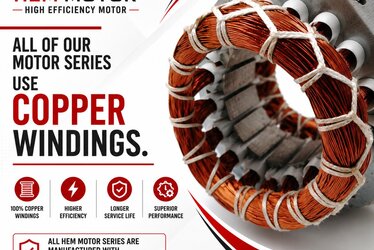
As solar investments become more popular, many business owners aim to lower their electricity bills with a self-consumption PV plant (solar power plant) installed on their roof or land. That goal is entirely valid; yet it is often paired with a misconception that the number of panels is the only thing that determines savings. In reality, the savings equation is a bridge with two ends: on one side sits how much energy you produce, and on the other sits how efficiently you use the energy you produce. Panels strengthen the generation side; but if the machines that turn that energy into work are inefficient, a significant share of your precious kilowatt-hours dissipates into the air as heat and friction loss.
The vast majority of an industrial facility's electricity consumption comes from electric motors. Pumps, fans, compressors, conveyors, mixers and presses are all turned by a motor. According to international studies, roughly two-thirds of the electricity consumed in industry is used by electric motors. In this context, the synergy that emerges when a self-consumption PV system meets motor efficiency carries the payback period of the investment far beyond the panel count. In this article we examine, in technical detail, how solar power and high-efficiency motors complement each other, why daytime load shifting is critical, and how choosing the right motor multiplies savings.
Why Savings in Self-Consumption PV Do Not Begin With Panels Alone
In a self-consumption PV model the goal is to consume the electricity you generate directly within your own facility rather than selling it to the grid. The reason is simple: the unit price of the energy you sell to the grid is usually far lower than the unit price of the energy you buy from it. Therefore the highest financial return comes from consuming every kilowatt-hour you produce yourself. And this is exactly where motor efficiency comes into play.
Suppose your solar panels produced 100 kWh of energy at midday. If you use this energy with an old IE1 or IE2 class motor, then because of the motor's low efficiency perhaps only 88-90% of this energy converts into real mechanical work; the rest is wasted as loss. If you use the same energy with an IE4 or IE5 class motor, the share turned into useful work rises to 95-97%. The difference of a few points, when multiplied by the annual operating hours, reaches a colossal figure. In other words, every kWh the panel produces turns into work with fewer losses in an efficient motor, and you get more work out of the same generation.
The point we want to underline here is this: no matter how large your panel array is, if you are spending that energy with an inefficient motor, the total efficiency of the system is determined by the weak link. A chain is only as strong as its weakest link. A high-efficiency motor investment literally "protects" and multiplies the return of your PV investment.
Motors Make Up Most of a Facility's Consumption
When you begin an energy efficiency analysis, the first thing you should do is map out where the electricity consumption in your facility goes. In most industrial facilities, lighting, air conditioning and office equipment make up a small slice of total consumption, while motorized systems on the production line take the lion's share. That is why real savings begin with the motors.
The Share of Motorized Systems in Consumption
- Pumps: Moving water, chemicals and process fluids; they usually run continuously and consume high amounts of energy.
- Fans and ventilation: Cooling, exhaust and process air; efficiency is highly critical because flow is tied to energy by the cube law.
- Compressors: Compressed-air generation; referred to as industry's "fourth utility" and often the most expensive energy item in a facility.
- Conveyors and handling systems: They have long operating hours because they carry loads continuously.
- Processing machines: Presses, mixers, crushers and machine tools.
All of these systems are motor-centric. Therefore, when installing a self-consumption PV system, it is not enough to calculate how many panels will fit on the roof; you must also review the efficiency class of the motor fleet that those panels will feed. An energy efficiency audit and building a motor inventory reveals how much energy each motor consumes, helping you set your investment priorities.
In IE4 and IE5 Motors Every kWh Turns Into Work With Fewer Losses
The efficiency of electric motors is defined by IE (International Efficiency) classes under the international standard IEC 60034-30-1. Understanding what IE4 and IE5 energy efficiency classes mean is fundamental knowledge for making the right investment decision. As the class number grows, the motor's efficiency rises and its losses fall:
- IE1 – Standard Efficiency: An older generation now restricted from sale in many countries.
- IE2 – High Efficiency: The standard of the past, today below the minimum threshold.
- IE3 – Premium Efficiency: Today's legal minimum across many power classes.
- IE4 – Super Premium Efficiency: The standard of the future, reducing losses markedly compared with IE3.
- IE5 – Ultra Premium Efficiency: The top class that runs with the lowest losses, mostly achieved with permanent-magnet synchronous technology.
The loss difference between IE4 and IE3 is around 15-20%, while the difference between IE5 and IE4 again means a reduction of up to 20% in losses. The word "loss" is the key here; because when motor efficiency rises from 95% to 97% the efficiency appears to climb "only" two points, yet when losses drop from 5% to 3% the losses have actually fallen by almost 40%. Considering the expensive and precious energy that comes from the sun, this reduction in losses flows straight back into your pocket.
In the self-consumption scenario the issue is not merely reducing the energy drawn from the grid. Panel generation is fixed and limited; it reaches a certain peak at midday and falls in the evening. When you use this limited generation with efficient motors, you can run more pumps, more fans and more production with the same solar energy. In other words, a high-efficiency motor increases the "purchasing power" of every kilowatt-hour the panel provides.
Daytime Load Shifting: Where PV Meets the Motor
The biggest constraint of solar energy is that it generates only during the day, and especially around midday. For this reason, the golden rule of self-consumption PV efficiency is to shift your consumption as much as possible to the hours when the sun is shining. This is called daytime load shifting.
Load Shifting Strategies
- Scheduling energy-intensive processes: Moving operations such as pumping, cooling and compressor charging to midday hours.
- Thermal storage: Generating the cooling or heating load during the day and storing it in thermal mass.
- Filling water reservoirs: Filling an elevated water tank during sunny hours and using it by gravity when needed.
- Shift optimization: Concentrating feasible production activities into the daytime shift.
The success of a load-shifting strategy is directly tied to the efficiency of the motors that run those loads. If at midday you are using 50 kWh of solar energy to fill a water tank, then with an efficient pump motor you can pump more water with the same energy, building a larger reserve for the evening and night. This is where the savings that a high-efficiency motor with a variable frequency drive delivers in pumps and fans come into play. A variable frequency drive (VFD) runs the motor not at full load but at variable speed according to the instantaneous demand, delivering dramatic savings particularly in pump and fan applications. Because in pumps and fans the power consumption varies with the cube of the speed; when you drop the speed by 20%, energy consumption can fall by half.
The variable nature of PV generation and the variable-speed capability of the VFD complement each other perfectly. When the sun is abundant the motor can run faster and fill the tank quickly; when a cloud passes the speed can be reduced to balance generation with consumption. This flexibility is only possible with a correctly selected IE4 or IE5 motor plus drive combination.
Carrying the Return on Investment Beyond the Panel Count
The most common mistake made when planning a PV investment is to allocate the entire budget to panels and inverters while leaving the motor fleet as it is. Yet allocating a portion of the same budget to high-efficiency motor conversion often delivers a faster payback than adding new panels. The reason is that an efficient motor both makes better use of daytime solar energy and reduces the energy drawn from the grid at night. In other words, a motor investment produces savings around the clock, whereas an extra panel only contributes during sunny hours.
The Total Cost of Ownership Perspective
The true cost of a motor is not its purchase price. The cost of the energy an electric motor consumes over its lifetime can reach tens of times its purchase price. For this reason, motor selection should be based on the total cost of ownership (TCO) calculation of a high-efficiency motor. An IE4 or IE5 motor that looks slightly more expensive at the moment of purchase pays for itself many times over through lifetime energy savings. Combined with PV, this equation grows even stronger; because you are already generating part of the energy you consume yourself, far more cheaply.
The Numerical Logic of the Synergy
- Fewer losses = more useful work: More production output with the same solar generation.
- Lower peak load: Efficient motors draw less current, reducing the burden on the inverter and the installation.
- Extended equipment life: Less heat loss, lower temperature, longer motor life and fewer breakdowns.
- Lower carbon footprint: Both green energy and efficient use reflect positively in your sustainability reports.
The carbon issue is gaining importance. Not only generating solar energy but also using that energy efficiently contributes to your corporate sustainability targets. More information about the effect of high-efficiency motors on the carbon footprint will be useful in your reporting processes.
Choosing the Right Motor: HEM Motor Expertise
To capture maximum savings in a solar-supported facility, choosing the right motor is decisive. Every application requires a different efficiency class, power, speed and frame type. The ideal motor profile for a pump application differs from a fan application; from a conveyor to a compressor, it varies. This is exactly where working with an expert supplier makes the difference.
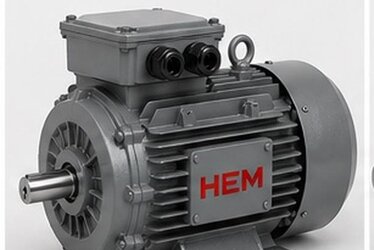
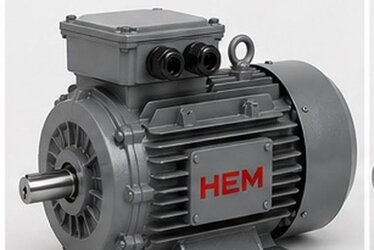
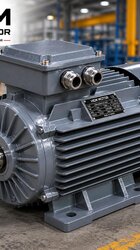
As HEM Motor, with our broad IE3, IE4 and IE5 stock range, we offer motors with fast delivery that ensure your facility gets maximum benefit from its solar investment. By analyzing your existing motor fleet, we can determine together which motors should be replaced first and in which applications the use of a variable frequency drive will bring the highest savings. You can visit our homepage to review our product range and contact us to find the most suitable solution for your project.
Remember: every panel you put on your roof is an investment; but what truly multiplies the return of that investment are the high-efficiency motors that turn the energy you produce into work with the least loss. When sun and efficiency work together, savings do not merely rise; they multiply.
Frequently Asked Questions
Should I also renew my motors when installing a self-consumption PV plant?
It is definitely something to evaluate. Since motors make up most of your facility's consumption, replacing old and inefficient motors with IE4 or IE5 class models at the same time as the panel investment significantly increases the return of your solar energy. An efficient motor makes better use of daytime solar energy and reduces the energy drawn from the grid at night, delivering savings around the clock. Starting with a motor inventory analysis to determine which motors are the priority is the right first step.
What is the relationship between solar power and an IE4 motor?
Panels generate energy, and motors convert that energy into mechanical work. An IE4 class motor turns every kilowatt-hour the panel produces into work with fewer losses. That means you can do more pumping, ventilation or production with the same solar generation. The efficient motor increases the "purchasing power" of the energy the panel provides, carrying the return on investment beyond the panel count.
Why is a variable frequency drive important together with PV?
Solar generation varies throughout the day; it fluctuates with passing clouds and the time of day. A variable frequency drive (VFD) makes it possible to run the motor at variable speed according to the instantaneous demand and the available solar energy. Especially in pump and fan applications, since power consumption varies with the cube of the speed, dramatic savings are achieved with a VFD. The variable nature of PV and the variable-speed capability of the VFD complement each other perfectly.