English
 Türkçe

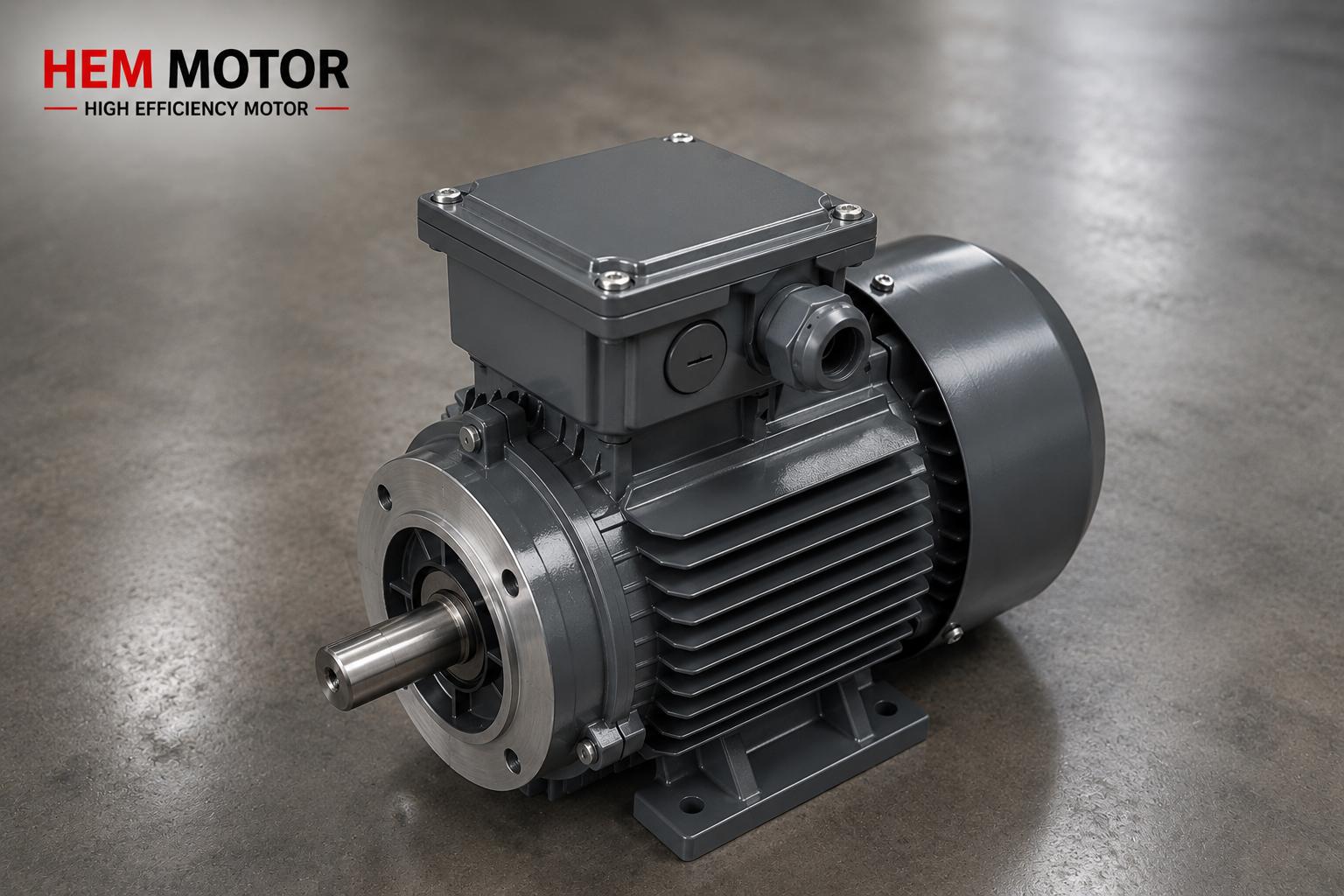

The most common mistake when ordering an IE5 synchronous reluctance (SynRM) motor is to think of it like a classic asynchronous motor. In fact, IE5 synchronous reluctance motors mandatorily require a variable frequency drive to operate and are usually supplied as a matched motor + drive package. The basis of a correct order is matching the trio of kW, speed (poles) and IEC frame size correctly. In this article we address frame-power matching, drive selection, replacement ordering and shaft/flange compatibility in IE5 synchronous reluctance motors as an order-focused guide. Unlike classic IE3/IE4 frame tables, this content focuses specifically on IE5 and drive-based operation logic.
Why Is the Frame-Power Logic Different in an IE5 Synchronous Reluctance Motor?
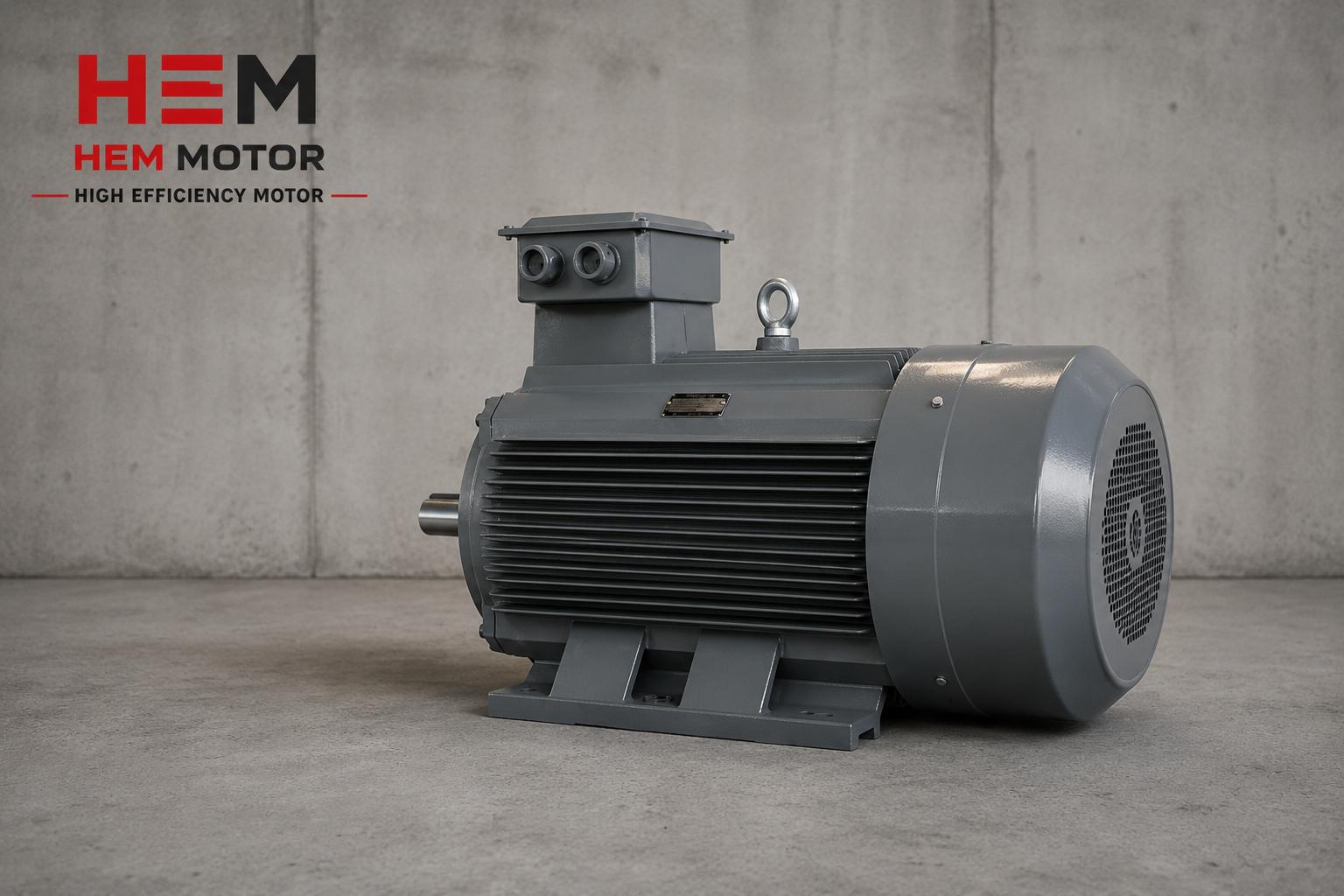
In asynchronous motors the frame size (IEC frame size) is largely standardised: for a given kW and speed combination there is an established frame size in the market. The IEC frame standard is preserved in IE5 synchronous reluctance motors too; that is, frame sizes such as 90, 100, 112, 132, 160, 180, 200, 225, 250, 280 and 315 follow the same axis. However, because in SynRM the operating point of the motor is set by the drive, frame-power matching must always be considered together with the drive.
We addressed the basic structure of SynRM and why it is positioned as the future efficiency class in our IE5 and Synchronous Reluctance Motors: The Future Efficiency Class? article. You can examine the supply advantage of the magnet-free rotor structure in our The Magnet-Free Rotor in IE5 Synchronous Reluctance Motors article.
The Relationship Between kW, Speed and Poles
The two basic parameters that determine the frame size are power (kW) and speed. Speed is inversely proportional to the number of poles: 2 poles correspond to about 3000 rpm, 4 poles to about 1500 rpm and 6 poles to about 1000 rpm synchronous speed. In SynRM, speed can be adjusted across a wide range thanks to the drive; nevertheless, the nominal point is still defined over a reference speed and power. We detailed the pole-speed relationship in our Asynchronous Motor Buying Guide: 2, 4, 6 Poles article.
IEC Frame-Power Matching Logic (IE5-Focused)
The following approach helps you relate frame size to power range in IE5 synchronous reluctance motors. Because this matching is based on the IEC standard, it also makes it easier to achieve mechanical compatibility with the asynchronous equivalent in the same frame:
- Small power (about 0.55–3 kW): 80–100 frame range; small machine and automation drives.
- Medium power (about 4–22 kW): 112–180 frame range; pump, fan and conveyor applications.
- High power (about 30–90 kW): 200–250 frame range; continuously running main drive motors.
- Large power (about 110–355 kW): 280–355 frame range; heavy duty and high running-hour facilities.
These ranges are for reference; the final frame is clarified according to speed and application load. You can see similar logic on the asynchronous side in our Frame Size and Power Matching in Cast Iron Motors article. For large-power supply planning, our Above 90 kW High-Power Electric Motor Supply article helps.
Mandatory Drive Matching: Choosing the Matched Package
The most critical ordering rule for an IE5 synchronous reluctance motor is this: the motor does not run without a drive. Because there is no cage in the rotor, direct-on-line (DOL) starting is not possible; a variable frequency drive (VFD) turns and commissions the motor. For this reason the drive is an inseparable part of the motor and the order is usually placed as a matched package.
In drive selection, the motor’s rated current, power and control mode (sensorless or with encoder) are decisive. An autotune step is required at commissioning so that the drive learns the motor parameters. We explained this topic step by step in our Drive Parameterisation in IE5 Synchronous Reluctance Motors article. You can find drive and installation compatibility in our Drive and Installation Compatibility When Moving to IE5 article. You can examine the reason it does not run without a drive and the package cost in our Why Does an IE5 Synchronous Reluctance Motor Not Run Without a Drive? article.
The Difference Between SynRM, PM and Asynchronous
IE5 efficiency can also be reached with permanent magnet (PM) motors besides synchronous reluctance; however, the structure, supply and cost differ. We detailed the distinction between SynRM and PM in our The Difference Between IE5 Synchronous Reluctance and Permanent Magnet (PM) Motors article. For the difference between asynchronous and SynRM in the same efficiency class, our transition decision guide is complementary.
Replacement Ordering: Replacing an Existing Motor With IE5
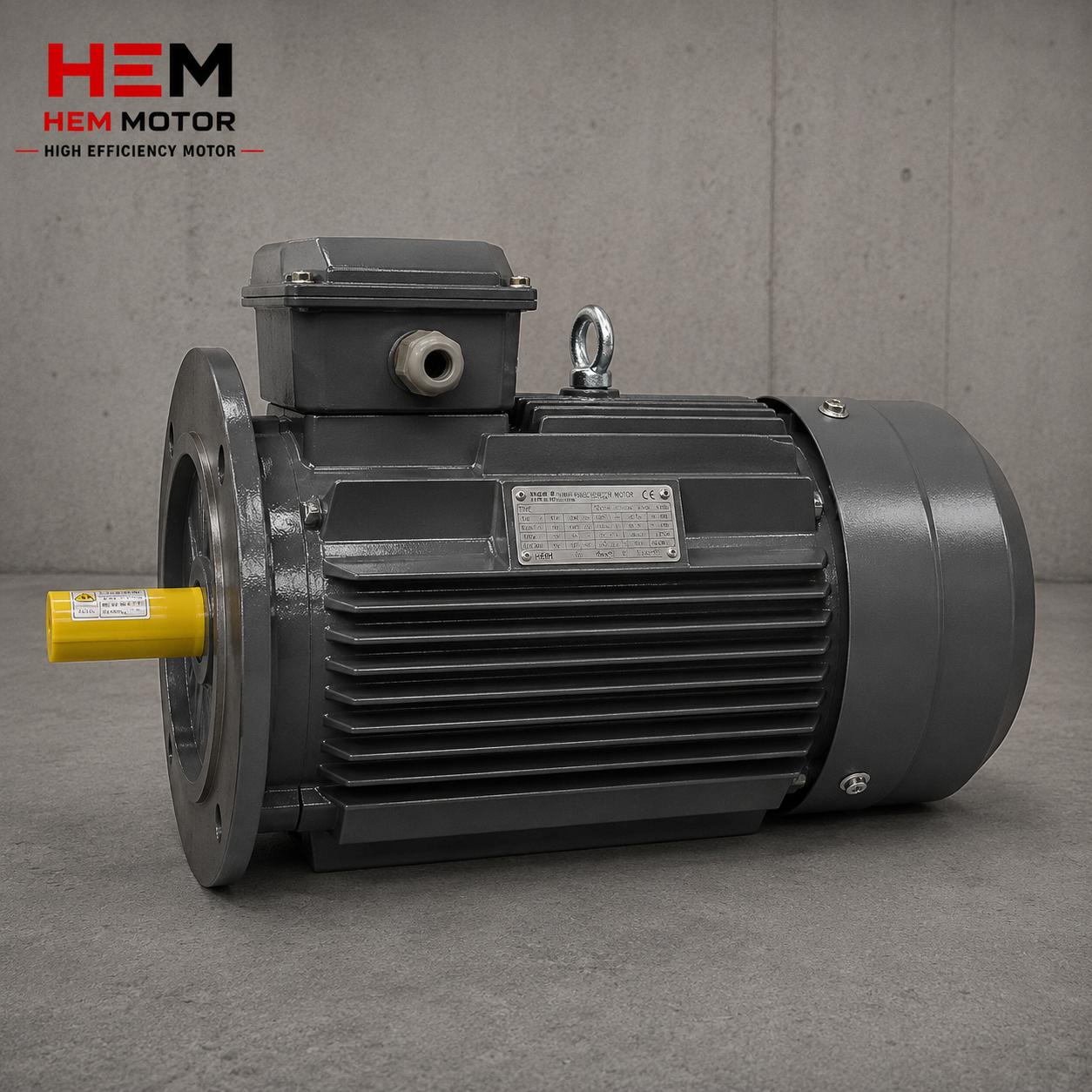
When replacing an existing asynchronous motor with an IE5 synchronous reluctance unit, two compatibility checks are critical: mechanical compatibility and electrical compatibility. On the mechanical side, the frame size, foot hole dimensions, shaft diameter, key and flange type must match exactly so that the gearbox, coupling or pulley connection is seamless.
- Frame and foot: in the same IEC frame size the foot hole spacings are standard; this allows mounting without drilling the base again.
- Shaft and key: the shaft diameter and key dimension must be compatible with the coupling or pulley. We addressed this in our Shaft Diameter, Key and Coupling in Cast Iron Motors article.
- Flange type: the B3 foot-mounted, B5 large-flange, B35 combined or B14 small-flange connection must be chosen correctly. We explained mounting-type selection in our B5 Flange or B14 Flange? article.
- Electrical compatibility: because a drive is mandatory in IE5, a drive-based supply is needed in place of the existing DOL panel.
The logic we examined for mechanical compatibility in IE4 equivalent replacement in our Mechanical Compatibility When Moving to IE4 article applies identically to IE5 replacement. To avoid receiving the wrong motor, apply the pre-order nameplate matching steps.
IE5 + Gearbox Matching
IE5 synchronous reluctance motors can also be used with worm gear or bevel-helical gearboxes. Here the motor’s IEC frame and flange dimension must match the gearbox input connection. We explained matching a motor to a gearbox in detail in our Which Electric Motor Fits a Worm Gear and NMRV Reducer? article. You can find the efficiency gain in geared use in our efficient motor + gearbox combination article.
What Information Is Required When Ordering?
To get an accurate and fast quote when ordering an IE5 synchronous reluctance motor + drive package, the following information must be provided in full: power (kW), nominal/operating speed, frame size, mounting type (B3/B5/B35), shaft diameter, voltage and drive control mode. We compiled the information needed for a quote in our 8 Pieces of Information Required When Requesting an Electric Motor Quote article. We evaluated the payback of a large-power IE5 investment in our Investment and Payback in IE5 Motors Above 132 kW article.
Frequently Asked Questions
Can I order an IE5 synchronous reluctance motor without a drive?
In practice, no. Because the SynRM rotor has no cage, the motor cannot start directly on line; a variable frequency drive is essential for it to operate. For this reason the order is usually placed as a matched motor + drive package, and the drive is sized to the motor.
At the same kW and speed, is the IE5 frame size the same as the asynchronous equivalent?
Because the IEC frame standard is preserved, the frame size is largely compatible, which makes replacement easier. Even so, the foot hole, shaft diameter, key and flange dimensions should be verified exactly before ordering; small differences can cause problems during mounting.
How should I size the drive in an IE5 package?
The drive is selected based on the motor’s rated power and current; the control mode (sensorless or with encoder) and the application’s load profile are also considered. At commissioning the drive learns the motor parameters via the autotune step. For correct sizing, sharing the motor nameplate values in full is sufficient.
Get a Quote
If you want to order your IE5 synchronous reluctance motor with the correct frame size, speed and matched drive, our team will determine the motor + drive package together with you based on your kW, speed and application information. Contact us now at +90 (532) 345 49 86 or request a quote via our contact page.
IE5 Ordering and Matching Checklist
- Determine the power (kW) and nominal/operating speed.
- Clarify the number of poles (2/4/6) and the target output speed.
- Match the IEC frame size to power and speed.
- Select the mounting type (B3/B5/B35/B14).
- Record the shaft diameter, key and flange dimensions.
- Determine the drive need and control mode (sensorless/with encoder).
- Order the motor + drive package as a matched set.
- If replacing, verify the existing motor’s nameplate and connection dimensions exactly.
- In geared use, check the input flange compatibility.
- Provide all nameplate information in full when requesting a quote.