English
 Türkçe

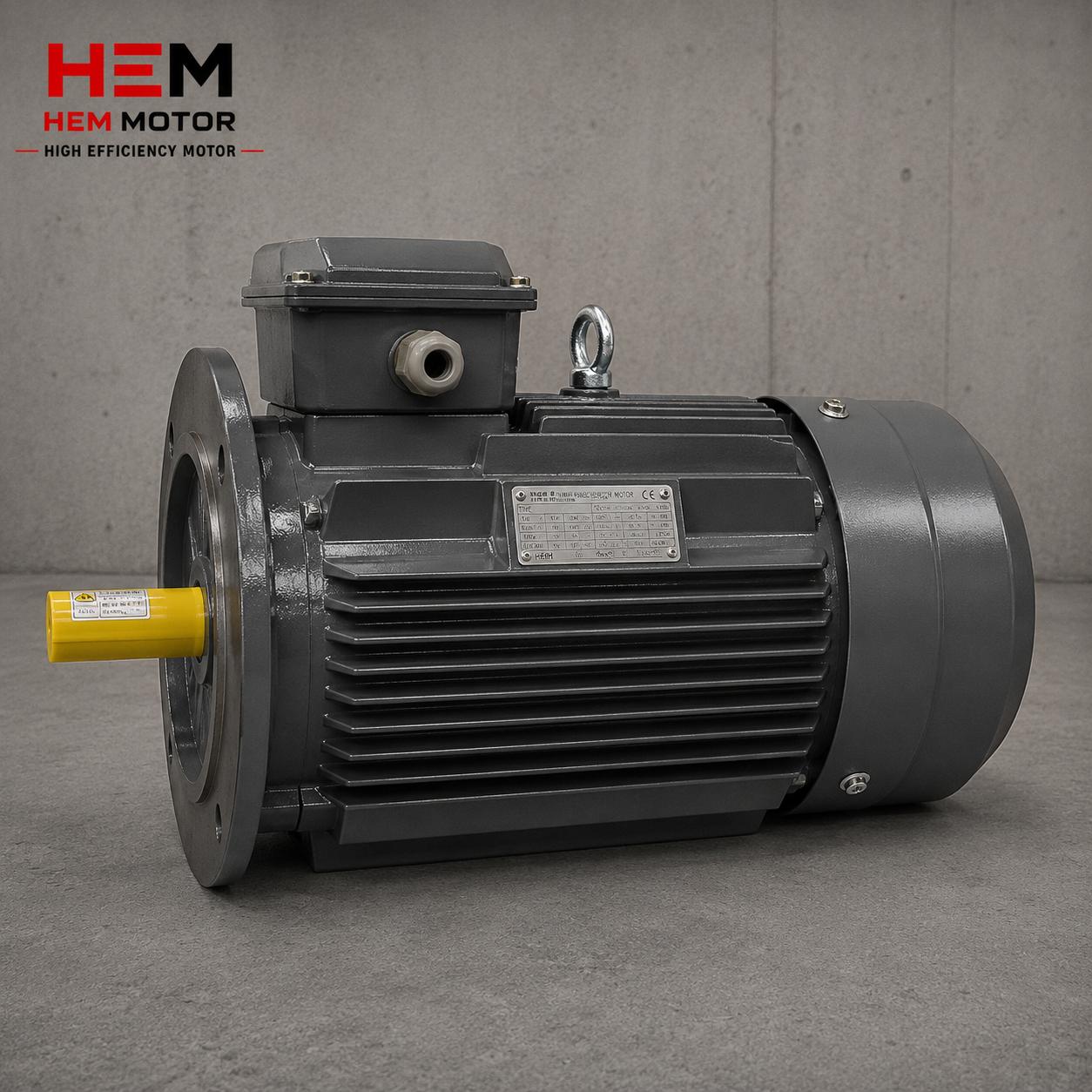

IE5 Ultra Premium is the highest step that efficiency has reached in electric motors. Moving to IE5 in the largest power class, such as 355 kW, is the most powerful savings lever for continuously running plants where the annual energy consumption is very high. In this article we cover the 355 kW IE5 ultra premium motor in terms of efficiency gain, return on investment and supply. Most IE5 motors run with synchronous reluctance technology and are commissioned as a package together with a drive (VFD). As HEM Motor, an electric motor factory manufacturing since 1979, we supply high-power and ultra premium motors from Türkiye stock and production together with a project lead time, shipping and commissioning plan.
What Is IE5 Ultra Premium? Synchronous Reluctance Technology
Efficiency classes rise from IE1 (standard) to IE5 (ultra premium). Each step means doing the same job with fewer losses. IE5 ultra premium is the highest efficiency class currently available and is designed especially to minimize the energy cost in high-power, continuously running applications. The large majority of IE5 motors are produced with a synchronous reluctance rotor structure; since there is no slip loss in the rotor, this structure runs with fewer losses than a traditional asynchronous motor.
We covered whether IE5 and synchronous reluctance motors are the efficiency class of the future in our IE5 and synchronous reluctance motors article. We explained why the efficiency curve of the synchronous reluctance motor is superior especially at partial load in our efficiency curve of the IE5 synchronous reluctance motor article; considering that in the real field the motor rarely runs at full load, this is a big advantage. We compared the difference between synchronous reluctance and permanent magnet (PM) motors in our difference between IE5 synchronous reluctance and permanent magnet motors article.
The Efficiency Difference Between IE5 and IE4 at 355 kW
355 kW is the largest power step in industrial motors. At this power, although the efficiency difference between IE4 and IE5 looks small as a percentage, the absolute saving is large because the annual energy consumption is enormous. In a continuously running 355 kW motor, every small improvement in the efficiency class means a notable reduction in the energy cost at the end of the year. We evaluated whether the efficiency difference between IE5 and IE4 justifies the investment in our IE5 or IE4 efficiency difference article.
What matters here is to make the decision according to the annual running hours. While the difference IE5 brings remains small in a motor running a few hundred hours a year, the difference becomes very large in a 355 kW motor running three shifts without interruption. We covered the investment and payback balance in IE5 motors above 132 kW in our investment and payback in IE5 motors above 132 kW article; the same logic becomes even more pronounced at 355 kW.
Why Is a VFD Mandatory? The IE5 Package Logic
IE5 synchronous reluctance motors cannot be connected directly to the grid and run like traditional asynchronous motors; they are always used together with a frequency inverter (VFD). This requires evaluating the IE5 motor not as a motor but as a motor + drive package. The drive provides synchronous operation by controlling the motor with the correct frequency and voltage. We detailed why the IE5 motor does not run without a drive and the package selection in our IE5 synchronous reluctance motor drive package cost article.
Another advantage the VFD brings is speed control. In variable-load applications such as pumps and fans, reducing the speed with a VFD provides significant energy savings due to the cube law; this is added on top of the efficiency advantage of IE5. We explained how a VFD is selected in our frequency inverter (VFD) with asynchronous motor article, and the savings that a high-efficiency motor and a drive provide together in our high-efficiency motor + frequency inverter article. We covered the drive and installation compatibility in the transition to an IE5 motor, together with a commissioning checklist, in our drive and installation compatibility in the transition to an IE5 motor article.
Return on Investment: From List Price to Total Cost
IE5 ultra premium motors carry a higher price as an initial investment than the lower efficiency classes; moreover, the cost of the VFD is also taken into account. However, the correct evaluation is to look not only at the list price but at the total cost of ownership (TCO). The TCO covers all of the purchase price, energy consumption, maintenance and downtime costs. In a high-power, continuously running motor, the energy item far exceeds the initial investment; that is why efficiency is the decisive factor in the long term. We explained how the TCO is calculated in our total cost of ownership in a high-efficiency motor article.
When evaluating the payback period, establishing the conceptual logic instead of a numerical calculation is sufficient: the higher the annual running hours, the shorter the payback period of the IE5 investment. We covered the payback logic of replacing an old standard motor with a high-efficiency motor in our replacing an old standard motor with IE4: payback article, and whether IE5 is expensive and the price-savings balance in our is buying an IE5 motor expensive article. You can find the method of measuring and documenting the annual energy saving in our measuring annual energy savings in a high-efficiency motor article.
The Maintenance and Supply Advantages of IE5
One advantage of synchronous reluctance IE5 motors is that there is no permanent magnet in the rotor. A magnet-free rotor reduces the dependence on rare elements in the supply chain and provides a cost advantage. We explained the supply and cost advantage of the magnet-free rotor in our magnet-free rotor in IE5 synchronous reluctance motors article. On the maintenance side, we covered the failure management and long life of the IE5 synchronous reluctance motor in our IE5 synchronous reluctance motor maintenance article.
We evaluated in which applications the transition to an IE5 motor is a priority in our IE5 ultra premium motor transition guide article; continuously loaded lines with the highest annual running hours are always first in line. Correctly understanding the difference between nameplate efficiency and field efficiency is also important; our difference between nameplate and field efficiency article guides calculating the real saving according to the field load profile.
Frame, Handling and Commissioning in a 355 kW IE5 Motor
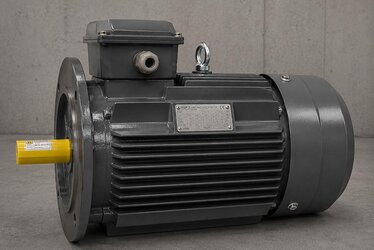
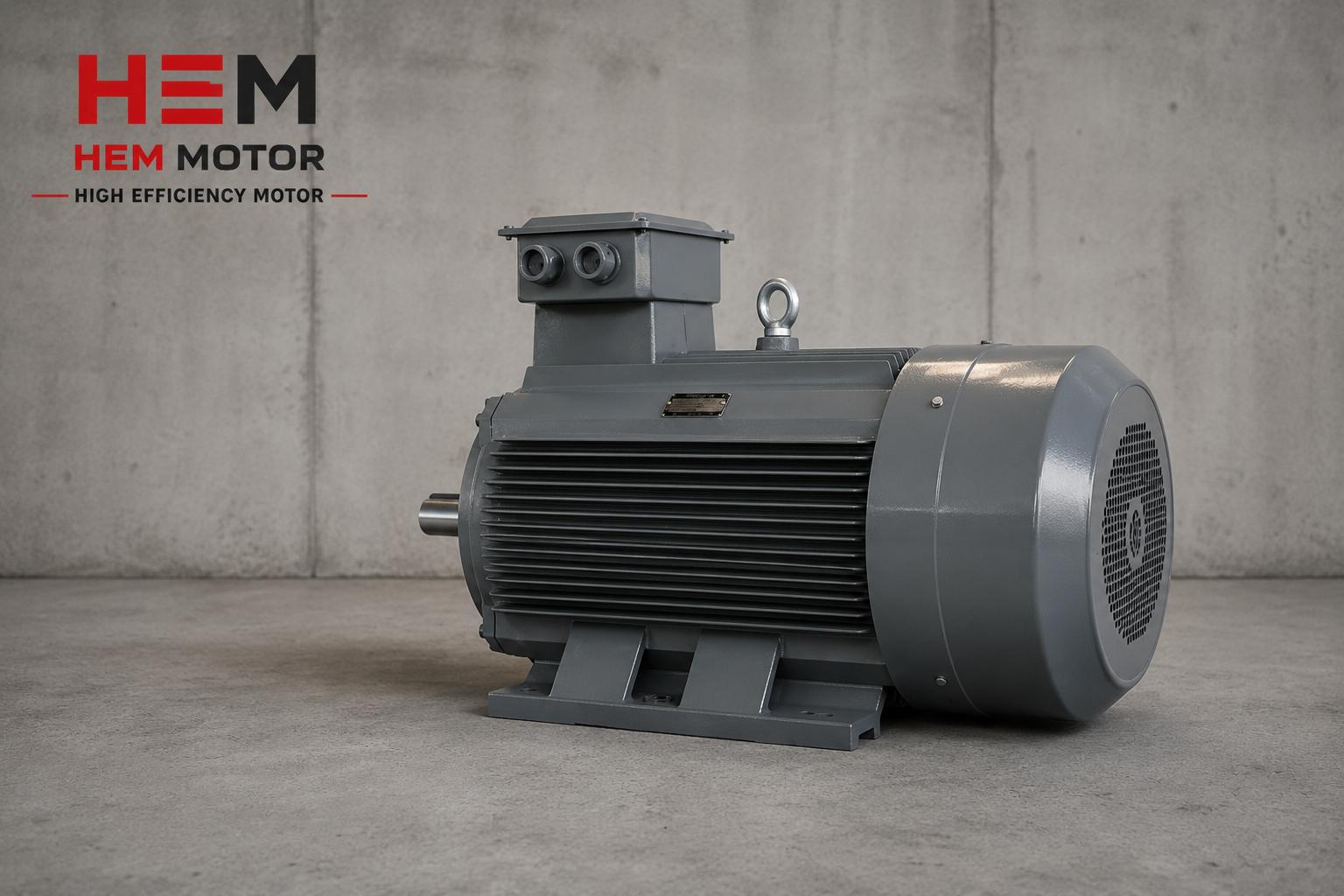
The 355 kW IE5 motor is also in the largest power class mechanically. The frame is usually in the 355 (IEC 355) class, with a cast iron structure; the weight exceeds one ton and lifting is done only with a lifting eye, crane and sling. We detailed the frame size, weight and handling of high-power motors in our cast iron motor frame sizes and weight-handling article. We clarified why the cast iron body is the only option at this power in our cast iron or aluminium body article.
Since the IE5 motor is a package, commissioning requires the motor, the drive and the installation to work in harmony. The drive parameters must be set according to the motor, and the cable and grounding must be selected to suit the drive. We gathered the delivery checks in our electric motor shipping damage check list article and the first start in our motor commissioning checklist article. We handled the lead time, shipping and commissioning plan in high-power supply as a whole in our high-power motor supply above 90 kW and 250 kW high-power motor supply articles. You can review our efficient motor range on our efficient electric motors page.
In Which Facilities Does a 355 kW IE5 Stand Out?
The 355 kW IE5 investment makes the most sense in facilities with high annual running hours and high energy intensity. Large fans and mill drives in cement and mining plants; large pumps and blowers in water and wastewater plants; compressor and pump lines in petrochemical and power plants - these are the applications where IE5 provides the fastest payback in this power class. The common point of these facilities is that the motors run almost without interruption and the total energy consumption holds a large share in the facility cost. For this reason, the efficiency class of a 355 kW motor is not just a technical preference but a decision that directly affects the operating budget.
When deciding to move to IE5, an inventory of all the high-power motors in the facility should be drawn up, and the most critical motors with the highest running hours should be evaluated first. A gradual transition that starts from a single motor and spreads to the fleet makes both the investment manageable and the saving measurable. In variable-load applications such as pumps and fans, the IE5 + VFD combination provides the highest saving because it combines both the efficiency and the speed control advantage. In constant-load, continuously running main drives, the high nominal efficiency of IE5 produces a stable saving throughout the year.
Regulation, Efficiency Trend and Readiness for the Future
Energy efficiency regulation is progressing over the years towards making ever higher efficiency classes mandatory. While IE4 is expected today in many high-power applications, IE5 ultra premium stands out as a voluntary upper step. Facilities that move to IE5 today both lower their energy cost and are prepared for possible future efficiency mandates. In addition, high-efficiency motors reduce the carbon footprint of the facility; this is a subject of growing importance for exporting facilities subject to carbon border regulations.
A motor in the largest power class such as 355 kW is a long-life investment that serves for decades. For this reason, selecting the highest efficiency class from the start provides energy savings throughout the entire life of the motor. The maintenance and failure management of the IE5 motor also support the long life; the magnet-free rotor of the synchronous reluctance structure offers a simple and reliable solution both in terms of supply and maintenance. A 355 kW IE5 system set up with the right drive package and commissioning plan runs stably and efficiently for years.
355 kW IE5 Motor Investment and Supply Checklist
- Efficiency class: IE5 ultra premium - highest efficiency, highest absolute saving at high power.
- Technology: Usually synchronous reluctance, magnet-free rotor.
- Drive: VFD mandatory - must be evaluated as a motor + drive package.
- Payback: The higher the annual running hours, the faster the payback.
- Evaluation: Total cost of ownership (TCO), not the list price.
- Frame: 355 (IEC 355) cast iron; weight and handling planned in advance.
- Commissioning: Motor, drive and installation compatibility planned together.
- Supply: Delivery from stock or production order; project lead time and shipping plan.
Frequently Asked Questions
Does a 355 kW IE5 motor run without a drive?
No. IE5 synchronous reluctance motors cannot be connected directly to the grid and run like traditional asynchronous motors; they are always used together with a frequency inverter (VFD). The drive provides synchronous operation by controlling the motor with the correct frequency and voltage. For this reason an IE5 motor must be planned not as a motor but as a motor + drive package; the cost of the drive and the commissioning compatibility must be taken into account from the start.
When does an IE5 investment make sense at 355 kW?
The return on an IE5 investment depends on the annual running hours. In a 355 kW motor running continuously (S1) with high annual hours, the efficiency gain that IE5 provides is very large in absolute value; for this reason the payback period shortens and the investment becomes sensible. In contrast, in a motor running few hours a year, the payback of the extra cost of IE5 plus a VFD lengthens. The decision should always be made on the basis of running hours and load profile.
The initial cost of an IE5 motor is high; why is it preferred?
IE5 ultra premium motors carry a higher price as an initial investment, and the VFD cost is also added. However, at high power and in continuous operation, the energy item far exceeds the initial investment. For this reason the decision should be made according to the total cost of ownership (TCO), not the list price. At high annual running hours, the energy saving of IE5 covers the extra cost over time and then provides a net gain.
Get a Quote
Would you like to plan your 355 kW IE5 ultra premium motor investment with the right drive package and a payback analysis? Send us your application, your annual running hours, the required speed and the delivery lead time; let us present the IE5 motor together with a suitable VFD and commissioning plan, with a total cost of ownership evaluation, in a single quote. As HEM Motor, we supply high-power and ultra premium motors from Türkiye stock and production with a project plan. Reach us right away at +90 (532) 345 49 86 or fill out the form on our contact us page; let our technical team prepare the most suitable IE5 motor + drive package and supply plan for your project together with you.