English
 Türkçe

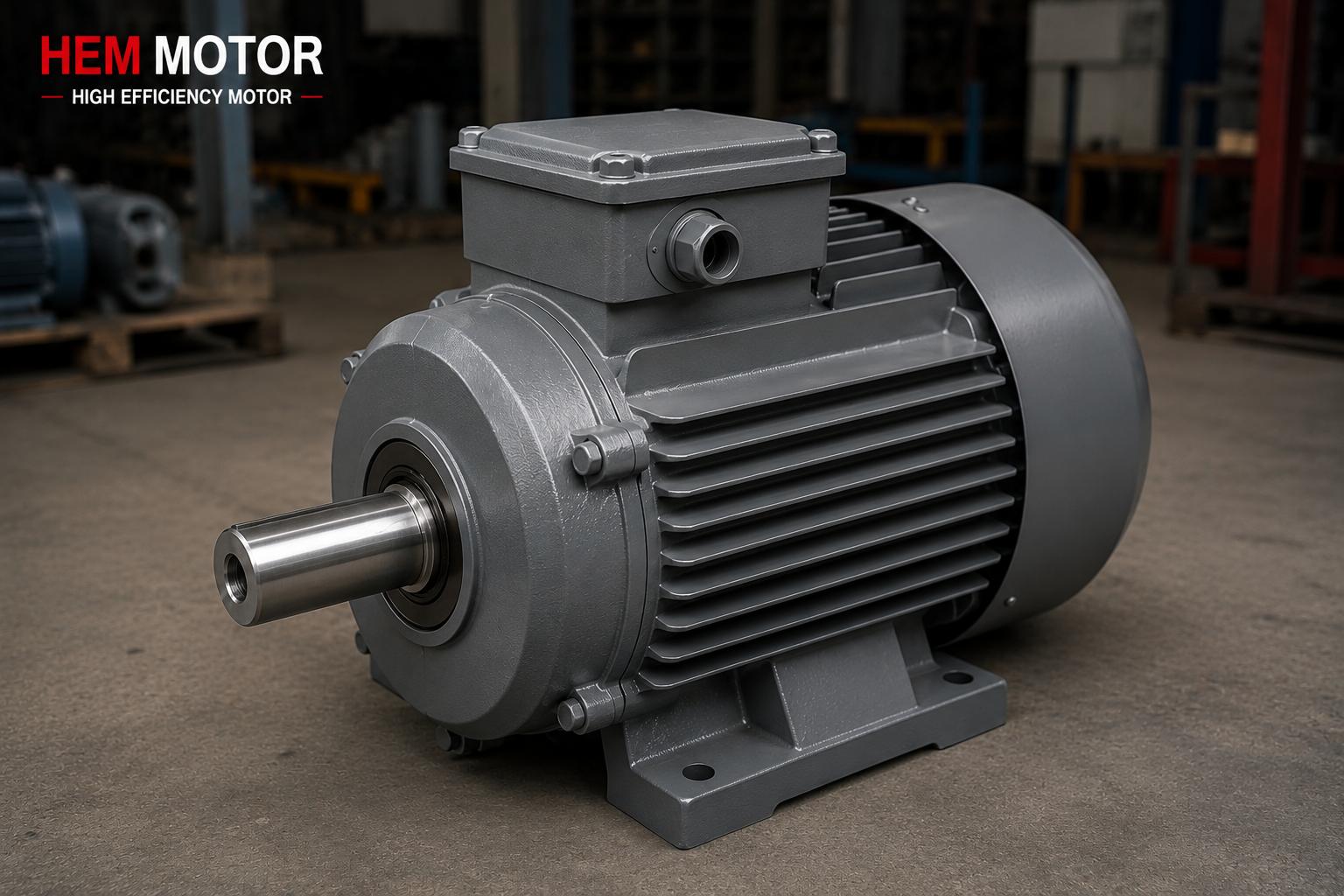

When sizing a motor, one question is usually asked: "How many kW is the load?" Yet the second and often more critical factor that determines how hard the motor works is how it operates. In machines such as elevators, cranes and presses, the motor does not run continuously at a fixed load; it runs for a while, then stops or idles, then runs again. This operating regime is called "intermittent duty" and is defined in international standards as S3 (periodic intermittent duty) and S4 (periodic intermittent duty with starting). In this article we explain what the S3 and S4 duty types are, what the % cyclic duration factor (ED) means, why frequent start-stop heats the motor, and how to select the power compared with a continuous duty (S1) motor, using an IE3 efficient motor as the example.
What Is Duty Type and Why Does It Determine Power Selection?
The duty type defines the load and stop pattern of a motor over time. The IEC 60034-1 standard classifies these patterns from S1 to S10. The best known is S1, continuous duty: the motor runs at a fixed load long enough to reach thermal equilibrium temperature. In intermittent duties the motor stops or unloads before reaching thermal equilibrium; it heats during each operating period and partly cools during each stop period.
This matters because the main factor limiting motor power is not mechanical strength but heating. Winding insulation ages rapidly above a certain temperature. A power higher than what can be delivered in continuous duty may be obtainable from the same frame in intermittent duty, because the stop periods give the motor a chance to cool. We covered the general logic of duty types in our duty type (S1-S6) selection article; here we focus specifically on S3 and S4 and the cyclic duration calculation.
S3 Periodic Intermittent Duty: The % Cyclic Duration (ED) Logic
The S3 duty type describes periodic intermittent operation in which the thermal effect of starting can be neglected. The motor runs under load for a while, then stops (de-energizes), and this cycle repeats. The key concept here is the % cyclic duration factor, internationally abbreviated as ED (Einschaltdauer) or "cyclic duration factor".
ED is the percentage of time the motor spends under load within one cycle. Standard ED values are given as 15%, 25%, 40% and 60%. For example, ED 40% means that in a 10-minute cycle the motor runs under load for 4 minutes and stops for 6 minutes. The lower the ED, the longer the motor cools and the higher the power that can be drawn from the same frame.
The cycle time is generally taken as 10 minutes in the standard. If the nameplate says "S3 40%", it means the motor has been rated for 4 minutes of operation in a 10-minute cycle. The S3 statement alone is incomplete without the ED value; it must always be ordered together with the percentage.
Why Does Power Increase as ED Decreases?
Motor heating depends on the loss heat, which is proportional to the square of the current drawn. The same frame can dissipate a certain amount of heat in continuous duty. In intermittent duty the total heat generated decreases as the operating time shortens, and some cooling occurs during the stop period. Therefore the same-frame IE3 motor can deliver a higher peak power at ED 25% than at ED 60%. In practice the manufacturer's tables are used; roughly, the permitted power increases as the ED is reduced.
S4 Periodic Intermittent Duty With Starting: When Start Count Comes Into Play
The S4 duty type is one step more demanding than S3: here the thermal effect of starting can no longer be neglected. In S4 the cycle consists of a start (run-up), operation under load and stop periods, repeated very frequently. Applications such as elevators, crane hoisting-traveling, revolving doors and press feeding are in the typical S4 regime.
To understand why starting is so important, one must look at the starting current. When an induction motor starts from standstill, it draws a starting current of about 5-8 times the rated current, and this current generates intense heat in the winding in a short time. We examined this mechanism in detail in our starting (inrush) current (LRA) article. In S4 this high current is repeated very frequently, so the motor is stressed more by start heat than by load.
That is why the S4 definition includes not only the % cyclic duration factor but also the number of starts per hour and the moment of inertia (J) of the load and motor. We covered the limit on starts per hour in our starts per hour article. Very short pulsed operations for positioning fall under jogging/inching, which we examined in our IE3 motor jogging and frequent start-stop article.
Why Is Moment of Inertia (J) Critical in S4?
The greater the inertia of the load, the longer the motor takes to accelerate it, and the more heat is generated at each start. The limit on starts per hour drops markedly under high-inertia loads. Therefore, when selecting an S4 motor, the load's moment of inertia (GD² or J) must always be taken into account. We covered the relationship between starting time and inertia in our starting time and moment of inertia (J) article.
Power Reduction or Increase Relative to S1
If a motor nameplate shows "S1" and a power value, that power applies to continuous duty. Using the same motor in intermittent duty has a two-way effect:
- Power increase at low-ED S3: Because there is a cooling margin, a higher peak power than S1 can be drawn from the same frame. For example, a frame giving a certain power in S1 can operate at a higher power class in S3 25%.
- Power reduction (derating) in S4: If start heat is dominant and the number of starts per hour is high, the motor heats from starting rather than load. In this case it may be necessary to operate at a lower effective power than the S1 rating or to choose a motor one frame larger.
The correct approach is to derive the application's actual cycle pattern (operating time, stop time, start count, inertia) and match it to the manufacturer's duty type tables. You can find the torque calculation from rated power in our rated torque calculation (torque from kW and speed) article, and part-load efficiency behavior in our efficiency-load curve (% load) article.
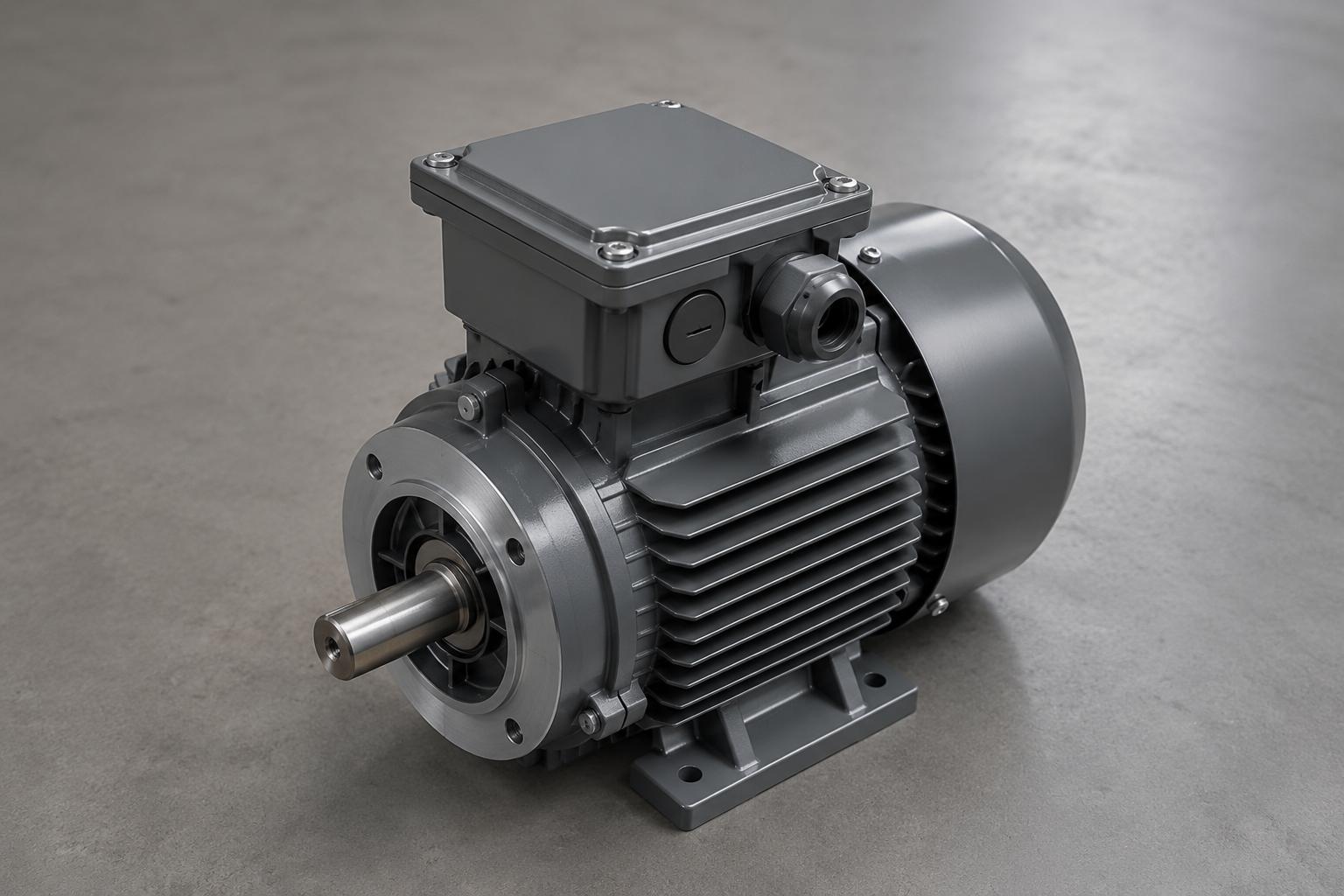
IE3 Selection in Elevator, Crane and Press Applications
Elevator: The up-down movement of the car is a typical intermittent duty. At each call the motor starts, moves the car and stops. Depending on traffic density, there can be many starts per hour. Therefore elevator motors are selected for the S4 regime and braked operation. We covered supply details on the elevator and escalator side in our elevator and escalator motor supply article.
Crane and hoist: Lifting and traveling movements involve frequent start-stop; a brake is also essential to hold the load. These applications generally require S3/S4 with a braked motor. We examined motor supply on the crane and hoist side in our crane and hoist lifting motors article.
Press and feeding: A press cycle involves short pulsed loads and frequent repetition; in some applications flywheel inertia comes into play. In this regime, motor selection must be handled together with cycle time and inertia.
In all these applications an IE3 efficient motor is preferred, because high efficiency both reduces operating cost and ensures regulatory compliance. We compiled the sectors in which IE3 motors are used in our IE3 motor use areas article, and the most sought-after power-speed combinations in our IE3 motor stock guide article.
Reading the Duty Type on the Nameplate Correctly
On the motor nameplate, the duty type is often written either alone as "S1" or together with a percentage (for example "S3 40%"). If you see only S1 on the nameplate, it means the motor has been rated for continuous duty; before using it in intermittent duty, it must be re-evaluated with the manufacturer's tables. If there is an ED percentage with S3 or S4 on the nameplate, the motor has already been built for that regime. The other fields of the nameplate (kW, speed, current, insulation class, protection class) must also be fully verified before ordering; we covered this topic in our reading the IE3 motor nameplate article.
When ordering for intermittent duty, clearly stating the ED percentage, the cycle time and, if needed, the number of starts per hour on the nameplate both prevents the wrong motor from arriving and is important for warranty coverage. Because if a motor is sold for S1 and run in S4 and fails due to heating, this may be assessed as a misapplication problem.
Relationship of Starting Current to the Starting Method
In frequently started S4 applications, a starting method that reduces the starting current (star-delta or soft starter) can reduce the motor's heating. However, since these methods also reduce the starting torque, they must be chosen carefully for high-inertia loads or loads requiring high starting torque. We covered the compatibility of the soft starter with the IE3 motor in our soft starter compatibility article. We examined the relationship between rated and starting torque in direct-on-line (DOL) starting in our rated torque and starting torque article.
Braked Motor and Position Holding
In most intermittent duty applications such as elevators and cranes, a brake is needed to hold the load when the motor stops. A braked motor has a disc brake that engages by spring force when power is cut; this holds the car or load safely in place. The S4 regime and braked operation often go together, because the brake engages at every stop and releases at every start. We covered accessory options such as brake, encoder and forced cooling in our accessory options article. In a frequently started application, the brake must also be selected to suit the start count, and the brake pad wear margin must be taken into account.
Thermal Protection: Monitoring the Winding Directly in Intermittent Duty
In intermittent duty and especially in frequently started S4, a current-based thermal relay is not always sufficient, because the heat comes from the starting current rather than the load, and the relay cannot fully track these rapid repetitions. The most reliable protection is to monitor the winding temperature directly with a PTC thermistor or PT100 embedded in the winding. We explained these methods in our thermal protection (PTC/PT100) wiring and winding temperature monitoring articles. Ideally a thermal relay and PTC are used together. It should also be remembered that heating in frequent starting ages the winding insulation, which leads to early failure; choosing the insulation class (F/H) correctly at this point directly affects motor life.
Frequently Asked Questions
What is the difference between S3 and S4 duty types?
S3 is a periodic intermittent duty in which the thermal effect of starting can be neglected; the motor runs, stops and this cycle repeats. S4 is a periodic intermittent duty with very frequent starting in which the thermal effect of starting cannot be neglected. In S4 the number of starts per hour and the load's moment of inertia are part of the definition. Applications with frequent start-stop, such as elevators and cranes, are typically in the S4 regime.
What does ED 40% mean?
ED is the % cyclic duration factor; it shows the percentage of time the motor spends under load within one cycle. The cycle time is generally taken as 10 minutes; in that case ED 40% means the motor runs under load for 4 minutes and stops for 6 minutes. The lower the ED, the more the motor cools and the higher the power that can be drawn from the same frame.
Can I use an S1-rated motor in intermittent duty?
You can, but it must be evaluated correctly. In a low-ED S3 regime, a higher peak power than S1 may be possible; conversely, in frequently started S4 where start heat is dominant, power reduction (derating) or a motor one frame larger may be needed. The most accurate method is to derive the application's cycle time, stop time, starts per hour and moment of inertia and match them to the manufacturer's duty type tables.
Get a Quote
For your intermittent duty (S3/S4) application such as an elevator, crane or press, let us select the right IE3 motor together according to the correct ED and start count, with a brake if needed. We evaluate your cycle time, moment of inertia and thermal protection needs according to your application. For a fast quote call our line at +90 (532) 345 49 86 or reach us through our contact page. You can review our full product range from our home page and related content from our IE3 motors category.
Purchasing and Selection Checklist
- Determine the application's duty type: is it S3 (starting effect negligible) or S4 (frequently started)?
- Clarify the % cyclic duration factor (ED 15/25/40/60) and the cycle time.
- For S4, state the number of starts per hour and the load's moment of inertia (J/GD²).
- Correct the S1 rated power with an increase or reduction (derating) according to the duty type.
- If braked operation is required (elevator, crane), add it to the order.
- Request PTC thermistor or PT100 thermal protection embedded in the winding.
- Ensure the duty type is stated on the nameplate together with the ED percentage.
- Verify the IE3 efficiency class and the correct pole/speed selection for the application.