English
 Türkçe

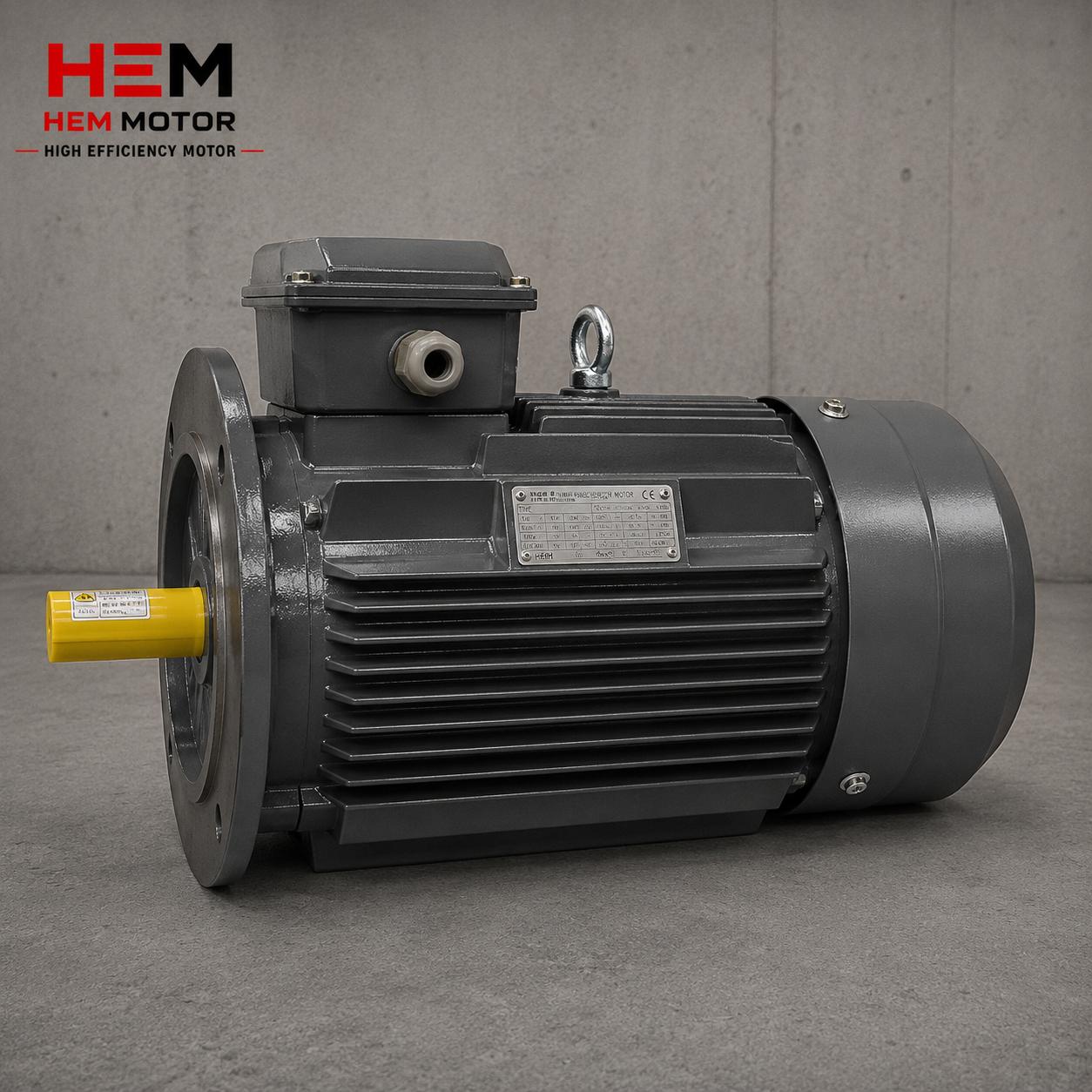

One of the most critical decisions a buyer faces when selecting a high-power drive motor is voltage choice: should you stay with a low voltage (LV, typically 400 V) motor, or move to a medium voltage (MV, 3.3 kV or 6.6 kV) motor? This decision affects not only the motor but the cable, the panel, the drive and the facility's electrical infrastructure from the start. As power rises, the current an LV motor draws climbs rapidly; beyond a certain threshold this high current becomes unsustainable in terms of cable cross-section, losses and the panel. This is where the move to a medium voltage motor comes onto the agenda. In this article we look, from the buyer/selection perspective, at the transition threshold above roughly 400-630 kW, the advantage and cost differences between LV and MV, and which is right in which situation. (This article contains no fixed price.)
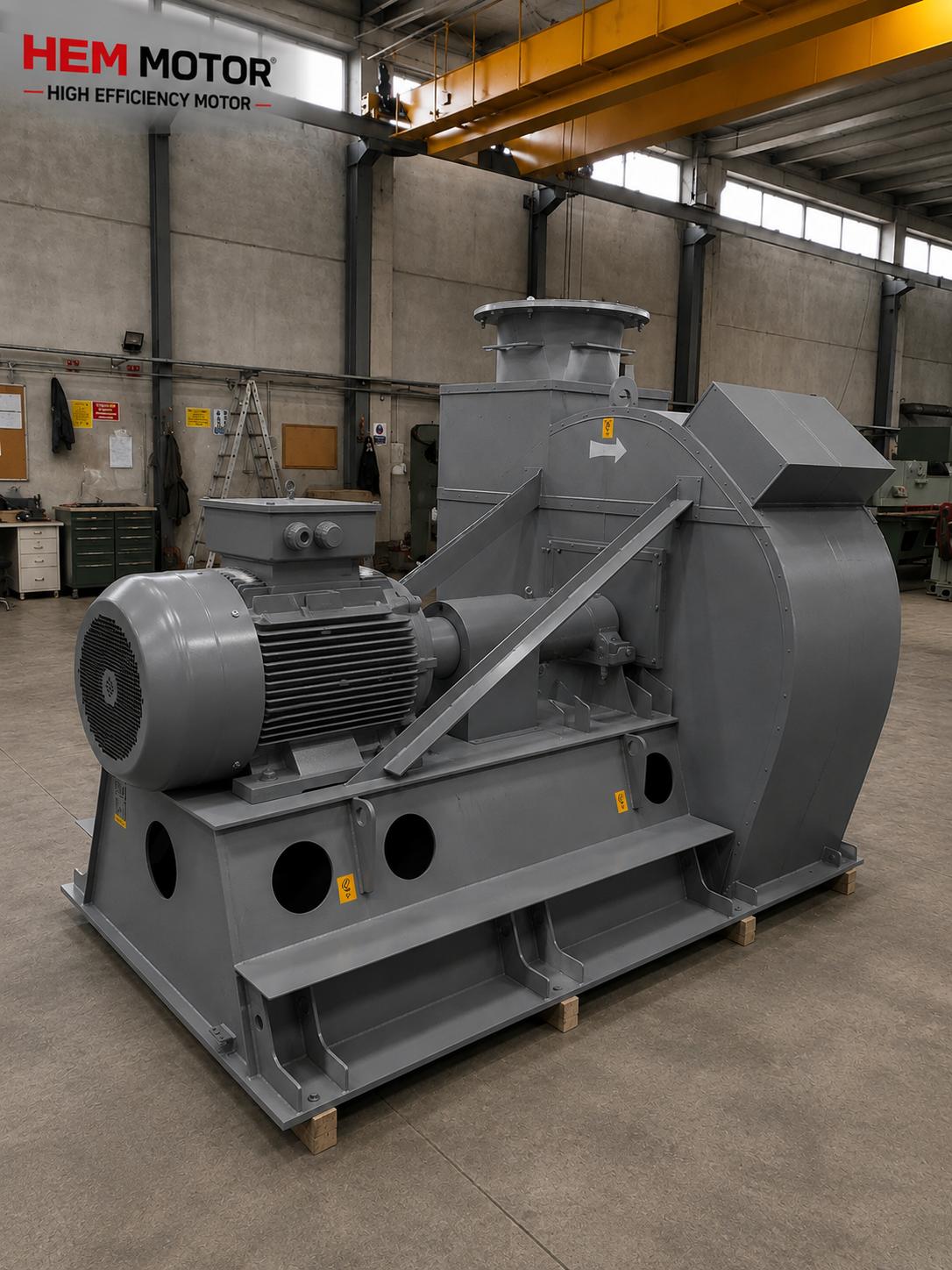
The Current Problem of a Low Voltage Motor at High Power
The current a motor draws is roughly proportional to power and inversely proportional to voltage. At 400 V low voltage, as power grows the current rises rapidly; for example, a few-hundred-kilowatt LV motor draws hundreds of amperes. This high current creates three basic problems. First, the cable: carrying high current requires very thick, often parallel-run cables; this means both cost and installation difficulty. Second, losses: the loss turning into heat in the conductor rises with the square of the current, so high current means more loss and more heating. Third, the panel and protection: the size and cost of the breaker, contactor and busbars needed to switch and protect the high current grow quickly.
For this reason, high power at low voltage hits a physical and economic ceiling. One way to reduce current at high power is to raise the voltage; the same power is carried at lower current at higher voltage. On the LV side, an intermediate step in this logic is 690 V; using 690 V instead of 400 V noticeably reduces the current. We cover 690 V motor selection and the low-current advantage at high power in 690 V asynchronous motor selection: low current at high power. But even 690 V becomes insufficient above a certain power; that is where medium voltage comes in.
The Rated Current, Cable and Protection Chain
In motor selection, rated current determines not only the motor but the entire supply chain: cable cross-section, fuse, contactor and breaker are sized to this current. As current rises in an LV motor, every link of this chain grows and becomes more expensive. We cover cable, fuse and contactor selection by rated current in rated current: cable, fuse and contactor selection and cable connection and lug selection in cable connection and cable lug in electric motors. The move to medium voltage shrinks this entire chain, simplifying the supply side.
The Transition Threshold: Above Roughly 400-630 kW
In practice there is no single exact limit for the move from low to medium voltage; the decision depends on power, operating conditions and facility infrastructure. But the general consensus is that above roughly the 400-630 kW band, medium voltage becomes increasingly sensible. Below this threshold, LV (400 V or 690 V) motors are mostly economical and practical; above it, the current, cable and loss problems of LV begin to justify the extra panel cost that medium voltage brings. At very high powers (1 MW and above), medium voltage becomes almost standard.
The threshold relates not only to power but also to operating hours. In a motor running continuously for long hours, the high-current losses of LV turn into a large energy loss over time; in that case the low-current advantage of medium voltage can become meaningful earlier. We cover supply, lead-time and commissioning planning at high power in high-power motor supply above 90 kW, and the difference between cast iron and fabricated steel frames at high power in cast iron vs fabricated steel frame?.
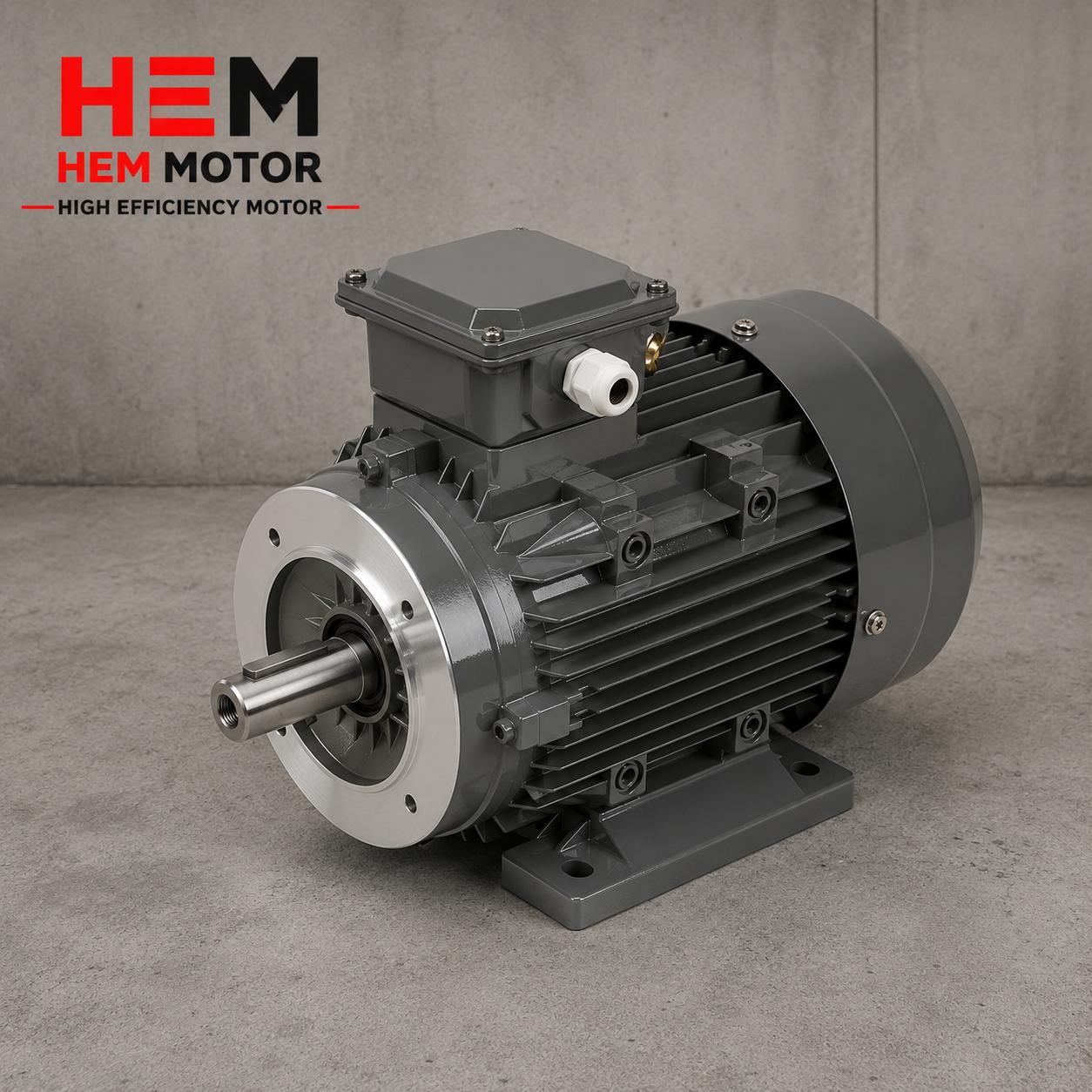
The Advantages and Cost of a Medium Voltage (MV) Motor
Medium voltage motors typically run at voltages such as 3.3 kV and 6.6 kV. Their biggest advantage is low current: because the same power is carried at much lower current at higher voltage, cable cross-section shrinks, transmission losses fall and panel/busbar sizes decrease. This makes the supply infrastructure manageable both technically and economically, especially at very high powers. Low current also means less heating and more efficient power distribution.
The cost of these advantages is that medium voltage equipment (breaker, protection, drive and transformer) is more specialized and expensive. Medium voltage panels and protection systems are more complex than LV; commissioning and maintenance also require expertise. Therefore MV is the right choice not for every application, but for cases where the advantage brought by power and operating hours offsets this extra cost. When deciding, you must look not only at the motor price but at the whole picture, including cable, panel, loss and maintenance. We use this holistic view in efficiency class selection too; our article on total cost of ownership (TCO) comparison exemplifies this approach.
Drive and Starting Between LV and MV
In high-power motors, not only voltage but also the starting method is a critical decision. Direct-on-line (DOL) starting draws very high inrush current at high power, stressing both the motor and the grid; so soft starters, star-delta or variable frequency drives are preferred for large motors. For very large, high-inertia loads, especially applications such as crushers and mills, liquid resistance starter (LRS) and slip-ring motor solutions are used. We cover this in liquid resistance starter (LRS) and slip-ring motor in large crushers and the cause and reduction of inrush current in starting (inrush) current in asynchronous motors. You can find soft starter sizing on the LV side in soft starter compatibility in IE3 motors.
When LV, When MV?
Clarifying a few questions guides the decision. Where does the motor's power sit relative to the 400-630 kW threshold? If it is clearly below this threshold and there is no existing medium voltage infrastructure in the facility, LV (690 V if needed) is mostly more practical and economical. If the power is above this threshold, especially approaching 1 MW, medium voltage stands out technically and economically. If the facility already has a medium voltage distribution infrastructure, the move to an MV motor becomes much easier and more sensible, because the transformer and panel infrastructure already exist.
Operating hours are also decisive: in a motor running at full load for most of the year, the low-current and low-loss advantage of MV pays back earlier. By contrast, in an intermittent or low-hour application, the simplicity of LV may stand out. Application type matters too: MV is often preferred in continuous, high-power drives such as crushers, large mills, main fans, large pumps and compressors. We cover motor selection in these heavy-duty applications in ball and rod mill main drive motor selection and mine and ore mill motors. You can reach our full high-power motor range from our homepage.
Typical High-Power Applications and Voltage Choice
Which voltage is right is often clear from the application itself. Large centrifugal pumps, high-airflow blowers and flue-gas (ID fan) applications, lime/cement mills and large crushers are high-power, continuously running drives; in these applications the 400-630 kW threshold is frequently exceeded and medium voltage comes onto the agenda. By contrast, many general industrial drives that run intermittently at medium-high power stay on LV. We cover high-airflow blower motor selection in centrifugal and turbo blower motor selection and the flue-gas ID fan motor in flue-gas and ID fan (aspirator) motor selection.
Multistage high-pressure pumps and boiler feed water pumps also appear at high power; in these applications the right power and voltage selection is critical for facility safety. We examine the multistage pump motor in multistage vertical pump motor selection and the boiler feed water pump in boiler feed water pump motor selection. On the mining and stone-crushing side, long-distance belt conveyor drives are also applications where the high-power voltage decision is critical; we cover this in mine and quarry long-distance belt conveyor motors.
Do Not Forget the Mechanical and Thermal Side
When deciding on voltage, the mechanical and thermal side of the motor should not be overlooked. High-power motors are heavy; transport, lifting and installation require separate planning. We cover handling of the heavy frame in transport, packaging and stacking in cast iron motors and power reduction (derating) at high altitude and in hot environments in motor purchase for high altitude and hot environments. The cooling method is also a critical choice at high power; you can find cooling methods in electric motor cooling methods: IC411 and IC416.
Frequently Asked Questions
Is there an exact power limit for the move from low to medium voltage?
There is no single exact limit; the decision depends on power, operating hours and facility infrastructure. In practice, above roughly the 400-630 kW band medium voltage becomes increasingly sensible and almost standard around 1 MW. Below this threshold, LV (400 V or 690 V) is mostly more economical and practical. For the right decision, you must evaluate the motor's power, annual operating hours and whether a medium voltage infrastructure already exists in the facility together.
Does a 690 V motor delay the move to medium voltage?
Yes, 690 V is an intermediate step. Using 690 V instead of 400 V noticeably reduces the current at the same power, easing the cable and panel problem; so in some applications it is possible to carry high powers on LV without moving to medium voltage. But above a certain power even 690 V becomes insufficient and medium voltage becomes unavoidable. 690 V is a practical solution that fills the gap between LV and MV.
Why does a medium voltage motor require a more expensive infrastructure?
Medium voltage equipment (breaker, protection, drive, transformer) is more specialized and costly than LV; the panel is more complex, and commissioning and maintenance require more expertise. In return, MV provides large savings on cable, loss and panel at very high power. So when deciding, you must look not only at the motor price but at the whole cost picture, including cable, panel, loss and maintenance.
Get a Quote
Share your high-power application's power, operating hours and your facility's electrical infrastructure with us; let us evaluate together whether to stay at low voltage or move to medium voltage. For the right voltage and motor selection, call us at +90 (532) 345 49 86 or send your request via our contact page. Sharing your application details lets us determine the right solution quickly.
Selection and Decision Checklist
- Position the motor's power relative to the 400-630 kW threshold; consider LV below, MV above.
- If staying on LV, consider reducing current with 690 V instead of 400 V.
- Account for annual operating hours; in continuous duty the MV advantage pays back earlier.
- Check whether a medium voltage infrastructure already exists in the facility.
- Compare cable cross-section, loss, panel and protection cost as a whole.
- Choose the starting method (DOL, soft starter, VFD, LRS) by power and load.
- Plan the mechanical/thermal side such as transport, lifting, cooling and installation.
- State the power, operating hours and infrastructure clearly before deciding.