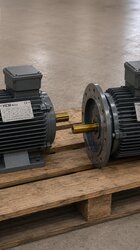
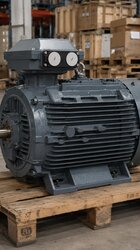
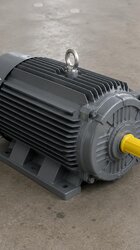
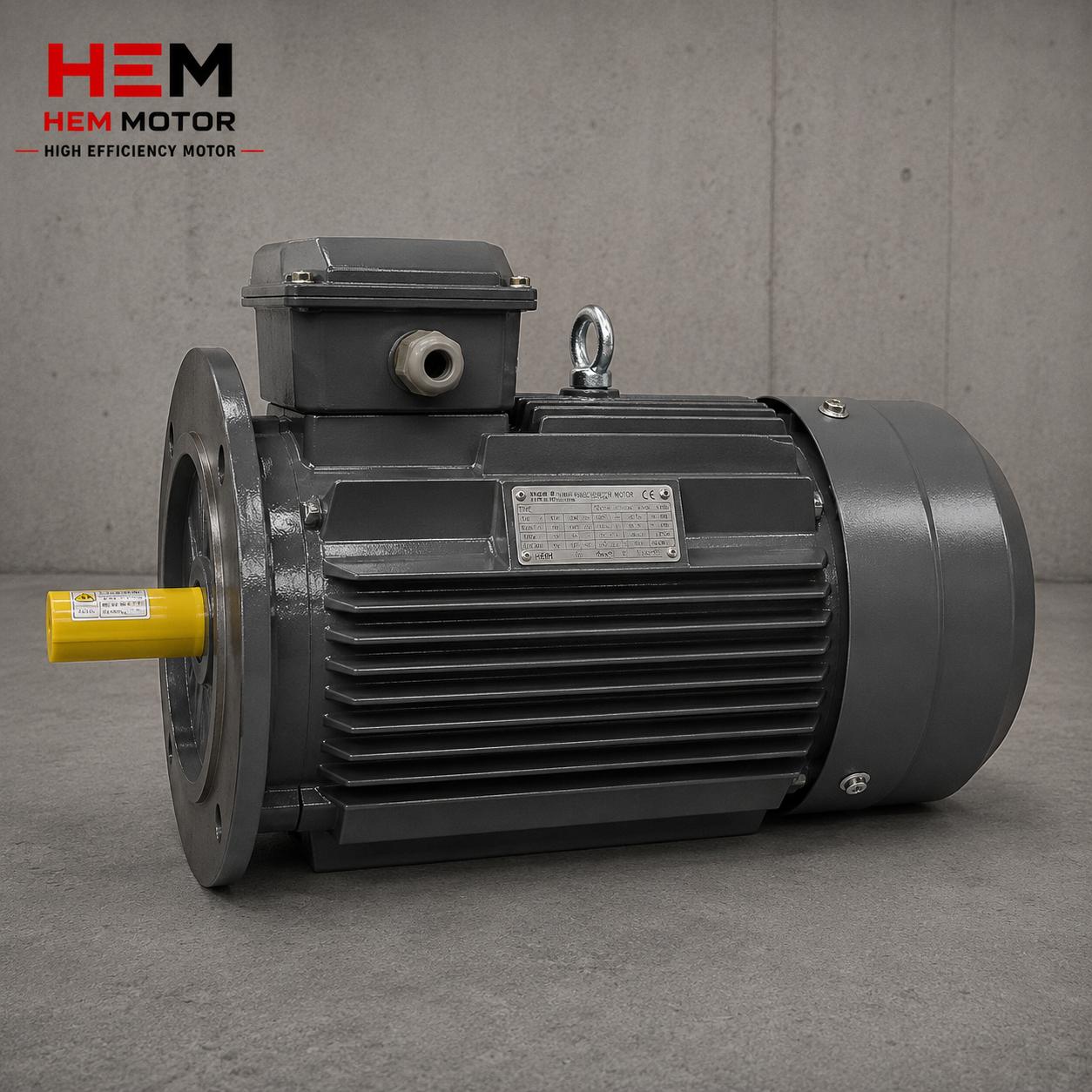
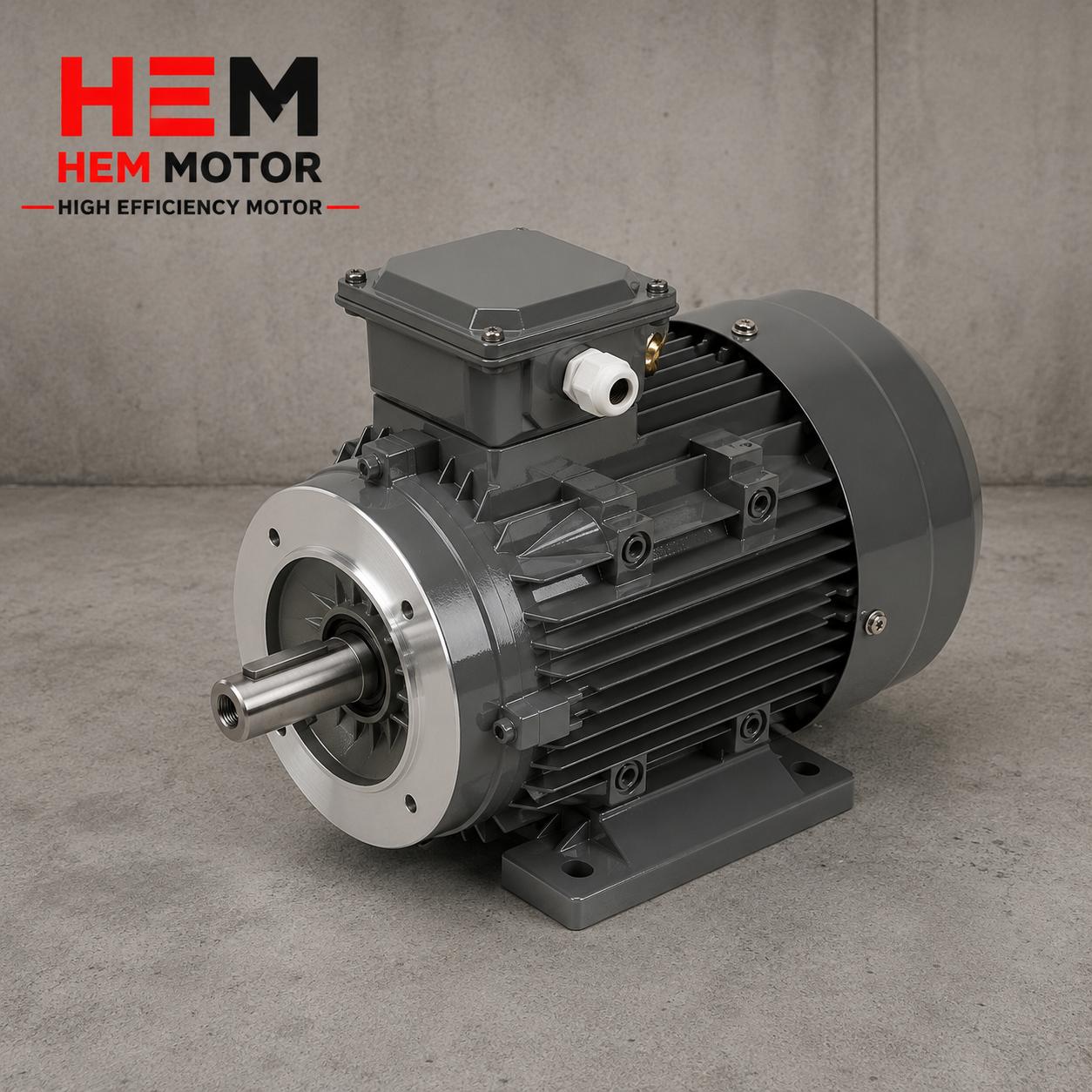
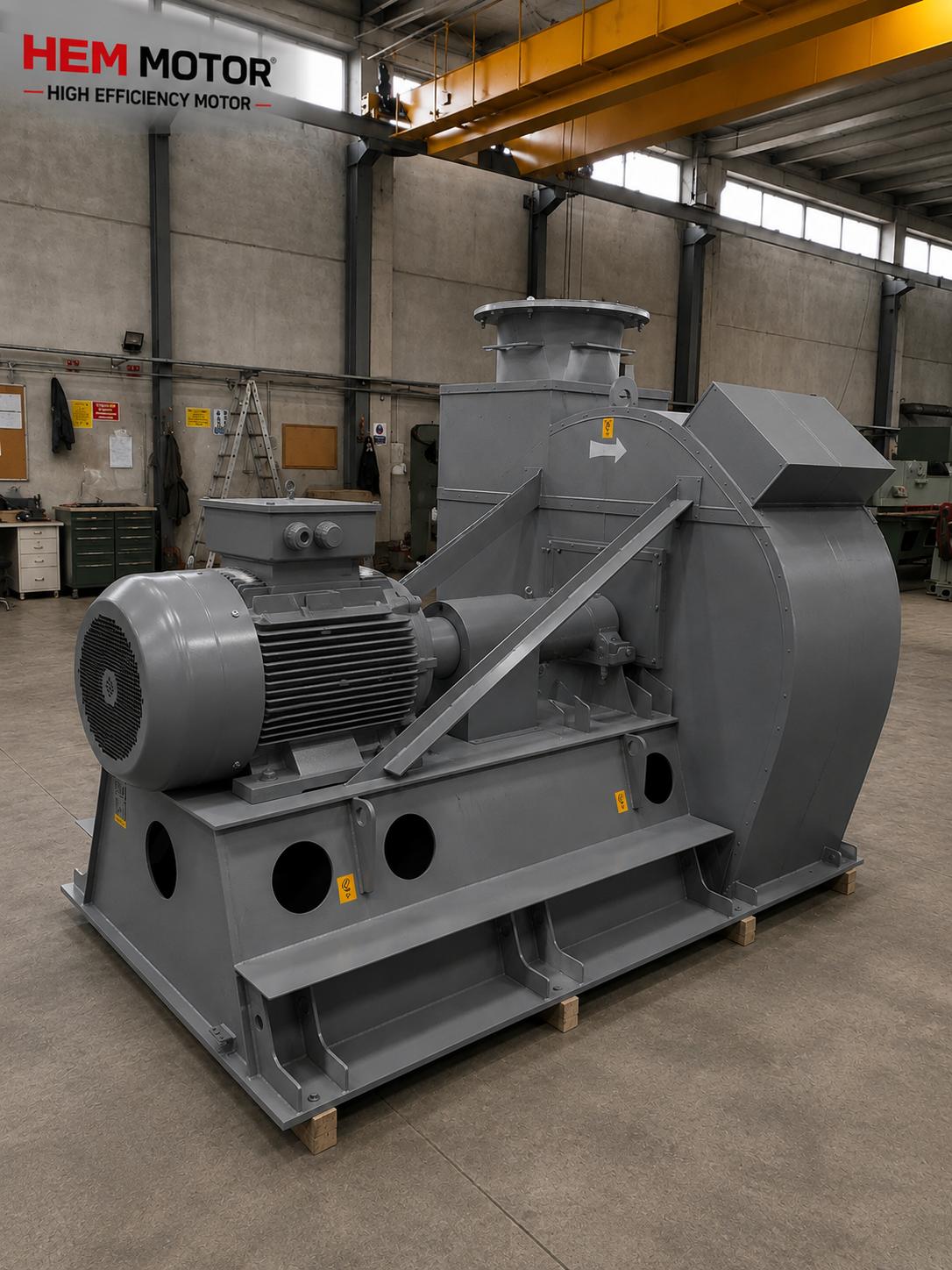
200 kW and 250 kW form a critical decision zone in high-power electric motors. In this class you can no longer "grab a motor off the shelf and go"; every order is planned like a project. The choice between 2-pole (about 3000 rpm) and 4-pole (about 1500 rpm) directly drives the frame size (roughly 315 to 355), the starting method, the motor weight, the crane and shipping needs, and therefore the delivery schedule. In this article we look at 200 and 250 kW selection from a decision and threshold angle: which application needs 200 and which needs 250 kW; 2-pole or 4-pole; and how to build a lead-time and shipping plan that reaches all the way to the field. (For a 250 kW-only read, our 250 kW supply, lead time and shipping plan is a separate resource.)
200 kW or 250 kW? The Decision Threshold
There is only a 25% difference between the two powers, but it changes frame size, weight and often lead time. The right decision starts with measuring the load's real power demand: oversizing hurts both the investment and part-load efficiency. We explain the logic of calculating required power for pumps, fans and conveyors in motor power calculation; for the right load ratio see load ratio and correct sizing. One band below: 160 and 200 kW high power motor and 132 kW supply plan; one band above: 315 kW project supply.
Typical 200 kW Applications
200 kW is used in large centrifugal pumps, main fan and aspirator lines, medium-large crusher drives, mills and main conveyors. For the efficiency-class sensitivity of this band under post-2023 regulation, see our efficiency mandate regulation.
Typical 250 kW Applications
250 kW is preferred in higher-flow pumps, high-capacity crushers and mills, long-haul belt conveyors and heavy process fans. For crusher power selection see crusher motor kW selection and for long belts long-haul belt conveyor motors.
2-Pole or 4-Pole? The Application Threshold
In this power class the pole choice means not only speed but frame size and mechanical design.
2-Pole (≈3000 rpm)
High speed; for large centrifugal pumps, high-pressure blowers and some compressor drives. In high-power 2-pole motors, rotor strength, balancing and bearing selection are more demanding; for vibration acceptance values see our vibration and balance ISO 10816.
4-Pole (≈1500 rpm)
The most common high-power configuration. It is the default for crushers, mills, conveyors and general process drives. For torque-speed balance and mechanical robustness, most stock and project deliveries in this power are 4-pole. Our efficiency and pole count comparison is useful for the general logic.
Frame Size: 315 and 355
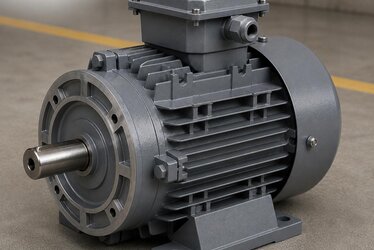
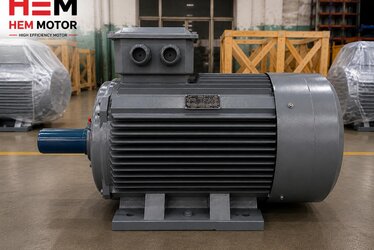
200 kW 4-pole is typically at the 315 frame limit; 250 kW usually moves up to the 355 frame. 2-pole versions can sometimes stay a size smaller. Frame size determines weight, foot hole spacing, shaft diameter and terminal box position. For IEC 56-355 weight and handling dimensions our frame sizes, weight and handling is a reference. At these powers the body is cast iron; the cast iron vs aluminum decision clearly favours cast iron at high power.
Starting: Soft Starter and Star-Delta
For 200-250 kW motors, direct-on-line starting is usually unsuitable due to high inrush current; a soft starter is preferred to protect the grid and the motor, with star-delta or auto-transformer used in some applications. For a method comparison see star-delta vs softstarter and for impact/heavy-start loads crusher motor starting. On site and generator supply, the inrush issue is covered in motor selection on generator-fed sites; our kVA-kW matching helps with sizing.
Weight, Crane and Commissioning
200-250 kW motors reach weights in the tonne range; the site needs a crane, lifting lugs and proper floor planning. For damage-free delivery see our shipping damage checklist, and for first run our commissioning and first startup. At this power, winding temperature and bearing monitoring (PT100/PTC) is usually standard; see PT100 and thermistor protection.
Load Profile, Inertia and Starting Time
In 200-250 kW motors, the real factor that determines the starting method is the connected load's inertia and breakaway-torque demand. A centrifugal pump starts quickly, while a large fan or mill needs a long start-up time due to high inertia, during which the motor heats up. High inertia makes it essential to set the soft-starter ramp time and the motor's thermal protection correctly. A wrongly set short ramp raises inrush current and thermal stress. For flywheel and inertia effects on impact and high-inertia loads see our motor, flywheel and inertia on impact loads; for torque-class (Design N/H) selection our torque classes and breakaway torque. For crusher cooling and heating at continuous full load see our crusher motor cooling.
Speed Selection by Sector
In the 200-250 kW band, speed selection becomes sector-specific. Crusher and mill drives usually use 4-pole (1500 rpm) followed by a gearbox or belt-pulley system; main fans and aspirators may use 4 or 6 poles depending on the application; large centrifugal pumps and blowers favour 2-pole (3000 rpm). The right speed-power combination affects both efficiency and mechanical design. For sector application examples see bearing life in crusher and mill motors and for low-speed alternatives 6 and 8 pole low-speed motor.
Shaft, Coupling and Mechanical Mounting
In 200-250 kW motors the shaft diameter grows (typically in the Ø60-Ø75 mm range on 315/355 frames) and power is usually transmitted via a coupling or large pulley. The shaft diameter, key dimension and shaft length must be clarified before ordering, and alignment with the driven equipment planned; a wrong shaft size halts installation in the field. For shaft, key and coupling fit see our shaft diameter, key and coupling and for general dimension ordering shaft diameter and key dimensions. For alignment and rotation-direction check at first run, our rotation direction and phase sequence is important.
Terminal Box, Voltage and Connection
In high-power motors the terminal box must suit large-section cables and proper gland entries. 200-250 kW motors can be ordered for 400 V or 690 V; 690 V means lower current and thinner cable at the same power, so it is often preferred at high power. For star/delta bridging and the right voltage selection see terminal connection and voltage selection, for terminal box IP protection and cable entry terminal box and cable connection and for grounding grounding and electrical safety.
Efficiency Class and Energy Cost
At large powers like 200-250 kW, when the motor runs thousands of hours a year, energy cost far exceeds the purchase price; so the efficiency-class decision directly affects operating expense. Under post-2023 regulation, IE4 has come to the fore in certain power and pole bands; for details see efficiency mandate regulation and for the decision IE3 vs IE4 investment. To calculate total cost correctly see total cost of ownership (TCO), and for the high-power efficiency threshold IE5 investment payback above 132 kW. Power factor and reactive penalty also matter at this power; see power factor and reactive penalty.
Cooling, Protection and Environment
In high-power motors, cooling and protection are among the most critical factors determining life. Standard cooling is usually IC411 (frame-mounted fan); in dusty environments clogged fins lower efficiency. For cooling methods see cooling methods (IC411/IC416). The standard protection class is IP55; IP65/IP66 can be requested for dusty and open-air sites. In hot and high-altitude environments the rated power drops (derating); for the right calculation see high altitude and hot environment derating. For open-field and corrosion protection our corrosion and open-field protection is useful.
Application Examples: Where Are 200 and 250 kW Used?
This power band typically belongs to heavy industry. In cement and mining plants for main fan, mill and conveyor drives; cement factory motors and mine and ore mill motors are examples. In water and wastewater plants for large pump and blower drives; our water treatment and wastewater plant motors describes the application. Port and terminal long-belt conveyors need high torque and starting; see our port long-belt conveyor motors. To avoid crusher overheating our crusher motor cooling gives tips.
Equivalent Selection and Replacement
When renewing an existing large motor, you must read the power, speed, frame, mounting and shaft diameter directly from the old nameplate; a wrong match causes installation problems in the field. For nameplate matching see exact matching by nameplate data and to replace an old brand with an equivalent old brand motor direct replacement. For frame, foot and shaft compatibility when moving to IE4, our mechanical compatibility in IE4 transition offers a practical checklist.
Lead Time and Shipping Supply Plan
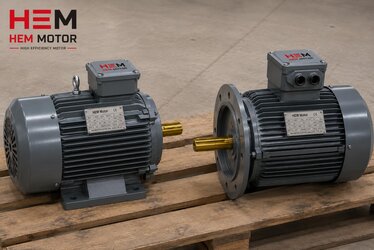
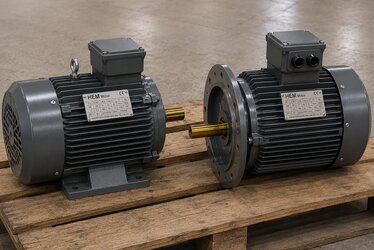
Delivery in this class depends on stock and the frame-pole-flange combination. The most-requested 4-pole B3 configurations are faster; versions needing a special shaft, B5 flange or 690 V connection can carry longer lead times. For 690 V high-power connection our 690V connection selection is useful. For project-based planning see high-power supply above 90 kW, and for shipping Anatolia shipping guide and supply to neighboring countries. For the stock-vs-production decision see from stock or production order and for redundancy in sectors like mining supply contracts and critical stock. For one band lower see 132 kW supply plan, for one band higher 355 kW ultra premium motor, and for more resources visit our HEM Motor homepage, efficient electric motors and worm gear reducers pages.
Frequently Asked Questions
How do I decide between 200 kW and 250 kW?
Measure the load's real power demand; if you plan future capacity growth, the next power up may make sense, otherwise avoid oversizing. Our correct sizing article explains the load-ratio balance.
What is needed for starting at this power?
Usually a soft starter; in some applications star-delta or auto-transformer. Inrush current, grid capacity and load character are decisive. See our starting comparison.
How long is delivery?
Standard 4-pole B3 configurations are usually faster to supply; versions needing special shaft, flange or voltage enter a project schedule. For an exact time, share the configuration through our contact page.
Get a Quote
To quickly confirm the right power rating, pole/speed combination and lead time for your application, talk to our engineering team. Call us on +90 (532) 345 49 86 or open a request through our contact page. When you share the nameplate data, frame type and mounting arrangement, we return a clear quote and delivery schedule the same day.
200 / 250 kW Supply Checklist
- Power: 200 kW or 250 kW (measured load demand)?
- Pole/speed: 2-pole (≈3000) or 4-pole (≈1500)?
- Frame size: 315 or 355; weight and crane plan?
- Starting: soft starter, star-delta or auto-transformer?
- Voltage: 400 V or 690 V?
- Mounting: B3 foot, B5 flange or B35?
- Protection: PT100/PTC, IP55+, terminal box position?
- Shipping, crane, commissioning and lead-time plan?