English
 Türkçe

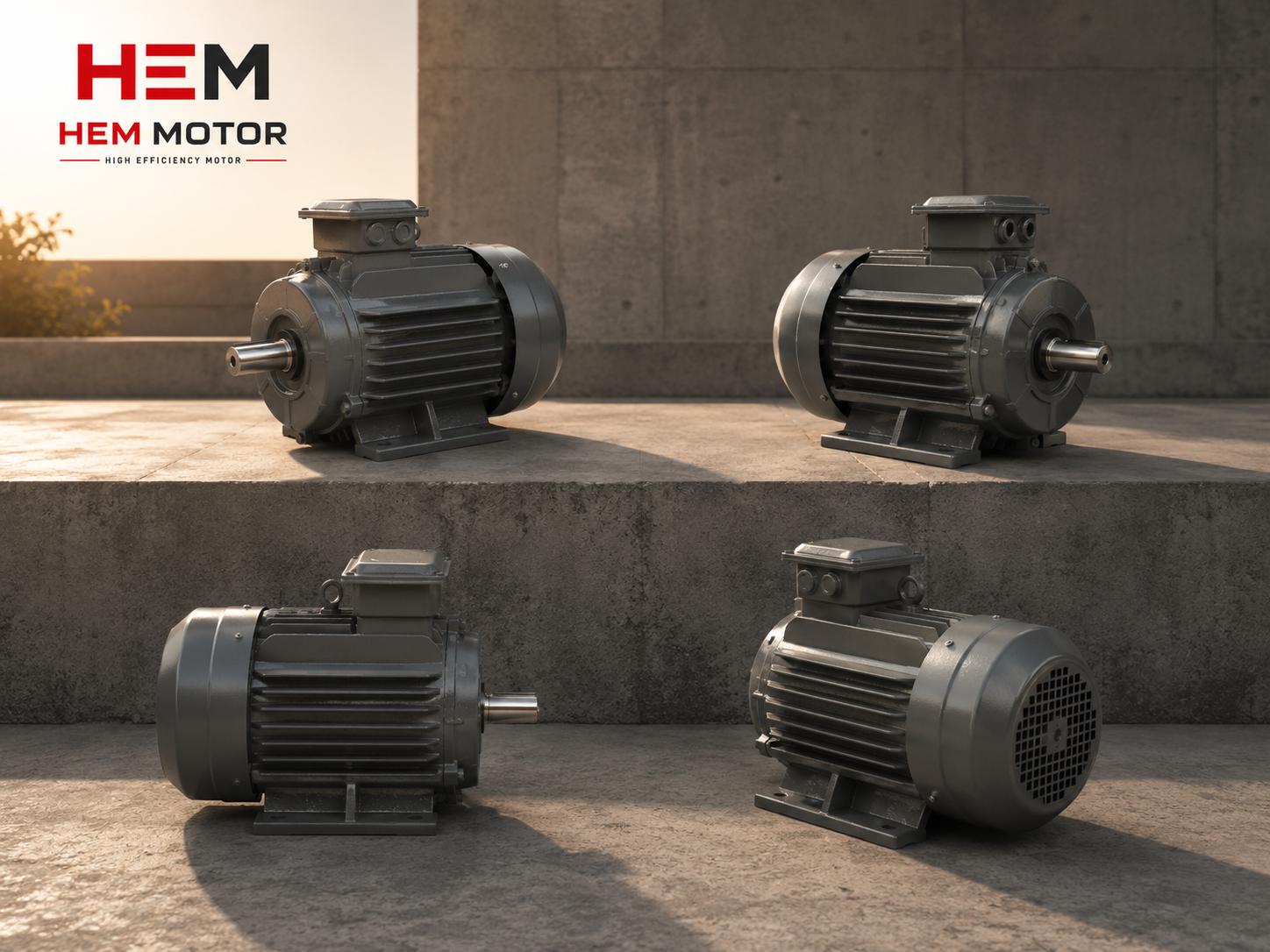

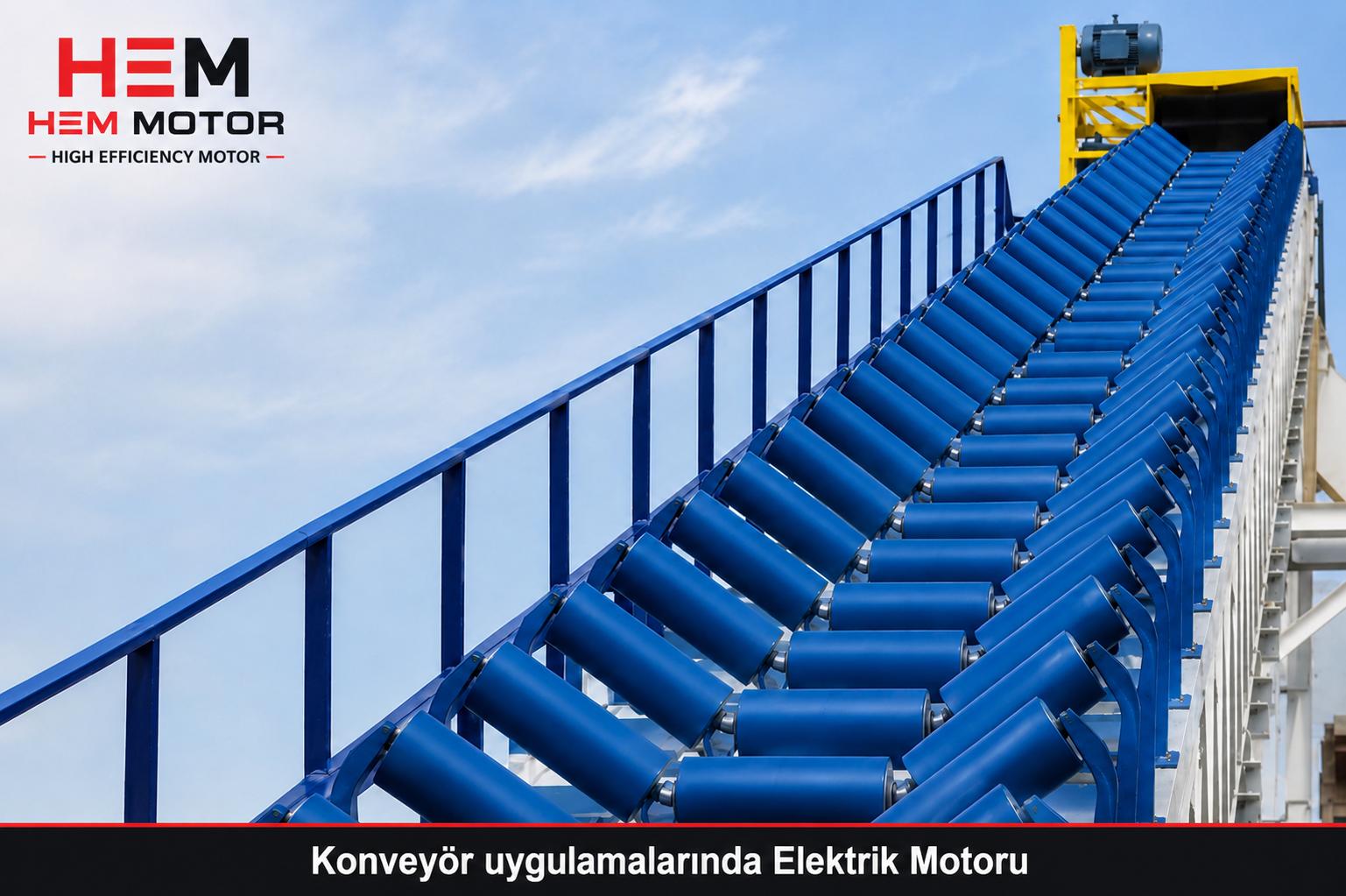
Overland belt conveyors that carry material hundreds of metres, sometimes kilometres, across mine and open-pit sites are one of the most demanding applications in the sector from the electric motor's point of view. The high inertia accumulated under a full belt, the heavy starting torque on long ramps, the constantly dusty and humid environment, and the synchronised operation of multiple drive groups make the motors of these conveyors completely different from those of a standard industrial conveyor. A wrongly selected motor or a badly configured starting system causes a series of problems, from a full belt failing to start to motor overheating, and from sudden tensions in the belt to mechanical damage. In this guide we examine mine and open-pit overland belt conveyor motors under the headings of high inertia and long ramp, starting methods (soft starter, fluid coupling, variable-frequency drive), multiple drive and load sharing, heavy starting torque and dust sealing, explaining what to watch for in correct supply.
High Inertia and Long Ramp: Why Is the Torque Demand High?
An overland belt conveyor has very high inertia because of the material on it and the weight of the belt itself. The longer the belt and the steeper the slope, the greater the resistance that must be overcome during start. When the conveyor is stopped full and restarted, the motor must overcome this high inertia and static friction to set the belt in motion, which means a high starting torque. On inclined conveyors that carry material upwards in open pits, gravity is added to the load, so the torque demand increases even further. At this point, looking only at the continuous running power when selecting the motor is misleading; what really matters is whether the motor can comfortably meet the torque the full belt needs at the moment of starting. On a long conveyor, starting may take several tens of seconds, and during this time the motor draws high current and heats up; therefore both the motor and the starting system must be configured to keep the start time short and controlled. Moreover, because of the belt's elasticity, wave-like tensions form along the belt during start; a sudden start can raise these tensions to a dangerous level and damage the belt splices and pulleys. Calculating the torque demand correctly is therefore a critical step for both the motor's life and the belt's safety.
Starting Torque and Torque Class
In these applications, not only the rated power but also the starting torque and breakdown torque of the motor are critical. A conveyor left under a full belt requires the motor to produce a high starting torque, so high-torque-class motors are preferred. The motor's torque-speed curve exceeding the load's resistance curve at every point ensures the belt starts without sticking. You can find in detail how torque classes (Design N/H) are selected by load in asynchronous motors in asynchronous motor torque classes (Design N/H) and starting torque.
Impact Load, Flywheel and Inertia
In mine conveyors, the irregular dumping of material onto the belt and sudden load changes create an impact load profile on the motor. If these impact loads are not managed correctly, they strain both the motor and the drive transmission elements. You can review motor selection under impact load and the effect of flywheel and inertia in motor selection under impact load: flywheel, inertia and crusher drive; the same principles apply directly to the drive configuration of long conveyors.
Starting Methods: Soft Starter, Fluid Coupling and VFD
Direct-on-line (DOL) starting is almost never preferred on overland conveyors, because the sudden start of a full belt creates both a high inrush current and dangerous tension spikes in the belt and its splices. Instead, methods that provide a controlled soft start are used. A soft starter reduces both the inrush current and the mechanical shock by ramping the voltage to the motor gradually. A fluid (hydraulic) coupling establishes a soft connection between motor and conveyor, allowing the motor to start unloaded and take over the load gradually; it is preferred especially on very long, heavy belts. A variable-frequency drive (VFD) offers both a soft start and speed adjustment during operation, and also precisely controls load sharing in multiple drives. When choosing the starting method, not only starting but also stopping behaviour must be considered; on an inclined conveyor, braking and holding systems are also included in the design to prevent the loaded belt from running back uncontrolled. Configuring the starting system correctly both keeps the motor's inrush current at a level the grid can handle and extends the life of the mechanical transmission elements; especially on sites fed by a generator, keeping the inrush current under control is also important to prevent generator strain and voltage drop.
Which Method for Which Conveyor?
The choice of starting method depends on the length and slope of the belt, the load inertia and the cost expectation. You can find a comparison of soft starter, star-delta and direct starting in crusher and heavy conveyor drives in crusher motor starting: soft starter, star-delta and direct starting. Where speed adjustment and energy savings are needed, you can review VFD selection in variable-frequency drive (VFD) with asynchronous motor.
Multiple Drive and Load Sharing
On very long, high-power conveyors, a single motor is not enough; the belt is driven by several motors placed on the head and tail pulleys or at intermediate points. The most critical issue in this multiple-drive arrangement is load sharing: motors sharing the load in balance prevents one motor from being overloaded while another runs idle. If load sharing is unbalanced, the most loaded motor runs constantly in overload and fails early; moreover, the failure of a single motor can stop the whole conveyor because the remaining motors cannot carry the load alone. In a multiple-drive arrangement, motors are designed to support each other both to share the high torque at start and to provide a balanced load distribution during operation. For this reason, in multiple-drive conveyors, the positioning of the motors relative to each other and how the control system manages load sharing matter as much as the motor selection itself.
Matching the Motors
In multiple drives, the motors having the same power, speed and slip characteristic is the basis of balanced load sharing. When motors with different slip values are used on the same belt, the motor with lower slip takes on the larger part of the load. For this reason, motors on multiple-drive conveyors are usually selected from the same series and specifications. You can find the effect of slip and actual speed on load sharing in asynchronous motors in slip and actual speed in asynchronous motors. In VFD-driven multiple drives, load sharing can be managed electronically and precisely.
Dust, Humidity and Impact: Protection and Frame Selection
Mine and open-pit sites mean intense dust, humidity, rain and mechanical impact for the motor. Under these conditions, the motor's protection class and frame strength directly determine its life. On open-pit conveyors where dust and humidity are heavy, IP65 or IP66 protection is preferred; a cast-iron frame stands out for both mechanical impact resistance and suitability for heavy-duty conditions.
IP Protection and Dust Sealing
Fine dust accumulating in open pits can seep into the motor over time and damage the bearings and winding, so a high IP protection class is critical. You can find dust sealing and IP65/IP66 protection in crusher and conveyor motors in dust sealing and IP65/IP66 protection in crusher motors, and protection against dust, humidity and impact at stone quarry and mine sites in motor protection at stone quarry and mine sites.
Bearing Life and Maintenance
In conveyor motors that run under constant heavy load and are exposed to impact, bearing life depends on correct bearing selection and regular lubrication. You can review the impact, dust and lubrication factors that affect bearing life in crusher and mill motors in bearing life in crusher and mill motors.
Power, Speed and Supply Plan
In overland conveyor motors, power is calculated from the belt length, slope, the amount of material conveyed and the speed. These motors are usually selected as 4- or 6-pole (1500 or 1000 rpm) and reduced to a low output speed with a reducer. Because the lead time of high-power conveyors can be long, it is important to plan delivery and shipping in advance; you can find the supply and commissioning planning of high-power motors in high-power motor supply above 90 kW. You can review the IE3 electric motors and IE4 electric motors categories in our product range, and use the electric motor mounting types page for mounting options. You can find how a conveyor motor is replaced one-to-one in an emergency in the conveyor belt motor emergency replacement checklist.
Frequently Asked Questions
Why is high starting torque needed on an overland belt conveyor?
A long, full belt has very high inertia; when the conveyor is stopped full and restarted, the motor must overcome this inertia and static friction. On inclined open-pit conveyors, gravity is also added to the load. Therefore, the motor having a high starting torque and a torque class selected for the load is essential for the belt to start without sticking.
Should I use a soft starter, a fluid coupling or a VFD?
The choice depends on the length and slope of the belt, the load inertia and the need. A soft starter reduces inrush current and shock; a fluid coupling lets the motor start unloaded and take over the load gradually on very long, heavy belts; a variable-frequency drive offers both a soft start, speed adjustment and precise load sharing in multiple drives. Direct starting is not preferred on long conveyors.
How is load sharing achieved on a multiple-drive conveyor?
For load sharing to be balanced, the motors must have the same power, speed and slip characteristic, so they are usually selected from the same series and specifications. When motors with different slip are used, the motor with lower slip takes on the larger part of the load. In VFD-driven systems, load sharing can be controlled electronically and precisely.
Get a Quote
To supply the overland belt conveyor motors of your mine or open-pit site in a way suited to high torque, correct starting and multiple-drive requirements, get in touch with us. Share the conveyor length, slope, material conveyed, speed and the nameplate data of your existing motors, and we will prepare a fast quote with the right power, speed, starting and protection options. Call us on +90 (532) 345 49 86 or reach us via our contact page.