English
 Türkçe

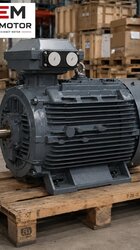
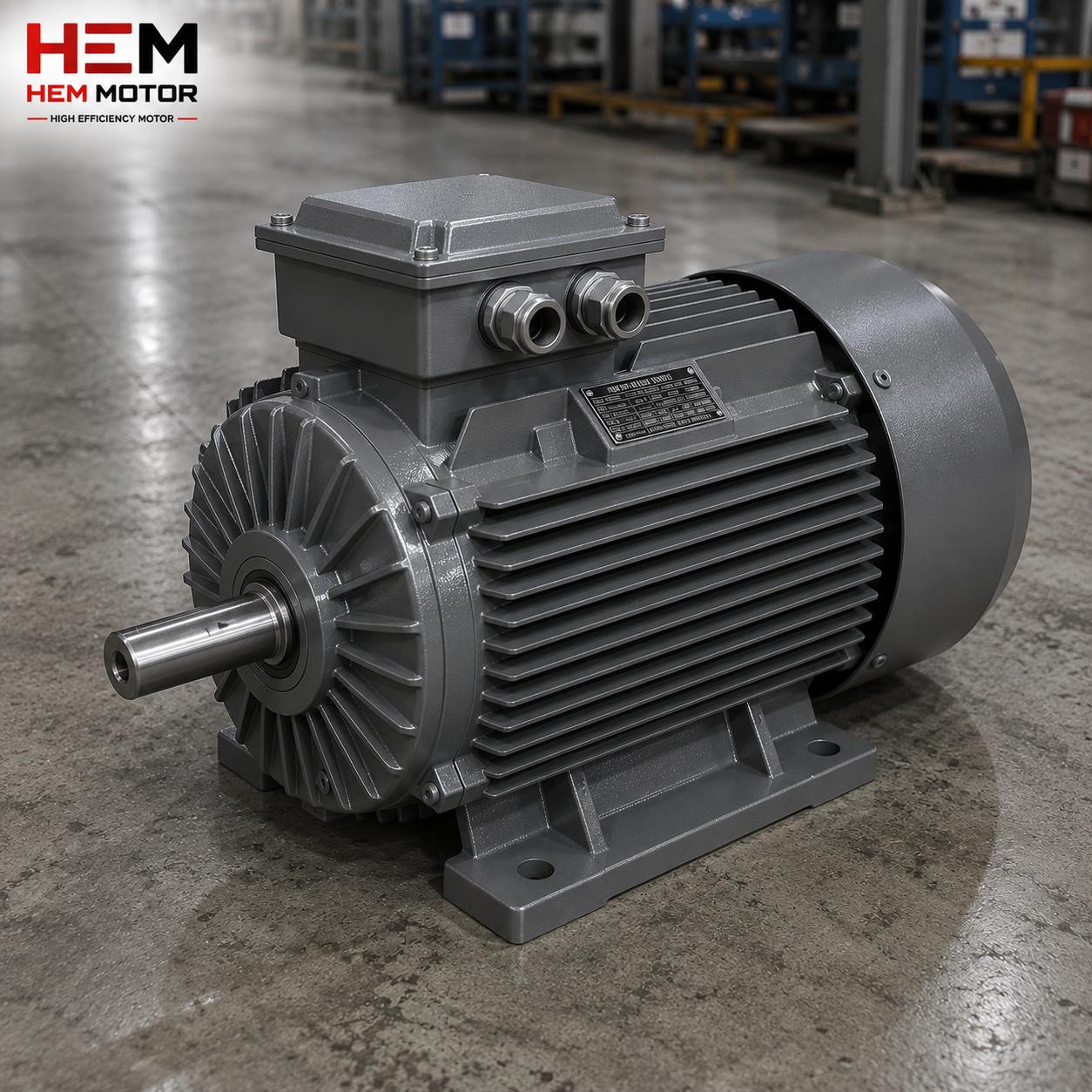

18.5 kW and 22 kW are two of the most frequently supplied IE3 motor powers in the medium-to-large class. They appear often in pump stations, fan and ventilation groups, compressors, conveyors and general industrial drives. Making the right purchase at these powers is not just a matter of stating the kW value. Speed (pole count), mounting type, frame size and, most importantly, stock availability determine both the lead time and the efficiency you will get in the application. This article is written for the purchasing managers, maintenance engineers and machine builders who make the decision. Our aim is to help you define an 18.5 and 22 kW IE3 motor correctly along the speed-pole-stock axis and obtain a fast, accurate quote.
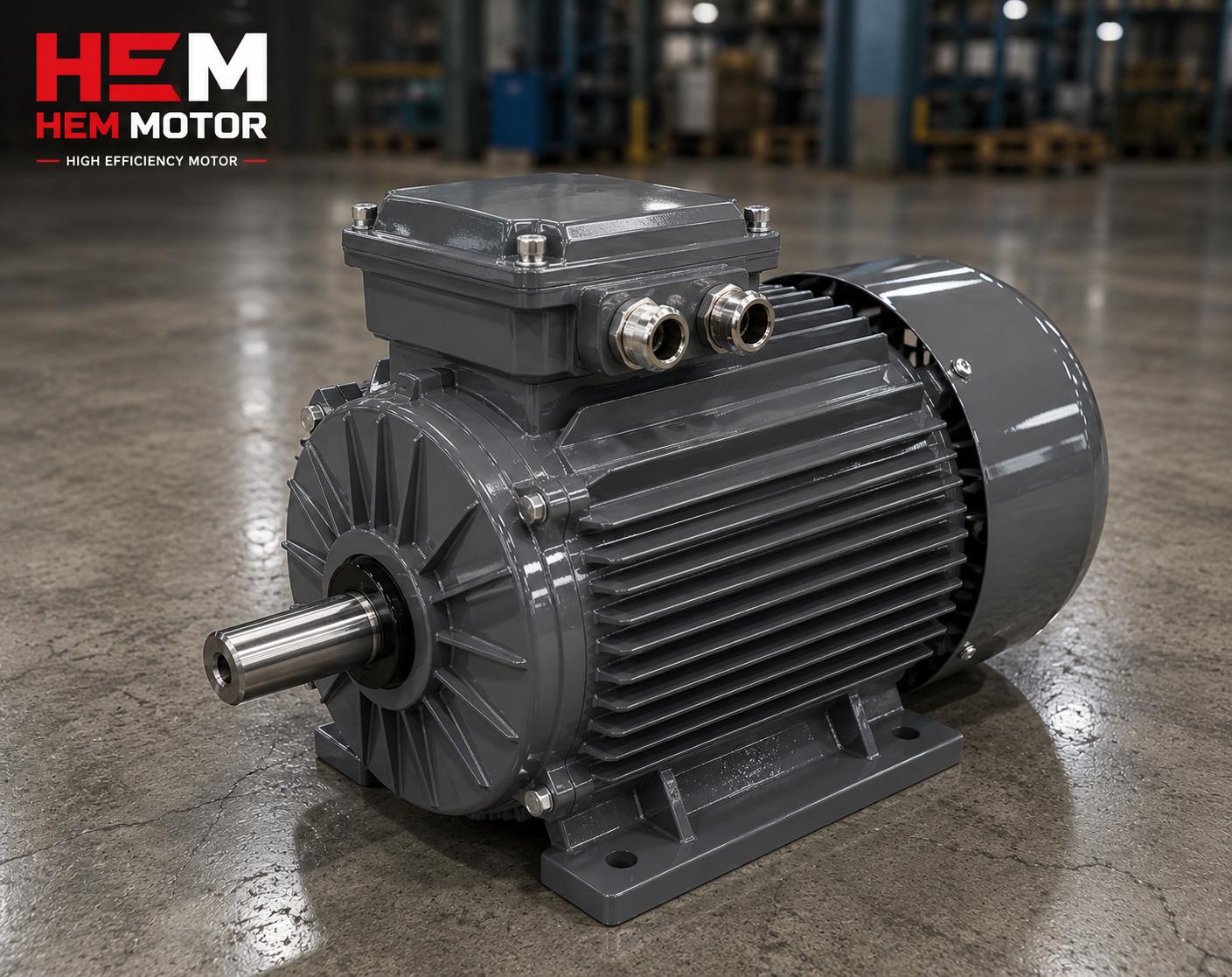
Why Are 18.5 and 22 kW So Common?
These two powers sit right in the middle of medium-scale industrial drives: strong enough to comfortably drive a centrifugal pump, a medium-capacity fan or a compressor, yet still manageable in frame and cost. The IE3 efficiency class is already mandatory at these powers; by regulation, IE3 is the minimum for DOL motors between 0.75 and 1000 kW. Our article on IE3 and IE4 efficiency mandate, which covers at which power and from which date these apply, clarifies the regulatory side before purchase. You can find how this power class is selected from stock with a cast iron body in detail in our full IE3 electric motors category.
Speed and Pole Selection: 2, 4 and 6 Pole
18.5 and 22 kW motors are supplied at three basic speeds. 2 pole (~3000 rpm) needs high speed: compressors, high-pressure pumps and some fans. 4 pole (~1500 rpm) is the most common choice: general pump, fan and conveyor drives mostly use this speed. 6 pole (~1000 rpm) is for applications needing higher torque and lower speed. We addressed how the pole count is chosen for the application in our article on asynchronous motor pole selection: 2, 4, 6 pole, which for which job, and the speed-pole-efficiency relationship in our article on efficiency and pole count in asynchronous motors.
Nameplate Speed and Actual Speed
In asynchronous motors the rated speed is slightly below the synchronous speed; a 4 pole motor runs at about 1465-1480 rpm instead of 1500. This slip affects the flow in speed-sensitive applications such as pumps and fans. We explained the difference between nameplate speed and actual speed and its cause in our article on slip and actual speed in asynchronous motors; knowing this difference before ordering helps the correct calculation.
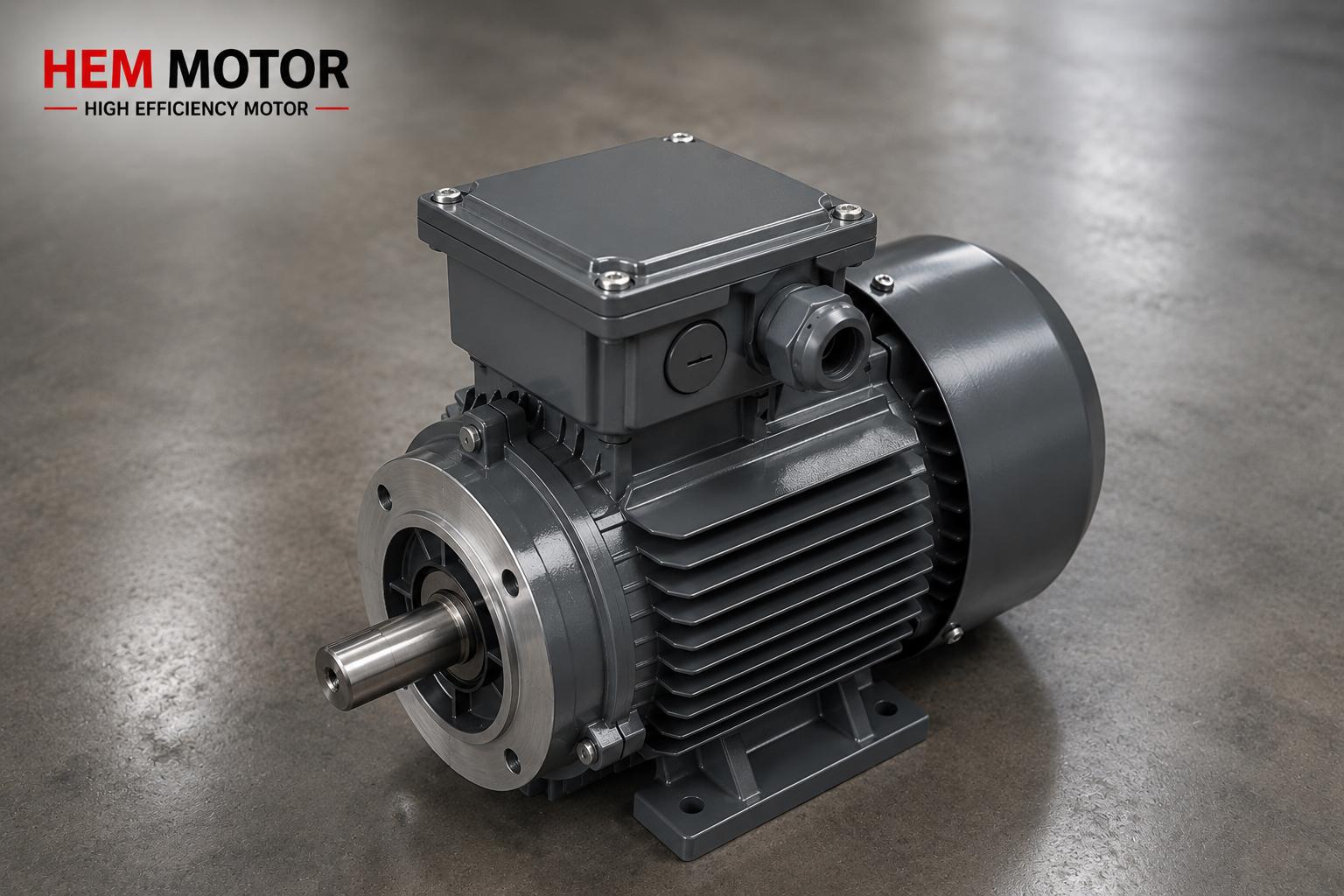
Selecting 18.5 and 22 kW by Application
The same kW power requires different speeds and mountings in different applications. To quote the right motor on the first attempt, the character of the load must be known.
Pump Applications
In centrifugal pumps, 18.5 and 22 kW are often used in medium-to-large flow systems. Here usually 2 pole (high pressure) or 4 pole (balanced flow) is preferred, and B5/B35 flange mounting is common. We addressed flow, head and power matching in our article on centrifugal pump motor selection; the correct kW and speed become clear with this calculation.
Fans and Ventilation
In radial and axial fans, 18.5-22 kW is used in medium-to-large air-flow systems. We examined power and speed selection by fan type in our article on centrifugal and axial fan motor selection. In fan applications 4 pole is mostly preferred; 6 pole comes up on large-diameter fans where quieter, more balanced operation is required.
Compressor Drives
In screw and piston compressors, 18.5 and 22 kW are common powers and usually 2 pole high speed is required. We addressed matching a motor to an existing compressor in our article on compressor motor replacement and matching guide; this reduces the risk of the wrong motor in a one-to-one replacement.
Stock, One-to-One Replacement and Frame Compatibility
The biggest advantage of common powers like 18.5 and 22 kW is that they can mostly be delivered from stock. But what is critical in replacement is mechanical compatibility: the frame size (IEC frame), shaft diameter, foot dimensions and mounting type must be the same as the existing motor. We addressed ordering the correct replacement using the IE3 motor shaft and frame table in our article on IE3 motor shaft diameter and frame table (IEC 56-355). Reading the motor nameplate correctly is the subject of our article on reading the IE3 motor nameplate; conveying the kW, speed, cosφ and efficiency values correctly is the precondition of an accurate quote. We compared the lead-time difference between from-stock delivery and a production order in our article on from-stock delivery vs production order.
Comparison with Neighbouring Powers
In some applications a lower power (15 kW) instead of 18.5 kW, or a higher power instead of 22 kW, may make more sense. Correct sizing is about choosing the motor neither too small nor needlessly large. We addressed common choices at smaller powers in our article on 11 and 15 kW motor selection, and larger powers in our article on 2/4 pole selection on 90-132 kW high-power motors. For the general product range you can reach IE3 electric motors and high-efficiency electric motors via the HEM Motor home page.
IE3 or IE4? The Efficiency Decision at These Powers
At 18.5 and 22 kW, IE3 is the regulatory minimum; however, on continuously running drives, switching to IE4 can lower the energy cost even further. The decision depends on the motor annual operating hours and load ratio: on a motor running long hours per day at high load, the efficiency difference IE4 brings can amortise the extra investment in a short time. By contrast, on a motor running intermittently or at low load, IE3 often remains sufficient and economical. Our article on staying with IE3 or switching to IE4, which addresses which is right in which case, offers a concrete decision framework for this power class. We examined which application requires the IE4 threshold in pumps, fans and compressors in our article on the IE4 threshold in pumps, fans and compressors.
The efficiency class decision does not affect mechanical compatibility: IE3 and IE4 motors share the same IEC frame, foot and shaft dimensions, so replacing an existing IE3 motor with an IE4 is mostly possible one-to-one. This gives facilities the chance to upgrade efficiency gradually while keeping the same mounting. For facilities targeting high efficiency, we supply IE4 electric motors and high-efficiency electric motors at 18.5 and 22 kW with the same frame and mounting.
Mounting Type and Frame Size Matching
The 18.5 and 22 kW powers generally correspond to 160 and 180 frame sizes in the IEC frame table; these sizes can change according to speed and mounting type. On the mounting side, B3 foot-mounted, B5 large-flange and B35 (foot + flange) are the most common options. While pumps and compressors require a direct flange connection, B3 stands out in belt-pulley driven fans and conveyors; in drives coupled to a gear unit, B5 or B35 is preferred. Ordering the wrong mounting type is one of the most common causes of delay; that is why stating the existing system mounting code (B3/B5/B35) at the quotation stage is important. You can reach all mounting-type options on our electric motor mounting types page, and find frame size-power matching in our article on frame size and power matching on cast iron body motors.
In this power class, the body material is also a decision point. 18.5 and 22 kW motors are mostly supplied with a cast iron body; cast iron is advantageous in heavy-duty applications for mechanical endurance and vibration damping. While an aluminium body comes up when lightness and cost are prioritised, cast iron is more commonly preferred at these powers and continuous load. Our article on cast iron or aluminium body, which evaluates the body choice together with environmental conditions, clarifies this selection.
Service Factor, Insulation and Continuous Load
At medium-to-large powers, the motor often runs continuously (S1) for long hours. For this reason, the service factor (SF) and insulation class stand out in the purchasing decision. The service factor shows how much the motor can withstand short-term overloads above its rated power; in applications with a high likelihood of overload, choosing a motor with a high SF value extends life. Our article on service factor (SF) and overload capacity in IE3 motors makes this decision concrete. On the insulation side, F-class is standard; H-class provides extra safety in hot environments. We examined how grid voltage fluctuations affect the motor at these powers in our article on voltage tolerance and grid fluctuation in IE3 three-phase motors.
Price and Quote
For an 18.5 and 22 kW IE3 motor, the price varies according to speed, mounting type, body material (cast iron/aluminium) and stock availability. So instead of a fixed list price, it is best to obtain a quote specific to your application. When you share the power you need, the speed (pole), the mounting type and, if any, the existing motor nameplate data, we can offer you the most suitable price and lead time according to stock.
Frequently Asked Questions
Which speed is most common for an 18.5 and 22 kW IE3 motor?
In general pump, fan and conveyor drives, the most common choice is the 4 pole (~1500 rpm) motor. In compressors and high-pressure pumps, 2 pole (~3000 rpm) is preferred, and 6 pole (~1000 rpm) in applications needing higher torque and lower speed. The right speed depends on the speed need of the application as much as on the motor power; that is why stating the application at the quotation stage matters.
Can I replace my existing motor one-to-one with an 18.5 kW IE3?
Yes, if the mechanical dimensions are the same, a one-to-one replacement is possible. For this the existing motor frame size (IEC frame), shaft diameter, mounting type (B3/B5/B35) and speed must match. Sharing the power, speed and mounting data on the nameplate ensures the correct replacement motor is allocated from stock and the wrong motor is avoided.
Is IE3 mandatory at these powers, or can I buy IE2?
Three-phase DOL motors at 18.5 and 22 kW must, by regulation, be at least IE3 efficiency class; IE2 is not suitable for new sales in this range. IE3 is the right choice both for legal compliance and for energy cost. If you target higher efficiency, the IE4 option can also be supplied with the same frame and mounting.
Get a Quote
We supply 18.5 and 22 kW IE3 motors by speed, pole and mounting type, from stock and with fast delivery. Share your need and, if any, the existing motor nameplate data, and let us offer you the most suitable price according to stock. Reach us now via our contact page or request a quote on +90 (532) 345 49 86.