English
 Türkçe



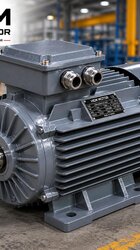
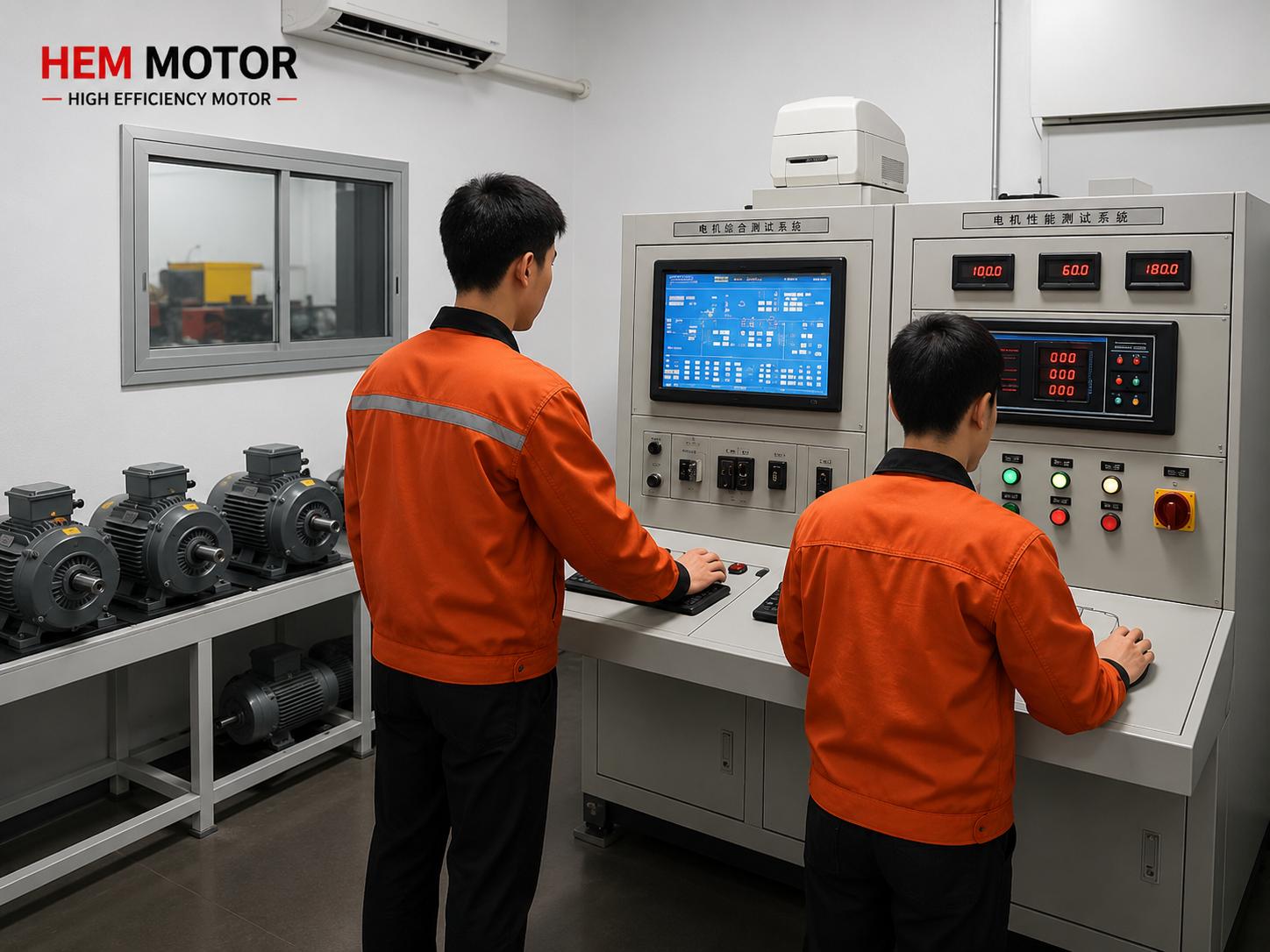

Switching to an efficient motor (IE4 or IE5) does not always pay back at the same speed. A motor of a given efficiency class may take decades to pay for itself on a machine running 2 hours a day; the same motor can pay for itself far more quickly on a line running continuously over three shifts. For this reason, the answer to “does an efficient motor make sense” is not a single number but the intersection of three main axes: runtime, load profile and the motor’s power. In this article, without giving a fixed currency figure or number, we present a proportional, scenario-based conceptual decision matrix; we clarify in which scenario an IE4/IE5 transition pays back quickly and in which staying on IE3 may be sufficient.

The Three Axes That Determine Payback
The logic determining an efficient motor’s investment payback is actually simple: savings are proportional to the amount of energy the motor uses over the year. The more, and the more heavily, a motor runs, the more the efficiency difference translates into energy savings. The three axes are:
- Runtime: How many hours a day, how many shifts, how many days a year does it run?
- Load profile (% load): At what percentage of its rated power does the motor run? Continuous full load or partial load?
- Power (kW): On a high-power motor, the same percentage efficiency difference means far more kW saved in absolute terms.
We covered the basis of this logic in Total Cost of Ownership (TCO) for High-Efficiency Motors, and the difference between nameplate and field efficiency in Nameplate vs Field Efficiency.
Axis 1: Runtime and Shifts
Runtime is the axis that affects payback the most, because savings are directly multiplied by hours:
- Low runtime (a few hours a day, single shift, seasonal): Since the efficiency difference acts over few hours a year, savings stay small; payback is slow.
- Medium runtime (two shifts, regular production): Savings become significant; the transition pays back in a reasonable time in most cases.
- High runtime (three shifts, continuous process, 24/7): Since the efficiency difference is multiplied continuously over the year, savings are highest; payback is fastest.
We covered motor fleet management in three-shift plants in Motor Fleet Management in Three-Shift Facilities, and the efficiency advantage in continuous process in Paper and Textile Lines in Continuous Process with IE4 Motors.
Axis 2: Load Profile (% Load)
How heavily the motor is loaded relative to its rated power determines how much the efficiency difference is worth:
- Continuous high load: In continuously loaded applications like pumps, fans and compressors, the efficiency difference works fully; savings are highest.
- Variable / partial load: If the load fluctuates, the motor’s part-load efficiency behavior comes to the fore. Motors like SynRM (IE5) are advantageous at partial load; we explained this in The Efficiency Curve of an IE5 SynRM Motor: Why Superior at Partial Load?.
- Oversized (low load): If the motor is chosen too large, both efficiency drops and power factor deteriorates; correct sizing is critical. We covered this in Efficiency at Partial and Low Load on an IE4 Motor and At What Load Should a Motor Run?.
We explained the extra savings from reducing speed by the affinity law on pumps and fans in Energy Savings on Pumps and Fans with a VFD.
Axis 3: Power (kW)
The same percentage efficiency difference means far more energy saved in absolute terms at high power. Therefore:
- Small power (below a few kW): Since absolute savings are small, the transition only makes sense at high runtime. We covered the IE5 logic at small power in Does an IE5 Motor Make Sense Below 7.5 kW?.
- Medium power: If runtime is medium-to-high, the transition is usually sensible.
- High power (tens to hundreds of kW): Even a small efficiency difference creates large absolute savings; payback is fastest. We covered the IE5 threshold at high power in Investment and Payback for IE5 Motors Above 132 kW.

Conceptual Decision Matrix
The matrix below combines the three axes to show, proportionally, which choice stands out in which scenario. There are no fixed numbers here; the aim is to provide a decision framework:
- High runtime + high load + high power: Fastest payback. Even an IE4-to-IE5 transition can pay for itself quickly. Priority should be given here.
- High runtime + high load + medium power: Fast payback; an IE4 or IE5 transition is usually sensible.
- Medium runtime + continuous load + medium/high power: Reasonable payback; an IE4 transition is usually correct.
- Low runtime + variable load + small power: Slow payback; staying on IE3 (where not mandatory) may be sufficient.
- Seasonal / spare motor: Efficiency investment is not a priority for motors that run very little; IE3 may be sufficient for this part of the inventory.
We covered the IE3-to-IE4 transition decision by power, runtime and payback in Switch to IE4 or Stay on IE3?, and when staying on IE3 is sensible in Stay on IE3 or Move to IE4?. You can find the IE5-vs-IE4 comparison in IE5 or IE4?.
From Single Motor to Fleet: Prioritization
If a plant has dozens of motors, there is no need to replace them all at once. The right approach is to start with the motors in the “high runtime + high load + high power” scenario and proceed in priority order. We covered this scalable savings approach in Scalable Savings in Switching to High-Efficiency Motors, and building a plant inventory in Preparing for an Energy Efficiency Audit: Motor Inventory. We covered finding the priority motor by logging the load profile in Motor Load Profile and Data Logging.
The Regulatory Axis: The Choice Is Not Always Free
The decision matrix is based on economic payback; however, in some cases the efficiency-class choice is not free but set by regulation. In certain power and pole ranges, a minimum efficiency class may be mandatory for motors running directly on the grid (DOL). In this case:
- Even if you do a payback calculation, you cannot go below the mandatory class.
- The salability of old-stock low-class motors may be restricted.
- In a new investment the mandatory class is the starting point of the decision; payback then determines whether to go above that class.
We covered which power, from which date, the efficiency-class requirement applies to in IE3 and IE4 Efficiency Mandate, and the logic of old IE2 stock in IE3 vs IE2 Motor Difference. Therefore, when applying the decision matrix, first check the regulatory threshold.
Verifying Field Efficiency: Are the Savings Real?
The decision matrix shows “how fast” the savings will pay back; but to see the real savings, field efficiency must be verified. The efficiency on the nameplate is the motor’s laboratory value at full load; if the motor runs at partial load in the field or there are transmission losses, the real savings come out differently. For verification:
- Load-profile logging: Measuring how much and at what load the motor actually runs clarifies prioritization.
- Power-analyzer measurement: Measurement before and after the change shows the savings with a number.
- Transmission losses: Belt and coupling selection can create loss when reflecting the motor efficiency to the field.
We covered load-profile logging in Motor Load Profile and Data Logging, and the effect of belt and coupling selection on transmission loss in Correct Belt and Coupling Selection in an Efficient Motor.
Sizing Error: An Oversized Motor Eats the Savings
An often-overlooked dimension of the decision matrix is that the motor must be correctly sized. A motor chosen too large, whether IE4 or IE5, cannot deliver the expected efficiency because it runs at low load, and the power factor deteriorates. So you must first choose the correct power, then raise the efficiency class. We covered how oversizing eats the savings in Efficiency at Partial and Low Load on an IE4 Motor, and the correct load ratio in At What Load Should a Motor Run?. In the decision matrix, the “low load” scenario is often a sign of a sizing error.
Fleet Prioritization: Where to Start?
In a plant with dozens of motors, replacing all motors at once is neither necessary nor economical. The right approach is a simple prioritization: first build the inventory, position each motor on the three axes (runtime, load, power), and start with the motors in the fastest-paying scenario. This way the limited investment budget is directed to the highest return. We covered building a plant motor inventory in Preparing for an Energy Efficiency Audit: Motor Inventory, and the scalable savings approach in Scalable Savings from Single Motor to Fleet.
Frequently Asked Questions
Does an efficient motor always pay back?
No, it does not always pay back at the same speed. The three axes determining payback are runtime, load profile and power. When high runtime, high load and high power come together, the transition pays back quickly; for low-runtime, small-power, lightly-loaded motors, payback is slow.
In which scenario is staying on IE3 sufficient?
Where not mandatory; for low-runtime (single shift, seasonal), small-power, lightly-loaded or spare-purpose motors, IE3 can often be sufficient. However, if there is a regulatory requirement, that is a separate criterion and the efficiency-class level is set by law.
Why are there no fixed numbers in the decision matrix?
Because energy price, runtime and load differ at every plant; giving a fixed currency figure or payback period would be misleading. Instead we offer a proportional framework: position your scenario on the three axes and see whether it pays back quickly or slowly. A precise calculation requires working with your own plant data.
Get a Quote for a Scenario Specific to Your Plant
Let us evaluate together which of your motors are priorities for an efficient transition and in which scenario they will pay back quickly. Share your runtime, load profile and power list, and we will recommend a suitable efficiency class and prioritization. HEM Motor is at your side for stock and supply across the IE3, IE4 and IE5 range.
Phone: +90 (532) 345 49 86 — reach us via our Get a Quote page; review the efficient-motor range in our High-Efficiency Motors category and all products on our home page.
Checklist: Efficient Motor Decision Matrix
- How many hours a day, how many shifts, how many days a year does the motor run?
- At what percentage of rated power does it run (continuous or partial)?
- Is the power small, medium or large?
- Is the scenario near the “high runtime + high load + high power” threshold?
- Is the motor oversized (running at low load)?
- If it is a pump/fan, is extra saving possible with a VFD?
- Is there a regulatory efficiency-class requirement?
- Which motors in the fleet are priorities — will you proceed in order?