English
 Türkçe

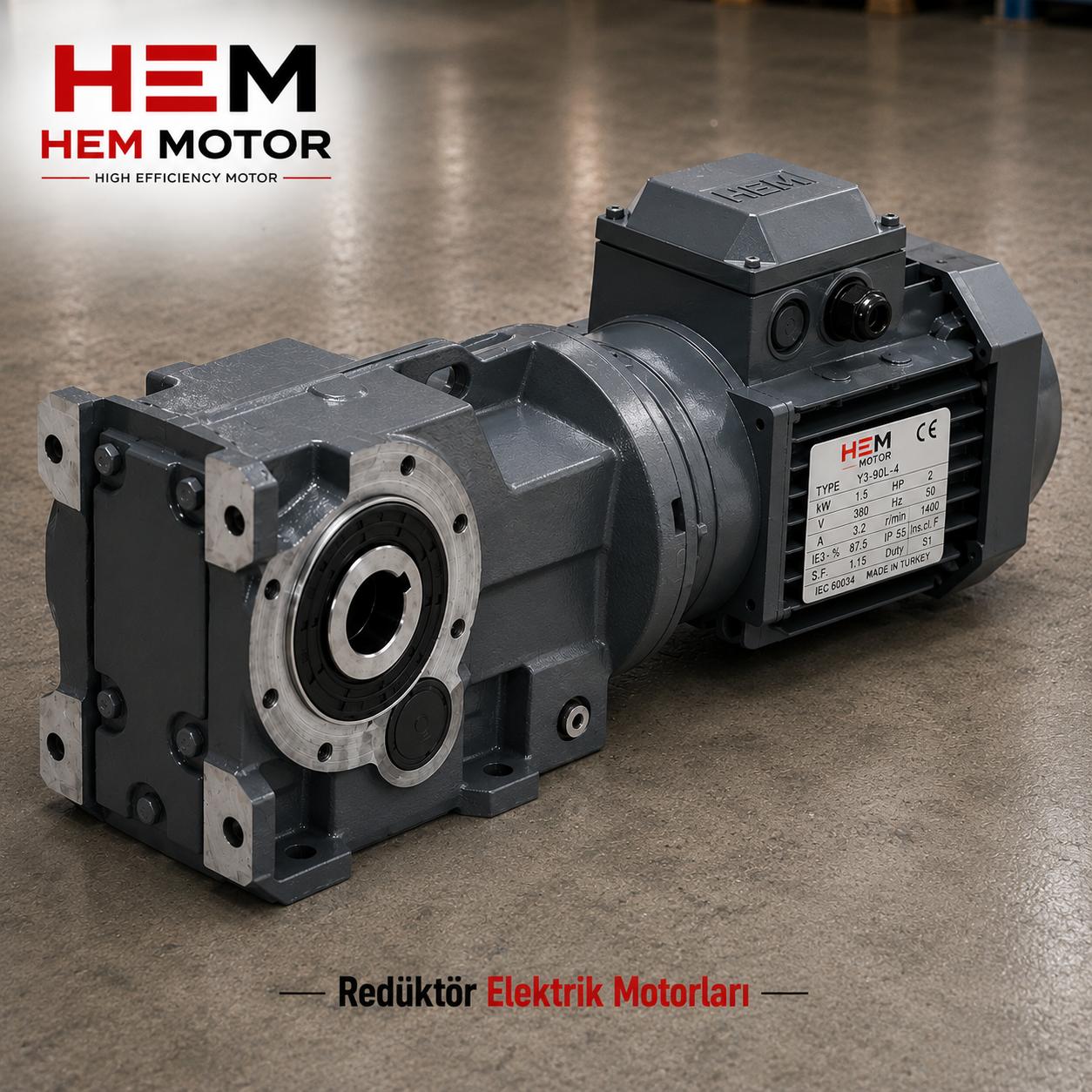

Natural stone processing plants are heavy-industry environments where marble and granite blocks are turned into slabs. At the heart of these plants are gangsaw machines, which cut a marble block with many parallel blades at once, and ST (splitting) machines, which prepare the block for cutting. The main drive motor of these machines runs continuously washed with water and stone dust, demands high torque and turns at near full load for most of the day. A wrongly selected motor means early bearing failure, winding short circuit and unplanned downtime. In this article we cover the right motor selection for gangsaw and ST machines in terms of power, poles, protection class, insulation, frame type and supply. As HEM Motor, an electric motor factory manufacturing since 1979, we supply cast iron body, heavy-duty motors for natural stone plants from Türkiye stock with fast delivery.
Gangsaw Main Drive Motor: Why High Torque Is Essential
In a gangsaw machine, dozens of saw blades tensioned on the upper frame cut the marble block with a back-and-forth oscillating motion. The main drive motor that produces this oscillation must continuously overcome the resistance coming from the block during cutting. So the motor does not run like an idling fan motor; it works under continuous load with a high and fluctuating torque. For this reason, high starting torque and high continuous torque are the first priority in a gangsaw main drive motor.
Gangsaw machines generally use 4-pole (1500 rpm) or lower-speed motors, because the mechanical system needs torque more than speed. On the power side, depending on the block size and the number of blades, a medium-to-high power band (for example 30 kW, 45 kW, 55 kW, 75 kW and above) comes into play. Since flywheel and inertia are critical for the smoothness of the oscillation, the motor must have a bearing and frame structure suited to this impact load profile. To study the impact load profile in more depth, our article on impact load motor selection, flywheel and inertia is a good starting point.
When choosing the right power, leaving a certain power margin instead of running the motor continuously near full load is correct both for efficiency and for life. We explained at what load you should run the motor in detail in our motor load ratio and correct sizing article. You can find whether the power is given as HP or kW and how to clarify it in the order in our HP or kW power understanding article; both units can appear on natural stone machine nameplates.
ST (Splitting) Machine Motors: The Block Preparation Line
ST machines perform the pre-cut or splitting of the block; they size the block before the gangsaw. In these machines too, a diamond wire or disc uses intensive water while cutting the stone. On the ST line, besides the main cutting motor, there are auxiliary motors such as wire tensioning, block carriage drive, water pump and extraction fan. Each has a different load profile: the cutting motor needs continuous high torque, the water pump continuous S1 duty, and the block carriage an intermittent and high starting torque.
Because of this variety, a natural stone plant should be equipped not with a single motor type but with a motor family of cast iron body, IP-protected, F/H insulated motors. We gathered the general motor requirements of marble and granite processing machines in our marble and granite processing machinery motor supply article. If you want to see the common points between hot, heavy-duty environments such as rolling mills and foundries and a natural stone line, our rolling mill and foundry electric motors article shares a similar heavy-duty approach.
Water and Stone Dust Environment: Why IP65/IP66 Is Needed
The most demanding aspect of a natural stone cutting line is the environment. While the saws cut the stone, cooling water is sprayed continuously; this water mixes with the dust of the cut stone to form an abrasive slurry. This slurry constantly splashes onto the motor body, fan cover and terminal box. Standard IP55 protection provides protection against water jets and dust from all directions; however, on a natural stone line, where pressurized water and abrasive slurry are involved, an IP65 or IP66 protection class is much safer.
IP65 means full dust-tightness (dust-proof) and resistance to water jets from all directions; IP66 means resistance to powerful water jets. In a natural stone plant, the terminal box gaskets, cable glands and the oil seal on the shaft side are the weak links of this sealing. You can find what the IP protection class means in practice and which one is needed in which environment, comparatively, in our electric motor IP protection class selection article. The IP65/66 experience in dust- and seal-demanding crusher/mining applications is complemented by our dust sealing in crusher motors article; similar principles apply on a natural stone line as well.
The matter of the oil seal and sealing is especially important; water leaking in from the shaft side ruins the bearing quickly. We covered oil seal and sealing details in cast iron motors in our oil seal and sealing in cast iron motors article. The IP protection on the terminal box and cable gland side is detailed in our motor terminal box and cable connection article.
Cast Iron Body: Mechanical Strength and Vibration Damping
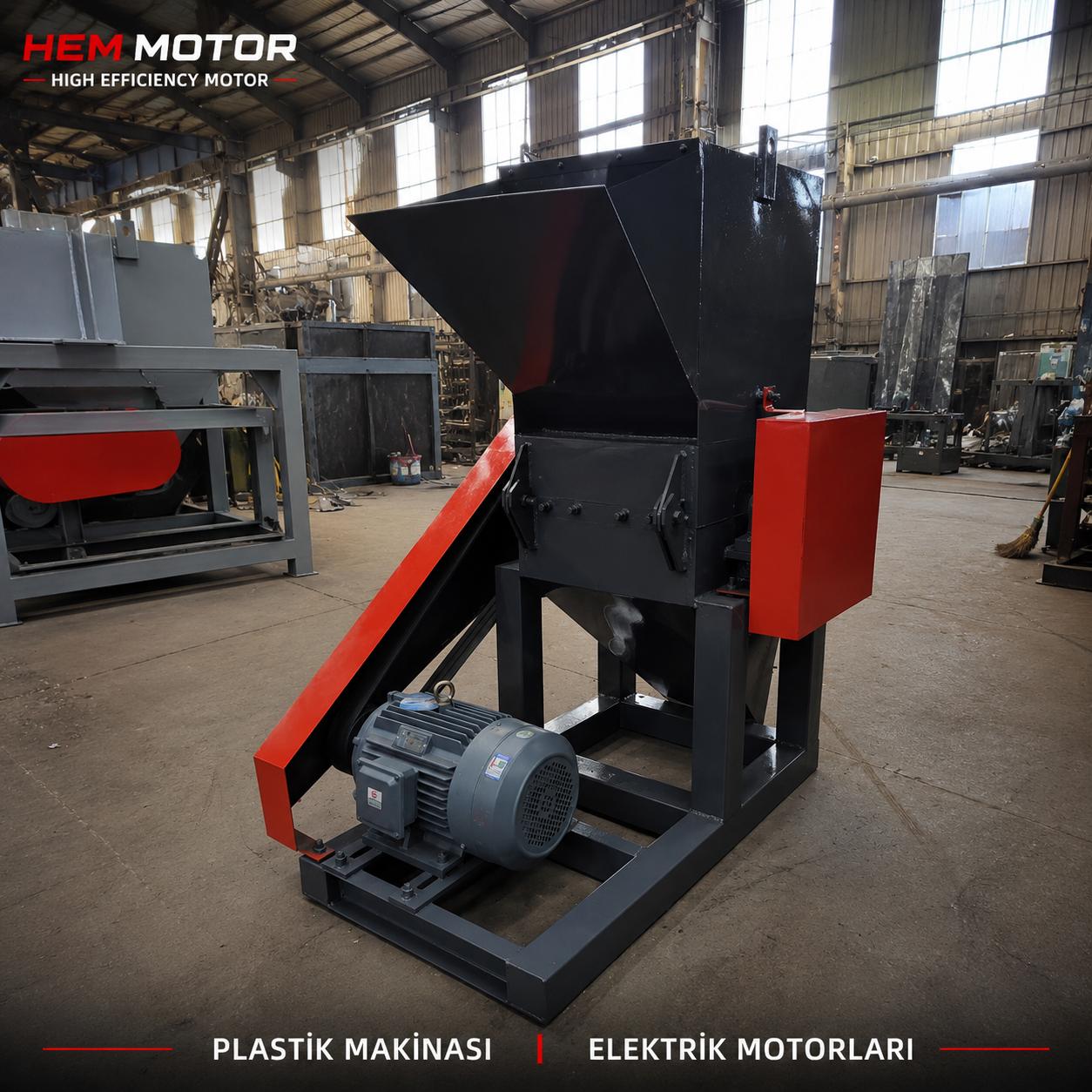
On a natural stone cutting line, the motor is connected to a mechanical system that is both heavy and vibrating. An aluminium body motor cannot withstand these conditions for long. For this reason, the standard choice in gangsaw and ST machines is cast iron body motors. The cast iron body provides high mechanical strength, better vibration damping and longer life in an abrasive slurry environment. In the HEM range, the cast iron body is offered in a wide power band from 0.55 kW to 355 kW, in IE3 and IE4 efficiency classes, with 100% copper windings.
If you want to clarify the difference between cast iron and aluminium body from a purchasing decision point of view, our cast iron or aluminium body article guides you directly. Since corrosion protection is also critical in open-field and humid environments, our corrosion protection in cast iron body motors and paint and cataphoresis coating articles are particularly important for natural stone plants. We explained the correct matching of frame size with power in our frame size and power matching in cast iron motors article. You can review the entire cast iron range on our efficient electric motors page.
Insulation Class (F/H) and Continuous S1 Duty
Natural stone plants mostly run two or three shifts; the motor is in continuous (S1) duty for most of the day, turning near full load. Under continuous load the winding temperature rises. For this reason class F (155°C) insulation is standard, and in harsh conditions class H (180°C) insulation is preferred. We explained the effect of the insulation class on life in hot and dusty environments in our motor insulation class in hot and dusty environments article.
The choice of duty type is also important: while the gangsaw main drive and the water pump are in continuous S1 duty, intermittently running drives such as the block carriage are evaluated in different duty types. We explained what the duty types (S1-S6) mean in our electric motor duty type selection article. For plants that want to monitor the winding temperature in the field, protection with PT100 and PTC thermistors reduces unplanned downtime; details are in our motor winding temperature monitoring article. We gathered the selection of thermal relay, contactor and fuse that protect the motor against overload in our electric motor protection article.
Starting and Speed Control: Soft Starter, Star-Delta and VFD
In gangsaw and ST machines, the initial start of the motor loads both the mechanical system and the grid. In high-power motors, direct online (DOL) starting causes both a voltage drop on the grid and a mechanical shock due to the high starting current. For this reason, soft starting with star-delta, a soft starter or a frequency inverter (VFD) is preferred. To compare the starting methods, our star-delta or soft starter article is useful.
On some natural stone lines, the cutting speed is to be adjusted according to the hardness of the stone; in this case speed control with a VFD comes into play. We covered when a VFD is needed and how it is selected in our frequency inverter (VFD) with asynchronous motor article. On auxiliary drives such as the water pump and extraction fan, a VFD provides both energy savings and smooth operation. If you wonder why an asynchronous motor turns at 1440 rpm instead of 1500 due to slip, our slip and actual speed in asynchronous motors article clarifies the subject.
Supply, Lead Time and Equivalent Replacement
In natural stone plants, a motor failure means the cutting line stops and slab orders cannot be delivered. That is why the supply side is at least as important as the technical selection. Meeting the most sought-after power-speed combinations from manufacturer stock with fast delivery minimizes unplanned downtime. Even if the brand and model of your existing motor are different, it is possible to prepare an exactly equivalent motor from the nameplate information. We explained how the equivalent motor is selected in our old brand motor direct replacement article. Keeping a spare motor in stock in advance for critical machines guarantees uninterrupted operation of the line for months; we gathered which powers should be kept as spares in our critical spare motor list article.
The shipping and commissioning of high-power gangsaw motors also require separate planning. Heavy cast iron body motors must be moved with a lifting eye and correct packaging; you can find the checks to be done at delivery in our electric motor shipping damage check list article. At the first start of the new motor, the rotation direction, insulation resistance and connection checks must not be neglected; we listed all the steps in our motor commissioning and first startup checklist article. Our information to provide when requesting a quote article summarizes the details you need to send for a correct and fast quote.
Auxiliary Motors: Water Pump and Extraction
The continuity of a natural stone cutting line depends not only on the main drive but also on the auxiliary motors. If the pump motor that supplies the cooling water stops, the saws overheat and the line halts. For this reason the pump motor must be at least as reliable as the main drive, in continuous S1 duty and with suitable IP protection. We explained centrifugal pump motor selection together with flow and head in our centrifugal pump motor selection article.
Extraction and dust collection fans that capture the fine stone dust in the cutting environment are also critical auxiliary motors. Our extraction and dust collection fan motor selection article covers fan motor selection in a dusty environment. For auxiliary motors too, a cast iron body and suitable IP protection are the safest choice for the demanding environment of a natural stone plant. For general industrial drives, our efficient electric motors range offers a wide selection.
Motor Selection Checklist for a Natural Stone Plant
- Power (kW): Selected with a power margin according to block size and blade count; medium-to-high power band for the gangsaw main drive.
- Poles/Speed: Usually 4 poles (1500 rpm) or lower speed; priority is given to torque.
- Protection class: IP65/IP66 is preferred due to pressurized water and abrasive slurry.
- Insulation: Class F standard for continuous S1 duty, class H for harsh conditions.
- Frame: Cast iron - mechanical strength and vibration damping.
- Sealing: Terminal box gaskets, cable glands and shaft oil seal must be watertight.
- Starting: Soft starter / star-delta at high power; VFD if speed control is needed.
- Auxiliary motors: Water pump and extraction fan in continuous S1, with suitable IP protection.
- Supply: Manufacturer stock, fast delivery and equivalent replacement capability.
Frequently Asked Questions
How many poles should a gangsaw main drive motor have?
Since the gangsaw machine needs torque, 4-pole (1500 rpm) motors are generally preferred; in some applications a lower speed is obtained through mechanical transmission. What matters is a high and smooth torque that can continuously overcome the resistance of the oscillation motion. For the right pole-speed selection, the machine manufacturer's recommendation and the nameplate information of the existing motor should be taken as the basis.
Is IP55 enough on a natural stone line, or is IP65 needed?
In a standard industrial environment IP55 may be sufficient; however, on a natural stone cutting line, because pressurized cooling water and abrasive stone slurry constantly splash onto the motor, IP65 or IP66 protection is much safer. Pay particular attention to the sealing of the terminal box, cable glands and the shaft oil seal; water ingress is the biggest factor shortening bearing and winding life.
How do I replace my existing gangsaw motor on a one-to-one basis?
The fastest and error-free method is to provide the nameplate information of the existing motor completely: power (kW), speed (rpm), frame size (IEC frame), mounting type (B3/B5/B35), shaft diameter and IP/insulation class. With this information we prepare an exactly equivalent motor from stock. We explained step by step how to do the correct matching from the nameplate in our avoid the wrong motor delivery article.
Get a Quote
Would you like to plan your gangsaw, ST and auxiliary drive motors from a single supplier, with the right IP protection and insulation class? Send us the nameplate information of your existing motors or the power-speed values recommended by your machine manufacturer; let us present cast iron body, IP65/66 protected motors, together with a soft starter/VFD recommendation if needed, in a single quote. As HEM Motor, we supply IE3/IE4 motors between 0.55 and 355 kW from Türkiye stock with fast shipping. Reach us right away at +90 (532) 345 49 86 or fill out the form on our contact us page; let our technical team plan the most suitable motor match for your natural stone line together with you.