English
 Türkçe

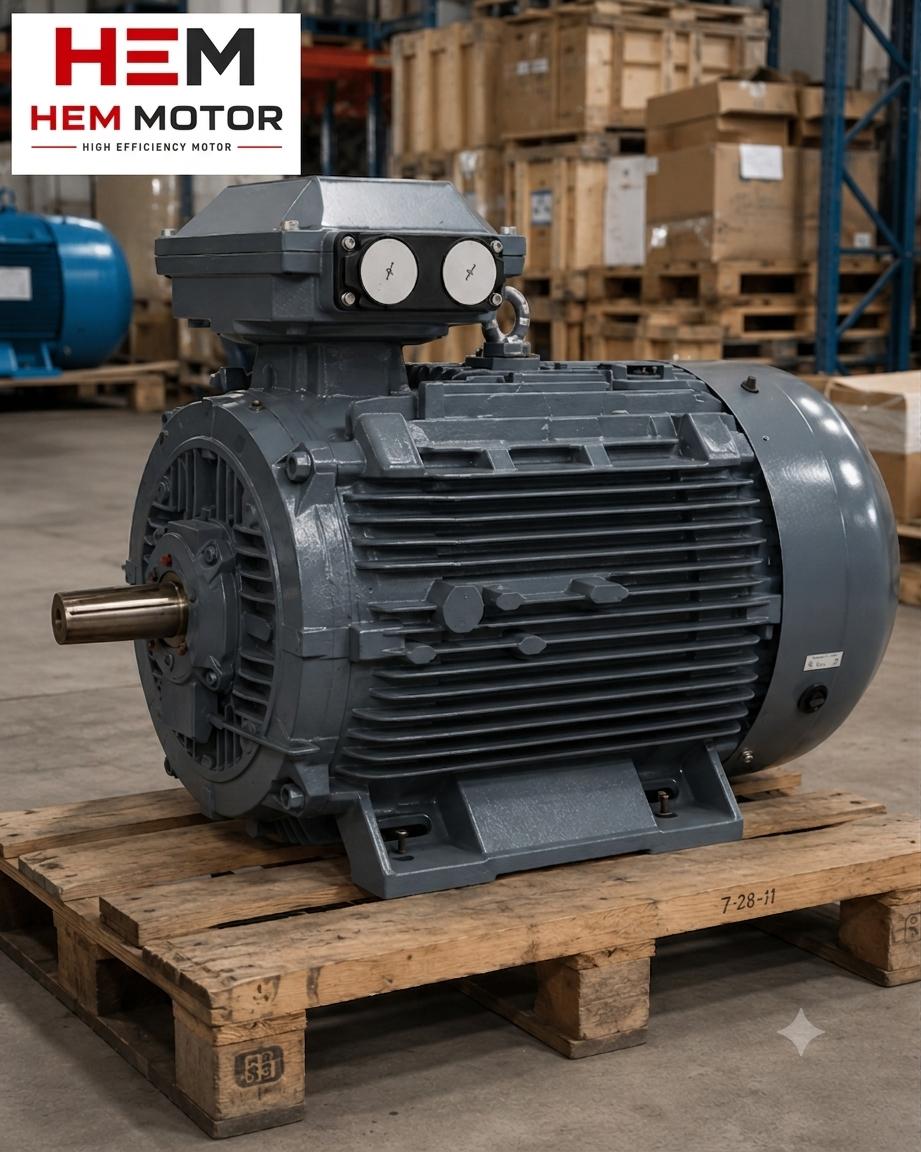

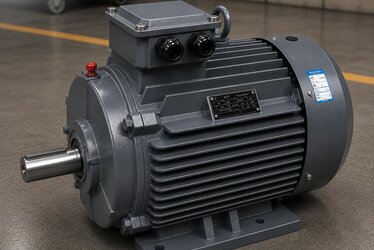
30 kW and 37 kW IE3 motors sit right in the middle of the medium-upper power class most demanded by industry. These two powers are practically a cornerstone for compressors, pumps, fans, conveyors, crushing-screening auxiliary drives and countless machines. Because demand is high, stock availability, correct speed and pole selection, frame size and mounting compatibility become critical. Since IE3 is now the mandatory efficiency class across many power ranges, buying a non-IE3 motor at 30 and 37 kW is, in most cases, not even compliant with regulation. This guide explains the 2/4/6 pole speed options of 30 kW and 37 kW IE3 motors, their typical frame sizes (around 200L/225), the IE3 mandate, mounting types and the ways to buy correctly from stock, with technical tables and clear recommendations.
30 and 37 kW: Why Are They So Much in Demand?
30 kW (about 40 HP) and 37 kW (about 50 HP) are the drive power of a very wide range of machines in industry. From screw compressors to centrifugal pumps, from large fans to heavy conveyors, many applications land exactly in this power range. This prevalence has two results: first, holding stock at these powers makes sense for a supplier, so a motor with the right specification is usually found quickly; second, because demand is diverse, 2, 4 and 6 pole, different mounting types and options must all be considered together. Correct buying starts with clearly defining the need and choosing the best available configuration from stock.
- 30 kW: medium-large pump, fan, compressor, conveyor; a very common drive power.
- 37 kW: one step up; larger-flow pump, fan and compressor sets.
- Stock logic: holding stock at these powers is common because of high demand.
For the most-sought power and speed combinations, our IE3 stock guide, and for one step down our 18.5 and 22 kW IE3 and 11 and 15 kW IE3 articles are a natural continuation.
Speed and Pole Selection: 2/4/6 Pole
30 and 37 kW motors are most commonly made in 2, 4 and 6 pole speeds. The pole count sets the motor's synchronous speed: more poles mean lower speed, more torque at the same power and a larger frame. The right speed is chosen per the driven machine's need; a wrong speed leads either to an inefficient belt-pulley ratio or to insufficient/excessive speed.
30 and 37 kW IE3 Pole-Speed-Frame Map (Typical)
| Power | Poles | Synchronous Speed | Approx. Load Speed | Typical Frame (IEC) | Typical Application |
|---|---|---|---|---|---|
| 30 kW | 2 | 3000 rpm | ~2950 rpm | 200L | Compressor, high-speed pump |
| 30 kW | 4 | 1500 rpm | ~1475 rpm | 200L | General purpose, fan, conveyor |
| 30 kW | 6 | 1000 rpm | ~985 rpm | 225M | Low speed, high torque |
| 37 kW | 2 | 3000 rpm | ~2955 rpm | 200L/225M | Large compressor, pump |
| 37 kW | 4 | 1500 rpm | ~1480 rpm | 225S/225M | Large fan, conveyor, mill |
| 37 kW | 6 | 1000 rpm | ~985 rpm | around 250M | Low-speed heavy drive |
Note: frame sizes may vary slightly by manufacturer; when buying a replacement motor, the existing motor's frame, shaft diameter and mounting type must always be confirmed.
IE3 Mandatory Efficiency Class: Why Does It Matter?
IE3 (Premium Efficiency) is an efficiency class that has become legally mandatory across many power ranges. At powers like 30 and 37 kW, IE3 is the right choice both for regulation and energy economy. Because a motor at this power usually runs long hours, a few points of efficiency difference correspond to serious amounts on the annual energy bill. Although an IE3 motor requires a slightly higher investment initially, thanks to its low losses it usually pays back that difference within a few years.
- Regulation: IE3 (and above) is mandatory in the relevant power ranges.
- Energy: high efficiency means large savings on a long-running motor.
- Payback: the initial difference is recovered over time as losses fall.
For which class is required at which power, our IE3 efficiency class mandate, and for reading the label our reading the IE3 motor nameplate articles are useful resources.
Frame, Shaft Diameter and Mounting Type
30 and 37 kW IE3 motors are typically offered in frames around 200L, 225 and 250. In a replacement (changing an existing motor), the frame size, shaft diameter, shaft length and mounting type (foot B3, flange B5, foot+flange B35) must match exactly; otherwise the motor will not seat on the machine or the coupling/pulley will not fit. In a new plant, the mounting type is chosen per the machine design.
| Mounting Type | Description | Typical Use |
|---|---|---|
| B3 | Foot-mounted on a base | Conveyor, fan, general purpose |
| B5 | Large flange, direct to machine | Pump, compressor set |
| B35 | Foot + flange (universal) | Where both foot and flange are needed |
For the shaft and frame table, our shaft and frame table, and for multi-mount our B3/B5/B35 universal frame article, are guiding.
Starting and Protection
On 30 and 37 kW motors direct-on-line (DOL) starting is possible on most grids, but since the inrush reaches 6-7 times the rated current, star-delta or a soft starter is preferred if the grid is weak or frequent starts are needed. In applications like pumps and fans, soft starting both reduces the mechanical shock and is grid-friendly. If speed control and energy savings are needed, a VFD is used. On the protection side, PTC/PT100 is added to the winding to protect the motor against overheating.
- DOL: simple; but high inrush, not suitable for frequent starting.
- Star-delta: lowers inrush; suitable under low start load.
- Soft starter: ramped start; ideal for pump, fan, compressor.
- VFD: speed control + savings; for variable-load applications.
For starting options see our star-delta vs soft starter, for soft starter compatibility our soft starter compatibility, and for temperature protection our PTC/PT100 wiring articles.
Replacement or New Plant? Two Different Buying Logics
When buying a 30 or 37 kW motor there are two basic scenarios, each with its own logic. The first is replacement, i.e. buying a new motor in place of one that failed or reached the end of its life. Here the key rule is exact compatibility: power, speed, voltage, frame size, shaft diameter and mounting type are read from the existing motor's nameplate, and an IE3 motor with the same values is chosen. If the old motor was below IE3, the new one becomes IE3 by regulation, which usually means a more efficient motor in the same frame. The second scenario is a new plant or new machine; here the motor is selected from scratch per the machine design and load calculation, and the mounting type and speed are chosen freely. In both cases the right specification is the key to avoiding surprises on site.
- Replacement: exact match from the old nameplate; power, speed, frame, shaft, mounting must be the same.
- New plant: free choice per load calculation; mounting and speed per design.
- Common point: in every case IE3 is verified as the mandatory class.
For the question of replacing or rewinding the motor, our rewind vs new article, and to avoid buying mistakes our most common mistakes article, will be helpful.
Rated Current, Torque and Cable-Fuse Selection
The correct installation of a 30 and 37 kW motor does not end with choosing the motor; a cable cross-section suited to the rated current, plus contactor, thermal protection and fuse must also be chosen. At 400V the rated current of a 30 kW motor is around 55-58 A, and of a 37 kW motor around 66-70 A (varying with efficiency and power factor). The cable cross-section is set per this current and the line length; to limit voltage drop, a larger cross-section is chosen on long runs. The contactor and thermal relay are sized per motor current and starting method; if star-delta is used, three separate contactors are needed. Knowing the rated torque (Nm) also matters for drive compatibility; for example, a 4-pole 30 kW motor has a rated torque of about 195 Nm and a 37 kW motor about 240 Nm.
- Rated current: 30 kW ~55-58 A, 37 kW ~66-70 A (400V, approximate).
- Cable: cross-section per current and line length; a size up on long runs.
- Protection: contactor and thermal relay chosen per motor current.
- Torque: rated torque should be known for drive compatibility.
For rated torque calculation, our finding torque from kW and speed, and for cable and lug selection our cable connection and lug selection articles are detailed resources.
Cooling, Insulation Class and IP Protection
30 and 37 kW IE3 motors are usually offered in a totally enclosed fan-cooled (TEFC, IC411) frame, in F insulation class and IP55 protection. The F insulation class sets the temperature margin the winding can withstand; in most applications F class gives sufficient margin, while H class is preferred in harsh conditions. IP55 protects against dust and water jets and is standard in most industrial environments; outdoors, or in dusty or humid places, higher protection such as IP56/IP65 may be required. If the motor will run at low speed for long periods on a VFD, an external forced cooling fan (IC416) should be considered, since a standard-fan motor cannot cool enough.
- Cooling: standard TEFC (IC411); IC416 for low speed on a drive.
- Insulation: F class common; H class in harsh conditions.
- IP: IP55 standard; higher protection outdoors/dusty.
Buying Correctly from Stock: A Checklist
- Determine the power (30 or 37 kW) and required speed/poles (2/4/6).
- If a replacement, confirm the existing motor's frame, shaft diameter and mounting type.
- Choose the mounting type (B3/B5/B35) per the machine.
- Verify the efficiency class as IE3 (mandatory).
- Decide the starting method per load and grid.
- Add IP rating, insulation class and thermal protection (PTC/PT100).
- Query stock; choose a suitable configuration for fast delivery.
Frequently Asked Questions
Should I choose 2-pole or 4-pole for a 30 kW motor?
It depends on the need of the machine you drive. For applications needing high speed (for example a high-speed compressor or some pumps) 2-pole (3000 rpm) is chosen. For general-purpose drives, fans and conveyors the most common choice is 4-pole (1500 rpm), because it offers balanced torque and efficiency. If you reduce speed with a belt and pulley, choosing the right motor speed both improves efficiency and avoids needless mechanical losses. If you are replacing an existing motor, base your choice on the speed shown on the nameplate.
Which frame size is used at 30 and 37 kW?
Typically a 30 kW motor is found in a 200L frame (at 4 pole), and a 37 kW motor in a frame around 225; as the pole count rises (lower speed) the frame grows. But frame sizes may vary slightly by manufacturer. When buying a replacement motor, always confirm the existing motor's frame size, shaft diameter and mounting type; otherwise the motor may not seat on the machine or the coupling/pulley may not fit.
Can I buy a lower-efficiency motor instead of IE3?
Usually no. At powers like 30 and 37 kW, IE3 is the mandatory efficiency class under the relevant regulation; selling a new non-IE3 motor at these powers is, in most cases, not permitted. IE3 is also the right choice for energy economy: on a long-running motor, high efficiency recovers the initial price difference within a few years. So for both legal and economic reasons, an IE3 motor should be preferred.
Let us find the IE3 motor that fits your need quickly from stock. We will clarify your 30 or 37 kW power, the required speed and poles, the frame and mounting type together, and offer the right configuration with manufacturer stock and fast delivery. To choose the right IE3 motor and request a quote, contact HEM Motor.