English
 Türkçe

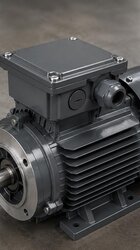
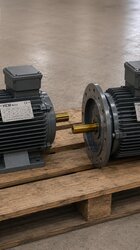
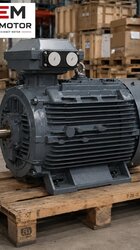

11 kW and 15 kW are the two most sought-after electric motor ratings in the medium-to-high power class in industry. Large pumps, high-flow fans and blowers, compressors, conveyor and mill drives, hydraulic units and countless general-purpose applications run in exactly this power range. These two classes are also the region where the IE3 efficiency requirement is clearly enforced; that is, a newly purchased 11 or 15 kW three-phase motor must by regulation be at least IE3 efficiency class. For correct purchasing, defining the kW alone is not enough; the pole count (speed), frame size (typically around 160M/160L), mounting type, voltage/connection and stock availability must all be evaluated together. In this guide we cover 11 and 15 kW IE3 motors through their 2/4/6-pole speed options, frame matching, the IE3 requirement and fast-supply logic so you can order without error.
The IE3 Requirement: Why Are 11 and 15 kW in This Class?
IE efficiency classes (IE1, IE2, IE3, IE4...) define the energy efficiency of motors on a standard scale. Regulation makes a minimum efficiency class mandatory for three-phase asynchronous motors in certain power ranges, and 11-15 kW sits right in the middle of that requirement. An IE3 (premium efficiency) motor runs with lower losses at the same power; especially because motors in this class usually run long hours, often continuously (S1), the efficiency difference reflects directly in running cost. Given that an 11 or 15 kW motor runs thousands of hours per year, IE3's lower losses provide serious energy savings over time.
IE3 is not just a cost item but also a compliance requirement. Choosing IE3 (or higher) in new lines and in replacement of existing motors guarantees both regulatory compliance and energy performance. So in 11 and 15 kW purchasing, the question "is it IE3?" should be treated not as optional but as the default. On the stock side, makers mostly hold IE3 motors at these ratings; so requesting the right class also shortens lead time.
IE3's Effect on Running Cost
At medium-to-high powers like 11 and 15 kW, the importance of the efficiency class becomes clear when you look at the motor's total life cost. A motor's purchase price is usually small next to the energy it consumes over the years; especially for a continuously running motor, the energy cost far exceeds the first investment. Each percentage point of efficiency gain an IE3 motor provides over a lower-efficiency motor of the same power turns into a notable saving on a 15 kW motor running thousands of hours per year. So the IE3 requirement is not just a rule but an economic choice in the buyer's favor.
The efficiency difference also means less heat loss; lower loss means the motor runs cooler and winding life is extended. This increases motor reliability especially in facilities running at high ambient temperature or continuously at full load. So choosing IE3 both lowers the energy bill and indirectly reduces maintenance and failure cost.
2, 4 and 6 Pole: Choosing the Speed
At the same 11 or 15 kW rating, a motor runs at a different speed and torque depending on pole count. Approximate speeds on a 50 Hz grid:
- 2-pole ~ 2900-2950 rpm: High speed, low torque. For high-pressure centrifugal pumps, booster lines, high-speed fans and some compressors.
- 4-pole ~ 1450-1470 rpm: Medium speed, balanced torque. The most common choice; standard for general-purpose drives, fans, pumps, conveyors and geared applications.
- 6-pole ~ 950-970 rpm: Low speed, high torque. For low-speed mixers, mills and special drives; needs a larger frame.
Key rule: at the same kW, as pole count rises (speed falls) torque rises but the frame grows and the motor gets heavier. So a 15 kW 6-pole motor is in a noticeably larger, heavier frame than a 15 kW 2-pole motor. Because for quadratic-torque loads like pumps and fans the speed choice directly sets performance, the pole count must be chosen as carefully as the kW.
11 and 15 kW Frame Matching
In the IEC standard, frame size sets the motor's shaft height and mounting holes. For 11 and 15 kW the typical frame range is 160M to 160L (overflowing to 132M or 180M by pole). The table below summarizes common matches (small differences by maker are possible):
| Power | Pole / Speed | Typical Frame | Common Application |
|---|---|---|---|
| 11 kW | 2-pole / ~2920 rpm | 160M | Booster pump, compressor |
| 11 kW | 4-pole / ~1460 rpm | 160M | Fan, pump, conveyor, gearbox drive |
| 11 kW | 6-pole / ~960 rpm | 160L | Low-speed mixer, mill |
| 15 kW | 2-pole / ~2930 rpm | 160M | High-pressure pump, screw compressor |
| 15 kW | 4-pole / ~1465 rpm | 160L | Large fan, hydraulic unit, line drive |
| 15 kW | 6-pole / ~965 rpm | 180L | Heavy mixer, low-speed drive |
Knowing the frame size is critical especially for replacement (like-for-like) purchases. If the existing motor's shaft height, foot hole spacing and shaft diameter do not match the new motor, mounting causes trouble. So before ordering, always read the frame code (e.g. 160L) and mounting type from the old motor nameplate and select the new motor to those dimensions. Thanks to the IEC standard, motors of different makers in the same frame code are usually interchangeable.

Mounting Type and Voltage/Connection
How the motor connects to the machine is defined by the mounting type. The most common mounting types in 11 and 15 kW frames are:
- B3 (foot): The most common. The motor bolts to the base by its feet, with drive via belt-pulley or coupling.
- B5 (large flange): The motor connects directly to the machine or gearbox through a large-diameter flange; common in pump and gearbox mounting.
- B35 (foot + flange): Both foot and flange; preferred in heavy applications needing extra rigid mounting.
On the voltage side 400V three-phase is standard; at this power, motors usually come with a 400V delta / 690V star winding and are adapted to grid voltage by terminal bridging. If star-delta starting is to be used, the motor's delta operating voltage must suit the grid. If it will run with a VFD, drive-compatible winding insulation and, if needed, forced cooling should be considered. Because wrong terminal connection can burn the motor instantly, the nameplate voltage/connection must be matched with the site grid voltage.
Starting and Protection
At direct-on-line (DOL) starting, 11 and 15 kW motors draw a starting current several times rated current. To limit starting current at this power, star-delta or a soft starter is often used; especially for high-inertia loads (large fan, mill), soft start reduces both the grid shock and motor heating. On the protection side, each motor must have its own thermal/MPCB protection, and where needed, winding temperature protection (PTC/PT100) should increase thermal safety. Correct cable cross-section, fuse and contactor selection must also be done per rated current.
11 and 15 kW Selection Examples by Application
To make the right choice concrete, consider common applications. Large centrifugal pump: to deliver high flow and pressure, a 2- or 4-pole 11/15 kW IE3 motor is usually chosen; power is set from the pump curve, based on the draw at the far-right operating point. High-flow fan/blower: 4-pole (1460 rpm) is often chosen per fan speed; as it is a quadratic-torque load, the motor should run comfortably at the nominal point and use soft start for high-inertia starting. Screw compressor: a 2-pole 11/15 kW motor is chosen as IE3 for efficiency under continuous load. Mill/mixer drive: if low speed is needed, 6-pole or 4-pole with a gearbox is used; high starting torque and durability matter.
The common principle in these examples is that, instead of "looking at the catalog and taking the nearest kW," you determine the machine's real speed and torque needs and select the matching pole, frame and starting method. Because motors in this class usually run long hours, the low losses provided by the IE3 efficiency class are also an inseparable part of the selection decision. The right pole and frame combined with the right efficiency class give the best result for both performance and running cost; a wrong pole choice runs the machine either weak or overstressed even at the correct kW.
Checklist for Correct Purchasing
- Power: 11 kW or 15 kW? (Verify the load by current measurement.)
- Pole/speed: 2, 4 or 6 pole? Per the application's speed.
- Frame: Same as the old motor in a replacement? (e.g. 160L)
- Mounting: B3, B5 or B35?
- Efficiency: IE3 (mandatory for new purchases).
- Voltage/connection: 400V, star/delta, VFD compatibility.
- Starting: DOL, star-delta or soft starter?
- IP protection: above IP55 in dusty/wet areas.
Stock Logic and Fast Supply
11 and 15 kW IE3 motors can usually be supplied quickly from shelf stock in the most common configurations (4-pole, B3, 400V). Because this power class drives critical machines in many facilities, fast spare supply during a failure is very important; even one hour of downtime is a serious cost. The most robust strategy is to keep a spare motor of the same power-pole-frame-mounting type for critical machines from the outset, or to work with a source that can supply quickly. Motors stored for a long time should be checked with insulation resistance (megger) before commissioning, and nameplate data verified exactly against the order.
The way to fully benefit from stock is to avoid unnecessary special options and prefer the standard configuration. Special flange, special voltage, high IP or options like brake/encoder can extend lead time; if the application does not truly require them, a standard IE3 motor comes both faster and more economically. If a facility has several machines in this power class, standardizing them all to the same frame and mounting type lets a single spare cover multiple machines.
Frequently Asked Questions
11 kW is not enough, should I move up to 15 kW?
If the motor continuously draws above rated current, overheats or trips the overload often, the load really is above 11 kW and 15 kW is right. But measure the load first; the problem is sometimes not undersizing but blockage, bearing friction or wrong speed choice. An unnecessarily large motor lowers part-load efficiency and means a more expensive investment.
Is IE3 mandatory at 11 and 15 kW?
Yes, newly purchased three-phase asynchronous motors in this power class must by regulation be at least IE3 efficiency class. IE3 provides energy savings and compliance in these long-running motors. So IE3 should be treated as the default in purchasing.
What should I watch when replacing an old motor?
Read the power, pole/speed, frame code, mounting type and shaft diameter from the old motor nameplate. If you select the new IE3 motor to those dimensions, mechanical mounting is trouble-free and running cost drops as the efficiency class rises.
Source 11 and 15 kW IE3 Motors Fast from Stock
For the most sought-after class of medium-to-high power, 11 and 15 kW IE3 motors, choosing the right pole, frame and mounting type makes both mounting trouble-free and delivery fast. As HEM Motor we hold a wide stock of 2/4/6-pole, B3/B5/B35 mounted IE3 motors in this power class. Share your application's speed, mounting, voltage and starting details; request a quote for the right motor and let us plan fast delivery with manufacturer stock.
Related guides: IE3 stock guide power and speed, 18.5 and 22 kW IE3 stock and speed, IE3 efficiency class mandate, shaft diameter and frame table and 2-4-6 pole motor selection.