English
 Türkçe

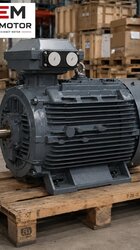
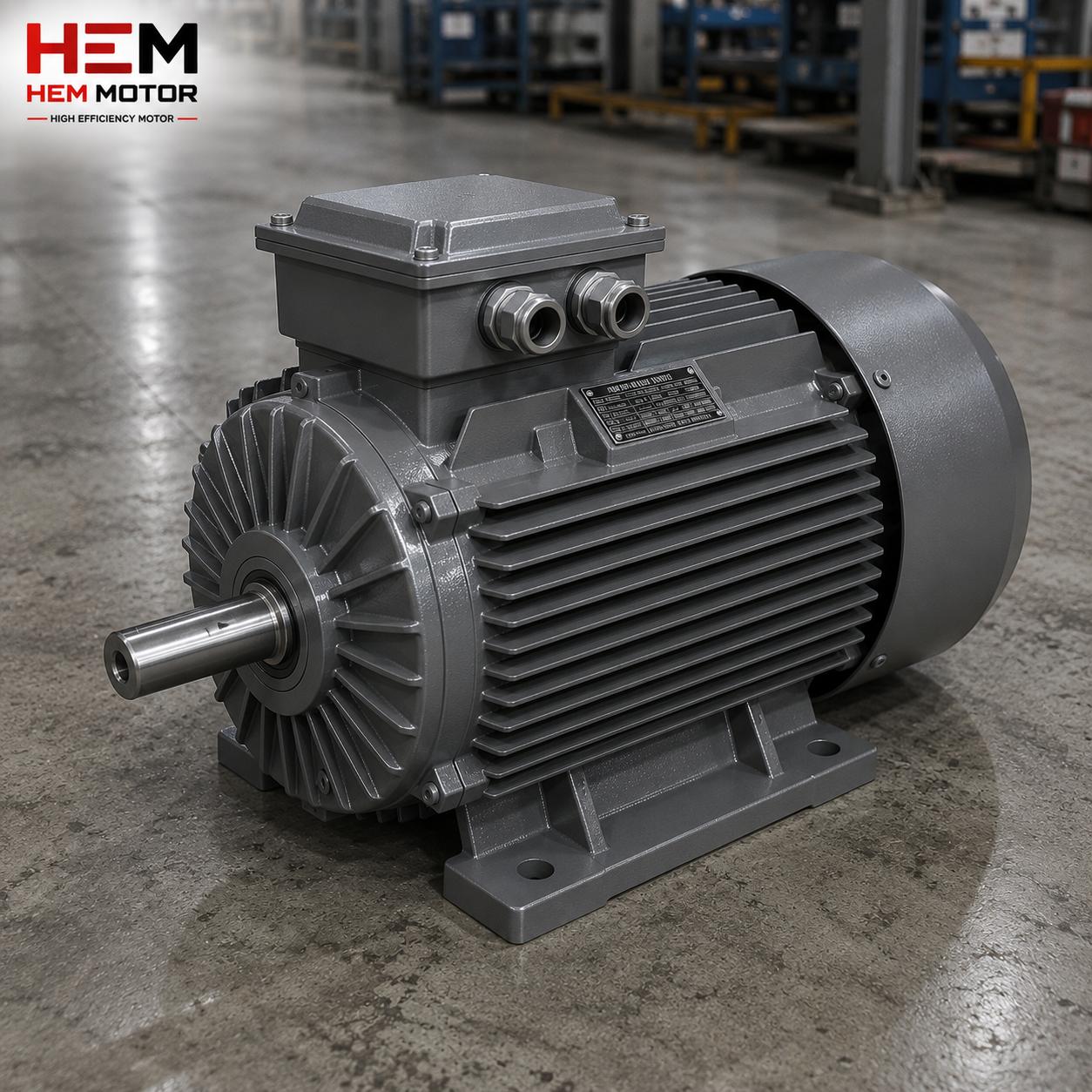

Before buying an IE3 motor, the question buyers most often get stuck on is simple: "Which efficiency class is mandatory at my power? Does the motor in stock comply?" This article is not an engineering lecture; it is a purchasing guide that clarifies the power-efficiency thresholds and makes your order decision easier. As HEM Motor, a manufacturer and supplier, we explain which class you must source at which power and why buying the wrong class is a cost risk. Choosing the right class from the start is critical for both legal compliance and energy cost.
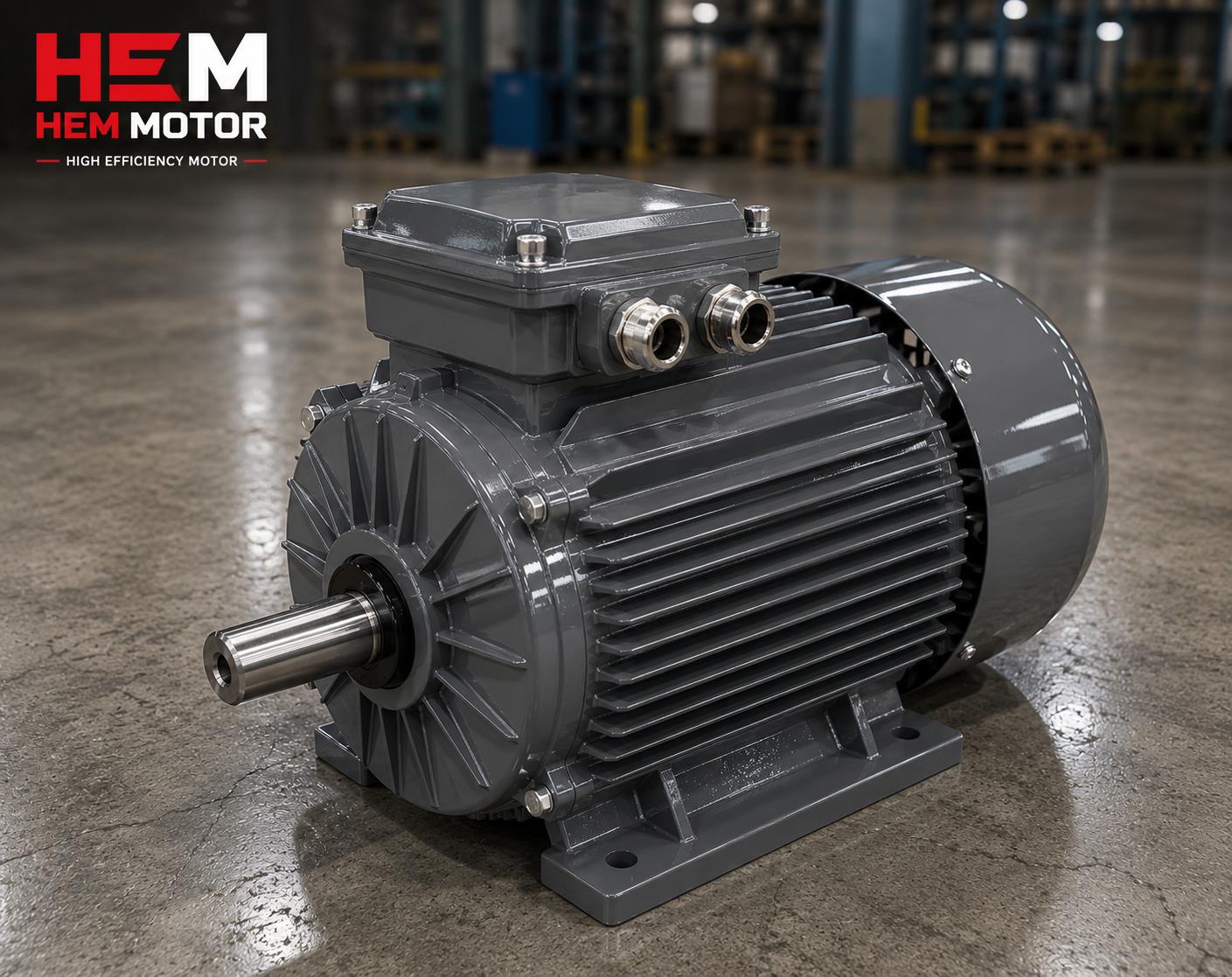
Where Does the Efficiency Class Mandate Come From?
The minimum efficiency of electric motors is set by the IEC 60034-30-1 standard and the ecodesign regulations based on it. The aim is to reduce the losses of motors, which account for a large share of industrial energy use. Efficiency classes rise as IE1 (standard), IE2 (high), IE3 (premium), IE4 (super premium) and IE5 (ultra premium). Regulations set a lower limit for certain power ranges and pole numbers: a motor in a class below that limit cannot be placed on the market. So the answer to "which class is mandatory" is not a single class but a threshold that depends on your power.
This article summarizes the thresholds from a practical purchasing angle. Our IE3 and IE4 efficiency mandate regulation article, which details the mandate timeline and date-based transitions, covers which class is required from which date; we recommend reading the two together.
It is worth stressing this: the efficiency class shows not how powerful a motor is, but how little energy it loses while doing the same job. So a 7.5 kW IE3 motor and a 7.5 kW IE4 motor deliver the same power at the shaft; the difference is in the electricity they draw from the grid, and therefore in the bill. A higher class means less heat, less loss and lower operating cost for the same power. The mandate sets a ceiling on these losses; the right choice for you is often above that ceiling too, a decision tied to your operating hours. We covered this logic for your facility with a payback calculation in our IE3 vs IE4 investment article.
Which Class at Which Power? Practical Thresholds
From a purchasing perspective, the key thresholds to keep in mind are below. These thresholds change with the motor's power and pole count; you can think of the bands below as a "minimum class map". What matters is correctly identifying which band your own motor falls into and ordering the class that corresponds to that band, or above.
0.12 kW – 0.75 kW Range
In this small power band, the general rule is at least IE2. Although the absolute difference between classes is relatively small at low powers, the total effect is significant in facilities running many small motors. Aluminum-body compact motors are common at these powers; our efficient electric motors range offers both aluminum and cast iron options. This band appears often in small motors coupled to reducers (0.12 – 0.55 kW); if you are buying a geared motor, we recommend separately confirming the motor's efficiency class. You can review motor matching suited to reducers from our worm gear reducers page and related guides.
0.75 kW – 1000 kW Range (DOL)
For direct-on-line (DOL) 2/4/6/8-pole three-phase single-speed motors, at least IE3 is essential across this wide band. So the majority of industrial motors, from 0.75 kW up to hundreds of kW, must be IE3 or above. In practice, the most-requested powers, 1.5 / 2.2 / 4 / 5.5 / 7.5 / 11 / 15 / 18.5 / 22 / 30 / 37 / 45 / 55 / 75 kW, all fall within this scope. We compiled stock and most-searched combinations in our IE3 stock guide article.
75 kW – 200 kW Range (High Power)
In this upper band, for certain pole numbers the efficiency bar can rise to IE4. So at large powers such as 90, 110, 132, 160 kW, IE4 may be required directly instead of IE3. We covered the lead time and shipping planning of large motors in our high-power motor supply above 90 kW article. For this reason, when clarifying your project you must state the pole number as well as the power. In this high-power band, motors are usually cast iron, heavy-duty and long-lead, so clarifying the IE4 requirement at the start of the project is an advantage for both stock and lead time; a last-minute class change can delay delivery.
Why Do Pole Number and Speed Matter?
At the same kW power, the pole number (and thus the speed) changes the efficiency value and sometimes the mandatory class. 2 poles means about 3000 rpm, 4 poles 1500 rpm, 6 poles 1000 rpm. Because the regulatory thresholds are defined by pole count, saying "I want a 5.5 kW motor" is not enough; you need a full definition like "5.5 kW, 4 poles, 1500 rpm". We explained the right pole choice by application in our 2, 4, 6 pole selection article. In the HEM Motor range, IE3 and IE4 motors are offered with 1000 / 1500 / 3000 rpm speed options.
Let us address a common confusion here: the speed printed on the nameplate is not the synchronous speed but the real speed under load. Although the synchronous speed of a 4-pole motor is 1500 rpm, in an asynchronous motor the real speed is usually around 1440-1460 rpm due to slip. This does not change the efficiency class mandate, but it reminds you to base your order on the pole number. We explained why 1440 is written instead of 1500 in our slip and actual speed article. The single-phase vs three-phase distinction also matters: mandatory efficiency classes are mainly defined for three-phase asynchronous motors, while the single-phase side has a more limited scope. We covered which motor suits which mains in our single-phase or three-phase article.
Do Insulation Class and Continuous Duty Affect the Mandatory Class?
Although they do not directly affect it, when choosing the right-class motor do not overlook items such as insulation class (F/H) and duty type (S1 continuous). The advantage of a high-efficiency motor fully emerges only when the motor runs in the right environment and the right duty type. F class insulation provides high temperature resistance; in continuously running facilities this directly affects motor life. We detailed the effect of winding and insulation class on life in our winding and insulation class (F/H) article. Another critical factor that determines efficiency is the winding material; 100% copper winding offers lower loss and higher efficiency than aluminum winding. We compared the difference in our copper vs aluminum winding difference article.
The Mandate Timeline: What Is Required from Which Date?
The efficiency class thresholds came into force in stages, not all at once. The general framework is: the IE3 mandate spread for DOL three-phase motors in the 0.75 kW – 1000 kW range; later, the bar was raised to IE4 for certain-pole motors in the 75 kW – 200 kW band. In addition, an at-least IE2 requirement was introduced for single-phase motors above 0.12 kW. The purchasing significance of this historical phasing is this: a motor newly placed on the market today must meet the current threshold corresponding to its power and pole count. You can find the detail of the date-based transitions in our efficiency mandate regulation article.
In practice, the critical question for the buyer is not "what changed on which date" but "what should I buy for my power today". Since HEM Motor supplies motors compliant with the current thresholds, when you share your power and pole count we recommend the right class directly; we will not propose a non-compliant motor. This is a critical assurance for CE compliance, especially for OEM machine manufacturers producing for the EU market.
Can an IE2 Motor Still Be Purchased?
This is one of the most common questions from buyers. You can keep using an IE2 motor already running in the field; the mandate applies to products newly placed on the market and does not retroactively ban existing use. But if you are buying a new motor and your power falls within the IE3 (or IE4 in the upper band) threshold, a lower-class motor is not the right choice: it causes a compliance problem and consumes more energy over its life, costing you more. Especially for production aimed at the EU market, a lower-class motor is not accepted for the CE mark. So instead of being tempted by "there is cheap IE2 in stock", we recommend choosing the mandatory class suited to your power. We calculated what replacing an old motor with a new, higher class delivers in our replacing an old motor with IE4 article.
Why Is Buying the Wrong Class Risky?
Sourcing a motor below the mandatory class for your power creates two kinds of risk. The first is legal compliance: a lower-class motor cannot be placed on the market, and especially if you build machinery for the EU market, a non-compliant motor causes a problem for the CE mark. The second is energy cost: a lower-class motor consumes more electricity over its life and raises total cost. We calculated the payback of replacing an old motor with a higher class in our replacing an old motor with IE4 article. To determine the efficiency class of your existing fleet, our motor inventory article also guides you.
A third, often overlooked risk is noticing the non-compliance too late. If, after a machine enters serial production, an audit reveals that the motor inside is in the wrong class, both replacing the motors and the production stoppage create cost. So clarifying the right class at the order stage is far more economical than fixing it later. Seen through the total cost of ownership window, a motor's purchase price is small next to its lifetime energy cost; therefore a few points of higher efficiency turn into a notable gain over the years. We built this calculation step by step in our total cost of ownership (TCO) article. We covered the factors that set electric motor prices in our factors affecting prices article; just contact us for a price quote.
Choosing the Right Class by Sector
The mandatory class is a lower bound; in practice, which class you should buy also depends on your sector and operating profile. In continuous, high-hour applications, choosing IE4 directly instead of the mandatory IE3 lowers energy cost. For example, with continuously running loads such as pumps, fans and compressors, the IE4 threshold makes sense faster; we covered when IE4 is required in these applications in our IE4 threshold for pumps, fans and compressors article. For industrial drives such as conveyors, mixers and augers, 1500 rpm IE3 motors are the most common choice.
We compiled the sectors where IE3 motors are most used and application examples in our IE3 use areas article. If you do not know which class the existing motors at your facility are, first taking an inventory and checking compliance with the mandatory class is a correct start, both for audit preparation and renewal planning. Our motor inventory article explains this step by step. As HEM Motor, with both fast delivery from stock and project-specific production, we supply the motor in the mandatory class suited to your power.
Nameplate Data for a Correct Order
To buy the motor in the right class first time, you must fully convey the nameplate data before ordering: power (kW), speed (rpm) or pole number, voltage/frequency, mounting type (B3/B5/B35), frame size and the required efficiency class. To prevent the wrong motor arriving, we explained nameplate matching step by step in our nameplate matching article. As HEM Motor, we supply IE3 and IE4 motors with 100% copper winding, cast iron body, IP55 protection and F class insulation from 0.55 kW to 355 kW.
Frequently Asked Questions
Is IE3 mandatory for motors below 0.75 kW?
The general rule is that at least IE2 is sufficient in the 0.12–0.75 kW range; the IE3 mandate mainly applies to DOL three-phase motors of 0.75 kW and above. Even so, choosing IE3 directly, depending on your application and target market, is a safe choice for both compliance and energy.
I have an IE2 motor; can I still use it?
You can keep using a motor already running in the field; the mandate applies to motors newly placed on the market. But for new purchases you must choose the mandatory class for your power (usually IE3 or above). If you build machinery for the EU market, confirm compliance with us.
Does it make sense to buy IE4 instead of IE3?
Even if the mandatory class is IE3, moving to IE4 in high-hour, continuously running applications lowers energy cost and pays back the difference over time. To decide, share your operating hours and load profile; let us determine the right class together.
Get a Quote
To source the IE3 or IE4 motor suited to your power and application in the correct class, from stock or with a short lead time, contact HEM Motor. Share the power, speed/pole and mounting type; we will offer a fast, accurate quote. Call now: +90 (532) 345 49 86 or use our contact page. For our full range, visit the HEM Motor home page.