English
 Türkçe

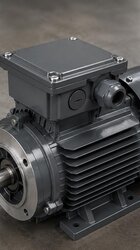
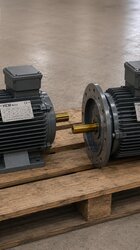
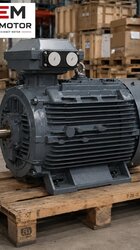
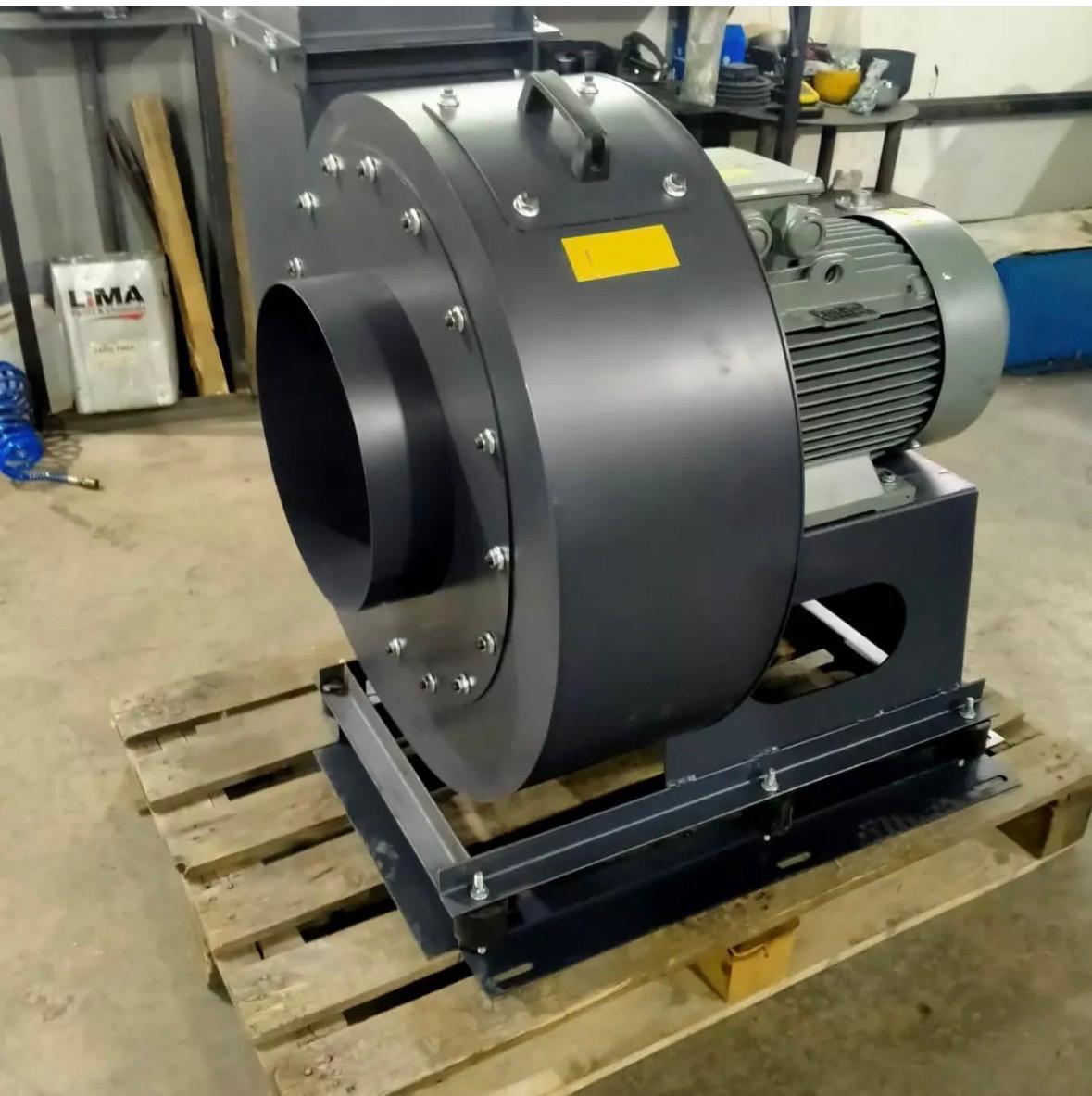

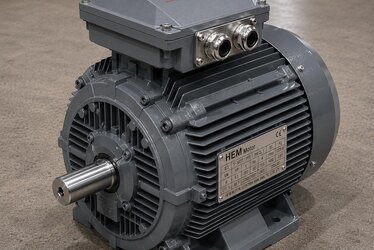
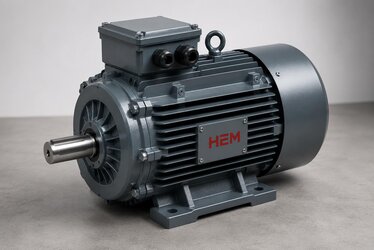
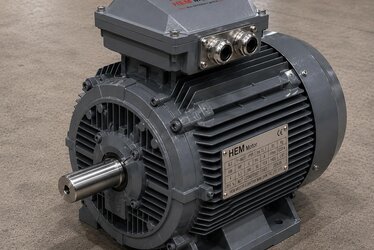
In electric motor supply, demand concentrates heavily in the small-to-medium power band, and within this band the 2.2 kW IE3 motor, the 3 kW IE3 motor and the 4 kW IE3 motor are by far the most requested products. From conveyor lines to water pumps, from fan and extractor groups to small compressors, these three power ratings stand out as a standard solution across a vast range of applications. As a result, these are also the items most consistently held in stock, shipped fastest, and quoted most quickly.
In this guide we examine 2.2 / 3 / 4 kW IE3 efficiency class motors from the perspective of speed, pole count, frame size and mounting type. Our goal is to show which parameters you must clarify when selecting the right motor, and to give you a practical roadmap so you can secure the correct product quickly from stock. Because the wrong pole count or the wrong frame can cause serious delays during installation, defining these details correctly at the quotation stage is critically important.
The IE3 efficiency class is today effectively a standard requirement across the European market and in Turkey. Because it delivers energy savings in continuously operating applications, when the return on investment is calculated it usually offsets the difference in initial purchase cost in a short time. Below we examine both the technical selection criteria and the points to watch during the supply and quotation process in detail.
Why Is the 2.2, 3 and 4 kW IE3 Power Band So Popular?
These three power ratings form a "sweet spot" that covers the bulk of industry's daily needs. The 2.2 kW level is ideal for small pumps, dosing systems, light conveyors and compact fan groups. 3 kW steps in for slightly heavier applications; for example, medium-size centrifugal pumps, packaging machines and air curtains operate at this power. 4 kW addresses heavier loads, larger flow rates and lines that require continuous high torque. As a natural consequence of this continuity, 2.2 3 and 4 kW electric motor stock levels are always kept high by suppliers.
Another advantage of this power band is that, with both 230/400 V and 400/690 V connection options, it adapts easily to common grid conditions. Thanks to the standard three-phase electric motor design, replacing a faulty motor in an existing facility with a unit of similar power and speed is often possible without additional engineering. This shortens downtime for maintenance teams.
Because stock density is high, quotation processes in this power class also move quickly. When the correct parameters are provided, price and lead-time information can be obtained the same day. To determine the best solution for your facility's needs, you can review our electric motor selection guide and then request a quote based on stock availability.
IE3 Premium Efficiency and the EcoDesign Requirement
The IE3 class is the "Premium Efficiency" level defined according to the IEC 60034-30-1 standard. Under the European Union's EcoDesign regulations, motors in specific power ranges are effectively required to meet at least IE3 efficiency. This directly affects motors between 2.2 and 4 kW, because these power ratings sit right in the middle of the regulation's scope.
An IE3 motor has lower copper, iron and windage-friction losses compared with an older IE1 or IE2 motor of the same power. Reducing these losses requires higher-quality lamination packs, optimized winding design and tighter manufacturing tolerances. The practical result is producing the same shaft power while drawing less power from the grid; in other words, the active power drawn from the network drops.
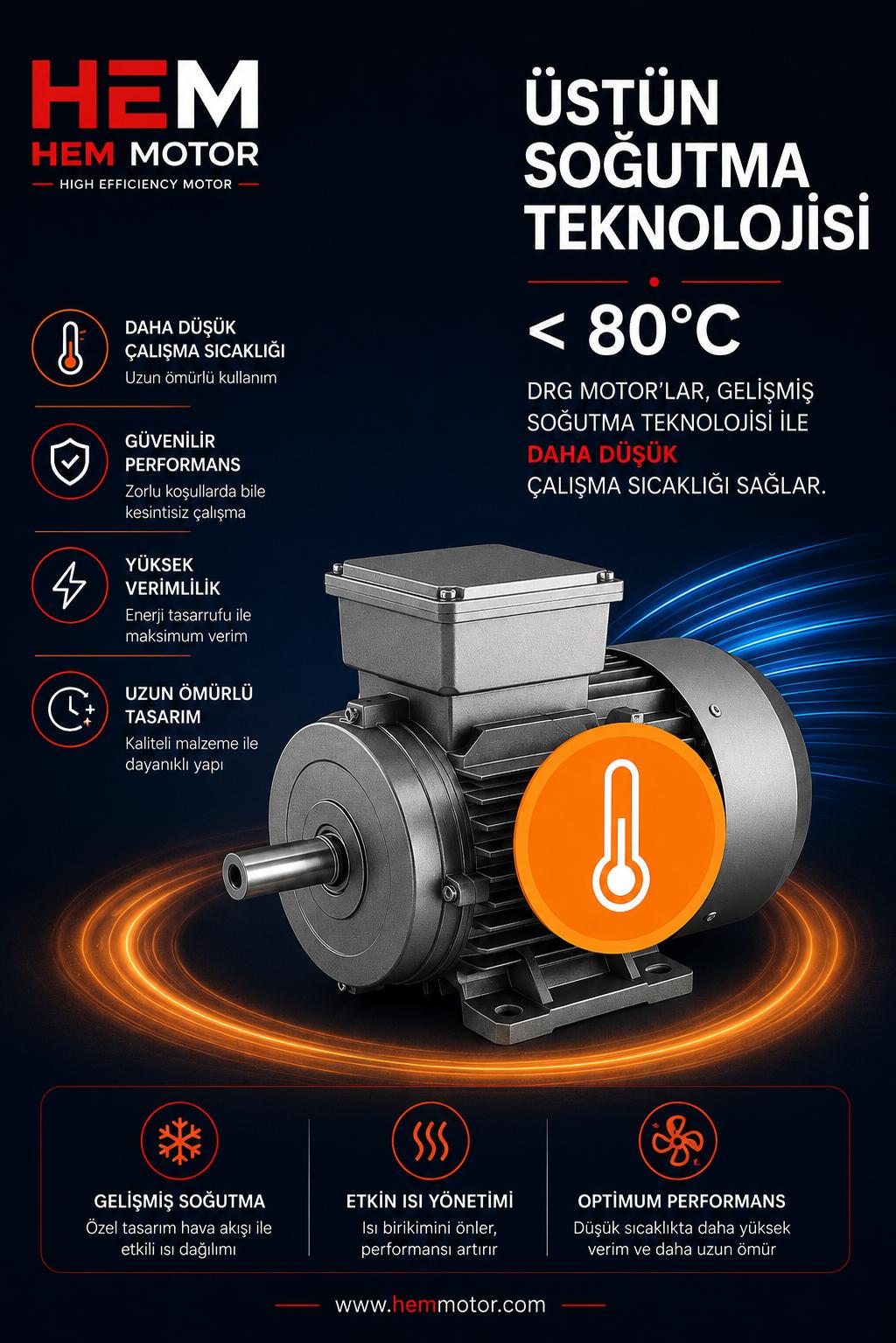
The essence of the EcoDesign approach is the fact that the energy a motor consumes over its lifetime forms a far larger cost item than its purchase price. For a continuously running 4 kW motor, the annual energy cost can be many times the purchase price. Therefore choosing IE3 premium efficiency is, beyond being an environmental requirement, a clear economic gain.
Energy Savings in Continuous Duty and Payback Period
For the energy saving to be meaningful, the motor's operating regime must be assessed. In a motor running a few hours a day, the efficiency difference still matters over the long term; but in a motor running 16-24 hours a day, six or seven days a week, the difference shows itself far more quickly. This is exactly why continuous operation (S1 duty) makes the IE3 choice almost indisputable.
Let us explain with an example: in a 4 kW motor running 6000 hours per year, even if the efficiency gain from moving from IE2 to IE3 is one or two percentage points, this difference corresponds to hundreds of kilowatt-hours of energy saved annually. The energy saved usually pays back the additional purchase cost between motors within one to two years. After payback, the savings translate directly into operating profit.
- Operating hours: The more annual operating hours, the shorter the payback period.
- Load profile: The efficiency advantage is highest in motors running close to nominal load.
- Energy unit price: As the electricity unit cost rises, the IE3 advantage becomes more pronounced.
- Maintenance cost: In cooler-running IE3 motors, insulation life lengthens and bearing heating decreases.
- Drive compatibility: When used together with a frequency inverter, additional energy optimization is possible.
To make these calculations project-specific, the motor's real load and operating-time data must be clarified. Sharing this information at the supply stage allows the most accurate power and efficiency combination to be recommended to you.
Pole Count and Speed: 3000, 1500 and 1000 rpm
The speed of an asynchronous motor is determined directly by pole count and grid frequency. On a 50 Hz network the synchronous speeds are: about 3000 rpm for a 2-pole motor, about 1500 rpm for a 4-pole motor, and about 1000 rpm for a 6-pole motor. The actual speed under load stays slightly below these values due to slip; for example, a 4-pole motor typically runs between 1440 and 1470 rpm.
Speed selection is made according to the speed the application demands. For centrifugal pumps and fans requiring high speed, 2-pole (3000 rpm) motors are preferred. The most common use, however, is the 4-pole (1500 rpm) model, because this speed adapts to a very broad range of applications through gearboxes and belt-pulley systems. Where higher torque and lower speed are needed, 6-pole (1000 rpm) motors come into play.
Pole count affects not only speed but also torque. At the same power, a lower-speed (higher-pole) motor produces more torque, because power is proportional to the product of speed and torque. For this reason low-speed motors are built larger and heavier. Correct pole-count selection is a critical decision in terms of both energy efficiency and mechanical compatibility.
Frame Size: 90L, 100L and 112M
The IEC standard divides motors into frame classes according to shaft center height. In motors between 2.2 and 4 kW, the most frequently encountered frame sizes are 90L, 100L and 112M. The number here expresses, in millimeters, the height of the shaft axis above the foot base; for example, in a 100L frame the shaft center is at a height of 100 mm. The letters "L" and "M" indicate the length class of the frame.
An important point: the same power rating moves to a larger frame as the pole count increases. For instance, a 4 kW 2-pole motor may fit a 100L frame, while a 4 kW 4-pole motor may move up to a 112M frame. The reason is that producing the same power at lower speed requires more torque and therefore a larger magnetic cross-section. Because this relationship directly affects motor mounting dimensions and shaft diameter, it must always be considered during selection.
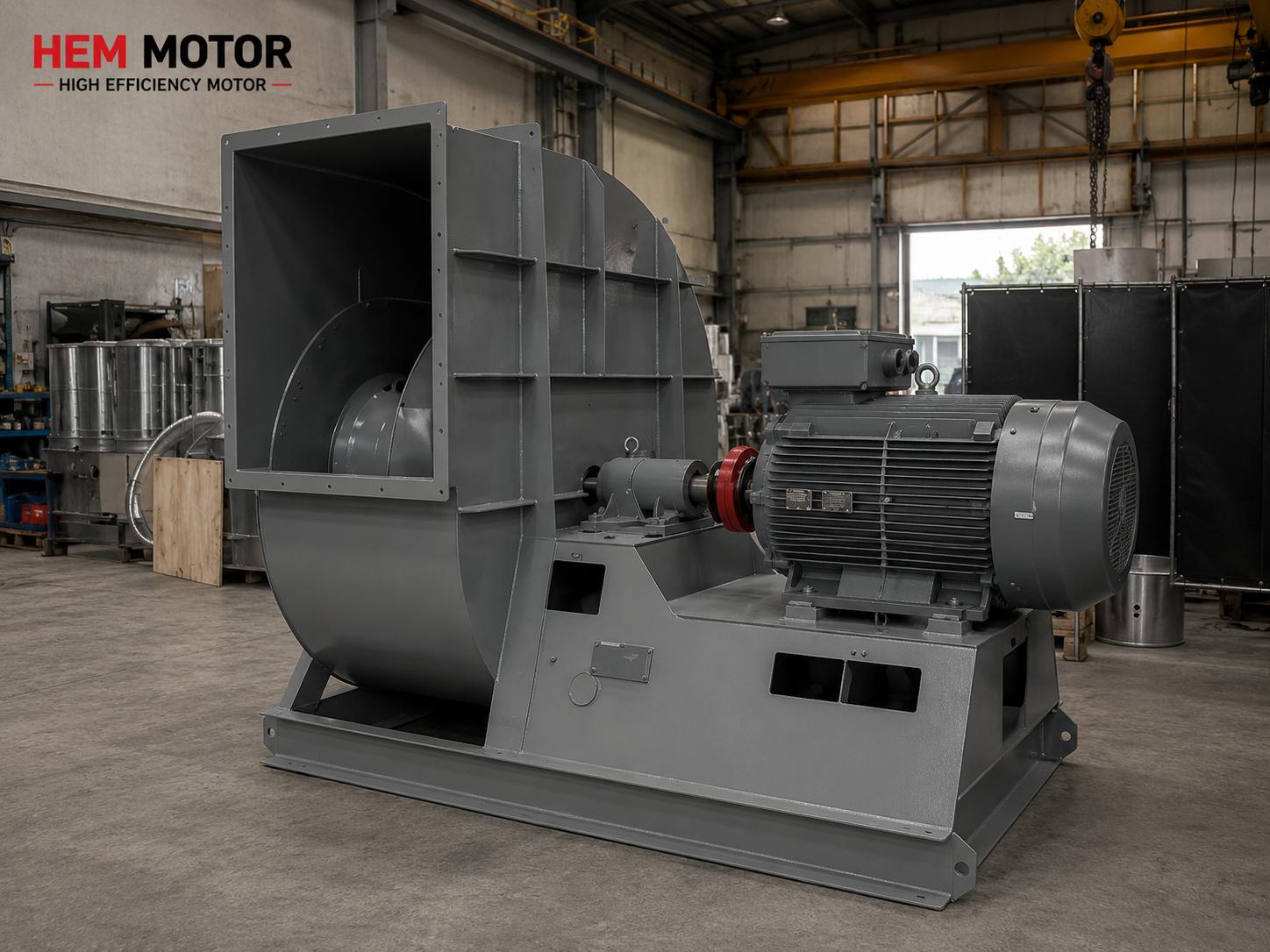
When the frame size changes, the shaft diameter, key dimension, flange hole pattern and total motor length also change. When fitting a motor to an existing machine, these dimensions must be compatible; otherwise additional adaptation may be needed at the coupling, pulley or flange connection. That is why, when requesting a quote, specifying not only the power but also the frame class and mounting type saves time.
What to Watch in Frame Selection
- Shaft diameter and key: A critical dimension for the coupling or pulley to seat on the motor.
- Flange pitch circle: On a B5/B14 flange the hole pattern changes with the frame.
- Total length: In limited mounting spaces, frame length can be decisive.
- Terminal box position: The cable entry direction eases field installation.
Mounting Types: B3 Foot and B5 / B14 / B35 Flange
The mounting type defines how the motor connects to the machine. The most common type is B3 foot mounting; the motor is bolted to a chassis or floor through the feet on its base. The majority of belt-pulley and coupling applications use this type. Flange mountings, on the other hand, allow the motor to connect directly to the machine, pump or gearbox through a flange on its front end shield.
The B5 flange is a large-diameter flange with through-holes (clearance bolts); it is generally used in pump and gearbox connections. The B14 flange has a smaller diameter and threaded holes; it is preferred on compact machines. B35 is a combined mounting type offering both feet and a flange at once; this way the motor connects from the flange and can also be supported by feet, which provides extra security in applications subject to vibration.
Specifying the mounting type correctly is one of the most critical steps in preventing the wrong product being shipped. A motor of the same power and speed can exist in B3, B5, B14 or B35 versions, and these are not mechanically interchangeable. Clarifying the mounting type at the quotation stage ensures a frictionless supply in terms of both lead time and compatibility.
IEC Standardization and Brand Substitution
The greatest practical benefit of IEC standards is that motors of the same class from different brands can easily be used in place of one another. The combination of a 100L frame, 4 poles and B3 mounting shares the same main mounting dimensions regardless of brand. Thanks to this standardization, you can replace an existing motor in your facility with an equivalent IE3 electric motor without having to re-measure the dimensions.
Brand substitution provides great convenience, especially in spare-part and emergency breakdown situations. A standard IEC motor supplied from manufacturer stock can often be shipped the same day and fits directly onto the existing structure. This significantly reduces the facility's downtime risk compared with long-lead-time, custom-order products.
To take full advantage of standard products, it is enough to have your existing motor's nameplate information at hand (power, speed, voltage, frame, mounting type and efficiency class). Sourcing an equivalent product from stock with this information is a fast and low-risk process.
The Advantage of Fast Supply From Manufacturer Stock
Because 2.2, 3 and 4 kW IE3 motors are standard products with consistently high demand, they are regularly held in manufacturer and main-supplier stock. This gives the buyer two fundamental advantages: short delivery time and clear pricing. A motor shipped from stock guarantees that your project proceeds on schedule.
The secret to a fast electric motor supply process is to start with the correct information. When power, pole count, frame and mounting type are clarified, stock checking and quote preparation can be completed within minutes. Missing or incorrect information, on the other hand, prolongs the process and increases the risk of the wrong product.
In this power band, which serves a broad range of applications, whether it is a single motor or a series project supply, fast shipping from stock is the biggest competitive advantage. For current electric motor prices and stock status, you can request a quote together with your requirement details.
What Information Should You Specify for a Quote?
To get an accurate and fast quote, the following parameters must be shared clearly. This information speeds up both stock checking and technical suitability assessment.
- Power (kW): A clear value such as 2.2 / 3 / 4 kW.
- Speed / poles: 3000, 1500 or 1000 rpm (2, 4 or 6 poles).
- Frame class: 90L, 100L or 112M.
- Mounting type: B3 foot, B5 / B14 / B35 flange.
- Voltage and frequency: 230/400 V or 400/690 V, 50 Hz.
- Efficiency class: IE3 (with drive compatibility info where needed).
- Duty regime: Continuous (S1) or variable load.
- Quantity: Single unit or project-based amount.
These eight headings are sufficient for the quote to come out correctly in most projects. If there are special conditions (high ambient temperature, explosion-protected zone, special paint or thermal protection), it is recommended to add them as well.
Frequently Asked Questions
Is IE3 mandatory for 2.2, 3 and 4 kW motors?
Yes. Under the European Union's EcoDesign regulations, a minimum IE3 efficiency class has effectively become mandatory for standard asynchronous motors in this power range. For this reason, IE3 is accepted as the standard when supplying new 2.2, 3 and 4 kW motors. In continuously running applications, the energy savings of IE3 usually pay back the additional cost in a short time.
Why does a 4-pole motor of the same power move to a larger frame?
Because power is proportional to the product of speed and torque. Producing the same power at lower speed (4 poles, 1500 rpm) requires higher torque, which means a larger magnetic cross-section and therefore a larger frame. That is why a 4 kW 2-pole motor may stay in a 100L frame while its 4-pole version may move to a 112M frame. Specifying the correct frame class at the quotation stage is important for mounting compatibility.
Can I replace my existing motor with a different brand?
Generally yes. Thanks to IEC standardization, motors of the same power, speed, frame and mounting type share the main dimensions and can be used in place of one another. Sharing your existing motor's nameplate information (power, speed, voltage, frame, mounting and efficiency class) is enough for an equivalent product to be sourced quickly from stock. This significantly shortens downtime in emergency breakdown situations.
To determine the most suitable 2.2 3 and 4 kW IE3 motor solution for your project and benefit from fast shipping based on stock availability, you can request a quote together with your requirement details. For a broader power range and different applications, you can also evaluate our three-phase electric motor options.