English
 Türkçe

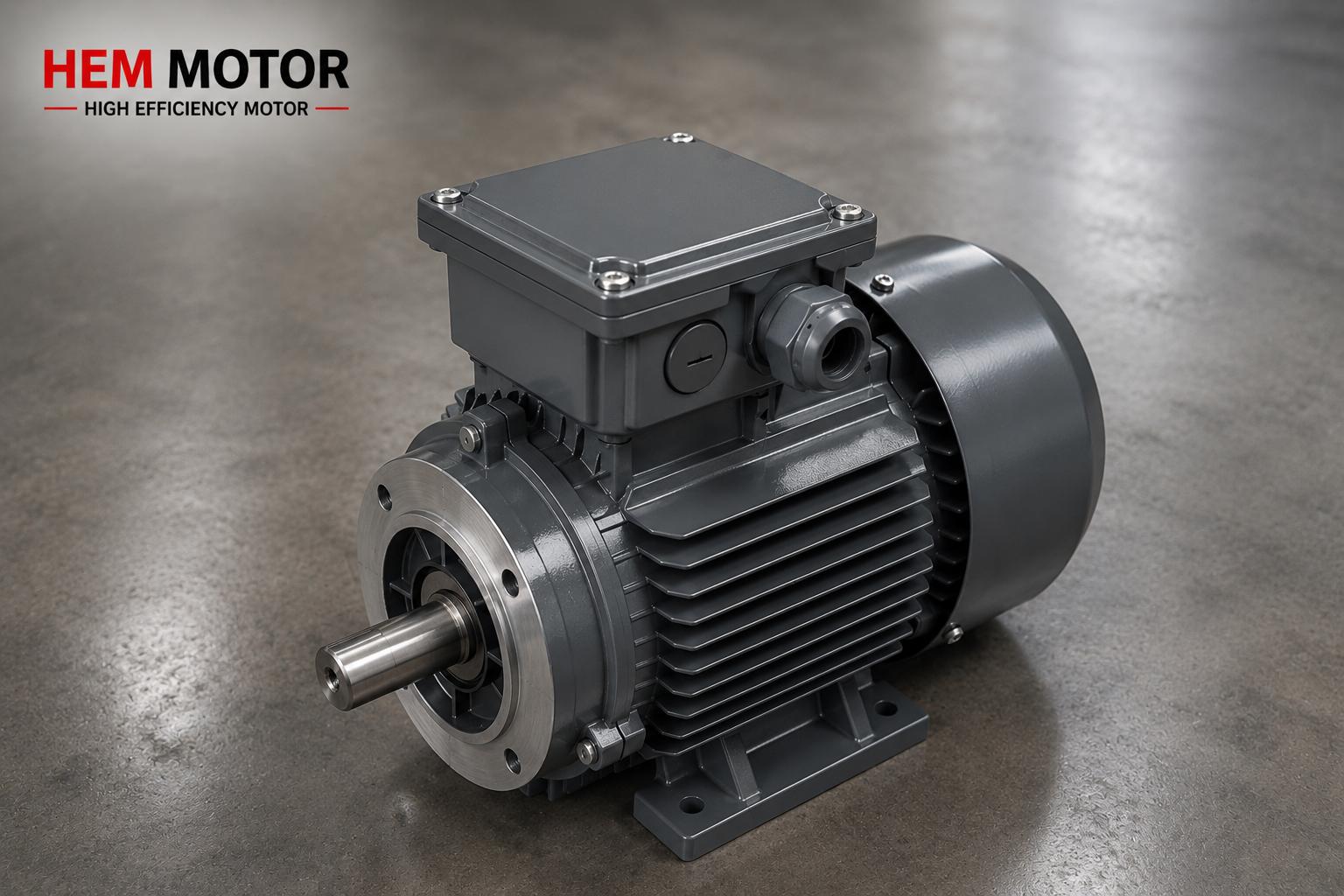

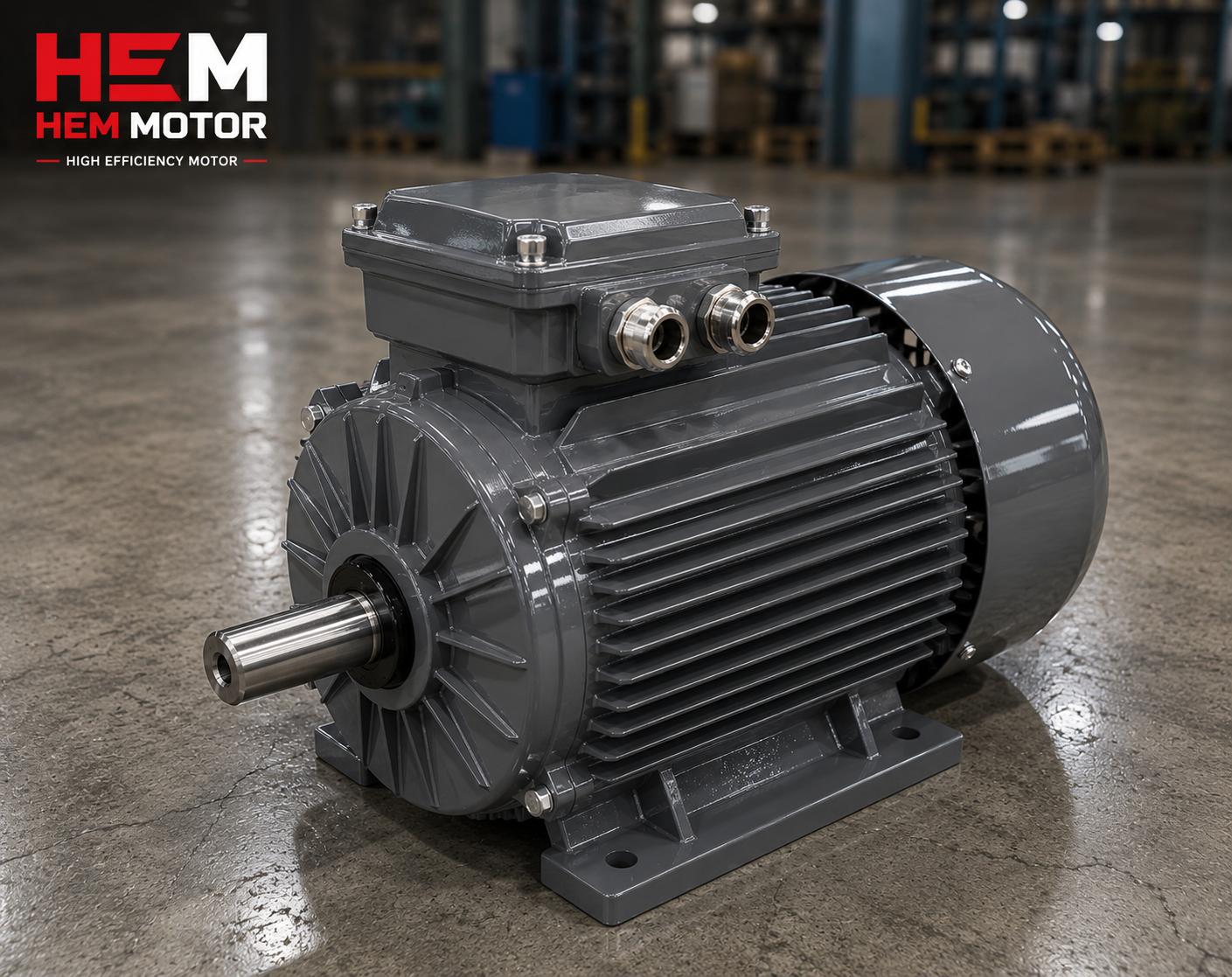
kW tells you “how powerful” an electric motor is; but torque (moment, Nm) tells you how forcefully that motor can turn the machine. What will lift the load — or fail to — is the torque at the shaft, not kW. The good news: rated torque can be calculated with a simple formula, and it is the most powerful tool for choosing the right motor before ordering. In this article we explain rated torque calculation in IE3 motors — the formula T (Nm) = 9550 × kW ÷ rpm — with examples, and cover comparison with load torque and torque increase via a gearbox. Unlike a discussion of DOL starting torque, this article focuses directly on the formula and calculation.
What Is Torque (Moment), and How Does It Differ from kW?
Power (kW) is work done per unit time; torque (Nm) is the twisting force at the rotating shaft. Two motors with the same kW running at different speeds produce different torque: as speed falls, torque rises at the same power. So the question “how many kW” must always be accompanied by “at how many rpm”. The power-speed-torque trio and the effect of pole count on speed are explained in asynchronous motor pole selection and HP or kW. Why the real speed is 1450 rather than 1500 is explained in slip and real speed in asynchronous motors.
The Core Formula: T (Nm) = 9550 × kW ÷ rpm
The practical formula for finding rated torque is:
T (Nm) = 9550 × P (kW) ÷ n (rpm)
Here P is the motor’s rated power (kW) and n is the rated speed (revolutions per minute, rpm). The constant 9550 converts the power and speed units into torque in Nm. The logic of the formula: at the same power, the lower the speed, the higher the torque. That is why low-speed (high-pole) motors produce higher torque. The torque advantage of low-speed motors is covered in low-speed high-pole motors and 6/8-pole low-speed motor selection.
Rated Torque Calculation with Examples
Let us make the formula concrete. The examples below are based on typical IE3 power-speed combinations:
Example 1: 7.5 kW, 1450 rpm (4-pole)
T = 9550 × 7.5 ÷ 1450 ≈ 49 Nm. So this motor produces about 49 Nm of rated torque at the shaft end.
Example 2: 7.5 kW, 2900 rpm (2-pole)
T = 9550 × 7.5 ÷ 2900 ≈ 25 Nm. The same power at twice the speed means about half the torque. This shows why 2-pole is chosen for high-speed loads such as pumps and fans, and 4/6-pole for loads needing high torque.
Example 3: 4 kW, 1450 rpm
T = 9550 × 4 ÷ 1450 ≈ 26 Nm.
Example 4: 15 kW, 1460 rpm
T = 9550 × 15 ÷ 1460 ≈ 98 Nm.
As shown, torque is directly proportional to power and inversely proportional to speed. Correct power-speed selection is made concrete in 5.5 and 7.5 kW IE3 motor and 11 and 15 kW motor selection.
Comparison with Load Torque: Is the Motor Enough?
The real purpose of calculating rated torque is to compare the torque the motor produces with the torque the load demands. If the machine’s continuous running torque stays below the motor’s rated torque, the motor runs comfortably. The load’s instantaneous peak (starting, jamming) torque is then compared with the motor’s starting and breakdown torque. The relationship between starting and rated torque is covered from the DOL angle in rated and starting torque in IE3 motors (DOL), and breakdown torque in the speed-torque (M-n) curve and breakdown torque. To distinguish whether the load is constant or variable torque, see motor selection in variable-speed applications.
Required Torque in Pumps, Fans and Conveyors
Torque demand varies by application: in pumps and fans torque rises with speed (squared), while in conveyors it is set by load weight and belt speed. To calculate the required kW — and thus torque — from the application, motor power calculation: pump, fan and conveyor gives practical guidance. Power-speed matching in a centrifugal pump is found in centrifugal pump motor selection.
Torque Increase via a Gearbox: Low Speed, High Moment
Some applications demand far higher torque than the motor can produce directly (e.g. mixers, hoists, heavy conveyors). In that case a gearbox is placed in between. The gearbox reduces speed and increases torque by the reduction ratio (minus efficiency losses). For example, with a 1/30 ratio gearbox the output speed falls about 30 times while the output torque rises about 30 times. This way, high output torque is achieved even with a small-power motor. The gearbox selection logic is covered in worm gear reducer motor matching (IEC) and ratio selection in reducer frame selection (HEM30-HEM130). For the gain in an efficient motor + gearbox combination, see using an IE4 motor with a gearbox. Output speed-torque calculation in bevel-helical reducers is found in K-series bevel-helical reducer.
Choosing the Right Motor for the Load: Step by Step
Let us turn the calculation into a selection flow:
- 1. Determine the load torque: find the machine’s continuous and peak torque demand.
- 2. Select the speed: what output speed does the application want? (Direct drive or geared?)
- 3. Calculate the required power/torque: find the motor’s rated torque with T = 9550 × kW ÷ rpm.
- 4. Leave a safety margin: the motor rated torque should be above the continuous load torque; oversizing also lowers efficiency.
- 5. Add a gearbox if needed: if high torque-low speed is required, solve it with a gearbox.
For load ratio and efficient sizing, at what load to run the motor guides you, and for IE3 stock combinations, IE3 stock guide. For a wider range, see our IE3 electric motors category and our home page for all models.
Reading the Nameplate Values Correctly
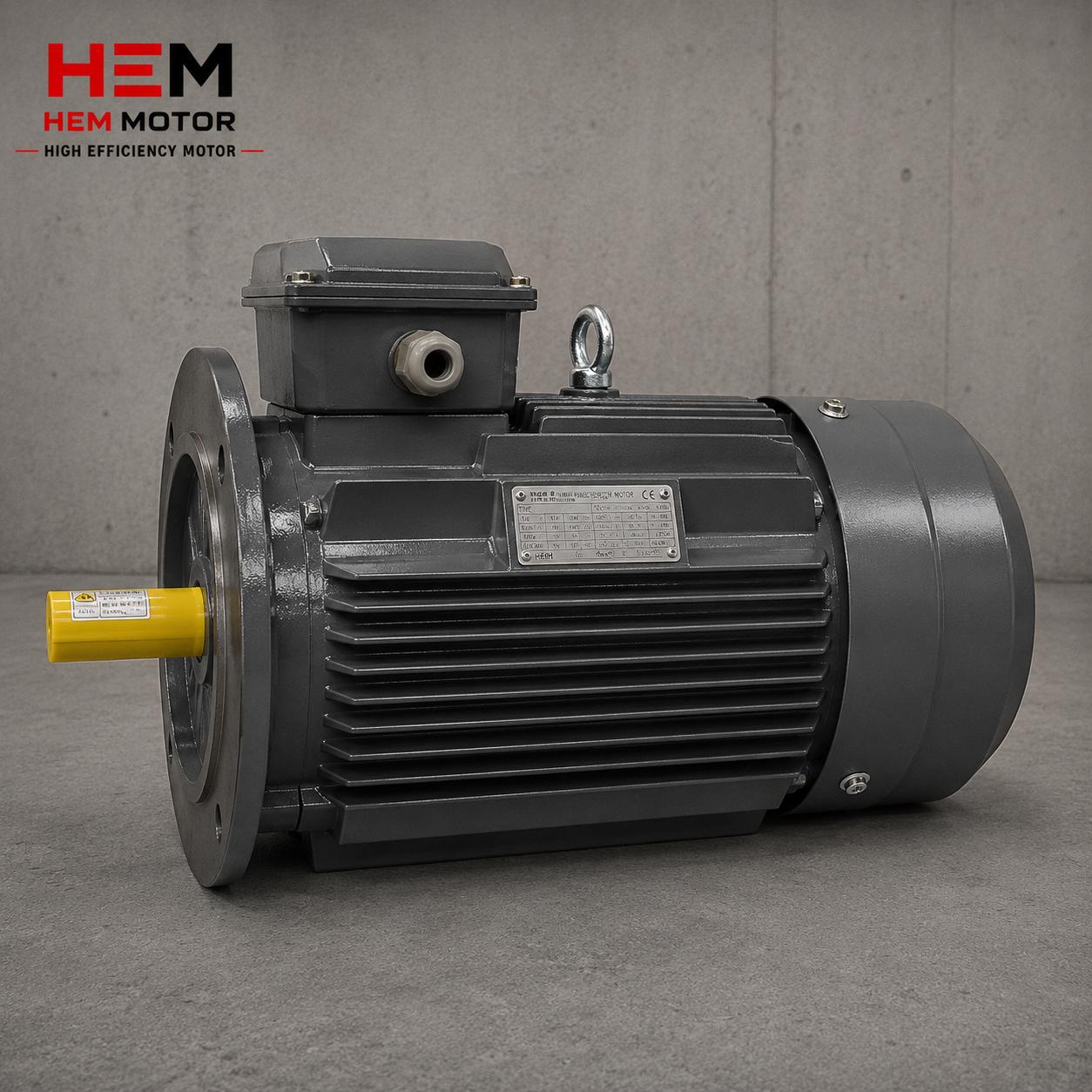
To do the calculation correctly, you need to read the kW and rated speed on the nameplate correctly. Nameplate reading is covered in reading the IE3 motor nameplate, and pre-order nameplate matching in prevent the wrong motor from arriving. For rated current, cable and protection selection, see rated current in IE3 motors.
The Relationship Between Pole Count, Speed and Torque
In an asynchronous motor, speed is set by the pole count and the grid frequency: 2-pole ~3000 (actually ~2900), 4-pole ~1500 (~1450), 6-pole ~1000 (~960), 8-pole ~750 (~720) rpm. Because speed is in the denominator of the torque formula, the rated torque grows as the pole count rises (speed falls) at the same power. For example, a 4 kW motor produces about 26 Nm at 4-pole but approaches about 40 Nm at 6-pole for the same power. So a high-pole (low-speed) motor is chosen for loads needing high torque, and a 2-pole motor for loads needing high speed. The effect of pole choice on efficiency is covered in efficiency and pole count, and pole and speed choice is made concrete in IE4 2-pole 3000 rpm and low-speed 6/8-pole motor.
HP-kW Conversion: The Right Power Before the Torque Calculation
Old nameplates or imported machines may give power in horsepower (HP). Before moving to the torque calculation, the power must be converted to kW: approximately 1 HP ≈ 0.746 kW. For example, a 10 HP motor is about 7.5 kW and gives the same torque values as the examples above. HP-kW conversion and its order equivalent are detailed in HP or kW and HP-kW matching table. Starting with the correct power value ensures the torque calculation comes out correct too.
Relationship with Rated Current and Protection
After selecting the right motor via the torque calculation, the cable, fuse, contactor and thermal protection are sized to that motor’s rated current. A wrong power choice leads not only to insufficient torque but also to incorrectly selected protection devices. Rated current and protection selection are covered in rated current in IE3 motors and motor protection circuit breaker (MPCB), and starting-current management in starting current (LRA). Thus the torque calculation becomes the first step of a consistent motor + protection selection from start to finish.
Frequently Asked Questions
Where does the constant 9550 in the formula come from?
9550 is the conversion coefficient used to obtain torque in Nm from power (kW) and speed (rpm). It arises from the relation power = torque × angular speed, when converting speed to revolutions per minute. In practice it is enough to use the formula by heart: T (Nm) = 9550 × kW ÷ rpm.
Which speed should I use: synchronous (1500) or rated (1450)?
In rated torque calculation the motor’s real (nameplate) rated speed is used; this is slightly below the synchronous speed due to slip (e.g. ~1450 rpm instead of 1500). For a more accurate result, taking the rated speed from the nameplate is best.
Is rated torque the same as starting torque?
No. Rated torque is the torque the motor continuously produces at rated load. Starting torque is the torque the motor produces as it sets off from zero speed, and is usually a multiple of the rated torque. To lift the load, both are compared separately with the load demand.
Get a Quote
Share your application’s load torque and desired speed; we will calculate the required torque and recommend the IE3 motor (geared if necessary) with the right power-speed combination. For a fast quote, call +90 (532) 345 49 86 or write to us via our contact page.
Purchasing and Selection Checklist
- Have the load’s continuous and peak torque demand been determined?
- Is the required output speed clear? (Direct / geared)
- Has rated torque been calculated with T = 9550 × kW ÷ rpm?
- Is the motor rated torque above the load torque?
- Does the starting/breakdown torque meet the load peak demand?
- Has oversizing been avoided (efficiency loss)?
- If high torque is needed, has the gearbox ratio been selected?
- Have the nameplate kW and rated speed been read correctly?