English
 Türkçe

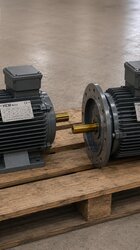

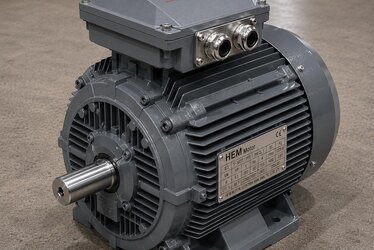
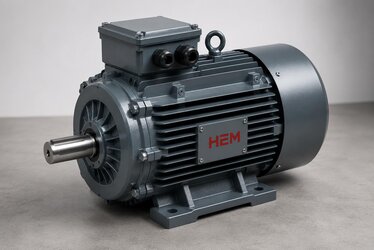
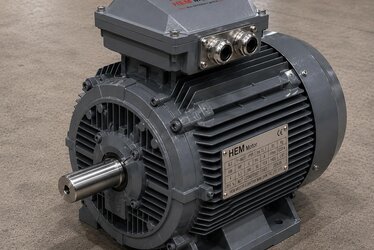
The nameplate of an electric motor is its identity. The small metal plate on its body may look at first like a confusing pile of numbers and abbreviations, but it actually contains nearly everything you need to know about the motor: its power, speed, voltage, current, power factor, efficiency class and more. Reading this nameplate correctly is critical both for ordering the right replacement and for avoiding a mismatch in the field. A single misread value can result in the wrong motor arriving, failing to fit your machine, and causing a delay of days.
In this guide we examine, one by one, all the rated values found on an IE3 motor nameplate; we explain where each value sits on the plate, what it means, and why it matters at the ordering stage, from the buyer's point of view. Our goal is to enable anyone holding a motor nameplate to interpret it comfortably and to send a complete request to their supplier.
Why Is the Nameplate So Important?
When a motor fails or when a motor is being selected for a new application, the most reliable source for making the right decision is the nameplate. That is because the nameplate carries the nominal (rated) values tested and approved by the manufacturer. These values are not guesses but measured facts. Nearly all the information you need for a correct order is found on this small plate.
Misreading the nameplate or skipping some values affects the entire supply chain. For example, reading only the power correctly while overlooking the mounting type means a motor of the right power that simply cannot be attached to your machine arrives. For this reason, nameplate reading must be a holistic reading, not a piecemeal one.
The Rated Values One by One
Now let us examine, in order, the values you will see on a typical IE3 motor nameplate. We explain both the technical meaning and the ordering significance of each.
1. Power (kW / HP)
The most prominent value on the nameplate is usually the motor's rated power, expressed in kilowatts (kW); some nameplates also state horsepower (HP). This value shows the mechanical power the motor can continuously deliver from its shaft. 1 HP corresponds to roughly 0.746 kW. Power is the fundamental value determining what load the motor can drive, and it is the first piece of information to clarify when ordering.
2. Speed (rpm)
Speed is the number of revolutions of the motor shaft per minute. In an asynchronous motor, the speed written on the nameplate is the actual speed under load, slightly below the synchronous speed (due to slip). For example, in a 4-pole motor the synchronous speed is 1500 rpm, while the nameplate typically shows a value like 1440-1470 rpm. Speed is critical for your machine to run at the correct rate; a motor of the same power but different speed can completely change your application.
3. Voltage (V) and Connection (Delta / Star)
The voltage value is usually given as two figures, for example 230/400 V. This double value shows the motor's different connection forms: the lower voltage corresponds to delta connection and the higher voltage to star connection. Choosing the right connection according to your grid voltage is vital; a wrong connection can burn the motor instantly. The connection diagram on the nameplate (delta and star symbols) guides you in this choice.
4. Current (A)
The rated current is the current the motor draws at rated power and rated voltage. Usually a separate current is given for each voltage value. The current value is needed for the correct selection of motor protection devices (thermal relay, fuse) and cable cross-section. By comparing the current drawn in the field with this value you can also tell whether the motor is overloaded.
5. Power Factor (Cos φ)
Cos φ (power factor) shows how much of the apparent power drawn by the motor is converted into real (active) power. It is a value between 0 and 1; the higher it is, the better. In a typical asynchronous motor at full load, cos φ is in the 0.80-0.88 range. A low cos φ means unnecessarily high current is drawn from the grid and can lead to reactive power penalties in large plants. For this reason, power factor is an important value affecting energy cost.
6. Efficiency Class (IE3) and Nominal Efficiency (%)
On modern motor nameplates the efficiency class (IE - International Efficiency) is clearly stated. IE3 means "premium efficiency". The nameplate also shows the motor's nominal efficiency percentage; for example 92.5% at full load. Efficiency shows how much of the electricity the motor draws is converted into useful mechanical power. In continuously running applications, high efficiency provides serious energy savings over the years; therefore the efficiency class is at the centre of the purchasing decision.
7. Frequency (Hz) and Pole Count
Frequency shows the grid frequency for which the motor is designed (usually 50 Hz). The pole count determines the speed: a 2-pole motor runs at ~3000 rpm, a 4-pole at ~1500 rpm, and a 6-pole at ~1000 rpm synchronous speed. Frequency and pole count together reveal the motor's fundamental speed character.
8. Insulation Class and Protection Class (IP)
The insulation class (for example F or H) shows the maximum temperature the winding insulation can withstand. Class F is very common and offers high temperature resistance. The protection class (IP - Ingress Protection) expresses the motor's protection against dust and water; for example IP55 is typical for industrial environments. The first digit indicates protection against solid objects, the second against water. If the motor will work in a dusty or humid environment, choosing the right IP class is critical for motor life.
9. Mounting Type and Frame Size
The mounting type (for example B3 foot-mounted, B5 flange-mounted, B14 small flange) determines how the motor connects to the machine. The frame size is a number set by the IEC standard (80, 90, 100, 112, 132...) and defines the motor's physical dimensions and shaft height. These two values determine whether the motor will physically fit your machine; even at the right power, a wrong mounting type means the motor cannot be used.
10. Weight and Production Information
The nameplate may also contain the motor's weight, serial number and production information. Weight is useful for handling and installation planning; the serial number is useful for warranty and traceability.
Common Mistakes When Reading the Nameplate
The most frequent mistakes during nameplate reading lead to wrong decisions about the motor. Being aware of them is important for a correct order.
- Reading only the power: A motor of the right power but wrong speed or mounting type will not suit your application.
- Skipping the voltage/connection: A wrong connection form can burn the motor; always check the 230/400 V value and the connection diagram.
- Overlooking the mounting type: Ordering a flange-mounted motor instead of a foot-mounted one means the motor cannot be attached in the field.
- Disregarding the efficiency class: A low-efficiency motor, though it may look cheap, costs far more over the years through the energy bill.
Placing a Correct Order with the Nameplate Data
After reading all rated values correctly, the request you send to your supplier must be clear and complete. The core information to provide in a motor order is: power (kW), speed (rpm) or pole count, voltage and connection type, efficiency class (IE3), mounting type, frame size, IP protection class and insulation class. A request prepared with this information both guarantees that the right product arrives and speeds up the supply process. For up-to-date electric motor prices and stock availability, the healthiest approach is to clarify these values and request a quote.
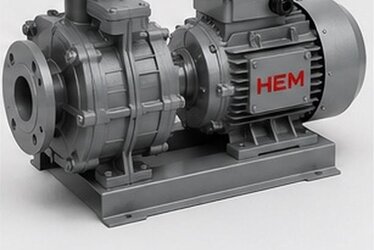
In terms of stock and supply, determining the right motor in advance by reading the nameplate data correctly eliminates waiting time, especially in emergency replacement situations. For a wider product range you may also evaluate the three-phase electric motor and geared motor options.
Frequently Asked Questions
What does 230/400 V on the nameplate mean?
These two values show two different connection forms of the motor. 230 V corresponds to delta connection; 400 V to star connection. You must choose the right connection according to your grid's phase-to-phase voltage; on common 400 V grids the motor is star-connected. A wrong connection damages the motor.
Why is the nameplate speed not exactly 1500 but something like 1440?
In asynchronous motors the nameplate speed is the actual speed under load. The synchronous speed (1500 rpm for 4 poles) is the theoretical upper limit; under load the motor runs slightly below this, lower by the amount of slip. That is why values like 1440-1470 rpm are normal in a 4-pole motor.
How do I tell the efficiency class from the nameplate?
On modern nameplates the efficiency class is written clearly as IE2, IE3 or IE4, usually together with the nominal efficiency percentage. IE3 is the "premium efficiency" class. By seeing the IE marking and the percentage next to it on the nameplate, you can directly learn the motor's efficiency level.