English
 Türkçe


Modern greenhouses and livestock facilities rely on many different electric motors to keep production running without interruption. From ventilation and circulation fans to irrigation pumps, from feeding and scraper systems to manure handling, a motor works at every point. The common feature of these facilities is a harsh operating environment: high moisture, dust, ammonia and aggressive gases quickly wear out standard motors. Moreover, because these motors mostly run continuously, annual energy consumption makes up a large part of the operating cost. This guide helps businesses building or renovating a greenhouse or livestock facility to source fan, irrigation and feeding motors in the right efficiency class, resilient to the environment and quickly available. Our aim is not to deliver a technical lecture, but to help you select the motors your facility needs completely and correctly.
Main Motor Groups in the Facility
To plan the motor requirement of a greenhouse and livestock facility correctly, the equipment must be separated by function. Each group demands a different power, speed and protection criterion; trying to meet them all with the same motor means both inefficiency and early failure.
Circulation and Exhaust Fan Motors
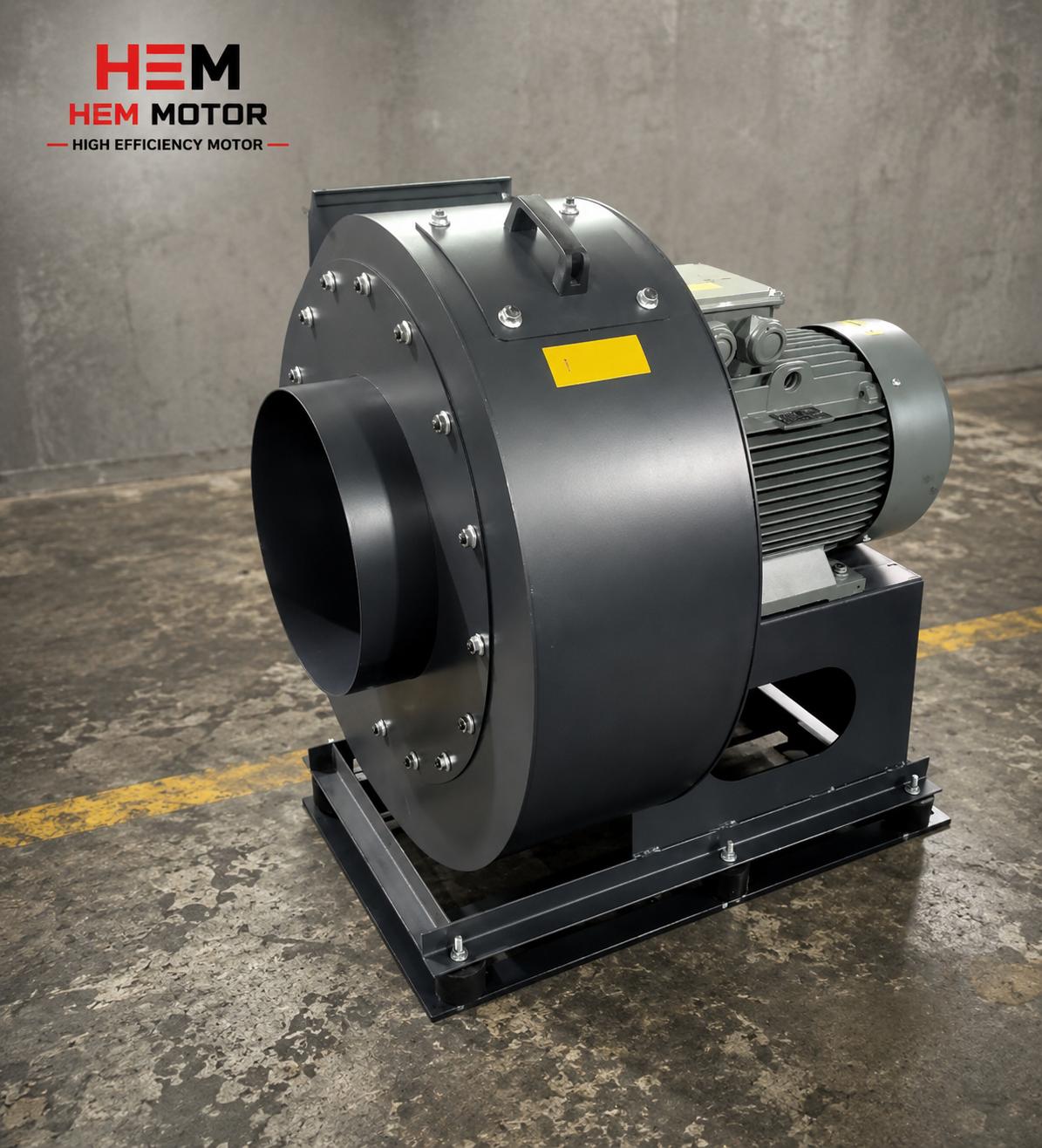
Climate control in a greenhouse and air quality in a livestock facility depend on the uninterrupted operation of fans. Circulation fans distribute air homogeneously, while exhaust fans expel moist, ammonia-laden air. Because these fans are usually large-diameter and run at low-to-medium speed, 4 or 6 pole motors are preferred. In fan motor selection, power and speed are determined by the fan type; our article on centrifugal and axial fan motor selection guides this. For fans that need to run large-diameter and quietly, a low-speed motor is advantageous; our article on low-speed (high-pole) motors: gearless direct drive addresses this option. For general ventilation needs, our high efficiency electric motors product group includes suitable options.
Irrigation and Water Transfer Pump Motors
In a greenhouse, drip and sprinkler irrigation, and in livestock, drinking water and cleaning, make pump motors critically important. These pumps are sized by flow and pressure; knowing the flow and head is essential for the right power selection. Our article on centrifugal pump motor selection: flow, head and power matching explains this step by step. Our article on irrigation and agricultural pump motors: field and greenhouse supply addresses pump motor sourcing for field and greenhouse irrigation in detail.
Feeding, Scraper and Conveying Motors
In livestock facilities, automatic feeding systems, manure scrapers and feed-conveying screws are driven by motors that run continuously or on a schedule. These applications usually demand low speed and high torque; they are often used with a gearbox. Our article on feed factory and mill motors selection is a useful reference for selecting feed machine and mill motors. Our article on motor purchasing for agricultural machinery: pre-season stock planning addresses pre-season planning.
Harsh Environment: Moisture, Dust and Ammonia
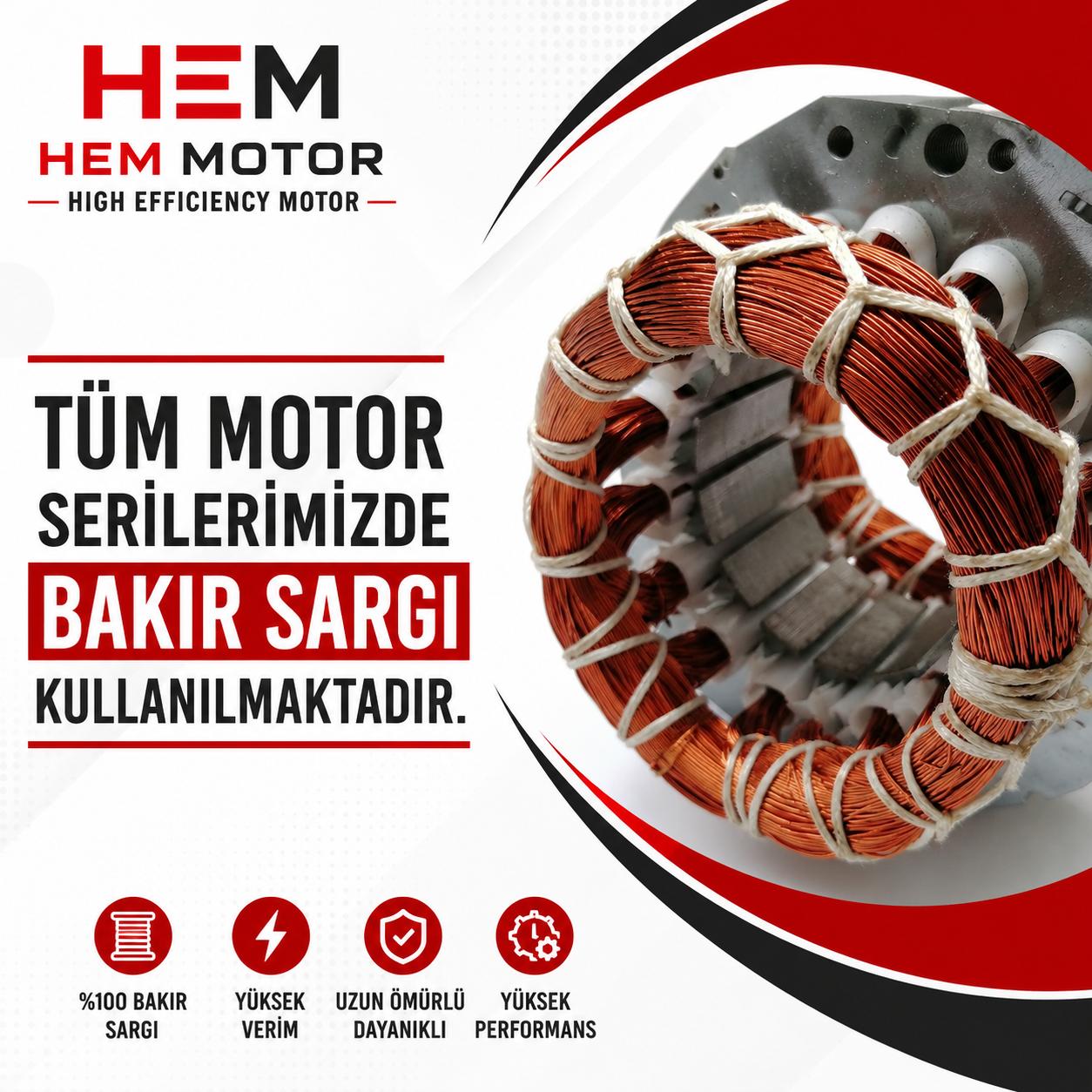
The most decisive sourcing criterion for greenhouse and livestock facilities is the wearing effect of the environment on the motors. In a greenhouse, constant high moisture and water vapor, and in a livestock facility, ammonia, dust and aggressive gases quickly damage a standard motor's frame and winding. Therefore, a minimum IP55 protection class is essential in these facilities; in harsher conditions, IP65/IP66 should be preferred. Our article on IP protection class selection in electric motors: IP55, IP65, IP66 explains the right IP class clearly. For frame protection against moisture and ammonia, cast iron and cataphoresis coating are decisive; our article on corrosion protection in cast iron body motors guides this. In hot, humid and dusty environments, the insulation class is also important; our article on motor in hot and dusty environments: insulation class (F/H) and cast iron frame selection offers the decisive criteria.
Why a High-Efficiency Motor?
In greenhouse and livestock facilities, fans and pumps usually run all day, even 24/7. This makes the motors' annual energy consumption a far larger cost item than the purchase price. Here, IE3 and IE4 high-efficiency motors provide a clear advantage; one step higher efficiency recovers the purchase-price difference many times over across the motor's economic life. Our article on replacing an old standard motor with IE4: payback period and incentives addresses the return of replacing an old standard motor with a high-efficiency one in concrete terms. You can assess the total cost of ownership view from our article on how to calculate TCO in high-efficiency motors, and review our IE4 product family on our electric motor IE4 page. You can reach other guides on this topic from our high efficiency motors blog category.
Energy Savings and the Variable-Frequency Drive
In greenhouse and livestock facilities, fan and pump loads can be run at different flows as the need changes. In such variable loads, using a variable-frequency drive (VFD) provides significant energy savings by slowing the motor to the need instead of running it at a fixed speed. Our article on high-efficiency motor plus VFD energy savings in pumps and fans explains in detail the gain of combining a high-efficiency motor with a VFD in pumps and fans. Our article on a variable-frequency drive (VFD) with an asynchronous motor clarifies when a VFD is needed and how to select it. Especially in facilities where ventilation fans must be controlled in steps according to the greenhouse climate, a drive-based solution increases both comfort and energy efficiency.
Correct Sizing and Speed Selection
The most common mistake in greenhouse and livestock facility motors is choosing an oversized motor, making both an unnecessary investment and running it inefficiently at a low load ratio. Our article on at what load to run a motor: efficiency, power margin and correct sizing explains this clearly. Speed selection is at least as important as power: in fans, large diameter and low speed usually run more quietly and efficiently, while in pumps, 2 or 4 poles are preferred depending on the application. To calculate the required kW for pump, fan and conveyor, our motor power calculation article is a practical tool. Correct sizing both lowers the energy cost and extends the motor's life.
Stock, Supply and Replacement
In greenhouse and livestock facilities, the failure of a fan or pump motor means, in the worst case, the breakdown of climate control and product loss. Therefore, fast supply and redundancy are important for critical motors. Our article on a critical spare motor list and stock planning guides which powers to keep in stock. When replacing an existing motor, the power, speed, frame size, mounting type, shaft diameter and IP protection class from the nameplate are enough for an exact replacement. To prevent the wrong motor from arriving, you can verify pre-order nameplate matching with our article on avoid the wrong motor delivery: pre-order nameplate matching. For mounting type options, you can review our electric motor mounting types product group.
Continuous Duty and Cooling
Fans and pumps in a greenhouse and livestock facility largely run continuously (S1). The heating behavior of a continuously running motor directly affects its life and efficiency; therefore, correct duty-type selection is essential. A motor not suited for continuous duty overheats under continuous load and fails early. Our article on electric motor duty type (S1-S6) selection is a comprehensive resource on correct duty-type selection. Monitoring winding temperature in continuously running motors prevents unexpected failures; our article on winding temperature monitoring with PT100 and PTC thermistors guides this. Dirt buildup on the cooling fins of the motor frame in a dusty environment also reduces cooling; our article on cooling fins and dirt buildup in cast iron motors: cleaning and efficiency addresses the importance of regular cleaning. Especially in dust-heavy livestock facilities, this maintenance is critical for motor life.
Terminal Box, Cabling and Maintenance
In a humid, ammonia-laden environment, one of the motor's weakest points is the terminal box and cable entries. Inadequate sealing allows moisture to reach the winding and leads to failure in a short time. Therefore, correct gland selection and terminal box sealing must be included in the specification; our article on the motor terminal box and cable connection: IP protection and correct gland selection offers the decisive criteria. Regular maintenance significantly extends motor life in a greenhouse and livestock facility; you can build a periodic check schedule from our article on the electric motor maintenance and periodic check schedule. Routine maintenance such as bearing greasing and lubrication reduces failure risk in continuously running motors and keeps the maintenance cost under control.
Frequently Asked Questions
Which IP protection class is needed in a greenhouse and livestock facility?
A minimum IP55 protection class is recommended in these facilities; in environments with high moisture, water vapor, dust and ammonia, IP55 is a basic requirement. In areas with washing, direct water splashing or much more aggressive gas, IP65/IP66 should be preferred. Cast iron frame and cataphoresis coating provide additional protection against corrosion. If you share which conditions exist in which part of your facility, we can determine the suitable protection class for each point together.
Should I buy IE3 or IE4 for a greenhouse fan?
Because fans run continuously, the efficiency class directly affects the annual energy cost. In large fans running very long hours, IE4 super premium efficiency recovers the purchase-price difference many times over across its economic life. In shorter-duration or small-power applications, IE3 may also be a suitable choice. When used together with a VFD, the saving increases even more. If you share your operating hours and fan power, we will recommend the most suitable efficiency class.
How are feeding and scraper motors selected?
Feeding, scraper and screw-conveying systems usually demand low speed and high torque; therefore, they are mostly used with a gearbox. For the right selection, the system's output speed, the load carried and the operating time are decisive. Because these motors work in a dusty, humid environment, the IP protection class and terminal box sealing are also important. If you send your application's output speed and load data, we will determine together whether a direct motor or a geared solution is needed.
Get a Quote
Contact us for fast supply of circulation and exhaust fan, irrigation pump and feeding motors in the right efficiency class and protection for your greenhouse and livestock facility. Send your facility's needs, and we will identify the motor that fits your environmental conditions and energy-saving goals and prepare a clear quote. Phone: +90 (532) 345 49 86 · Create a quote request from our contact page.