English
 Türkçe

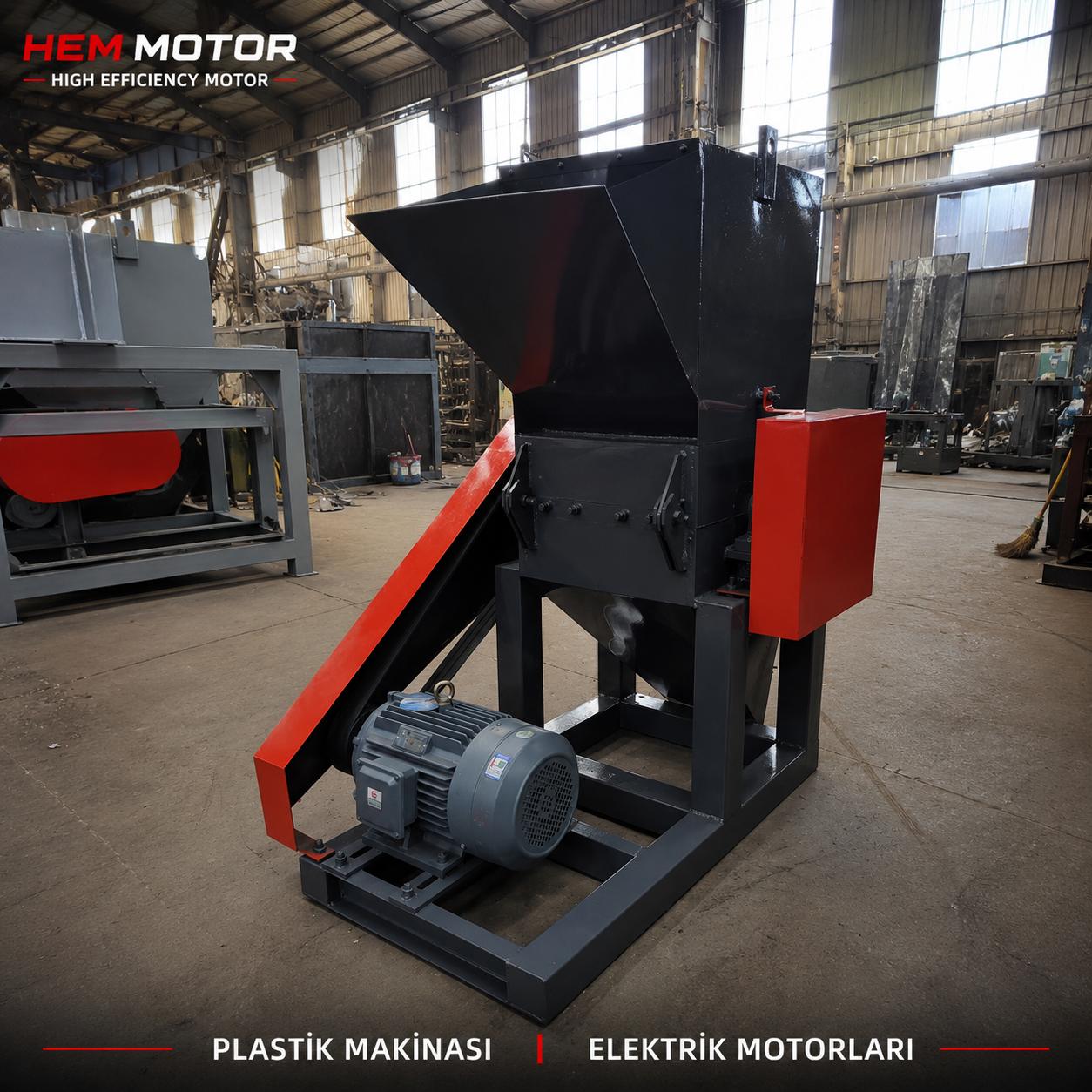

In many facilities such as water supply, booster sets, cooling towers, process water and wastewater transfer, groups of several pumps connected in parallel are preferred instead of a single large pump. When demand varies over a wide range during the day, running a single large pump continuously throttled is both inefficient and a method that wears the pump. Instead, a parallel cascade pump group built with high-efficiency motors keeps the system always close to its most efficient operating point by adjusting the number of pumps in service according to the variable flow. In modern applications this cascade control is realised with a VSD (variable speed drive) master-follower architecture: while one pump performs precise speed control with the drive, other pumps are brought into service at fixed speed as demand rises. In this article we cover the logic of the parallel cascade pump group, VSD master-follower control, the most efficient operating point at variable flow, the number of motors and the staging strategy, system efficiency and energy savings.
Why a Parallel Cascade Group Instead of a Single Large Pump?
A pump delivers its highest efficiency around a particular flow-pressure point (the best efficiency point, BEP). When demand falls far below this point, a single large pump is forced to run with a throttled valve or at low speed, and its efficiency drops. A parallel cascade group, on the other hand, divides the total capacity among several smaller pumps; thus at any moment the number of pumps closest to the demand runs in its own efficient region.
- Efficient operation: Each pump runs close to its own BEP; system efficiency stays high.
- Flexibility: At low demand one pump, at high demand several pumps come into service.
- Redundancy: Even if one pump fails the group keeps running.
- Wear balance: The pumps are rotated to equalise wear.
You can find the efficiency threshold in pumps, fans and compressors in our IE4 threshold in pump, fan and compressor article, and pump-fan savings with an efficient motor and a frequency drive in our efficient motor + frequency drive savings content.
VSD Master-Follower Control Architecture
In a cascade pump group the heart of control is the logic that determines which pump runs when and at what speed. The most common and efficient approach is the VSD master-follower (sometimes lead-lag) architecture. In this architecture one pump is driven as the "master" with a variable speed drive and keeps the system pressure/flow precise; when demand exceeds the master pump's capacity, the "follower" pumps are staged in turn at fixed speed (directly from the grid or with their own drive).
- Master pump: Driven by the VSD; precisely holds the pressure/flow setpoint.
- Follower pumps: Staged in as demand rises; the master makes the fine adjustment.
- PID control: The setpoint is held constant with pressure sensor feedback.
- Rotated operation: The master role is changed periodically to balance wear.
VSD master-follower provides both precise pressure control and high efficiency: while the master pump follows the flow smoothly, the follower pumps run only when needed and at full load (that is, at the efficient point). You can study when a frequency drive is needed and how to select it in our VFD with asynchronous motor article.
The Most Efficient Operating Point at Variable Flow
In pumps, power consumption varies strongly with flow (and therefore speed) according to the affinity laws: when speed halves, power can theoretically drop to about one eighth. For this reason the greatest saving at variable flow comes from reducing the pump's speed rather than throttling it when demand falls. In a cascade group the master pump makes this speed adjustment while unnecessary pumps are stopped completely, eliminating idle loss.
| Total demand | Running pump | Master speed trend | System efficiency |
|---|---|---|---|
| 0-25% | 1 (master) | Low-medium speed | High (speed low) |
| 25-50% | 1 master + 1 follower | Medium speed | High |
| 50-75% | 1 master + 2 followers | Medium-high speed | High |
| 75-100% | 1 master + 3 followers | Near full speed | Full-load efficiency |
We detail the affinity law and the effect of running below 50 Hz in our running below 50 Hz article, and why efficiency at partial load matters in our efficiency at partial and low load content.
Number of Motors and Staging Strategy
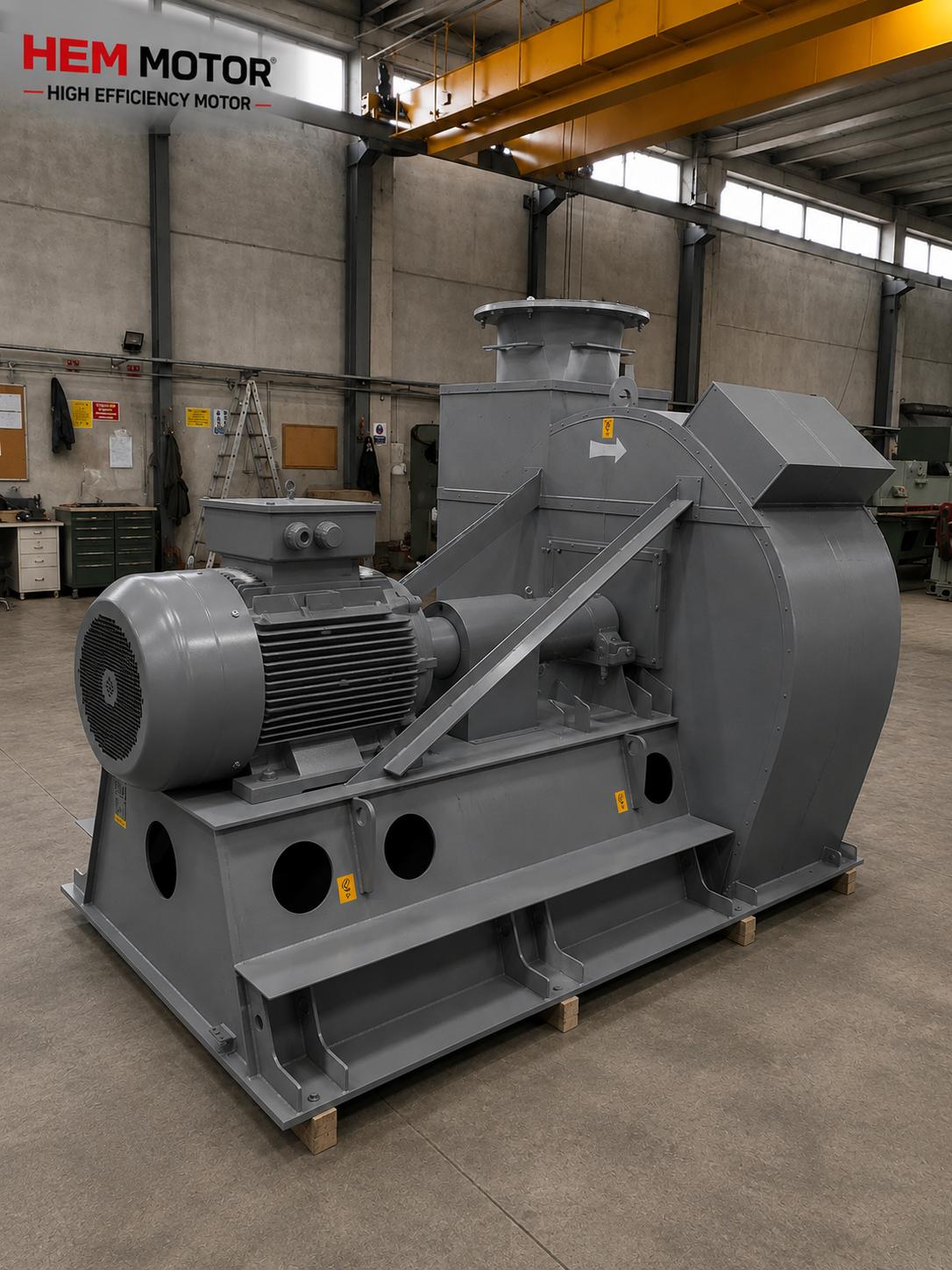
How many pumps will be used in a cascade group and how the staging thresholds are set directly affect both efficiency and operating stability. Using too few pumps reduces flexibility; too many pumps increase cost and control complexity. The general rule is to choose a pump count that divides the demand curve into a few efficient stages.
- Pump count: Enough to divide the demand range into efficient stages; typically 2-4 pumps are common.
- Staging threshold: A follower is staged in when the master pump reaches a certain speed/load.
- De-staging threshold: When demand falls, followers are stopped in turn; hysteresis prevents frequent start-stop.
- Hysteresis and delay: A threshold band and time delay prevent continuous staging in and out (hunting).
You can find heating and duty type in frequent start-stop in our S1-S6 duty type selection article, and correct sizing in an efficient motor in our efficiency class and correct sizing content.
System Curve and Constant Pressure Control
To understand the efficiency of a pump group, the system curve (pipe resistance + static head) and the pump curve must be considered together. In most water and booster applications the aim is to keep the output pressure constant even as the flow changes. The VSD master-follower architecture achieves this by continuously adjusting the master pump's speed with feedback from the pressure sensor. When demand rises the master pump first speeds up; if it approaches full speed and is still insufficient, a follower is staged in and the master lowers its speed again to keep the total flow at constant pressure. Thus the output pressure stays constant in a narrow band while the system always runs with the fewest pumps and the lowest speed.
- Static head: The height the liquid must be lifted; the constant component of pressure.
- Friction loss: Pipe resistance increasing with the square of the flow; the variable component.
- Constant pressure target: The output pressure is held constant with sensor + PID.
- Minimum energy: The target is met with the fewest pumps and the lowest speed.
Preserving efficiency at variable flow begins with correct motor sizing; you can study how oversizing eats savings in our efficiency at partial and low load article.
Redundancy and Operating Reliability
An important advantage of the parallel cascade group is redundancy. While a fault in a single large pump stops the whole facility, in a multi-pump group the remaining pumps continue to largely meet demand even if one unit fails. This is decisive for operating reliability, especially in water supply, fire line and critical process applications. Furthermore, by adding a stand-by pump, uninterrupted operation can be ensured even during planned maintenance.
- N+1 redundancy: One extra pump prevents interruption during maintenance or a fault.
- Rotated operation: Running the pumps in turn equalises wear and keeps them all fresh.
- Automatic staging: When a faulty pump is taken out, the stand-by stages in automatically.
- Staged start: Not all pumps start at once; the grid surge is reduced.
You can find motor fleet and replacement scheduling in three-shift facilities in our motor fleet management article, and mixer, blower and pump supply in biogas and treatment in our biogas and treatment plant motors content.
System Efficiency: Seeing the Motor, Drive and Pump Together
Real savings come not from motor efficiency alone but from the system efficiency formed jointly by the motor, drive, pump and control strategy. High-efficiency (IE4) motors are an important link in the chain, but a wrong control strategy can eat this gain. To maximise system efficiency:
- Use high-efficiency (IE4 and above) motors; minimise losses.
- On the master pump, adjust the speed with the drive instead of throttling the flow.
- Run the follower pumps only when needed and at the efficient point.
- Prevent frequent start-stop with the right pump count and thresholds.
- Calibrate the pressure sensor and PID setting to field conditions.
We cover the difference between nameplate and field efficiency in our nameplate and field efficiency difference article, and measuring and documenting annual savings in our measuring and documenting annual savings content.
Energy Savings and Payback
A parallel cascade VSD master-follower group provides clear energy savings in variable-flow facilities compared with a single large fixed-speed pump. The magnitude of the saving depends on the demand profile: the more the demand fluctuates and the further the average load is from full capacity, the greater the advantage of the cascade group. The combination of a high-efficiency motor and correct control both lowers the energy bill and extends pump and motor life.
- High gain at variable demand: Savings are highest under fluctuating load.
- Advantage at low average load: The difference is large in facilities that rarely reach full capacity.
- Maintenance gain: Soft start and balanced wear reduce maintenance cost.
- Reactive gain: Efficient motors can reduce the reactive penalty by improving the power factor.
You can find the total cost of ownership (TCO) in our TCO in high-efficiency motors article, and power factor and reactive penalty in our power factor (cos phi) and reactive penalty content. Our single-motor-to-fleet savings article explains scalable savings from a single motor to a fleet.
Commissioning and Operating Tips
To truly achieve the savings the cascade group promises in the field, the following points must be observed during commissioning and operation:
- Do not keep the pressure setpoint higher than necessary; every extra bar means additional energy.
- Set the hysteresis and delay times to prevent frequent start-stop.
- Rotate the master role to equalise wear between pumps.
- On a drive-fed motor, apply shielded cable, grounding and bearing current measures.
- Check sensor and PID calibration periodically.
For grounding and EMC in a VFD system, our grounding and EMC: connection in a VFD system article, and for energy efficiency audit and motor inventory, our energy efficiency audit content are helpful.
Frequently Asked Questions
How does VSD master-follower control work?
One pump is driven as the "master" with a variable speed drive and precisely holds the setpoint with pressure sensor feedback. When demand exceeds the master pump's capacity, the "follower" pumps are staged in turn at fixed speed; the master still makes the fine adjustment. As demand falls, followers are stopped in turn. The master role is rotated periodically to balance wear.
Why is a cascade pump group more efficient?
A single large pump runs inefficiently at low demand; a cascade group, since it divides the total capacity among small pumps, runs each pump close to its own best efficiency point. Moreover, the master pump greatly reduces power by lowering speed rather than throttling, per the affinity laws; idle loss is eliminated because unnecessary pumps are stopped completely. The result is high system efficiency across a wide demand range.
How many pumps should I use?
The pump count is chosen to divide the demand curve into a few efficient stages; groups of 2-4 pumps are typically common. Too few pumps reduce flexibility, too many increase cost and control complexity. Staging/de-staging thresholds are set with hysteresis and time delay to prevent frequent start-stop.
Efficient Pump Group Supply with HEM Motor
For your parallel cascade pump groups we offer high-efficiency (IE4 and above) motors with solutions suited to the VSD master-follower architecture, with fast delivery from the manufacturer. Share your demand profile, flow-pressure range and existing pump arrangement; let us determine together the pump count, power and control strategy that will capture the most efficient operating point. With the right motor, the right drive and the right cascade control, lower your energy bill and extend pump-motor life. Contact us for stock and fast delivery, and request a quote tailored to your project.