English
 Türkçe

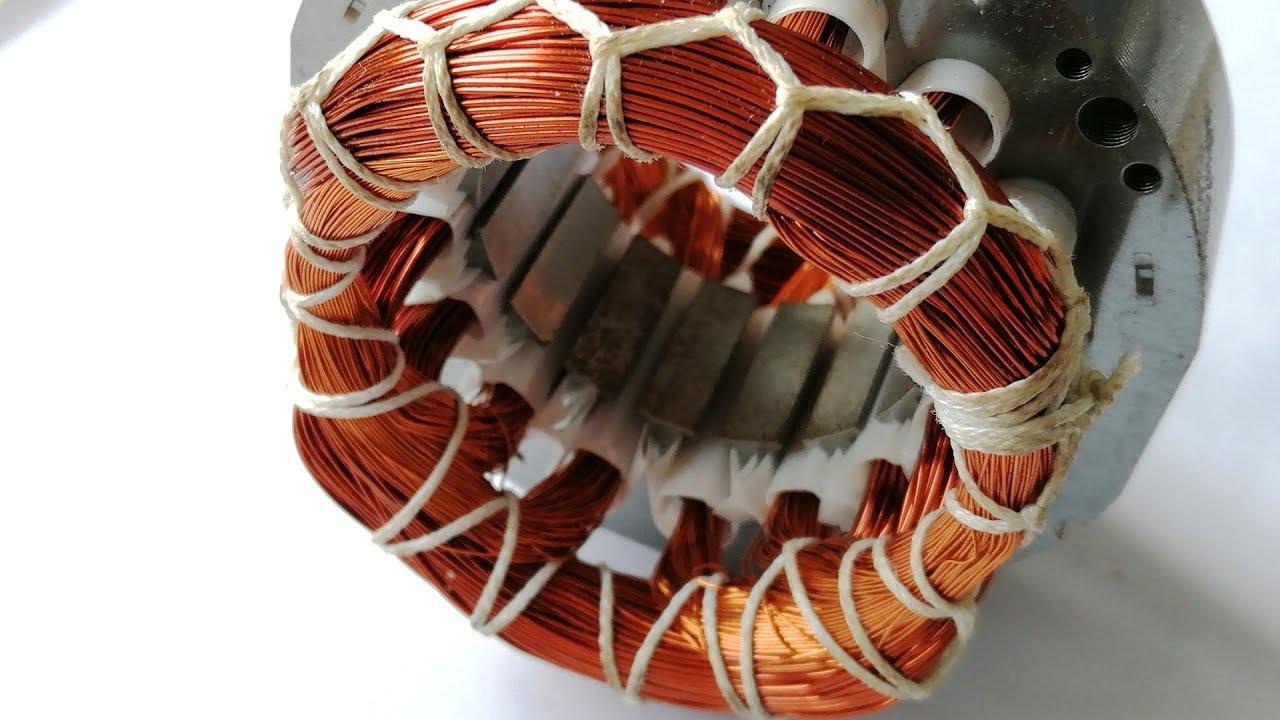

When you purchase a high-efficiency electric motor, the efficiency value written on the nameplate shows that motor's first-day, brand-new performance. However, a motor runs for ten, fifteen or even twenty years, and during this time it physically ages. Ageing causes the motor's efficiency to drop somewhat over time through processes such as insulation degradation, increased bearing and friction losses, and thermal fatigue of the winding. In high-efficiency motors this drop is important because it directly affects the lifetime energy savings. In this article we cover in detail the causes of ageing in high-efficiency motors, insulation ageing, the increase in bearing and friction losses, the effect of winding temperature history, the efficiency loss from rewinding, the importance of periodic measurement, the ways to preserve efficiency over the life, and when the motor should be replaced. The goal is to help you preserve the return on the investment you made in your high-efficiency motor throughout its life.
Why Is Ageing Important in High-Efficiency Motors?
High-efficiency (IE3, IE4, IE5) motors are purchased with a higher initial investment than standard motors; the return on this investment comes from the energy savings the motor provides over its life. If the motor's efficiency drops significantly over time, the expected saving does not materialize and the payback period of the investment lengthens. Therefore understanding and managing ageing in high-efficiency motors is not only a technical but an economic matter. The good news is that with correct maintenance and operating conditions, the efficiency drop can be greatly slowed and the motor can run close to its nameplate value for decades.
The efficiency drop is not sudden but a gradual process. While a new motor delivers its rated efficiency, the losses grow with small increases over the years. The main sources of these losses are: insulation ageing, the increase in bearing and mechanical friction, the effect of the winding temperature history, and (if done) the loss introduced by rewinding. Each of these factors deserves to be addressed separately.
Insulation Ageing
The insulation of the motor winding ages over time under heat, moisture, vibration and electrical stress. As the insulation material ages, it loses its flexibility, becomes brittle and the insulation resistance drops. The most important driver of insulation ageing is temperature: as a general rule, every continuous 10 °C rise in winding temperature roughly halves the insulation life. Therefore the operating temperature of the motor directly determines its life.
The effect of insulation ageing on efficiency is indirect but real: small leakage currents and local heating increase in aged insulation, which raises the copper loss. More importantly, insulation ageing increases the motor's failure risk; advanced ageing can lead to a winding short circuit and complete failure of the motor. The insulation condition must be tracked with periodic insulation resistance (megger) measurement.
- Temperature: The biggest ageing factor; a motor running at low temperature lasts longer.
- Moisture: Lowers insulation resistance; a space heater is important in humid environments.
- Vibration: Mechanically fatigues the winding wires; balanced and aligned operation slows ageing.
- Voltage spikes: dV/dt spikes in drive-fed operation strain the insulation; the use of a filter is protective.
Increase in Bearing and Friction Losses
The mechanical losses of the motor arise from the friction of rotating parts, primarily the bearings. In a new motor the bearings run smoothly and the friction loss is minimal. Over time the bearing surfaces wear, the grease deteriorates, the internal clearance changes and friction increases. Increased friction means a direct efficiency loss; because some of the electrical energy drawn by the motor turns not into useful work but into friction heat. Neglected lubrication, contaminated grease or misalignment accelerate this increase.
Limiting bearing and friction-related efficiency loss is largely possible through maintenance:
- Following the periodic greasing schedule and using the correct grease.
- Monitoring bearing noise and vibration; abnormal vibration is a sign of early wear.
- Correct coupling/pulley alignment; misalignment strains the bearing and increases friction.
- Replacing the bearing on time when its life is over; running with a worn bearing endangers both efficiency and the motor.
In a well-maintained motor, bearing-related efficiency loss stays low over the years; in an unmaintained motor it rises rapidly and creates a noticeable deviation from the nameplate efficiency.
Winding Temperature History and the Efficiency Loss of Rewinding
How long and at what temperature a motor has run is its "temperature history", and it is the most important factor determining the rate of ageing. A motor that has run continuously at high temperature ages much faster than the same model run at low temperature. Overload, insufficient cooling, clogged cooling fins, high ambient temperature and frequent starting-stopping are the main factors that raise the winding temperature. Therefore keeping the motor at a reasonable temperature throughout its life preserves both the insulation and the efficiency.
When a motor fails or its winding burns out, the method frequently resorted to is rewinding. However, if rewinding is not done carefully, it can cause a permanent loss in efficiency. The heat treatment applied to remove the old winding can damage the insulation of the stator core (lamination) and increase the iron loss. In addition, if the conductor cross-section, winding technique and fill factor used in the new winding differ from the original, the copper loss increases. Typically, a careless rewind can cause a loss of roughly 1–3 percentage points in efficiency; this can drop a high-efficiency motor to a lower class.
Therefore, when a high-efficiency motor fails, the question of whether to rewind or buy new must be carefully evaluated. If rewinding is to be done, a qualified workshop that works efficiency-focused, uses a low-temperature removal method that does not damage the core, and stays faithful to the original data must be chosen.
Typical Efficiency Drop Over the Years
The table below illustrates the typical efficiency course over time in good-maintenance and poor-maintenance scenarios for a high-efficiency motor. The values are indicative; the real course depends on operating conditions.
| Period | Good Maintenance (Low Temp.) | Poor Maintenance (High Temp.) | Main Loss Source |
|---|---|---|---|
| 0 years (new) | Rated efficiency | Rated efficiency | — |
| 5 years | ≈ 0.2% drop | ≈ 0.8% drop | Bearing, grease |
| 10 years | ≈ 0.4% drop | ≈ 1.5% drop | Bearing + insulation |
| 15 years | ≈ 0.6% drop | ≈ 2.5% drop | Insulation ageing |
| After rewinding | ≈ 1% extra loss (careful) | ≈ 3% extra loss (careless) | Core + copper loss |
As the table shows, a well-maintained motor can stay very close to its nameplate efficiency even after 15 years, while a poorly operated motor loses noticeable efficiency. The difference corresponds to a significant amount in lifetime energy cost.
Periodic Measurement and Preserving Efficiency Over the Life
The basis of managing the efficiency drop is to measure and monitor it. An invisible loss cannot be managed. Therefore periodic measurement and recording are important in high-efficiency motors:
- Current and power measurement: An increase over time in the current and power drawn at the same load is the first sign of an efficiency drop.
- Temperature measurement: Surface and bearing temperatures are monitored with thermography (thermal camera); hot spots are detected.
- Insulation resistance (megger): Periodically shows the insulation condition.
- Vibration analysis: Catches bearing and mechanical problems early.
- Record keeping: Recording each measurement enables trend analysis and the correct replacement decision.
The ways to preserve efficiency over the life are: keeping the motor at a reasonable temperature (load, cooling, cleaning), periodic greasing and correct lubrication, alignment and vibration control, moisture and dust protection, and the use of an appropriate filter in drive-fed operation. When these measures are applied together, the high-efficiency motor runs close to its nameplate value throughout its life and the return on the investment is fully realized.
When Should the Motor Be Replaced?
Every motor completes its economic life one day. The situations in which a high-efficiency motor should be replaced are:
- If the efficiency has dropped noticeably according to periodic measurements and the energy cost has reached a level where it will pay back the cost of a new motor in a short time.
- If the motor has been rewound multiple times and the efficiency has dropped a little more with each rewind.
- If the insulation resistance has fallen below the critical level and the failure risk has increased.
- If a transition to a higher efficiency class (for example from IE3 to IE4/IE5) will quickly amortize itself through energy savings.
The replacement decision must be made on an economic, not emotional, basis: the motor's current efficiency, annual running hours, energy unit price and the cost of the new motor are evaluated together. Often, replacing a very old motor with reduced efficiency with a new high-efficiency motor is an investment with a short payback period.
The Hidden Cost of Efficiency Drop
A few-point drop in a motor's efficiency over the years may look small at first glance. However, in a continuously running motor this small difference turns into a large energy and cost difference over the life. For example, in a motor running 16 hours a day, thousands of hours a year, a drop of just two points in efficiency means a significant amount of extra energy consumed every year. Moreover, this loss is silent; since the motor keeps running, it goes unnoticed and the extra cost reflected in the bill is often not attributed to the motor. This is exactly why the efficiency drop is called a "hidden cost".
Making this hidden cost visible is the basis of correct operating decisions. When small efficiency losses on each of dozens of motors in a plant add up, the total energy waste reaches a considerable amount. Therefore, regularly monitoring motor efficiency in energy-intensive plants is becoming increasingly important for both cost control and sustainability. Efficiency tracking also helps prioritize which motors need to be renewed; the most-running and most efficiency-reduced motors are the priority replacement candidates.
Frequently Asked Questions
How much does a high-efficiency motor's efficiency drop over time?
While a well-maintained motor may drop only about half a point in 15 years, this loss can rise to a few points in a poorly operated (overheated, unmaintained) motor. Rewinding, if done carelessly, also causes an extra 1–3 point loss. So the efficiency drop largely depends on the quality of operation and maintenance.
Why does rewinding lower a motor's efficiency?
Because the heat treatment applied to remove the old winding can damage the insulation of the stator core and increase the iron loss; also, if the conductor cross-section and winding quality of the new winding differ from the original, the copper loss increases. Careful, low-temperature removal and winding faithful to the original data minimize this loss.
How do I decide when to replace the motor?
Track the efficiency drop with periodic measurements. If the rising energy cost will pay back the cost of a new high-efficiency motor in a reasonable time, or if the failure risk has increased, replacement makes sense. The decision is made by evaluating the current efficiency, running hours, energy price and new motor cost together.
Related Articles
- Rewinding the motor or buying a new one?
- IE4 motor efficiency loss after rewinding
- Impact of maintenance on motor efficiency: bearing, lube, alignment
- Efficient motor loss detection with thermography and hot spots
- Electric motor maintenance/operating cost and lifecycle ratio
Request a Quote for Manufacturer Stock and Fast Delivery
Get in touch with us to replace your aged, efficiency-reduced or repeatedly rewound motors with new-generation high-efficiency (IE3/IE4/IE5) motors. Share the power, running hours and application of your existing motor; let the HEM Motor expert team prepare a solution for you in the right efficiency class, from manufacturer stock and with fast delivery. A motor renewal made at the right time secures your lifetime energy savings, and your investment pays for itself in a short time.