English
 Türkçe



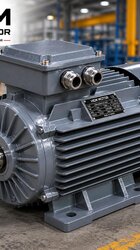
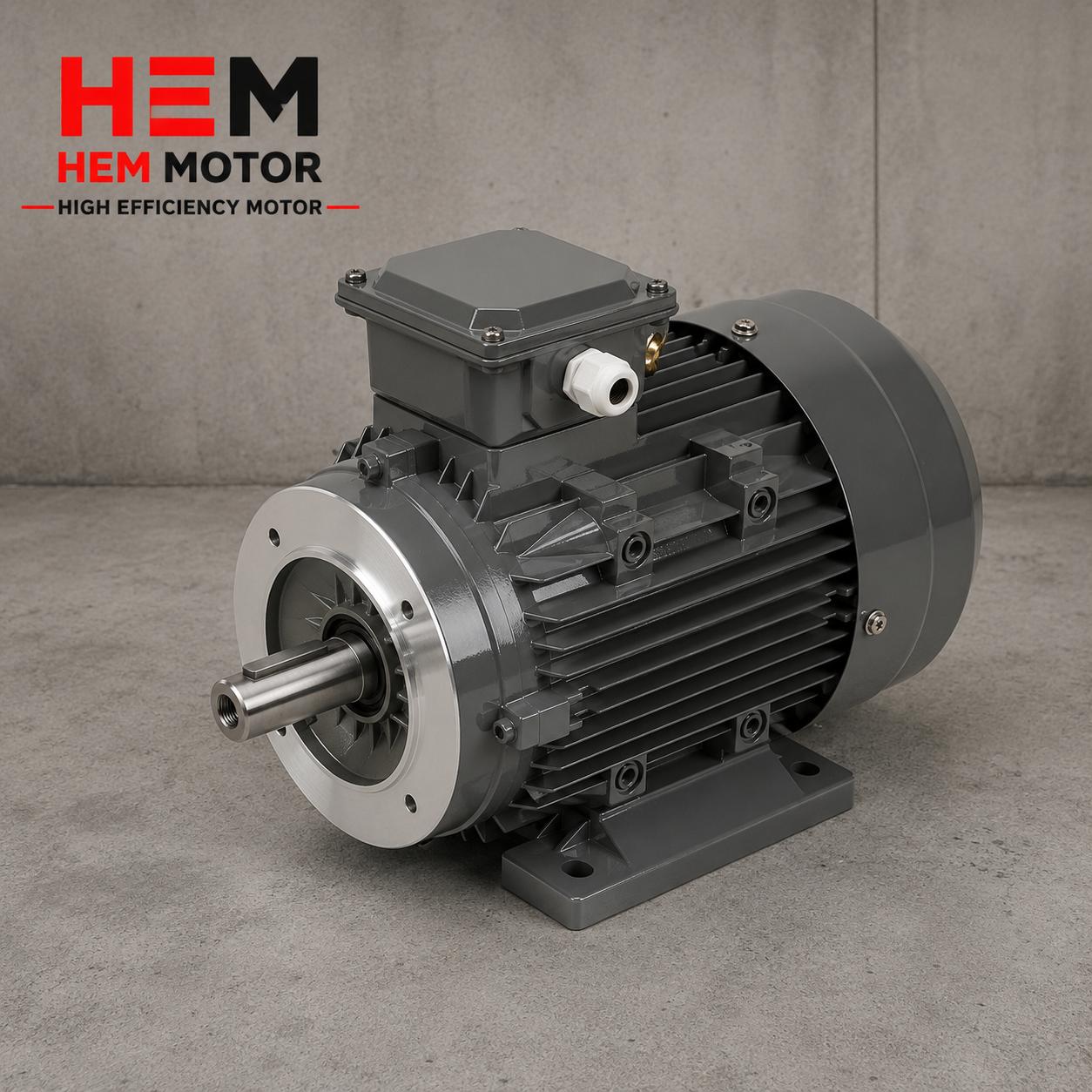

Buying a high-efficiency motor is the first step most businesses take to reduce energy cost. However, raising the efficiency class alone is not enough; correctly sizing the motor is at least as important as the efficiency class. You chose an IE4 motor instead of IE3, but if you run that motor far below its real load, you lose a significant part of the savings you expect. High efficiency and correct sizing are two decisions that must be considered together, not separately. As HEM Motor, with our identity as both manufacturer and supplier, we provide IE3/IE4 motor solutions that deliver real savings to your business by determining the correct efficiency class and the correct kW together. This guide shows the way to optimize efficiency class and sizing together from a purchasing perspective.
What Is the Efficiency Class (IE) and What Does It Save?
The efficiency class (IE — International Efficiency) is a standard measure showing how much of the electrical energy a motor draws it converts into mechanical power. As the number rises, efficiency increases: IE3 Premium, IE4 Super Premium and IE5 Ultra Premium. A high-efficiency motor does the same work with less electricity, providing significant savings over the years, because the electricity a motor consumes over its lifetime is many times its purchase cost.
We addressed what efficiency classes mean and when the difference between them justifies the investment, with a payback calculation, in our IE3 or IE4? the right electric motor investment for your business article. The place where the efficiency difference becomes most apparent is continuous-duty applications where the motor runs long hours, such as pumps, fans and compressors.
Why Is Correct Sizing as Important as Efficiency?
A motor operates at peak efficiency not at the full power written on its label, but generally in the 75-100% load range. As the load ratio drops below this range, efficiency and power factor (cos φ) decrease noticeably. So an IE4 motor selected far too large, if it runs at for example 40% of the real load, never reaches its high efficiency value on paper.
Therefore selecting a motor larger than needed out of a "just in case" mindset means both extra investment and low-efficiency operation. We explained in detail at what load ratio it is most efficient to run a motor in our at what load should you run a motor? efficiency, power margin and correct sizing article. Oversizing is a common purchasing mistake and directly reduces the return on the efficiency class investment.
The Hidden Cost of Oversizing
Oversizing creates several different costs. First, a larger motor is more expensive; an unnecessary initial investment is made. Second, efficiency drops at a low load ratio, so the premium paid for the high efficiency class is wasted. Third, the power factor worsens at low load, which can lead to a reactive energy penalty. We explained the role of power factor and reactive penalty in high-efficiency motors in our power factor and reactive penalty in high-efficiency motors article.
Businesses often blindly repeat the same (large) power when replacing an old motor. Yet the old motor may have been oversized from the start. Replacement is an opportunity to drop to the correct power. Measuring the real load and selecting a motor to match it brings gains from both the efficiency class and the correct size.
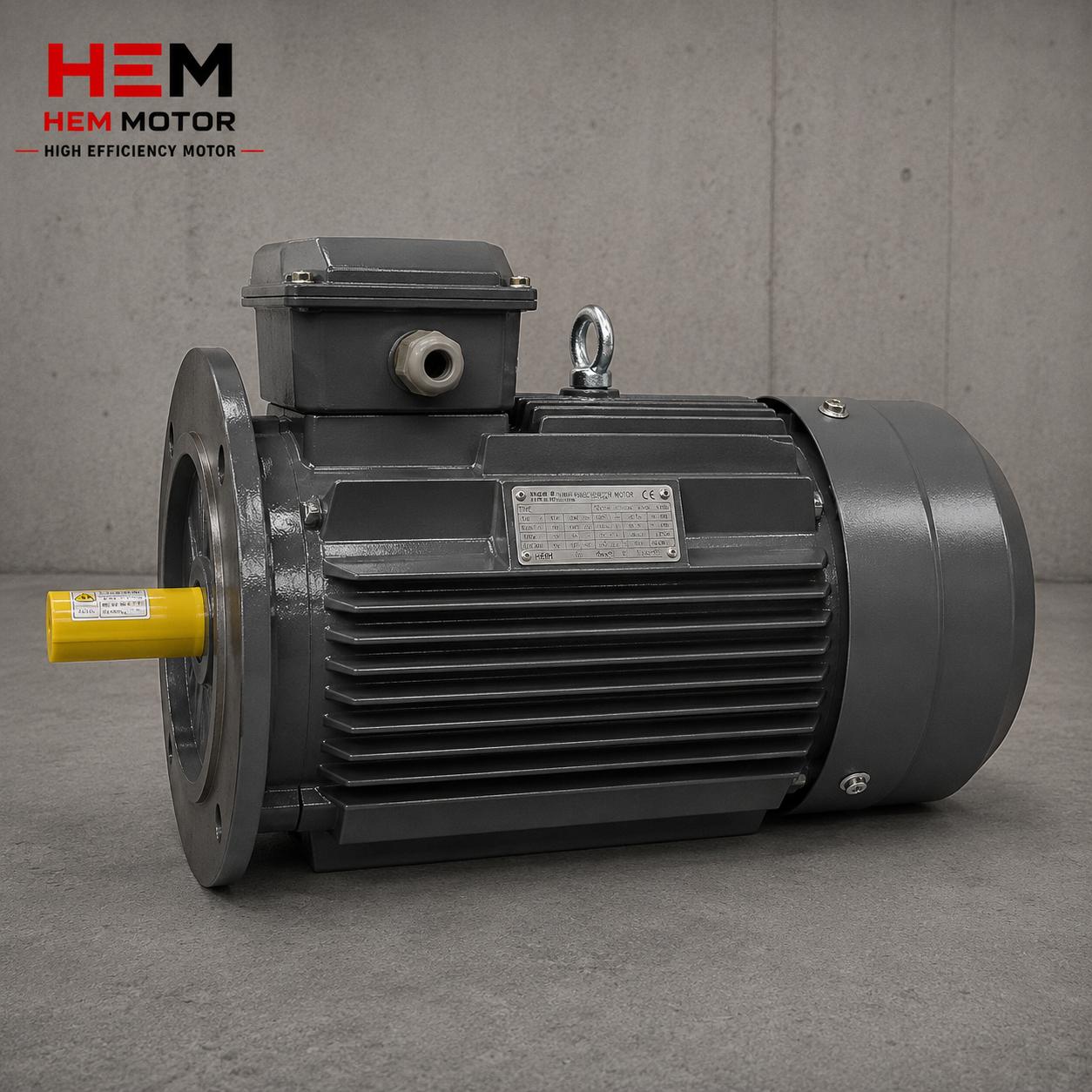
Optimizing Efficiency Class and Sizing Together
Real savings come from making two decisions together: choosing a high efficiency class and sizing that motor at the power closest to its real load. The correct approach is:
- First determine the real power need (load) of the application; start from the pump, fan or machine label or from measurement.
- Add a reasonable service factor margin to this power; without overdoing it, select the nearest standard rating that meets the need.
- Prefer the highest suitable efficiency class available at this power (IE3 or IE4).
- Aim for the motor's operating load ratio to stay in the ideal range (approximately 75-100%).
A motor selected with this approach offers the advantage of both the efficiency class and the correct size together. We addressed the role of the service factor in correct selection in our service factor and overload capacity in IE3 motors article, and calculating motor power for pumps/fans/conveyors in our power calculation article.
Looking Through the Total Cost of Ownership (TCO) Window
The real cost of a motor is far more than its purchase price. The electricity it consumes over its lifetime makes up the majority of total cost in most applications. Therefore, when deciding, you must look not just at the label price but at the total cost of ownership (TCO). We explained step by step how to make the TCO calculation in our how to calculate total cost of ownership in high-efficiency motors? article.
Viewed through the TCO window, both a high efficiency class and correct sizing more than repay the small difference in initial investment over the years. We addressed the return and payback period of replacing an old motor with IE4 in our replacing an old standard motor with IE4: payback period article with a real consumption calculation. You can examine the difference between nameplate efficiency and field efficiency, and how to correctly calculate real savings, in our difference between nameplate and field efficiency article.
Together with a Frequency Drive: Extra Savings in Pumps and Fans
In variable-load applications like pumps and fans, using the high-efficiency motor together with a frequency drive (VFD) increases savings further. The drive slows the motor according to the load at the moment of need, preventing unnecessary energy consumption. We addressed the savings potential of this combination in pumps and fans in our high-efficiency motor + frequency drive: energy savings in pumps and fans article. But here too sizing keeps its importance; a drive does not magically make an incorrectly sized motor efficient.
We explained when the IE4 threshold is reached in pump, fan and compressor applications in our IE4 threshold in pumps, fans and compressors article, and where efficiency losses are reduced in an IE4 motor in our efficiency losses in IE4 motors: iron, copper and friction loss article.
The Regulatory Framework in Efficiency and Sizing
In Turkiye and the EU, efficiency class is no longer just a preference but a legal requirement in most power ranges. IE3 has become mandatory for DOL (direct-on-line) three-phase motors between 0.75-1000 kW, and IE4 in certain power ranges. This regulation clearly defines which motor is required from which date. Considering the legal thresholds when selecting the correct efficiency class prevents future non-compliance. We provided which power is subject to which class in a table in our IE3 efficiency class mandate: which class is required at which power? article.
Sizing is also indirectly related to regulation, because efficiency is measured at certain load points; the motor running at those points is necessary both to reach the legal efficiency value and to capture real savings. So buying the high efficiency class is the first step, while reaching the efficiency that class promises in the field is possible only with correct sizing. Making the two decisions together is the soundest path for both regulatory compliance and real savings.
Which Facility Should Get Efficiency Improvement First?
Replacing all motors at once is not possible for most businesses. Therefore prioritization matters. The motors that run the most hours, have the highest power and are the oldest (low-efficiency) should be the first target, in terms of both efficiency class and correct sizing, because the gain is greatest there. A continuously running pump or fan motor provides much faster payback than a motor running a few hours a day. We addressed the role of high-efficiency motors in reducing carbon footprint in our reduce your facility's carbon footprint with high-efficiency motors article, and measuring and documenting annual savings in our measuring and documenting annual energy savings in high-efficiency motors article. When prioritizing, evaluating both the efficiency class and the load ratio of each motor together lets you achieve the highest savings on a limited budget.
Correct Efficiency and Correct Size with HEM Motor
As HEM Motor, with the manufacturer experience we have gained since 1979, we do not merely sell a high-efficiency-class motor; we determine the power truly suited to your application together. Our IE3 electric motor and IE4 electric motor options are offered in a wide power range from 0.25 kW to 355 kW and at different speeds. You can examine all high-efficiency electric motors and mounting types on our products page, and all our guides on high-efficiency motors in our high-efficiency motors section. To determine the efficiency class of your existing motors, our facility motor inventory and efficiency class identification article also guides you.
Frequently Asked Questions
I bought an IE4 motor but the savings aren't as much as I expected, why?
The most common reason is running the motor far below its real load. The high efficiency value applies while the motor runs at a suitable load ratio (approximately 75-100%). If the motor runs at half load, for example, both efficiency and power factor drop and the expected savings do not materialize. The solution is to size the motor at a power suited to the real load, and to use a frequency drive in variable-load applications. So correct sizing is just as critical a factor as the efficiency class.
Does raising the efficiency class or downsizing the motor save more?
The two solve different problems, and the best result comes from applying both together. If the motor is sized to suit its real load, raising the efficiency class provides direct savings. If the motor is oversized, you must first drop to the correct power; otherwise the return of the high efficiency class is largely lost. The correct approach is to first determine the real load and select the correct power, then prefer the highest suitable efficiency class at that power.
How do I tell whether my existing motor is the correct size?
You can approximately determine the real load ratio by measuring the current the motor draws. If the current it draws is far below the nameplate current, the motor runs at low load, meaning it is oversized. In this case, a lower power rating can be considered during replacement. Creating a motor inventory to see the general state of the motors in your facility and identifying their efficiency classes clearly shows which motors can be improved in terms of both size and efficiency.
Get a Quote
Let us determine the right efficiency class and the right power for your business together. Share your application, real load and operating hours; we will recommend an IE3/IE4 motor that is both efficient and correctly sized. For an immediate quote, reach us through our contact page or call our line at +90 (532) 345 49 86. HEM Motor maximizes your energy savings with both efficiency class and correct sizing.