English
 Türkçe

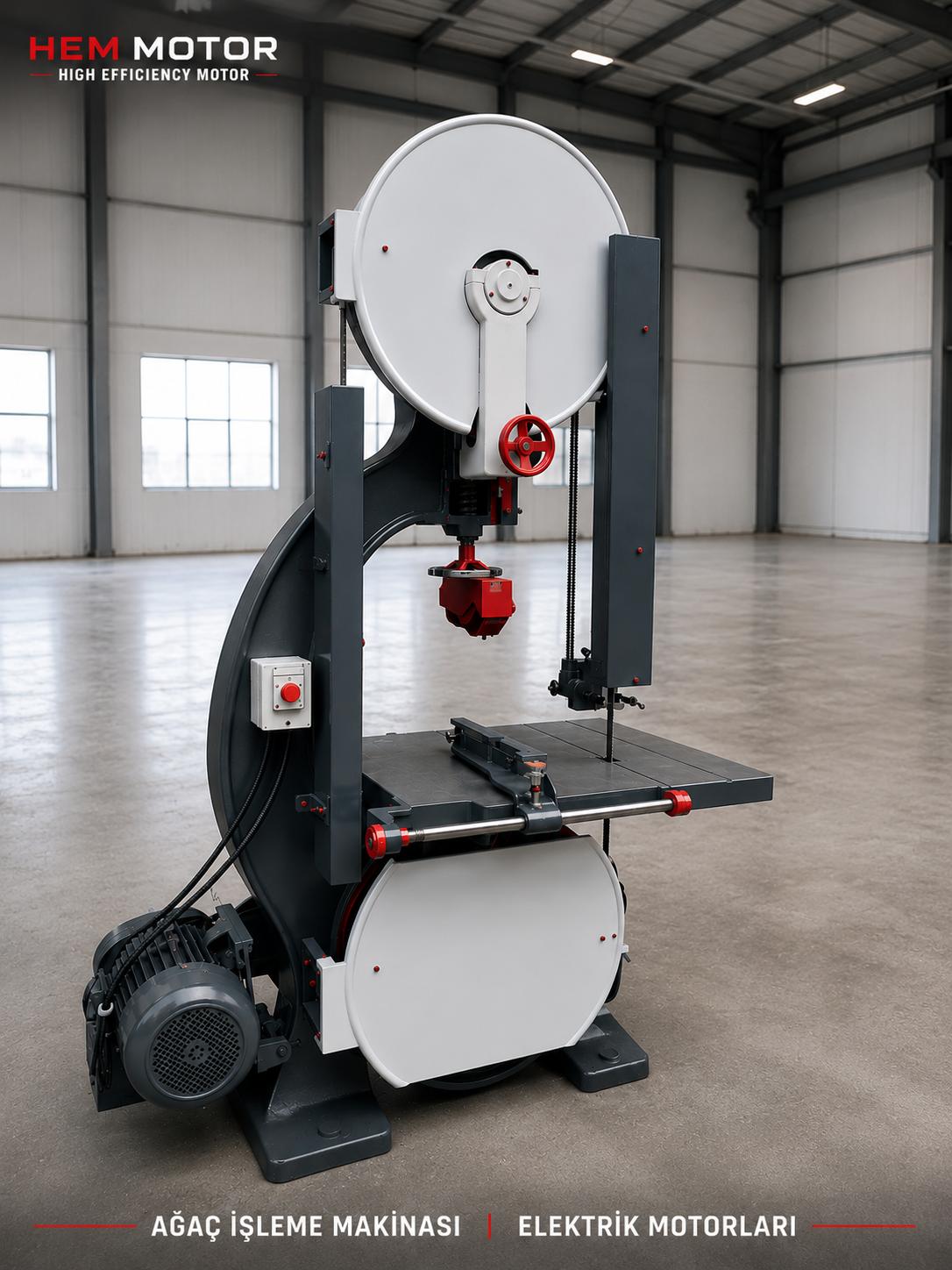

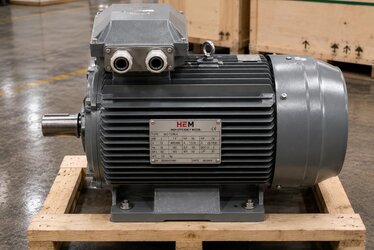
Before ordering a cast iron framed motor, the first question sounds simple but in practice causes the most mistakes: is the frame of the motor you hold or are being offered really cast iron, or is it aluminium? Because the frame material directly determines the motor's rigidity, heat dissipation, corrosion behaviour, impact resistance and ultimately its service life in the field. The most reliable, fastest and most document-backed way to verify this is to correctly read the motor's rating plate and type label. In this article, as HEM Motor, we explain step by step every field of the rating plate on cast iron motors, how to decode the type code, how to verify the frame material from the label and the type code, and how to confirm IEC ratings (kW, speed, voltage, current, cosφ, efficiency), IP protection, IM mounting, insulation class and casting grade/quality before ordering.
Why Is the Rating Plate the Basis of Pre-Order Verification?
The rating plate is a legal and technical document where the manufacturer declares the motor's guaranteed operating values. IEC 60034-1 defines the minimum information that must appear on the plate. On a cast iron motor, the plate carries not only electrical values but also the mechanical identity of the frame: frame size, mounting arrangement, protection class and often a type code that implies the frame material. During ordering, simply saying "10 kW cast iron motor" is not enough, because the same power is produced in several speeds, pole numbers, frame sizes and mounting arrangements. Reading the plate correctly prevents the wrong motor arriving on replacement orders and avoids mounting incompatibility.
For the reasons behind choosing a cast iron frame and a comparison with aluminium, our article Cast Iron or Aluminium Frame? is a good start. To verify the efficiency and IE code on the nameplate in the field, our guide Reading Efficiency Value and IE Code on the Nameplate is detailed.
Rating Plate Fields and Their Meaning
The table below summarises the fields you will find on a typical cast iron IEC motor rating plate, their symbol and what each one verifies before ordering. Note every field one by one while reading; a missing field may indicate a non-standard motor or a relabelled plate.
| Plate Field | Symbol/Example | What It Verifies Before Ordering |
|---|---|---|
| Power | P 11 kW | Shaft output power; application demand |
| Voltage / Connection | 400/690V Δ/Y | Grid compatibility, star-delta start option |
| Current | I 21 A | Cable, fuse, contactor sizing |
| Speed | n 1465 rpm | Pole number (4-pole), slip |
| Frequency | f 50 Hz | Grid frequency, 60 Hz check for export |
| Power factor | cosφ 0.84 | Reactive power, compensation |
| Efficiency class | IE3 / IE4 | Regulatory compliance, energy cost |
| Insulation class | Ins. Cl. F | Winding thermal capability, life |
| Protection class | IP55 | Dust/water protection, environment fit |
| Mounting | IM B3 / B5 / B35 | Foot/flange fit, attachment to machine |
| Frame size | Frame 160M | Shaft diameter, foot hole pitch, replacement fit |
| Duty type | S1 | Continuous/intermittent suitability |
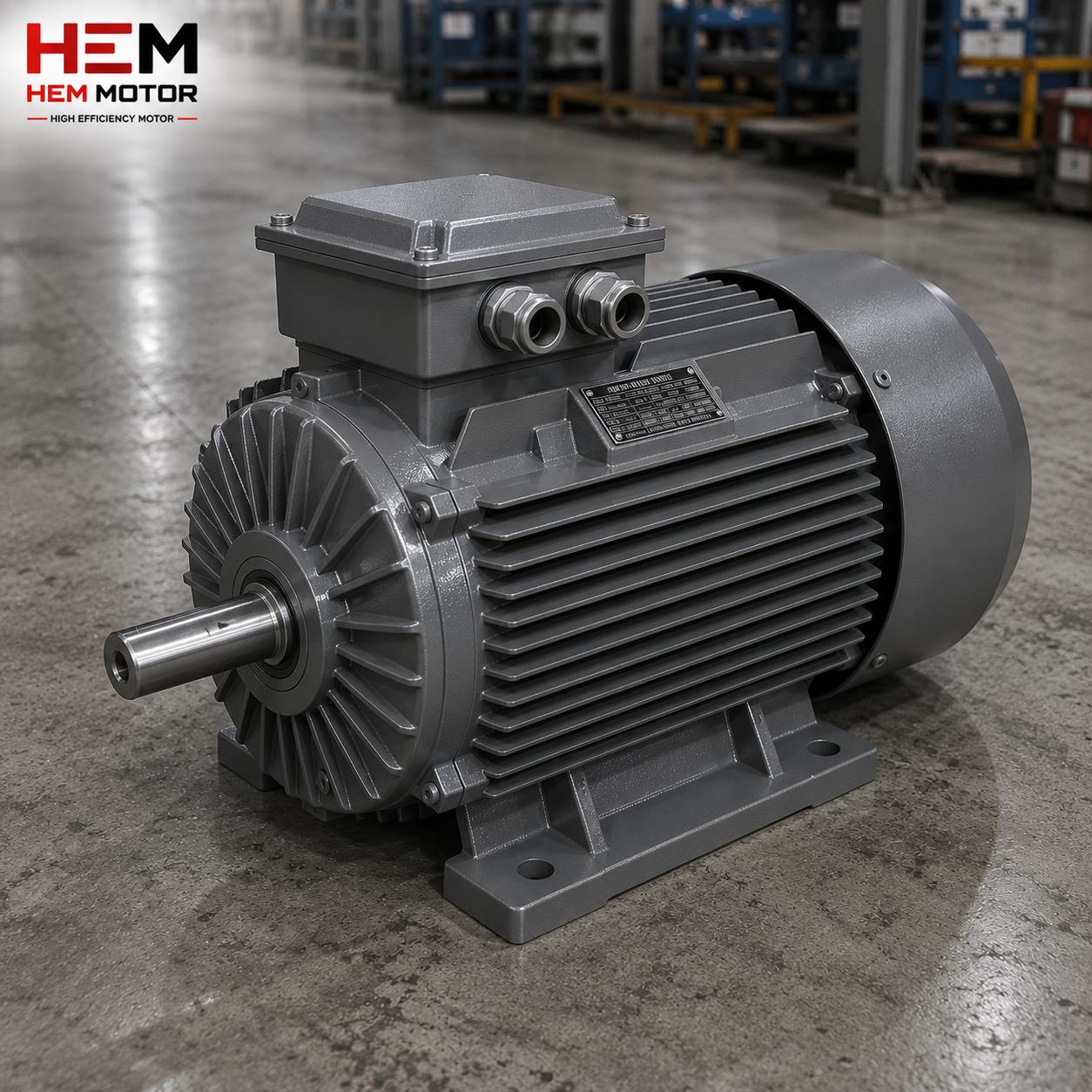
Verifying Frame Material From the Type Code
Many manufacturers place a letter or digit in the type code (model code) that implies the frame material. In general, aluminium framed aluminium series and cast iron framed series have different type prefixes. However, since the type code varies between manufacturers, it should not be considered sufficient on its own; always cross-verify it with the frame size, weight and casting mark on the plate. In practice, three pieces of evidence are evaluated together to confirm the frame material:
- Type code prefix: Check the manufacturer catalogue for how aluminium and cast iron series are coded (e.g. a series letter).
- Motor weight: At the same frame size, a cast iron motor is markedly heavier than aluminium; the plate or catalogue weight is a strong indicator.
- Casting mark/number on the frame: Cast iron frames carry a cast-in mark for casting batch traceability.
For the casting mark and traceability on the frame, see our article Casting Mark and Number on the Frame; to verify frame size against power, see Frame Size and Power Matching.
Casting Grade / Material Quality: EN-GJL (GG20/GG25)
The quality of a cast iron frame does not end with it "being cast iron"; the casting's EN-GJL grade (formerly GG) defines the material quality. GG20 (EN-GJL-200) and GG25 (EN-GJL-250) grades are commonly used; the number roughly indicates the tensile strength (MPa). A higher grade means better rigidity and vibration damping. The casting grade is not always printed on the plate; in that case, request the manufacturer's technical data sheet or material certificate. For how this grade difference affects selection, our article EN-GJL Grade (GG20/GG25) Difference addresses exactly this topic.
| Property | EN-GJL-200 (GG20) | EN-GJL-250 (GG25) |
|---|---|---|
| Approx. tensile strength | ~200 MPa | ~250 MPa |
| Rigidity / vibration damping | Good | Higher |
| Typical use | Standard industrial motor | Heavy/impact load, large frame |
| Cost | Lower | Higher |
To assess casting quality through porosity and wall thickness, our article Casting Quality: Porosity and Wall Thickness is useful.
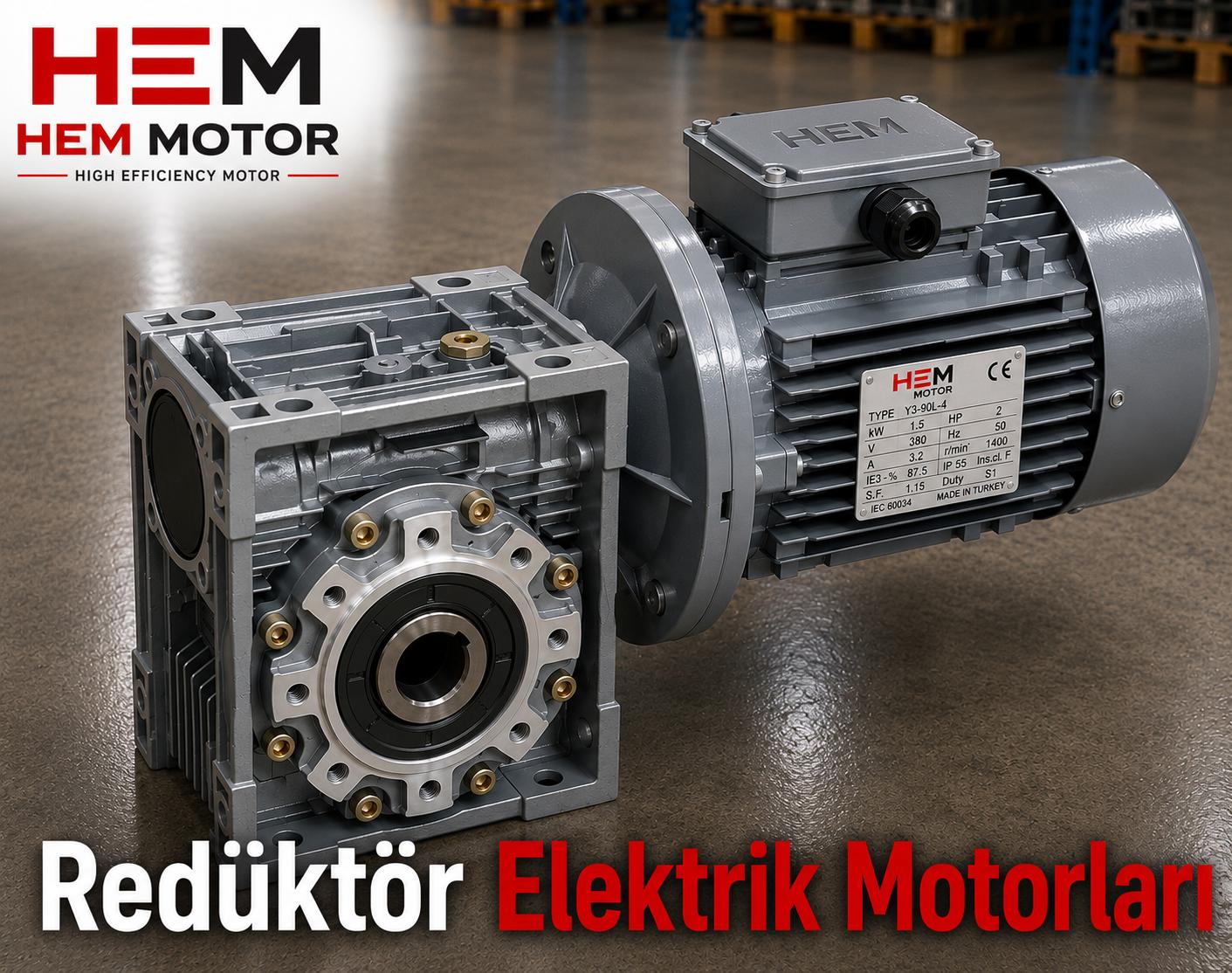
Confirming IP, IM and Insulation Class From the Plate
Since cast iron motors are usually used in heavy industry, open field and harsh environments, three plate fields are especially critical:
- IP protection class: Standard IP55 protects against dust and splashing water. Dusty/wet environments may require IP65/IP66.
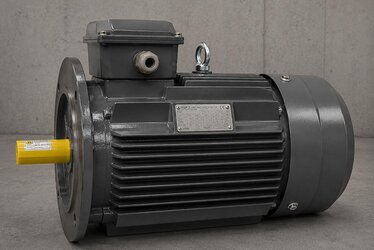
- IM mounting arrangement: Codes like IM B3 (foot), B5 (flange), B35 (foot+flange) define attachment to the machine. On replacement orders this must match.
- Insulation class (F/H): Determines the winding's thermal capability and temperature rise margin; class H gives margin in hot environments.
For insulation class and cast iron frame selection in hot and dusty environments, see Motors in Hot and Dusty Environments. For terminal box IP protection and correct gland selection, Terminal Box and Cable Connection is complementary.
Pre-Order Verification Checklist
- Take a sharp photo of the plate so all fields are legible.
- Note power, speed (poles), voltage/connection and frequency.
- Match frame size and mounting (IM) with the motor to be replaced.
- Verify frame material via type code + weight + casting mark.
- Request a data sheet for casting grade (EN-GJL) and insulation class if needed.
- Check that the IP protection class suits the environment.
Decoding Speed, Pole Number and Slip From the Plate
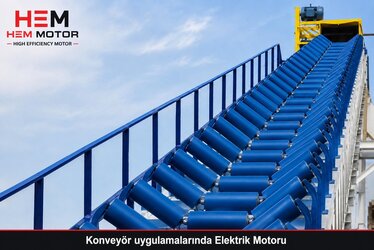
The speed value on the rating plate directly reveals the motor's pole number and therefore its suitability for the application. On a 50 Hz grid the synchronous speed is 3000 rpm for 2 poles, 1500 for 4 poles, 1000 for 6 poles and 750 for 8 poles. If you see a value like 1465 rpm on the plate, this is a 4-pole motor and the difference (1500-1465) is the slip under load. On cast iron motors the pole choice is made according to the character of the driven load: variable-torque loads such as fans and pumps are mostly 2 or 4 poles; loads requiring high starting torque such as conveyors, crushers and mixers are chosen in 4 or 6 poles. Misreading the speed on the plate causes a completely different pole number to arrive on the replacement order, making the machine run too fast or too slow. For this reason the speed must always be converted to a pole number and noted before ordering.
To better understand the relationship between starting torque and load character, our article Rated and Starting Torque helps; for cable, fuse and contactor selection from the rated current, Rated Current: Cable, Fuse and Contactor Selection completes the ordering decision.
Knowing the Difference Between the Plate and the Type Label
Many users look at a single label on the motor and assume all information comes from there. Yet cast iron motors usually have two separate information carriers. The first is the main rating plate, riveted or bonded to the frame, containing electrical-mechanical rated values. The second, often smaller, is the type/serial label carrying the serial number, production date, batch number and sometimes a barcode. In ordering and warranty processes this second one is at least as important as the first, because the manufacturer tracks warranty claims by serial number. A worn, reprinted or hand-written label may indicate the motor is second-hand, has been rewound or has had its label changed, and should be evaluated carefully.
When assessing the risk of a second-hand or rewound motor, our article Rewind or Buy New? helps; to tie label control to stock entry during incoming inspection, Delivery, Packaging and Acceptance Inspection offers practical checklists.
Frame Size and Mechanical Replacement Compatibility
The most common problem when replacing a cast iron motor is that, even with correct electrical values, the motor does not fit the machine mechanically. The cause is a mismatch in frame size and the associated shaft diameter, shaft length, foot hole pitch and flange dimensions. The IEC standard defines frame sizes from 56 to 355; each frame corresponds to a specific shaft diameter and mounting dimension. If you see a frame value like "160M" on the plate, the number expresses the distance from the centreline to the foot base (mm) and the letter the frame length (S/M/L). On a replacement order it is mandatory to match not only the power but also the frame value and mounting arrangement.
| Frame | Typical Power (4-pole) | Approx. Shaft Dia. | Mounting |
|---|---|---|---|
| 100L | 2.2 - 3 kW | 28 mm | B3 / B5 / B35 |
| 132M | 5.5 - 7.5 kW | 38 mm | B3 / B5 / B35 |
| 160M/L | 11 - 15 kW | 42 mm | B3 / B5 / B35 |
| 180M/L | 18.5 - 22 kW | 48 mm | B3 / B5 / B35 |
| 200L | 30 kW | 55 mm | B3 / B5 / B35 |
To apply the shaft and frame table to a replacement order, our article Shaft Diameter and Frame Table (IEC 56-355) helps; for imported machines requiring NEMA-IEC matching, NEMA and IEC Motor Matching is directly relevant.
Frequently Asked Questions
How do I verify the frame material if it is not printed on the plate?
Evaluate the type code prefix, motor weight and the casting mark on the frame together. A markedly higher weight at the same frame size is a strong sign of cast iron. For definite confirmation, request the manufacturer's technical data sheet or material certificate.
Do the letters in the type code mean the same for every manufacturer?
No. The type code is manufacturer-specific; a letter denoting aluminium in one brand may differ in another. Therefore, do not rely on the type code alone, cross-verify it with the plate and catalogue.
Which fields are essential from the plate for a replacement order?
Power, speed/poles, voltage-connection, frame size and mounting arrangement (IM) are mandatory. If these do not match, the motor may not fit the machine mechanically or electrically.
Source the Right Cast Iron Motor Quickly
As HEM Motor, we perform the plate and type code verification for you on cast iron framed motors and clarify all values before ordering, including frame material, casting grade, IP/IM and insulation class. Share a photo of your motor's plate; let us identify the correct replacement and provide a tailored quote for fast delivery from manufacturer stock so you can source the right motor with confidence. Contact us to request a quote.