English
 Türkçe


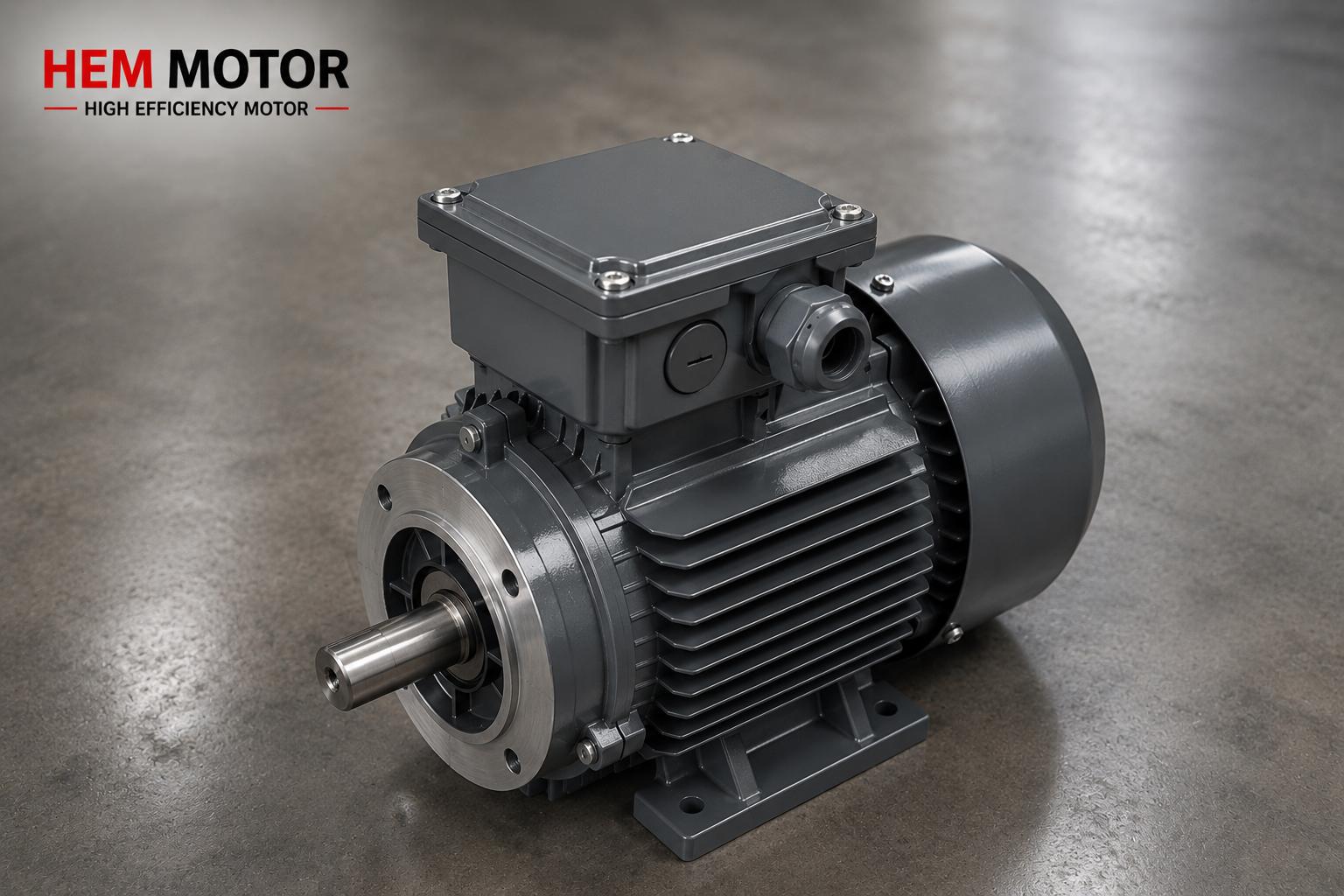

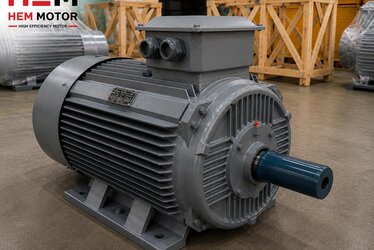
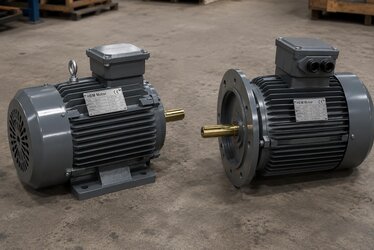
The most important, yet visually hardest to detect, difference that distinguishes one cast-iron framed electric motor from another is casting quality. Two motors may be of the same IEC frame size, the same kW value and the same protection class; however, while one runs vibration-free and cool for years, the other may shorten its life with premature cracking, overheating and noise. Behind this lie metallurgical factors such as the casting quality of grey cast iron (GG / EN-GJL), porosity and slag defects, and the homogeneity of wall thickness. In this article, we address from a buyer's perspective how you can evaluate casting quality at the point of purchase, which defects lead to what, and the risks carried by cheap/low-quality casting.
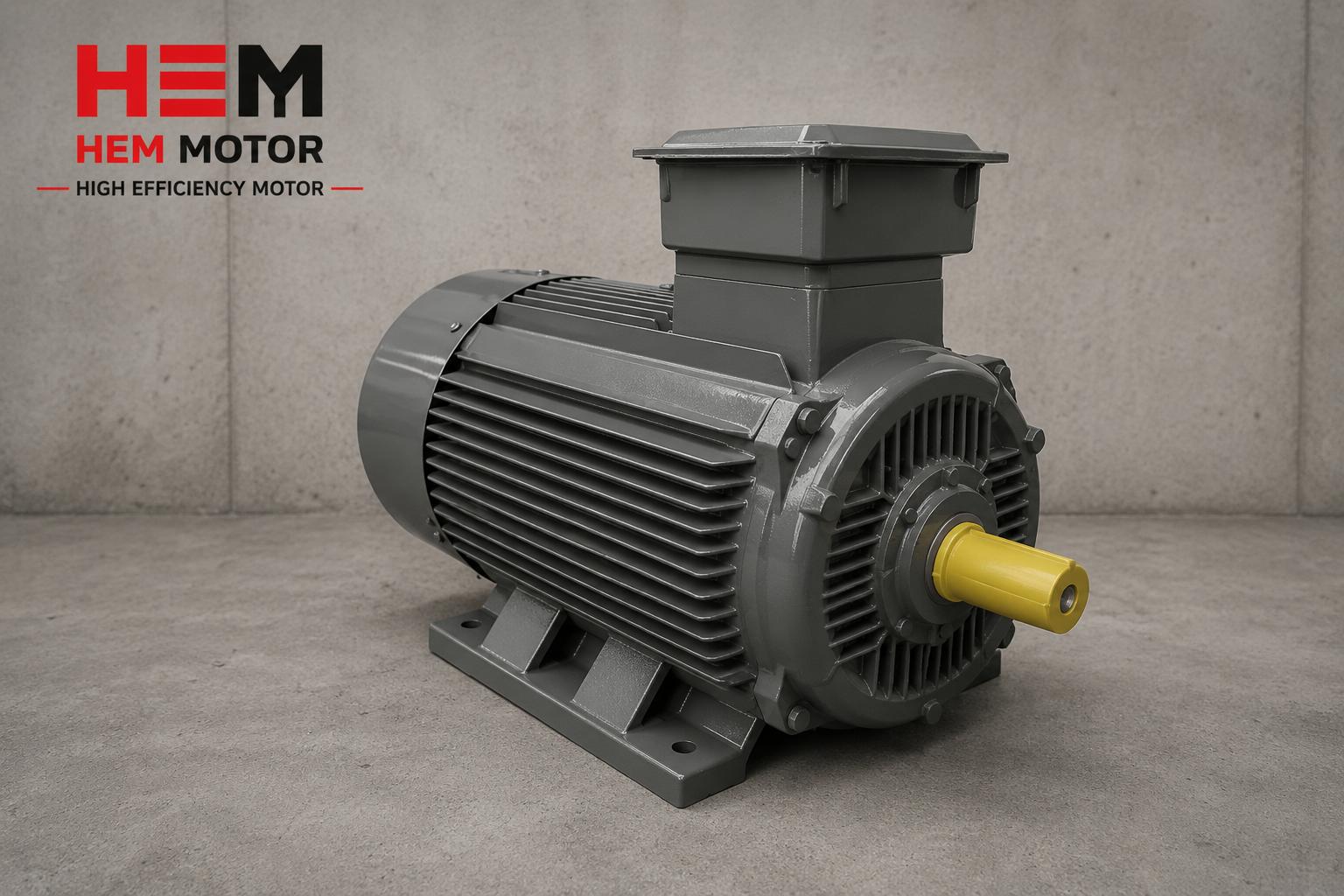
Why Is Grey Cast Iron (GG / EN-GJL) Preferred?
The most commonly used material in a motor frame is grey cast iron; it is coded in the standards as EN-GJL (formerly GG). The reason grey cast iron is ideal for a motor frame is the vibration-damping capability of the lamellar graphite structure within it. This material absorbs the mechanical and magnetic vibrations that occur during operation, enabling the motor to run more quietly and more stably. It also offers high compressive strength and good heat conduction; the frame plays an important role in expelling the heat generated in the winding through the fins to the outside.
The superiority of the cast-iron frame over aluminium lies precisely in these points: higher rigidity, better vibration damping and longer service life under heavy/impact loads. We covered the difference between cast iron and an aluminium frame and which is correct in which environment in detail in our article cast iron or aluminium frame?; and the importance of frame rigidity under impact loads in our article impact resistance and frame rigidity in a cast-iron framed motor. However, all of these advantages depend on the casting being done correctly and flawlessly; a bad casting can negate all the material's advantages.
Porosity and Slag Defects: The Invisible Danger
Porosity is the presence of gas cavities or shrinkage cavities within the metal during casting. This defect, commonly called "porosity", leaves small cavities invisible to the eye within the frame's wall thickness. These cavities create three serious problems: first, they lower the frame's mechanical strength, creating crack initiation points under impact and vibration loads; second, they interrupt the heat conduction path, weakening heat transfer from the winding to the frame and causing the motor to run hotter; third, they threaten the IP protection class, because a pore passing all the way through the wall can open the door to moisture and dust seeping into the frame.
Slag defects, on the other hand, are oxide and mould residues mixed into the metal during casting; these too create weak zones within the material. Porosity and slag defects are seen more frequently in cheap castings, because quality casting requires the correct melting temperature, good degassing, controlled cooling and a clean mould. Each of these processes requires additional cost and expertise; under pressure to cut costs, these steps are usually the first to be sacrificed. Scrap quality, melting control and foundry discipline directly determine the rate of porosity and slag. For this reason, casting quality is actually a mirror of the manufacturer's production discipline; a good casting is a strong sign that all the remaining components of the motor have also been produced with care. To understand how these defects affect IP protection, our article on selecting the IP protection class in an electric motor helps; and the role of condensate drainage in a moist environment is complemented by our article condensate drain hole in a cast-iron motor.
The Effect of Porosity on Vibration and Service Life
A porous frame loses its vibration-damping capability and, instead of absorbing vibration, can amplify it. This shortens bearing life, increases noise and, in the long run, can go as far as cracking. We covered the acceptance values for vibration and balance in a motor in our article vibration and balance in an electric motor: ISO 10816/20816; and the selection of a low-noise motor in our article noise and vibration in an electric motor. A quality, pore-free casting is a precondition for keeping these values within acceptance limits for many years.
Wall Thickness Homogeneity: The Most Distinct Sign of Quality
Wall thickness is the thickness of the frame and is perhaps the most critical indicator of casting quality. In a good casting, the wall thickness must be homogeneous around the frame, that is, close to one another at every point. A wall that is not evenly distributed, thin on one side and thick on the other, shows that the mould and core positioning has been done poorly. Areas left thin are both mechanically weak and prone to cracking by accumulating tensile stresses during cooling.
Wall thickness determines not only strength but also the motor's weight and heat capacity. A sufficient and homogeneous wall gives the frame good thermal mass; this means the winding temperature rises more slowly during short-term overloads. In applications that frequently start and stop and have high starting current, this thermal mass acts as a buffer that protects the motor from sudden heating; the frame takes on part of the temperature and protects the winding. An excessively thinned, "economised" casting, on the other hand, lightens the motor but lowers its thermal durability and strength. We covered the relationship between frame size, weight and wall in our article cast-iron motor frame sizes (IEC 56-355): weight and transport; and frame machining tolerance and centring in our article machining, tolerance and centring in a cast-iron motor frame.
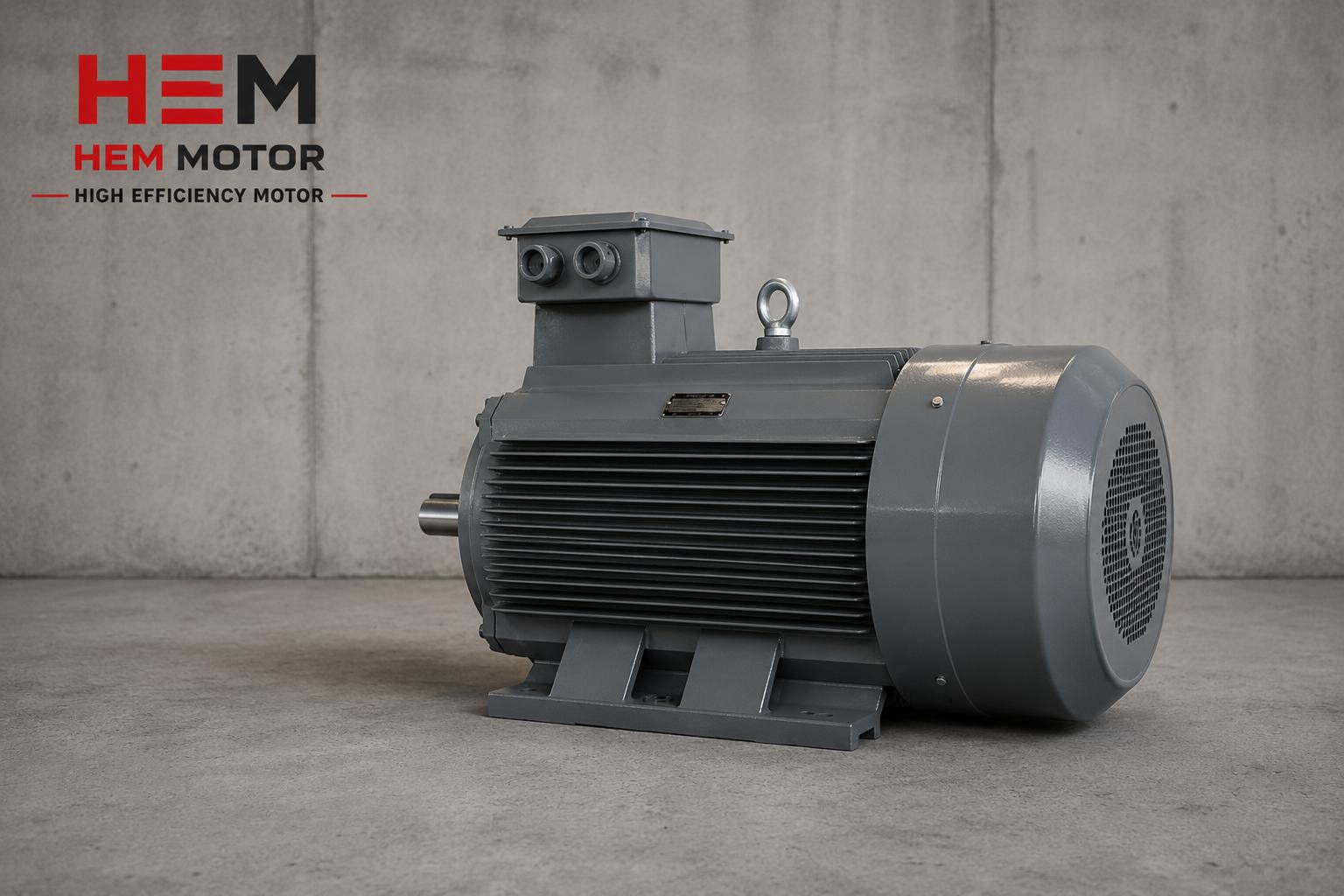
The Effect of Casting Quality on Vibration Damping, Strength and Heat Dissipation
A good casting performs three functions at a high level at once. In terms of vibration damping, solid and pore-free grey cast iron absorbs vibrations thanks to its lamellar graphite structure; this means quieter operation and longer bearing life. In terms of strength, a homogeneous wall and flawless internal structure enable the frame to remain crack-free under heavy and impact loads; in applications such as conveyor drives, crushers and presses, this directly reduces downtime. In terms of heat dissipation, a continuous and void-free metal path enables the heat generated in the winding to be transferred quickly to the cooling fins and to the outside.
The design and cleaning of the cooling fins are also part of this heat dissipation; quality casting produces sharp and even fins. We covered the effect of fins and dirt accumulation on efficiency in our article cooling fins and dirt accumulation in a cast-iron motor; and power reduction (derating) at high ambient temperature in our article cast-iron motor at high ambient temperature. You can find the selection of the insulation class in a hot and dusty environment in our article motor in a hot and dusty environment.
The Relationship Between Casting Quality and Oil Seal / Sealing
Casting quality affects not only the body of the frame but also the quality of the bearing housings and seal seating surfaces. A porous or poorly machined bearing housing can lead to the oil seal not seating fully and leaking over time; this means dirt entering the motor in a dusty and moist environment. We covered the role of sealing and the oil seal in our article oil seal and sealing in a cast-iron motor; and the correct machining of the flange type and hole dimensions in our article flange type (FF/FT) and hole dimensions in a cast-iron motor. A quality casting ensures that these machined surfaces are pore-free and of dimensional accuracy.
Cast Iron or Steel Construction? Casting Quality at High Power
In high-power motors, the frame can also be produced as a steel construction (welded sheet) instead of casting. While cast iron stands out at medium and high powers with its vibration damping and rigidity advantage, steel construction may be preferred in very large frames. We examined which is correct in which situation in our article cast iron or steel construction frame?. Whichever frame you choose, the decisive factor is production quality; just as a bad casting can, a bad welded construction can also create vibration and strength problems.
The Risks of Cheap and Low-Quality Casting
Markedly cheaper motors of the same kW and frame size can be seen on the market. A significant part of this price difference is often cut from casting quality: thinner wall, uncontrolled melting, insufficient degassing and the use of low-quality scrap. The result is a frame that is lighter but more brittle, more porous, runs hotter and has a shorter service life. Such motors may not cause problems at first glance; however, under heavy load, high ambient temperature or impact operation, the risk of premature cracking and failure increases markedly. Especially in continuously impact-loaded applications such as crushers, mills, presses and heavy conveyors, frame quality is directly reflected in plant downtime; a motor failure can mean the stoppage of not only the motor but the entire line.
Another risk created by low-quality casting is corrosion and surface quality; a porous surface prevents paint and cataphoresis coating from adhering well, accelerating corrosion. We covered corrosion protection in our articles corrosion protection in cast-iron framed motors and painting and cataphoresis coating in a cast-iron motor; and the selection of protection in marine/salty environments in our article cast-iron motor in marine and coastal facilities. To fully evaluate motor service life and the causes of premature failure, our article electric motor service life and the 7 causes of premature failure is a good starting point.
Practical Ways to Assess Casting Quality at Purchase
As a buyer, you can read the signs that indicate quality even without a laboratory test. Look at the surface quality: a smooth, even and sharp-lined casting is usually a sign of a good mould and a controlled process; excessively rough, blistered or repair-marked surfaces should raise suspicion. The sound heard when you lightly tap the frame; a solid, dense casting gives a clear and full sound. Pay attention to weight: a frame abnormally light for the same IEC size may be a sign of a thinned wall. It is also important that machined surfaces such as the terminal box, feet and flange are clean and pore-free.
It is healthiest to include these checks in the acceptance inspection during delivery. We covered damage and nameplate checks at stock entry in our articles electric motor delivery and acceptance inspection and transport, packaging and stacking of a cast-iron framed motor. You can find the signs of bearing and housing quality in our article bearing and housing life in cast-iron motors. You can reach our entire range of cast-iron framed motors from our homepage.
It must not be forgotten that casting quality is not a feature on its own in the purchasing decision, but a foundation that determines the entire service life of the motor. The right insulation class, quality bearings, a solid winding and an appropriate protection class only gain meaning when they are built on a solid frame. For this reason, to avoid the mistakes made when buying an electric motor, we recommend reviewing our articles the 7 most common mistakes when buying an electric motor and, to reach the right model, electric motor types and purchasing map. A quality and pore-free casting is a silent assurance that supports all of these decisions, often overlooked but decisive in the long run.
Frequently Asked Questions
Can I detect porosity in a cast-iron motor from the outside?
It is not possible to see all internal porosity with the eye, but there are strong clues: blister or pore marks on the surface, small holes on machined surfaces, an abnormally light frame and a dull/non-ringing sound when tapped are signs of suspicion. A casting that is even, smooth and gives a full sound is usually healthier. In critical applications, it is best to ask the supplier for information about material and casting quality.
Why is wall thickness so important?
Wall thickness determines both mechanical strength and heat capacity. A homogeneous and sufficient wall resists cracking under impact loads and helps the motor stay cool by dissipating winding heat better. An excessively thinned wall lightens the motor but lowers its strength and thermal durability; the risk of premature failure increases especially in heavy duty and at high ambient temperature.
Does it make sense to buy a cheap cast-iron motor?
You need to understand the source of the price difference. If the cheapness has been achieved by cutting from casting quality, although it may look like a saving in the short term, in the long term it brings the risk of vibration, heating, corrosion and premature cracking. In continuously and heavily operating facilities, the downtime cost exceeds the difference in motor price in a short time. For this reason, a quality casting with a homogeneous wall and free of porosity is more economical in the long run.
Get a Quote
Share the ambient conditions and load profile of your application with us; let us determine together the cast-iron framed motor of suitable quality for your need. For a long-lasting motor with quality casting, a homogeneous wall and the correct protection class, you can reach us at +90 (532) 345 49 86 or convey your request through our contact page. Sharing your existing motor nameplate and your operating environment speeds up the correct product match.
Purchasing and Quality Checklist
- Verify that the frame material is grey cast iron (EN-GJL / GG).
- Look at the surface quality: prefer a smooth, sharp-lined casting free of repair marks.
- Be suspicious of abnormally light frames at the same IEC size; this may be a sign of a thinned wall.
- Check that machined surfaces (feet, flange, terminal box seating surface) are free of pores and holes.
- Expect the frame to give a full and clear sound when tapped; a dull sound may indicate porosity.
- For corrosion protection, evaluate the quality of the paint/cataphoresis and the surface preparation.
- Select the IP and insulation class suited to the operating environment (temperature, dust, moisture, impact).
- Carry out an acceptance inspection at delivery; record the damage, nameplate and surface check.