English
 Türkçe

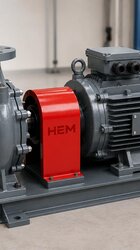
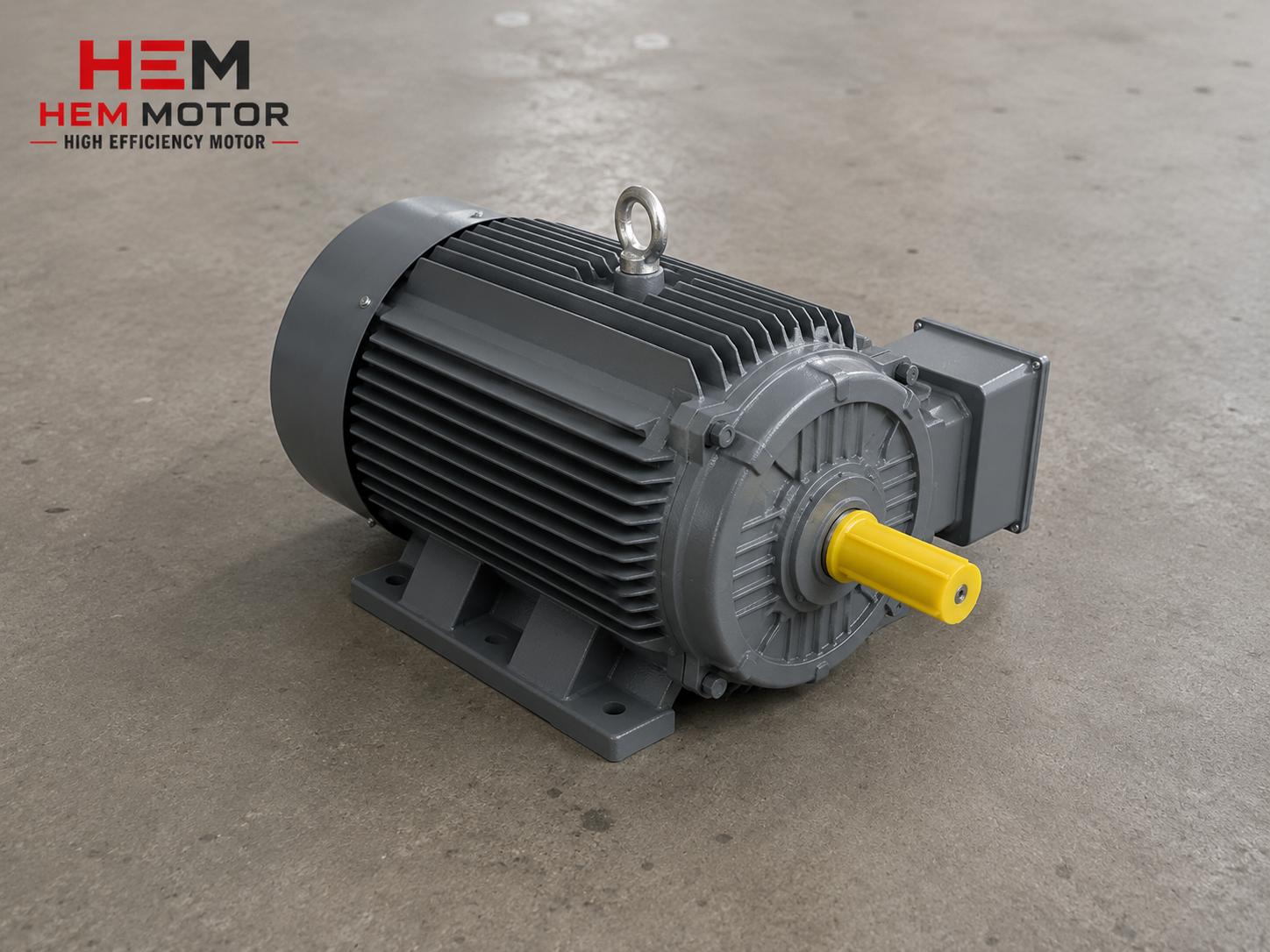

Replacing a failed electric motor in an imported machine looks at first glance like a simple spare-part job; however, if the machine is of North American origin the motor was most likely manufactured to the NEMA standard and cannot be directly swapped with the IEC motors common in Turkey and Europe. NEMA and IEC use different definitions on many points, from frame dimensions to the unit of power, from speed to voltage and mounting code. When these differences are ignored, the ordered IEC motor neither fits mechanically nor runs correctly electrically; the shaft height does not match, the foot holes do not align, the shaft diameter does not match the coupling, or the speed comes out different at 50 Hz instead of 60 Hz. In this article we cover NEMA and IEC motor matching step by step, addressing frame, foot, shaft and flange dimension differences, the HP-kW conversion, the 60-to-50 Hz speed and power effect, voltage differences and mounting code matching, explaining how to correctly replace a failed NEMA motor in an imported machine with its IEC equivalent.
NEMA and IEC: A Fundamental Philosophy Difference
NEMA (National Electrical Manufacturers Association) sets standards in North America, while IEC (International Electrotechnical Commission) sets them in Europe and most of the world. The two systems share the same physics but use different units and different dimension tables. NEMA expresses power in horsepower (HP) and dimensions in inches; IEC expresses power in kilowatts (kW) and dimensions in millimetres. Frame numbers are also coded with different logic.
- Power unit: NEMA HP (horsepower), IEC kW. 1 HP ≈ 0.746 kW.
- Dimension unit: NEMA inches, IEC millimetres.
- Frame code: NEMA e.g. 145T, 213T; IEC by shaft-centre height, e.g. 90, 132, 160.
- Grid: NEMA is typically 60 Hz, IEC predominantly 50 Hz.
For HP-kW matching and quick ordering, our HP-kW matching table for 220V and 380V motors article is a practical reference. To read the motor nameplate correctly, see our reading the motor nameplate content.
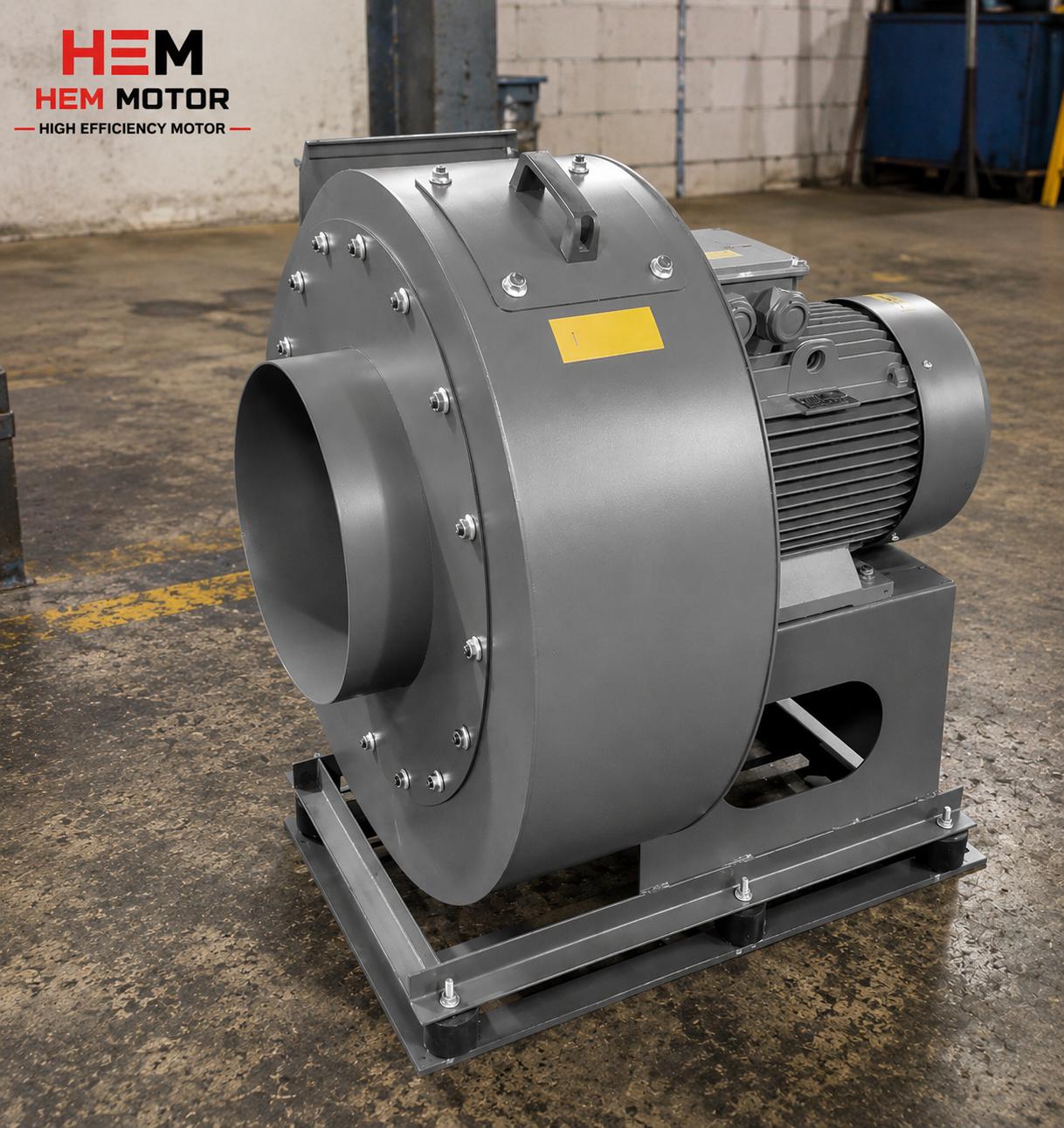
Frame Dimension Differences: Shaft Height, Foot and Shaft
The most critical dimensions that seat a motor mechanically into a machine are: shaft-centre height (the D dimension in NEMA, the H dimension in IEC), foot hole spacing, foot hole diameter, shaft diameter (NEMA U, IEC D), shaft length and key dimension. The last digits of a NEMA frame number code the foot hole position; in IEC the frame number directly gives the shaft-centre height in millimetres.
| NEMA frame | Shaft-centre height (approx.) | Near IEC frame | IEC shaft-centre height |
|---|---|---|---|
| 143T / 145T | ~89 mm (3.5") | 90 | 90 mm |
| 182T / 184T | ~114 mm (4.5") | 112 | 112 mm |
| 213T / 215T | ~133 mm (5.25") | 132 | 132 mm |
| 254T / 256T | ~159 mm (6.25") | 160 | 160 mm |
| 284T / 286T | ~178 mm (7") | 180 | 180 mm |
As the table shows, NEMA and IEC frames are close but not exactly the same; therefore, in a replacement the foot hole spacing, shaft diameter and shaft length must always be measured and compared. For the IEC shaft diameter and frame table, our IEC 56-355 shaft diameter and frame table article, and for shaft, key and coupling matching, our shaft diameter, key and coupling content are helpful.
Flange and Mounting Code Matching
In foot mounted motors the foot hole layout, and in flange mounted motors the flange diameter, pilot diameter and bolt hole layout must match. IEC mounting codes are defined as IM B3 (foot mounted), IM B5 (large flange), IM B14 (face flange), while NEMA uses definitions such as C-face and D-flange. In a replacement the mounting type must be matched exactly; where needed, mechanical compatibility is achieved with an intermediate flange/adapter plate.
- IM B3: Foot mounting; the foot hole layout is critical.
- IM B5: Large flange (holes outside the flange); pilot and bolt layout must match.
- IM B14: Face flange (threaded holes); common at small powers.
- Adapter plate: Can be used for the mechanical transition between NEMA and IEC.
You can find shaft height (H dimension) and axial alignment with replacement selection in our shaft height H dimension and axial alignment article, and the frame, foot and shaft assessment in mechanical compatibility in our mechanical compatibility: frame, foot and shaft content.
HP-kW Conversion and Power Matching
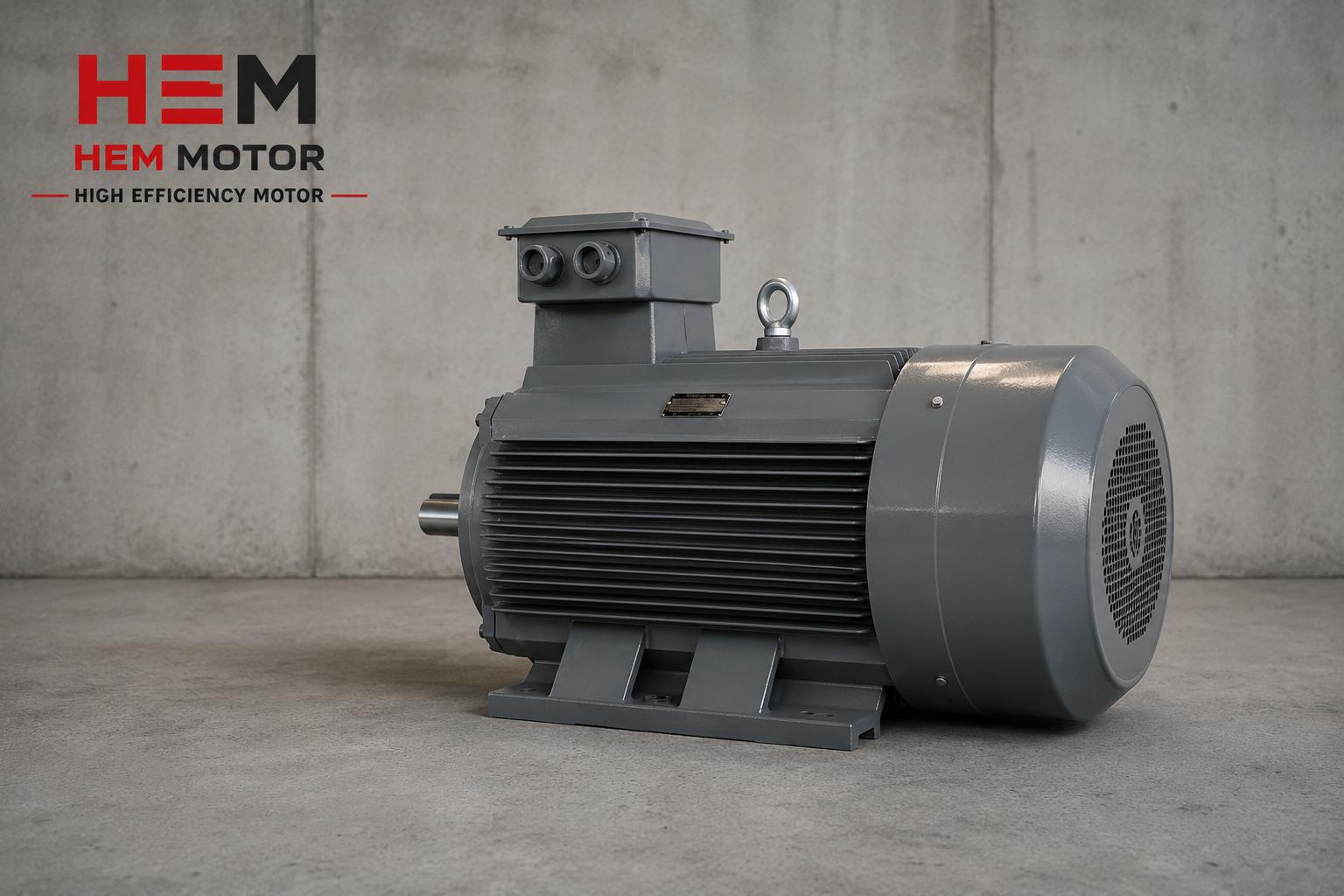
The power of NEMA motors is in horsepower (HP), and that of IEC motors is in kilowatts (kW). The conversion is done with the formula 1 HP ≈ 0.746 kW; however, the rated power steps of the two standards do not exactly coincide. For example, 5 HP is about 3.73 kW and the nearest IEC step, 4 kW, is selected. In a replacement the power is rounded slightly up, so that the motor is not overstrained under load.
| NEMA HP | Calculated kW | Nearest IEC kW |
|---|---|---|
| 1 HP | 0.75 kW | 0.75 kW |
| 3 HP | 2.24 kW | 2.2 kW |
| 5 HP | 3.73 kW | 4 kW |
| 10 HP | 7.46 kW | 7.5 kW |
| 20 HP | 14.9 kW | 15 kW |
| 50 HP | 37.3 kW | 37 kW |
You can find the practical HP-kW matching table in our HP-kW matching table article, and efficiency class and correct power sizing in our efficiency class and correct sizing content.
60 Hz to 50 Hz: Speed, Power and Torque Effect
NEMA motors are typically designed for a 60 Hz grid, IEC motors for 50 Hz. When the frequency changes, the synchronous speed also changes: a 4-pole motor turns at ~1800 rpm at 60 Hz and ~1500 rpm at 50 Hz. This directly affects the drive speed of the machine. Moreover, since the same motor turns at a lower speed at 50 Hz, the power it can deliver also changes. If the speed in the imported machine must be preserved, the speed must be compensated with the pole number, pulley/gear ratio or a frequency drive.
- Speed drop: In the 60-to-50 Hz transition the synchronous speed drops by about 17%.
- Power effect: The same motor runs at a different power-speed point at 50 Hz.
- Compensation method: Pole number change, pulley/gear ratio or speed adjustment with a VFD.
- Torque: The drive torque demand must be re-verified at the new speed.
You can find the effect of the 50/60 Hz difference on speed, power and torque in our motor rated voltage and 50/60 Hz difference article, and 50/60 Hz compatibility in export and multi-country plants in detail in our multi-voltage and 50/60 Hz compatibility content.
Voltage and Connection Differences
NEMA motors are typically produced at North American voltages such as 230/460 V or 575 V; IEC motors at voltages such as 230/400 V or 400/690 V. In a replacement the plant supply voltage and the motor connection arrangement (star/delta) must be carefully matched. A wrong voltage-connection combination causes the motor to either produce insufficient torque or draw excessive current and burn out.
- Clarify the plant supply voltage and frequency.
- Verify the voltage/connection combination on the motor nameplate.
- Adjust the star/delta bridging to the plant where needed.
- Provide flexibility with a multi-voltage/multi-frequency motor.
You can study star/delta connection and voltage selection in our star/delta winding connection and voltage selection article, and rotation direction and phase sequence in our rotation direction and phase sequence content.
Which Dimensions Should You Measure in the Field?
Nameplate information is not always sufficient; especially on old or worn NEMA motors the nameplate may be illegible. In that case the physical dimensions of the motor must be taken directly for mechanical compatibility. To select the correct IEC equivalent, the following dimensions should be recorded in the field:
- Shaft-centre height: The vertical distance from the base to the shaft centre (the most critical dimension for mounting).
- Foot hole spacing: The distance between hole centres lengthwise and crosswise.
- Foot hole diameter: The bolt clearance hole diameter.
- Shaft diameter and length: The coupling/pulley seating diameter and shaft extension length.
- Key dimension: The width and height of the key on the shaft.
- Flange dimensions: On a flange motor, the flange diameter, pilot diameter and bolt layout.
After these dimensions are taken they are compared with the nearest IEC frame; where there is no exact match, compatibility is achieved with an adapter plate, a shaft bush or a coupling change. For the detail of shaft, key and coupling matching, our shaft diameter, key and coupling article offers a practical checklist.
Document Compliance in Import and Purchasing
In a motor replacement in an imported machine, not only mechanical and electrical compatibility but also document and regulatory compliance matter. Motors sold in the Turkish and European markets are expected to meet CE marking, declaration of conformity (DoC) and the applicable efficiency class (MEPS) requirements. When replacing an old NEMA motor with its IEC equivalent, having the new motor meet the efficiency class mandate in force (IE3/IE4) provides an advantage in terms of both legal compliance and energy savings.
- CE and DoC: A declaration of conformity is required for the European market.
- MEPS/efficiency class: The minimum efficiency mandate in force must be met.
- Nameplate verification: kW, speed, efficiency and IE code should be verified in the field.
You can find CE, declaration of conformity and MEPS certification in our CE and declaration of conformity (DoC) and MEPS article, and the efficiency class mandate with a power table in our efficiency class mandate content.
Step-by-Step Matching Checklist
The ordered checklist to follow when replacing a failed NEMA motor in an imported machine with its IEC equivalent:
- Read the old motor nameplate: HP, speed, voltage, frequency, frame, mounting code.
- Convert HP to kW and select the nearest higher IEC power step.
- Physically measure the frame dimensions: shaft-centre height, foot holes, shaft diameter and length.
- Determine the mounting type (foot/flange) and adapter need if any.
- Evaluate the 60-to-50 Hz speed difference; compensate with pole/pulley/VFD if needed.
- Match the plant voltage and connection arrangement.
- Add the efficiency class (IE3/IE4) and environmental conditions.
You can find equivalent selection and IEC connection dimensions in replacement in our equivalent selection and IEC connection dimensions article, and mistakes made when buying a motor in our mistakes made when buying an electric motor content.
Frequently Asked Questions
Can a NEMA motor be directly replaced with an IEC motor?
Most of the time not directly. Although NEMA and IEC frame dimensions are close, they are not exactly the same; the shaft-centre height, foot hole spacing, shaft diameter and length may differ. In a replacement these dimensions must be physically measured and compared, an adapter/intermediate flange plate used if needed, HP converted to kW and the 60-to-50 Hz speed difference compensated.
What happens when a 60 Hz motor runs on a 50 Hz grid?
The synchronous speed drops by about 17%; a 4-pole motor turning at 1800 rpm at 60 Hz turns at about 1500 rpm at 50 Hz. This changes the drive speed of the machine and the deliverable power. If the machine speed must be preserved, the speed must be compensated with the pole number, pulley/gear ratio or a frequency drive.
How do I convert HP to kW?
1 HP is about 0.746 kW. The calculated value is rounded to the nearest higher IEC power step; for example, for 5 HP ≈ 3.73 kW, 4 kW is selected. Rounding the power slightly up ensures the motor is not overstrained under load. The speed and torque demand should also be verified at the new frequency.
NEMA-IEC Replacement Supply with HEM Motor
To replace the failed NEMA motors in your imported machines quickly and smoothly with the correct IEC equivalent, we carry out the frame, shaft, flange, power, speed and voltage matching together. Share the nameplate information and, if possible, the dimensions of the old motor; let us supply the correct IEC motor with an adapter solution, pole/speed compensation and a suitable efficiency class where needed, with fast delivery from the manufacturer. Contact us for stock and fast delivery, and request a quote tailored to your project.