English
 Türkçe


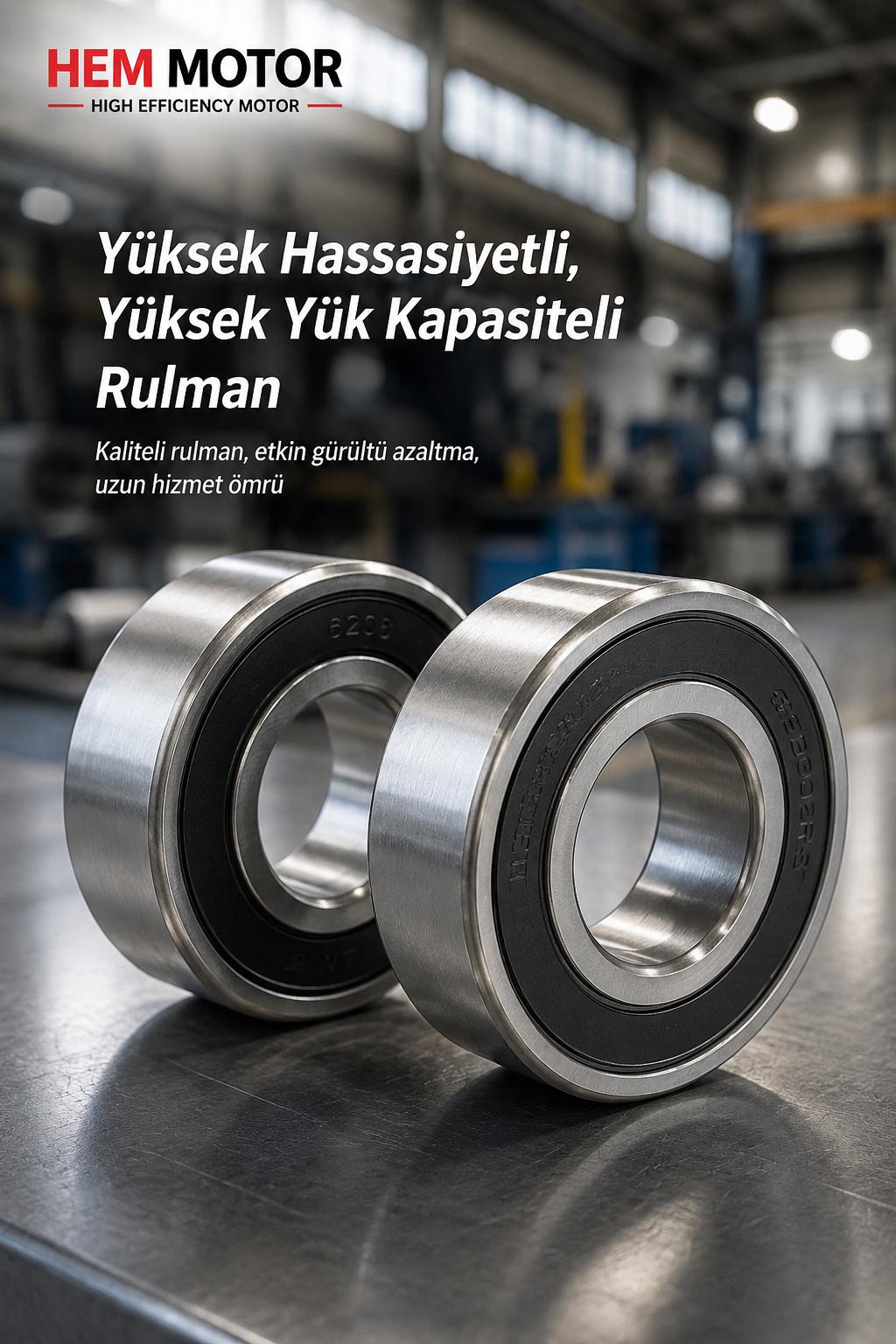

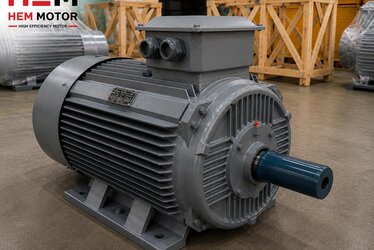
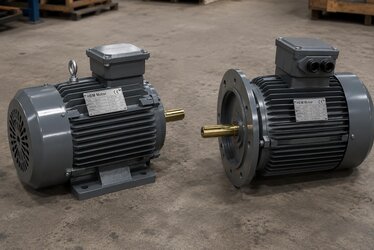
Whether a cast-iron framed motor runs quietly, vibration-free and with a long service life often comes down to a detail you cannot see: the machining quality of the end shield and the tolerance of the bearing seat. No matter how solidly the motor's frame is cast, if the bore where the bearing sits is machined to the wrong tolerance, if concentricity is off, or if the alignment between bearings is lost, the bearing fatigues early, the motor heats up and the vibration level rises. In this article we cover, in engineering terms, the machining quality of the end shield in a cast-iron motor, the bearing-seat fits (such as the ISO H7/j6 system), the relationship between concentricity and quiet operation, the effect of cast-frame rigidity on bearing life, and what to look at for a sound purchasing decision.
What Is the End Shield and Why Is It Critical?
The end shield is the cast part bolted to the frame at each end of the motor, carrying the rotor shaft through the bearing. It is also called the "bearing housing" or "end bell". Its job is not only to hold the bearing; it keeps the rotor properly centred relative to the stator, at the correct air gap and in axial alignment. The better the axis of the bearing bore in the end shield aligns with the axis of the spigot (rabbet) on the frame, the better the motor's concentricity.
In cast-iron framed motors the end shield is usually produced in the same casting grade (for example EN-GJL-200 / EN-GJL-250). The rigidity of the cast frame ensures the end shield does not "flex" under the forces generated during operation. This is one of the biggest advantages of a cast-iron motor over an aluminium-framed one. We compared the differences between cast iron and aluminium frames in detail in our article on cast iron vs aluminium frame.
Which Surfaces Are Critical in End Shield Machining?
- Bearing seat: The cylindrical bore where the bearing's outer ring sits. It is directly affected by tolerance, surface roughness and roundness.
- Spigot/rabbet: The diameter where the end shield seats on the frame; it determines concentricity.
- Bearing shoulder: The face the bearing rests against axially; it must be perpendicular to the shaft.
- Oil-seal seat: Where the sealing element sits; its smoothness affects oil leakage and dust ingress. We covered sealing in our article on oil seal and sealing.
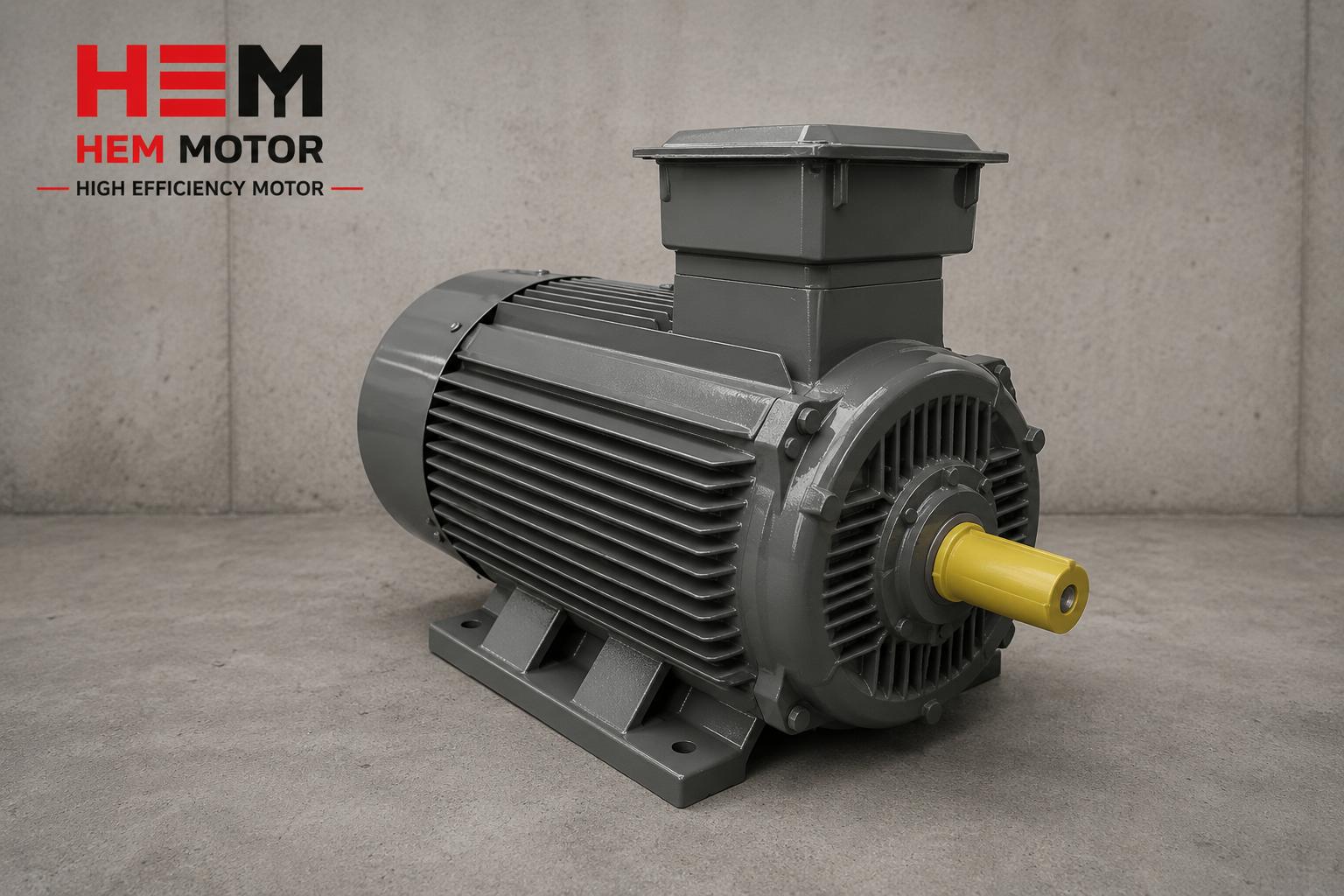
Bearing Seat Tolerance: H7, j6 and the Fit System
For a bearing to operate correctly its outer and inner rings must seat with the correct tightness. This is defined by the ISO fit system. There are two distinct interfaces:
- Shaft - bearing inner ring (rotating load): Since the inner ring rotates with the shaft, an interference fit is needed. The typical shaft tolerance on small/medium motors is j6, k6 or m6. If too loose, the inner ring creeps on the shaft and wears it.
- End shield seat - bearing outer ring (stationary load): Since the outer ring normally stays stationary, a transition/clearance fit such as H7 or J7 is generally applied. This allows the bearing to expand and slide axially when it heats up; otherwise the bearing binds and overheats.
This balance matters: one end of the motor is the locating (fixed) bearing, the other is the non-locating (floating) bearing. The locating bearing carries both radial and axial force, while the floating bearing carries only radial force and allows for thermal expansion of the shaft. The wrong fit choice shortens bearing life. For bearing life and correct selection, our article on bearing life in cast-iron motors is complementary.
Typical Tolerance and Surface Quality Values
| Interface / Feature | Typical tolerance / value | Note |
|---|---|---|
| Shaft bearing seat (rotating inner ring) | j6 / k6 / m6 | Interference fit, tighter with power |
| End shield seat (stationary outer ring) | H7 / J7 | Transition/clearance fit, thermal allowance |
| Bearing seat surface roughness (Ra) | 0.8 - 1.6 µm | Even seating and load distribution |
| Shaft bearing surface roughness (Ra) | 0.4 - 0.8 µm | Proper seating of the inner ring |
| Bearing seat roundness | IT5 - IT6 band | An oval seat causes vibration and noise |
| Bearing shoulder perpendicularity | ≤ 0.02 - 0.03 mm | To avoid loading the bearing at an angle |
The values in the table are references for typical IEC frame sizes; the exact tolerance is set by the manufacturer's technical drawing according to power, speed and bearing type. What matters is that these surfaces are machined in a single setup or with precise referencing so that concentricity is preserved.
The Relationship Between Concentricity and Quiet Operation
How quietly and vibration-free a motor runs largely depends on the quality of its mechanical geometry. When concentricity is lost between the bearing seats, or between the seat and the frame centre, the following problems arise:
- A radial preload is applied to the bearing, causing early fatigue and heating,
- The air gap becomes circumferentially uneven, producing magnetic noise,
- Vibration amplitude increases due to shaft misalignment,
- Uneven contact at the oil seal and early leakage.
Vibration is not just a comfort issue; the ISO 10816 / ISO 20816 standards define acceptable vibration levels. High vibration shortens the life of both the motor and the connected equipment (coupling, gearbox, pump). For vibration measurement and acceptance values, see our article on vibration, balance and ISO 10816 acceptance. For choosing a low-noise motor, our guide on noise and vibration low-sound selection is useful.
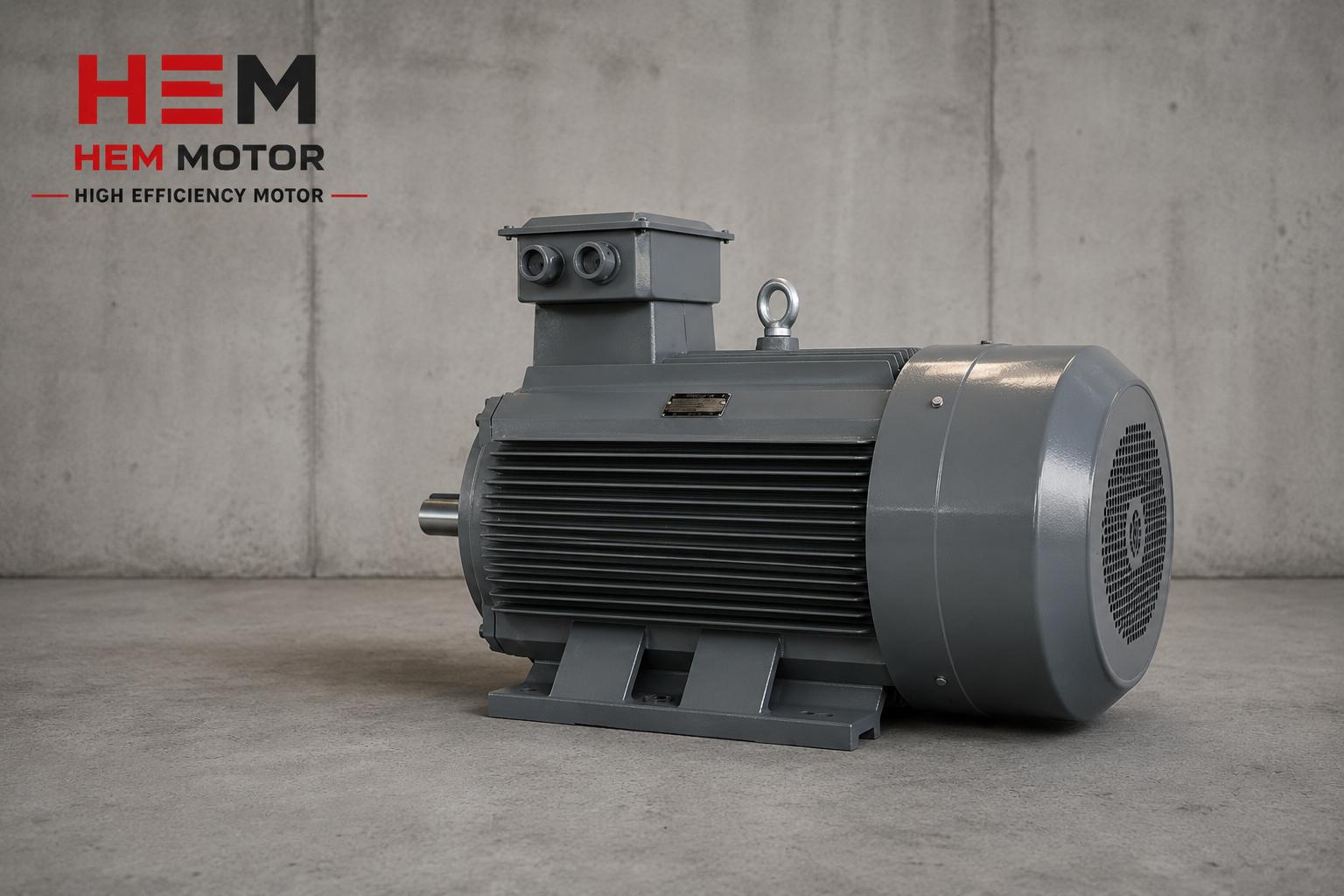
The Effect of Cast-Frame Rigidity on Bearing Life
The real advantage of cast iron is mass and rigidity. During operation the motor experiences magnetic pull forces, belt-pulley side load, coupling reactions and vibration. A rigid cast frame and thick-walled end shield minimise deflection under these forces. Because the end shield does not flex, it preserves the bearing seat geometry and the bearing runs close to the life (L10) in the manufacturer's catalogue.
By contrast, in a thin-walled or porous (casting-defect) frame, micro-deformation under load can make the bearing seat oval; this disrupts load distribution and reduces bearing life. So casting quality (porosity, wall thickness) is an indirect but strong determinant of bearing life. We covered the technical details of casting quality in our article on casting quality, porosity and wall thickness; and the effect of frame rib design on rigidity in our article on rib design, rigidity and heat dissipation.
Why Does Rigidity Matter More Under Heavy and Impact Loads?
In impact and heavy-duty applications such as conveyors, crushers, mills and presses, the instantaneous forces on the end shield are much higher. In these applications the rigidity of the cast-iron frame both prevents deformation of the bearing seat and raises the system's natural frequency, reducing the risk of resonance. A light, flexible frame can resonate under impact load and amplify vibration. We detailed heavy-duty and impact-load selection in our article on impact, rigidity, heavy load and vibration.
Smart Purchasing: How Do You Recognise End Shield Quality?
To quickly assess a motor's bearing/end shield quality in the field, the following checks are practical:
- Turn the shaft by hand; it should rotate smoothly, without catching or friction.
- Check the axial play; excessive movement or no movement at all is a warning sign.
- While running, measure vibration and noise against the ISO 10816 reference.
- Verify the bearing number and type from the nameplate/documentation; a standard bearing means fast stock and easy maintenance.
- At incoming acceptance, perform megger, rotation direction and vibration measurements.
We described the steps of incoming acceptance inspection in our article on incoming acceptance inspection: megger, direction, vibration.
How Do Bearing Type and Configuration Affect the Seat Machining?
The end shield machining is designed around the bearing type to be used. A standard induction motor typically uses deep groove ball bearings (e.g. the 62xx/63xx series) at both ends. However, if the application involves side load (belt-pulley) or axial load, a cylindrical roller bearing (NU series) at the drive end, or a locating/non-locating configuration, may be preferred. Since every bearing type has a different outer diameter, width and shoulder dimension, the end shield seat must be machined exactly for that bearing.
- Deep groove ball bearing: Carries both radial and limited axial load; the most common, quiet and low-friction choice.
- Cylindrical roller bearing: For high radial load (heavy belt tension); naturally allows axial movement, ideal as the floating bearing.
- Angular contact bearing: For special applications with significant axial load (vertical mounting, fan thrust).
Using a standard bearing number means both fast stock and easy maintenance; a special/rare bearing can create supply problems later during maintenance. That is why it is important to verify the bearing number from the nameplate or technical documentation at purchase. The rib design and rigidity also influence how the seat holds geometry under load over the motor's life, so it should not be considered in isolation from the casting quality.
End Shield Quality Criteria - Summary Comparison
| Criterion | Quality end shield | Low-quality end shield |
|---|---|---|
| Bearing seat tolerance | H7/J7, stable | Wide/variable, oval risk |
| Concentricity | Single-setup machined, low runout | Separate setups, high runout |
| Casting rigidity | Thick wall, ribbed | Thin wall, porosity risk |
| Vibration (ISO 10816) | Within limits, low | May exceed limits |
| Bearing life | Close to catalogue L10 | Below L10, early failure |
Frequently Asked Questions
Why is the bearing seat machined to H7 and the shaft to j6/k6?
Because the bearing's inner ring rotates with the shaft (rotating load) and needs an interference fit; therefore the shaft is machined to a tight tolerance such as j6/k6/m6. The outer ring stays stationary in the end shield (stationary load) and must be able to expand and slide axially when it heats up; therefore the seat is machined to a transition/clearance fit such as H7/J7. This balance lets the bearing run without binding or overheating.
Why can a cast-iron motor run more quietly than an aluminium one?
The high mass and rigidity of cast iron damp vibration and reduce flexing of the end shield under load. Because the bearing seat geometry is preserved, vibration and magnetic noise drop. In addition, the rigid frame raises the system's natural frequency, reducing the risk of resonance.
How much does an end shield machining error affect bearing life?
It has a serious effect. An oval or angled seat applies uneven load to the bearing and can reduce the catalogue L10 life by several times. Concentricity error also causes heating, noise and early oil-seal wear. That is why bearing seat tolerance and concentricity are among the most decisive mechanical criteria of motor quality.
Contact Us for Stock and Fast Delivery
At HEM Motor we put end shield machining quality, bearing-seat tolerances and concentricity at the centre of production quality control in our cast-iron framed motors. For conveyor, pump, fan, compressor and heavy-duty applications that demand quiet, low-vibration and long-life operation, let us determine the right frame size and bearing configuration together. To get a quote with manufacturer stock advantage and fast delivery, contact us and we will recommend the most suitable motor for your application's load profile.