English
 Türkçe

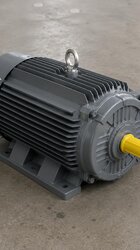

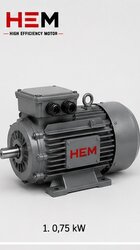
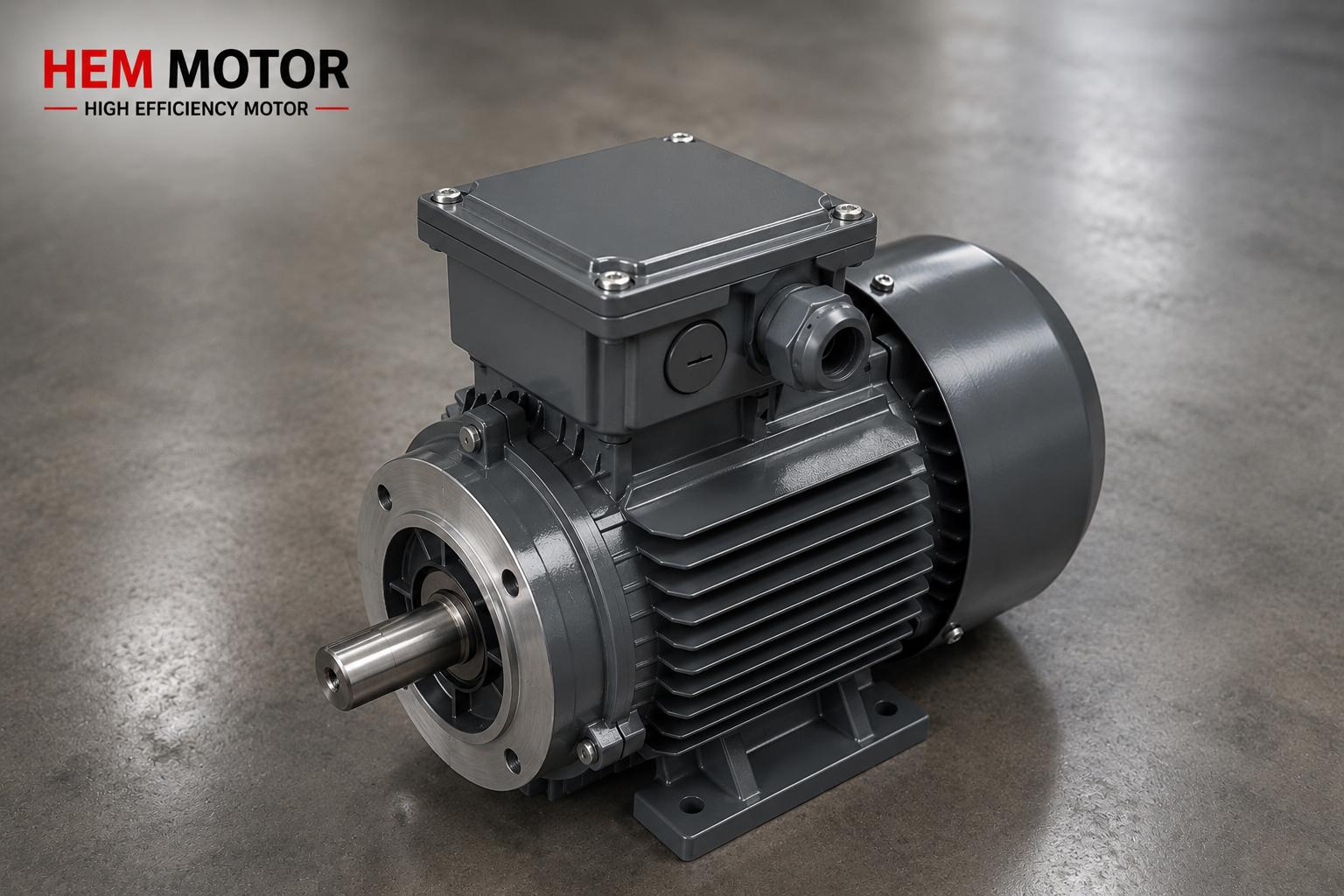

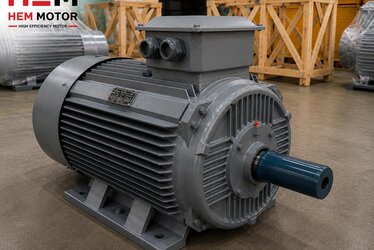
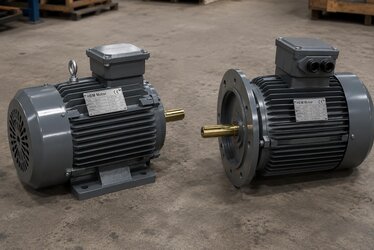
An experienced buyer who picks up an electric motor will often look first at the housing, and especially at the ribs on the housing. That is because the rib design on a cast iron motor housing is a powerful quality marker that reveals both how well the motor will cool and how rigid it will stay under load and vibration. The external cooling ribs (fins) dissipate heat into the air; the cast ribs that run inside and along the housing strengthen the body against bending. Well-designed, cleanly cast ribs are a sign of long life and quiet operation, whereas thin, irregular or poorly cast ribs are the mark of a weak housing. In this article we examine rib design on a cast iron motor housing from the standpoint of rigidity, heat dissipation and purchasing quality, making concrete what a buyer should look for. (This article makes no promise of a fixed price or figure; the aim is to explain the correct approach.)
What Is a Rib on a Motor Housing and What Does It Do?
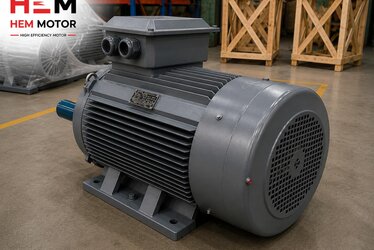
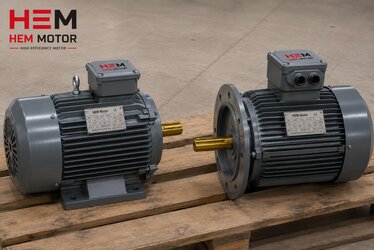
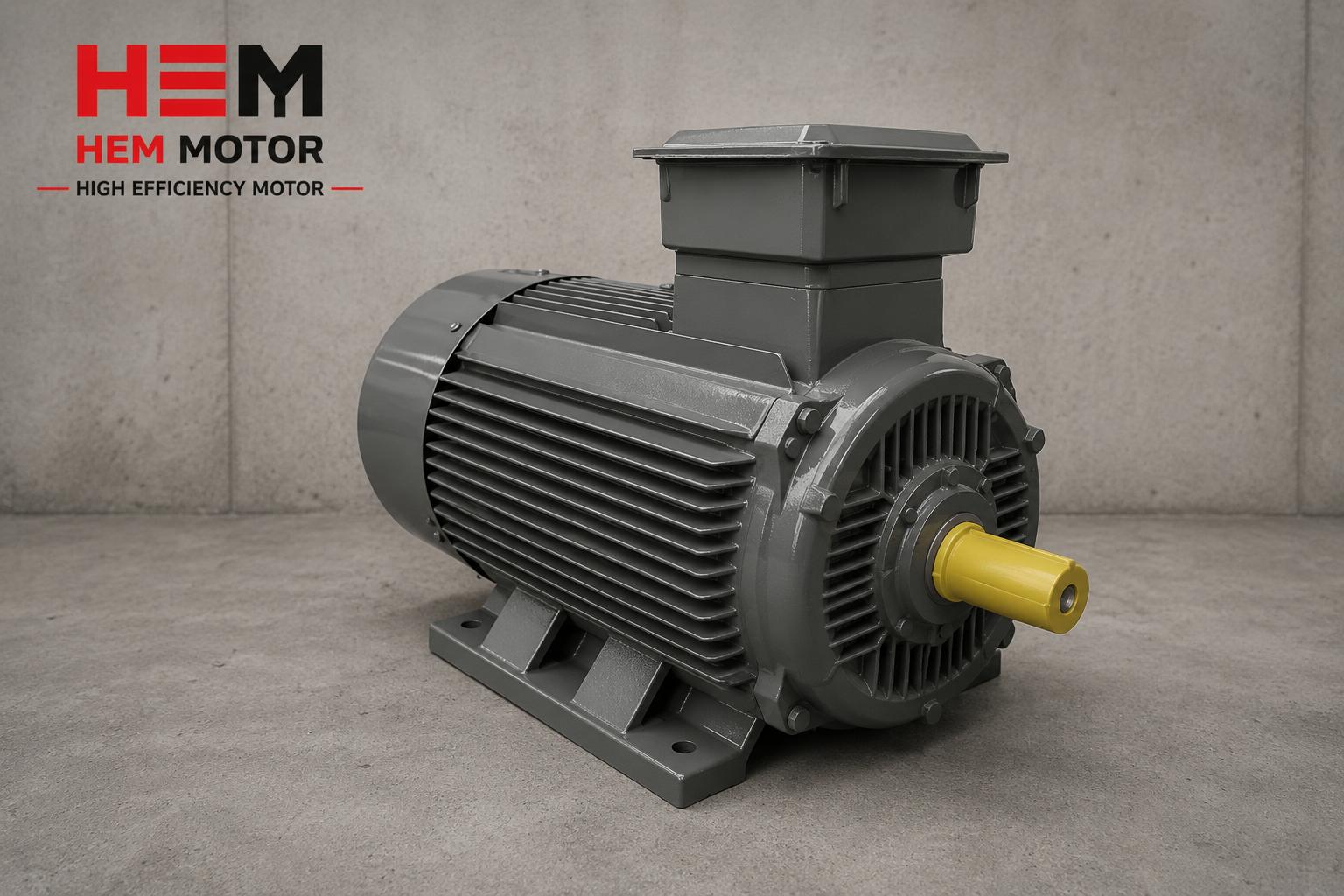
A rib is a thin wall that projects from the housing surface and is formed as a single piece with the housing during casting. In cast iron motors, ribs perform two basic functions. The first is thermal: the ribs on the outer surface (the cooling fins) increase the housing surface area in contact with the air, making it easier to expel the heat the motor produces. The second is mechanical: ribs increase the moment of inertia and the bending resistance of the housing, making the body far more rigid without significantly adding material. In other words, the same rib is a dual-purpose design element that serves both cooling and strength. This dual function makes rib design one of a motor's most economical engineering solutions: a single casting operation simultaneously delivers both heat dissipation and rigidity, requiring no extra parts or additional assembly.
The orientation and placement of the ribs also vary according to their function. External cooling fins generally run parallel to the motor axis; when the air blown by the rear fan flows in this direction, it passes freely between the fins and sweeps the heat away efficiently. The structural ribs that provide housing rigidity, on the other hand, are concentrated more in the load-bearing directions, in the foot regions and around the flange. For this reason the rib pattern on a housing is a visible map of engineering decisions; it is placed purposefully, not randomly.
The reason cast iron is preferred for this function is the nature of the material. Cast iron offers high mechanical strength and excellent vibration damping; it is also well suited to casting complex rib geometries as a single piece. We examined in detail the advantages of cast iron over aluminium and which one should be preferred in which environment in our article cast iron or aluminium housing. Our article cast iron frame size and power matching, where the housing material is offered as standard across our entire range, helps with the right housing selection.
External Cooling Ribs and Heat Dissipation
The waste heat generated in an electric motor directly affects the life of the winding insulation and the bearings. The main way this heat is expelled is through heat transfer from the housing surface to the air. This is exactly where the external ribs (cooling fins) come into play: as the number, height and spacing of the fins increase, the heat-dissipating surface area of the housing grows. The rear fan blows air over these fins (IC411-type surface cooling), significantly increasing heat dissipation. You can review motor cooling methods and the IC411/IC416 difference in our article electric motor cooling methods.
There is a critical balance here. Very dense and deep fins increase the surface area, but if the gap between the fins becomes too narrow, dust and dirt accumulate, which then chokes the cooling. A well-designed rib geometry provides both sufficient surface area and allows air flow to circulate freely between the fins. We addressed the effect of inter-fin dirt accumulation on cooling in dusty environments and the importance of cleaning in our article cooling fins and dirt accumulation on a cast iron motor. You can find the role of the fan cover in directing the air flow over the fins in our article fan cover and protective grille selection.
Internal Ribs and Housing Rigidity
The rigidity of a motor housing (its resistance to bending and torsion) directly determines the quality of the motor's operation. A rigid housing holds the stator pack firmly, keeps the air gap (the space between rotor and stator) constant, and damps vibration. If the housing is not sufficiently rigid, even slight deformations under load distort the air gap, noise and vibration increase, bearing loads become unbalanced and life is shortened. This is precisely where the internal ribs running along the housing are the main element that provides this rigidity without significantly adding material weight.
When cast iron's superior vibration damping property is combined with a ribbed design, it turns into a marked advantage especially under heavy and impact loads. In impact applications such as crushers, mills and presses, housing rigidity is critically important; we covered this topic in depth in our article impact resistance and housing rigidity on a cast iron motor. The acceptable limits of vibration and its relationship with balancing are clarified in our article ISO 10816/20816 vibration and balancing.
The Contribution of Rib Geometry to Vibration and Strength
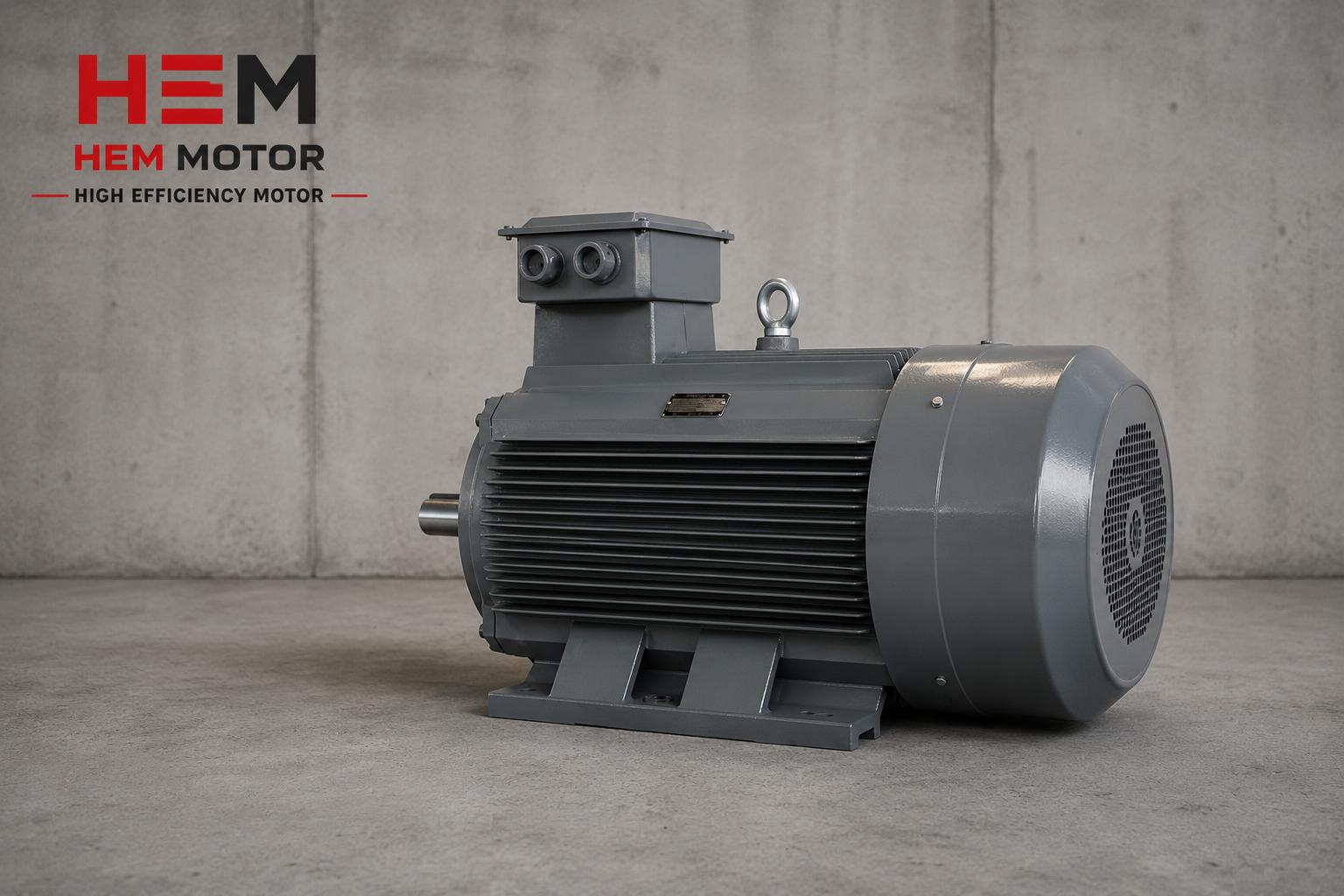
It is not only the presence of ribs that matters, but also their geometry. The height, thickness, root radius (the fillet where the rib joins the housing) and distribution of the rib affect both strength and casting quality. Ribs with sharp corners and abrupt cross-section changes lead to stress concentration and a risk of cracking during casting. Well-designed ribs, on the other hand, feature smooth transitions with root radii; this both eases casting and reduces the risk of cracking under load. Properly distributed ribs also lower the risk of resonance by moving the housing's natural vibration frequencies away from the operating speed. Resonance occurs when the natural frequency of the housing coincides with the frequency of the motor's rotating part, and it can amplify vibration to dangerous levels; a good rib distribution stiffens the housing, raises the natural frequency and prevents this coincidence.
Rib geometry also affects the distribution of heat in the housing. Well-designed ribs spread heat from hot regions (for example the mid-housing where the winding is concentrated) to the surroundings, reducing the formation of hot spots. Hot spots are among the most insidious enemies of motor life, causing the winding insulation to age rapidly in a localized way. Our article temperature monitoring with PT100 and PTC thermistors offers a practical solution for monitoring the winding temperature pointwise and catching hot-spot risk early.
For this reason rib geometry is also a mirror of casting quality. Clean, symmetrical and smooth ribs are the sign of a quality mould and a controlled casting process. You can find detailed indicators of casting quality such as porosity and wall thickness in our article casting quality on a cast iron motor. The machining tolerance and centring quality of the housing are addressed in our article housing machining, tolerance and centring.
Distinguishing a Quality Rib from a Weak Rib
The most practical question for a buyer is this: how do I recognize a good rib design by eye? A few concrete signs help. In a quality cast iron housing the ribs are evenly and symmetrically distributed, their thicknesses are consistent, their surfaces are smooth, and soft fillets are visible at the root regions. In a weak housing, on the other hand, the ribs are thin and sparse, their thicknesses are irregular, the surface has casting defects (porosity, burrs, misruns) and the root regions are sharp. In addition, a lightened housing feels lighter than expected when held; this may be a sign that the wall thickness and rib mass have been reduced. Thinning the wall and the ribs to cut cost yields a cheap motor in the short term but exacts a price in the long term in terms of both cooling and rigidity.
Another practical check is to lightly tap the housing and listen to the resulting sound. A quality, non-porous, cleanly cast iron housing gives a clear, solid sound; a weak housing with casting voids or porosity gives a duller, more cracked sound. This simple method is no substitute for a laboratory test, but it gives the buyer a quick impression under field conditions. To compare the frame size and expected weight against the nameplate information, you can verify the frame-to-power match with our nameplate and label reading guide.
These visual clues provide important information about the motor's life and durability. You can find how housing quality prevents early failure in our article electric motor life and causes of early failure, and the housing and label check at delivery in our article electric motor delivery and acceptance inspection. The relationship between frame size and weight on cast iron housing motors is explained in our article IEC 56-355 frame sizes and weight.
The Effect of Rib Design on Life and Maintenance
A good rib design extends the life of the motor in an indirect but powerful way. A better-cooled housing keeps the winding insulation and the bearings at a lower temperature; this directly means longer life. A more rigid housing keeps the air gap constant, reduces vibration and balances bearing loads. So rib design is not merely a matter of appearance but an engineering element that determines life and reliability.
Ribs are also important from a maintenance standpoint: when dirt accumulation between the fins disrupts cooling, the motor overheats and its life shortens. For this reason, in dusty environments regular fin cleaning should be included in the maintenance plan. For the general maintenance schedule see our electric motor maintenance and periodic inspection calendar, and for the right housing and insulation selection in a hot and dusty environment our article motors in hot and dusty environments provides guidance. For outdoor sites and corrosion protection, our article corrosion protection on cast iron motors will be complementary. All our housing options and electric motor solutions can be reviewed from our homepage.
Ribs, the Earthing Bolt and Mechanical Connection Points
The ribs on a cast iron housing do not only provide cooling and rigidity; they also make it possible for the mechanical connection points added to the housing (the earthing bolt, the lifting eye, the terminal box seating surface) to rest on a solid base. A thick, cleanly cast housing allows the earthing bolt to be tightened securely and electrical safety to be ensured. We addressed the correct installation of earthing and electrical safety in our article earthing and electrical safety on a cast iron motor.
Likewise, the lifting eye region on the housing also requires sufficient wall thickness and rib support; otherwise a risk arises while lifting the heavy motor with a crane. You can find the motor's weight, lifting points and safe handling in our article lifting eye and safe handling. For the terminal box to seat solidly and with IP protection on the housing, our article motor terminal box and cable connection provides guidance.
In Which Applications Is Rib Design More Decisive?
The importance of rib design is not the same in every application. While rib design is less critical in a small-power motor running under a light, steady load in a clean environment, in large-power motors operating under heavy, impact, dusty or high-ambient-temperature conditions, rib design directly determines life. Crusher and mill drives, heavy-duty conveyors, press and breaker applications are the areas most in need of good rib design, since they involve both high heat load and mechanical strain.
You can find the right housing and strength selection for heavy-duty conveyor drives in our article heavy-duty conveyor drive motor, and power derating at high ambient temperature in our article cast iron motors at high ambient temperature. The choice between cast iron and steel fabricated housing at high powers is clarified in our article cast iron or steel fabricated housing.
Sectors such as mining, stone crushing and cement are the areas that feel the importance of rib design most concretely. In these facilities the motor operates under high ambient temperature, heavy dust and impact load all at once; three challenges test the housing simultaneously. A good rib design ensures that, under these conditions, the motor both stays cool and remains mechanically intact. You can find motor selection in crusher and stone-crushing applications in our article crusher and stone-crushing plant motor selection, and the subject of flywheel and inertia under heavy impact load in our article motor selection under impact load.
Frequently Asked Questions
Does more ribs always mean better cooling?
Not exactly. The number and height of fins increase the surface area, but if the gap between fins becomes too narrow, air flow is hindered and dust accumulation chokes the cooling. A good design strikes the balance between sufficient surface area and easy air flow. For this reason you should look not only at the number of fins but at the geometry as a whole and at the direction of air flow.
Does rib design really affect the rigidity of the motor?
Yes, directly. Ribs running along the housing raise the bending and torsional resistance of the body without significantly adding material weight. A rigid housing keeps the air gap constant, damps vibration and balances bearing loads; this means quieter operation and longer life. Rigidity is decisive especially under impact and heavy loads.
How do I evaluate the rib quality of a motor before ordering?
Look at the even and symmetrical distribution of the ribs, the consistency of their thickness, the smoothness of the surface and the soft fillets in the root regions. Casting defects such as porosity, burrs and misruns indicate poor quality. It is also important that the weight is appropriate to the frame size. If you share your requirement with us, we will determine together the quality cast iron housing motor suitable for your application.
Request a Quote
Contact us for cast iron housing electric motors with a quality rib design suited to your application. To plan the power, speed and housing selection together, you can reach us at +90 (532) 345 49 86 or create a request through our contact page.
Purchasing and Selection Checklist
- Choose the housing material according to the application (cast iron for heavy/impact loads and hot-dusty environments).
- Evaluate the number, height and air-flow direction of the external cooling fins.
- Visually check the even, symmetrical distribution of the ribs and the consistency of their thickness.
- Verify that the root radii are soft (not sharp) and that there are no casting defects.
- Make sure the housing weight is appropriate to the frame size (excessive lightness is a cause for suspicion).
- Add inter-fin cleaning to the maintenance plan in dusty environments.
- Determine the insulation class (F/H) and IP protection class according to the environment.
- Inspect the housing, ribs and label upon delivery; look for damage and casting defects.