English
 Türkçe


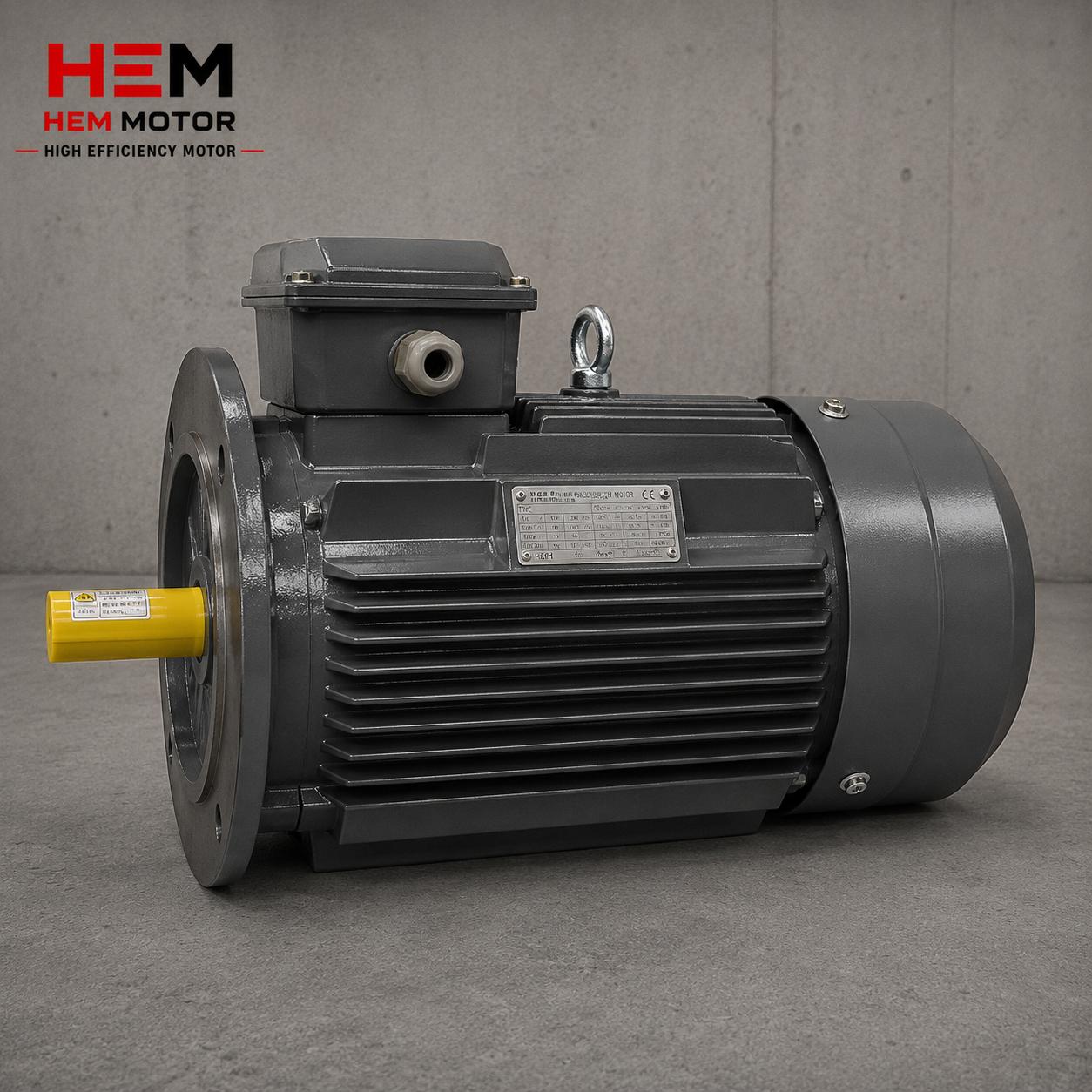

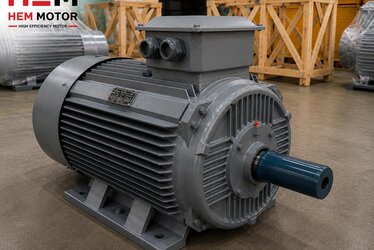
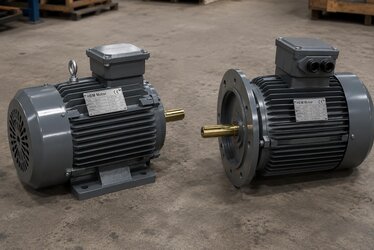
In an electric motor, vibration and noise are rarely decided by rotor balance alone; they are governed by the mass and rigidity of the housing and by the dynamic behaviour of the foundation it sits on. In cast iron bodied motors, high mass and high internal damping absorb the vibration produced by rotating forces, whereas in light sheet-steel housings the same force is resisted by less mass, so vibration amplitude and radiated noise both rise. This article explains in detail how a cast iron body damps vibration and sound, what natural frequency and resonance mean, the role of foundation design and anti-vibration mounts, the ISO 10816 vibration classes, and how the right motor choice affects your purchasing decision. The goal is to make you think of the motor, the foundation and the mounting as a single system for a quiet, long-lived drive.
How Does a Cast Iron Body Damp Vibration and Noise?
Cast iron (grey cast iron) is a material with a high internal damping coefficient thanks to its graphite flakes. This graphite structure converts the energy of vibration waves travelling through the housing into heat and damps them; in sheet-steel housings this damping is far lower. The second factor is mass: for a motor of the same rating, a cast iron body is significantly heavier than a sheet body. By Newton's second law, when the force produced by rotating unbalance is fixed, a larger mass means a smaller acceleration of the body (that is, lower vibration amplitude). The third factor is rigidity: a thick-walled cast body is stiffer against bending and torsion, which raises the natural frequency and moves it away from the running speed.
Together these three properties make cast iron motors quiet and stable, especially under heavy, impact and continuous loads. In crushers, large fans, pumps and compressors, transmitting vibration to the machine and the foundation is undesirable; here the cast iron body acts as a natural vibration isolation layer.
- High internal damping: Graphite flake structure absorbs vibration energy.
- High mass: Lower amplitude against the same unbalance force.
- High rigidity: Thick walls push the natural frequency up.
- Thermal stability: The cast body keeps dimensional stability at operating temperature.
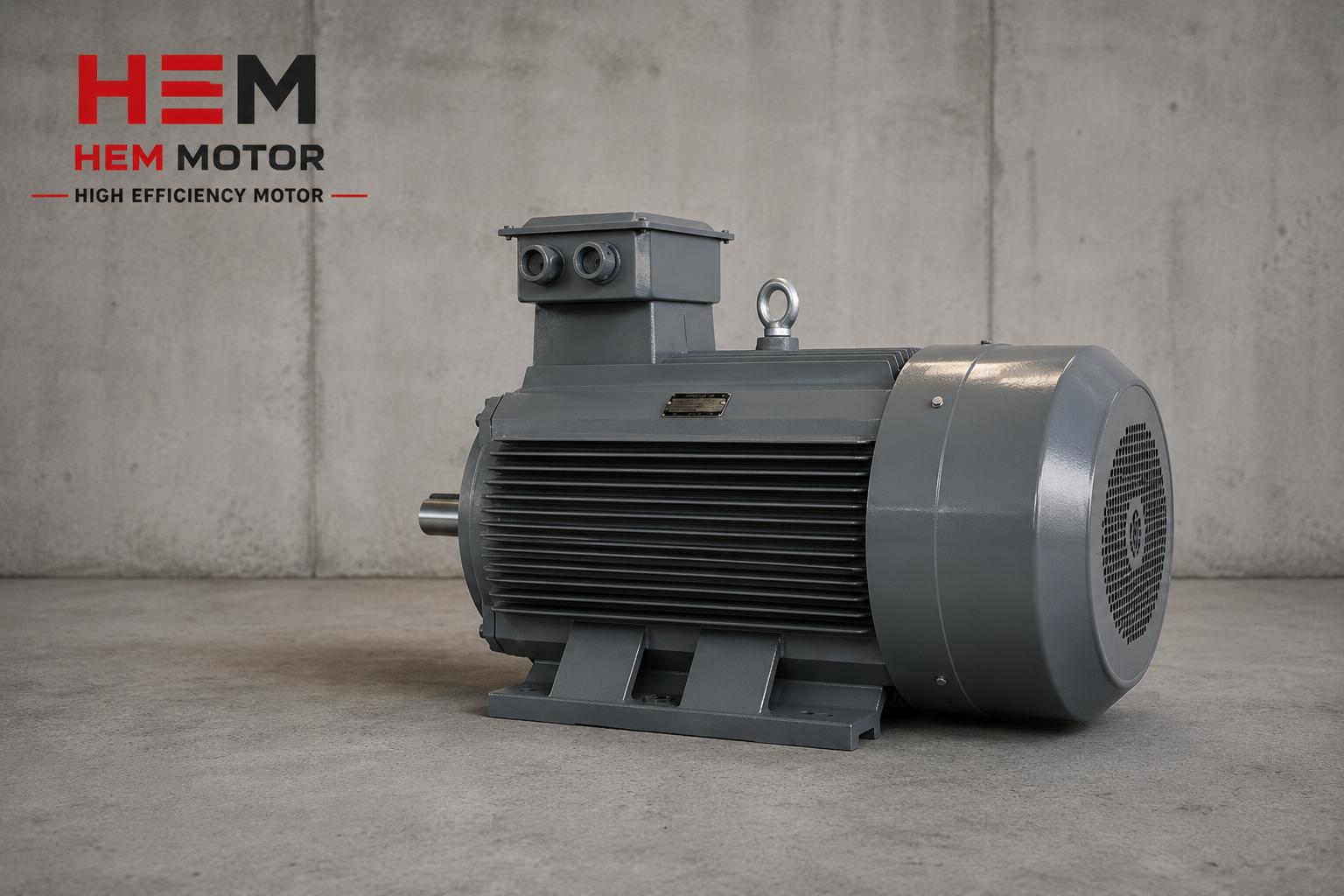
Natural Frequency and Resonance: Why Do They Matter?
Like any mechanical structure, the motor + foundation system has a natural (resonance) frequency. If the motor's rotational frequency (for example about 50 Hz for a 2-pole motor on a 50 Hz supply, about 25 Hz for a 4-pole) or its force harmonics coincide with this natural frequency, even a small unbalance produces large vibration amplitudes. This is called resonance and it dangerously increases both noise and bearing load.
The golden rule of good design is to keep the system natural frequency at least 20-25% above or below the running speed. The high rigidity of the cast iron body keeps the motor's own natural frequency high and reduces resonance risk. However, if you mount the motor on a weak, flexible or loose foundation, the total system natural frequency drops and may approach the running speed. That is why foundation design is as important as motor selection.
| Speed (rpm) | Rotation frequency (1X) | Target natural frequency (band to avoid) |
|---|---|---|
| 3000 (2-pole) | ~50 Hz | away from 40-60 Hz band |
| 1500 (4-pole) | ~25 Hz | away from 20-30 Hz band |
| 1000 (6-pole) | ~16.7 Hz | away from 13-20 Hz band |
| 750 (8-pole) | ~12.5 Hz | away from 10-15 Hz band |
Foundation Design and Anti-Vibration Mounts
There are two fundamental approaches to vibration. The first is rigid (hard) mounting: the motor is fixed with anchor bolts to a concrete foundation or a heavy steel base whose mass is at least 3-5 times that of the motor. The aim is to push the system natural frequency well above the running speed. Combined with a heavy foundation, the cast iron body provides excellent damping.
The second approach is elastic (soft) mounting: the motor sits on rubber or spring-type anti-vibration mounts. Here the aim is to lower the system natural frequency well below the running speed to stop vibration reaching the foundation. In mount selection, the static deflection and the damping ratio are critical; a mount of the wrong stiffness can put the system into resonance exactly at the running speed.
Points to watch in foundation and mounting
- Flatness: The surface under the motor feet must be flat; otherwise the body is strained, raising vibration and the risk of a cracked foot.
- Soft foot: A foot left in the air amplifies vibration; correct it with shims.
- Anchor torque: Bolts must be tightened to the maker's torque in a cross sequence.
- Mass ratio: In rigid mounting aim for a concrete block 3-5 times the motor mass.
- Alignment: In coupled systems, shaft misalignment is a vibration source independent of unbalance.
For bolt, nut and anchor detail see our guide on foundation and base mounting, anchor and tightening torque; for shaft alignment see our flexible vs rigid coupling and shaft alignment article.
Cast Iron versus Sheet (Aluminium/Steel) Body
Sheet or aluminium bodied motors are light, cheap and practical in small ratings. But their capacity to damp vibration and noise is limited. The table below compares the two body types in terms of vibration.
| Property | Cast Iron Body | Sheet / Aluminium Body |
|---|---|---|
| Internal damping | High (graphite flakes) | Low |
| Mass (same rating) | High | Low |
| Rigidity / natural frequency | High | Medium-low |
| Impact/heavy load capacity | Very good | Limited |
| Radiated noise tendency | Low | Higher |
| Typical application | Crusher, pump, fan, compressor | Small machine, light duty |
The advantage of the cast iron body under heavy, impact loads is covered in our impact resistance and body rigidity article; the effect of bearing seat machining quality on quiet running is in our end shield machining article.
ISO 10816 / 20816 Vibration Classes
Motor vibration is objectively assessed by vibration velocity (mm/s RMS). ISO 10816 (and its current successor ISO 20816) groups machines by power and mounting rigidity and defines zones A (new/good), B (acceptable), C (warning) and D (damage risk) for vibration level. A quality motor should be in zone A or B at acceptance inspection.
| Zone | Vibration velocity (mm/s RMS, typical) | Meaning |
|---|---|---|
| A | ≤ 1.4 - 2.3 | Target for a new motor |
| B | 2.3 - 4.5 | Acceptable for unlimited long-term running |
| C | 4.5 - 7.1 | Warning; short-term acceptable |
| D | > 7.1 | Damage risk; intervention required |
Limit values vary with the motor's power class and mounting type (rigid/elastic). Vibration measurement at stock entry and delivery is the most reliable way to distinguish a quality motor. For detailed acceptance values see our ISO 10816/20816 vibration and balance acceptance values article; for vibration checking at acceptance see our incoming and acceptance inspection guide.
Frequently Asked Questions
Is a cast iron motor always quieter than a sheet-bodied one?
Usually yes, because high mass and internal damping reduce vibration. But noise also depends on mounting: if you bolt a cast iron motor to a weak, flexible foundation it may, through resonance, be noisier than a well-mounted sheet-bodied motor. For the material advantage to appear, the foundation and alignment must be correct.
Is an anti-vibration mount or a rigid concrete foundation better?
It depends on the application. For precise, impact-free, high-speed systems, rigid mounting on a heavy concrete foundation gives the most stable result. Where transmission of vibration to the building structure is undesirable (for example equipment on upper floors), correctly selected anti-vibration mounts are preferred. Because a mount of the wrong stiffness can cause resonance, mount selection requires an engineering calculation.
How can I learn the motor's vibration class?
Ask for the maker's vibration class (for example standard A or a low-vibration option) and the nameplate/datasheet data before ordering. At delivery you can take mm/s RMS readings at the bearing points with a vibrometer and compare them with the ISO 10816/20816 zones. Zone A or B indicates a quality stock motor.
Practical Tips for the Right Motor Choice
- Consider the cast iron body first for heavy, impact and continuous loads.
- Keep the running speed and foundation natural frequency away from resonance (at least 20-25% separation).
- In rigid mounting, aim for a concrete block 3-5 times the motor mass.
- Correct soft foot and flatness errors with shims.
- Ask for vibration measurement per ISO 10816/20816 at delivery; look for zone A/B.
- For a low-noise motor, apply the criteria in our low-noise motor selection article.
Effect of Vibration on Bearing and Motor Life
Vibration is not merely a matter of comfort or noise; it directly determines the mechanical life of the motor. High vibration amplitude increases the dynamic load on the bearings and disturbs the oil film. When the oil film thins, metal-to-metal contact begins, which leads to early wear in the bearing seat, rising noise and eventually a bearing failure. By damping vibration, the cast iron body reduces the repeated load transmitted to the bearing, so it helps preserve lubrication intervals and extends bearing life.
A motor running in the resonance band fatigues its bearings far faster than expected, even if its nameplate values are flawless. For this reason vibration is one of the key indicators in periodic maintenance: a rising trend of mm/s RMS taken at the bearing points over time is an early warning of unbalance, misalignment or bearing degradation. The high mass of the cast iron body helps this trend progress more slowly and more predictably. For grease type and lubrication interval selection see our bearing greasing, grease type and NLGI consistency guide; for bearing life and quality marks see our bearing and seat life in cast iron motors article.
Vibration Sources: Unbalance, Misalignment and Looseness
Understanding the source of the vibration measured on a motor is a precondition for choosing the right solution. There are three main mechanical sources, and each leaves a different signature in the vibration spectrum:
- Unbalance: The 1X (one per revolution) component dominates the spectrum. It comes from rotor, fan or coupling unbalance and is removed by dynamic balancing in production.
- Misalignment: The 2X component is usually pronounced and axial vibration rises. It arises from shaft misalignment in coupled systems.
- Mechanical looseness: Multiple harmonics (1X, 2X, 3X...) appear. It is caused by loose anchor bolts, soft foot or a worn bearing housing.
- Bearing damage: Vibration appears at high frequencies specific to the bearing geometry.
The cast iron body damps the effect of these sources but eliminates none of them; so a good motor choice must be completed with good balancing, correct mounting and regular monitoring. We detailed the link between vibration and balance in our vibration and balance article, and fault symptoms in our electric motor failures, symptoms and causes article.
What Does a Cast Iron Body Mean for Purchasing?
In the purchasing decision, a cast iron body usually carries a higher up-front price than its light-bodied counterpart; yet its advantages in vibration, noise, bearing life and stability repay that difference many times over the life cycle. Especially at 7.5 kW and above, in continuously running and vibration-sensitive applications, the cast iron body should be the standard choice. In low-power, intermittent applications where vibration is not critical, a light body can be an economical option.
To make the right decision you must assess the application's power, speed, duty type (continuous/intermittent), mounting surface and vibration sensitivity together. To see the site conditions on the spot, our pre-sales site survey and field measurement service helps you choose the right body and vibration class. Because the cast iron body's damping advantage only appears fully with the correct foundation and mounting, we recommend you always handle motor selection together with the mounting plan.
At HEM Motor we offer cast iron bodied, low-vibration motors compliant with ISO vibration classes, with fast delivery from stock. To choose the right body and vibration class for your application's speed, load and mounting type, and to request a quote with engineering support, get in touch with us; we are with you for a quiet, stable and long-lived drive system.