English
 Türkçe



Picture a conveyor that frequently starts and stops, a press that engages many times an hour, or a process line whose cycle time is measured in minutes. In these applications the motor never settles at a single temperature; with every run-stop cycle it heats up, cools down and heats up again. This thermal cycling is a far tougher load on the motor frame than it first appears. The frame material expands with each heating phase and contracts as it cools; repeated thousands or tens of thousands of times, thermal stress accumulates and, over the long term, raises the risk of fatigue, micro-cracking and loosened joints. In most purchasing decisions the frame material is judged only on weight or price; yet if the operating profile involves cyclic thermal load, the material's thermal cycling behavior is one of the most critical factors determining the motor's real service life. This article explains, in engineering terms but with a buying decision in mind, why cast iron frames are preferred in high thermal-cycle applications, how frame rigidity copes with the cycle, and where the difference from aluminum frames really shows.
What Is Thermal Cycling and Why Does It Stress the Frame?
Thermal cycling means the motor repeatedly experiences heating and cooling phases. Running continuously at a steady load, a motor reaches a stable temperature and stays there; the frame settles into a single expansion state, and from a material standpoint this is the most comfortable operating condition. But with frequent start-stop, short duty types (S3, S4, S6), intermittent process operation or large ambient swings, the frame continuously expands and contracts. Metal expansion is proportional to the temperature difference (ΔT) and the material's coefficient of thermal expansion. When a motor starts from cold and reaches its stable temperature, the frame sees a rise of tens of degrees; in continuous duty this happens once, but in intermittent operation it repeats every cycle.
Because different parts (frame, winding, rotor, bearing housing, bolts) have different coefficients, they grow at different rates during heating. That mismatch creates thermal stress at material interfaces and transition zones. For example, a steel shaft and a cast iron frame reaching the same temperature expand at different rates; the interference fit in the bearing housing is affected by this difference. Likewise the winding copper, the lamination stack and the frame all heat at different speeds and grow by different amounts.
A single expansion event is usually harmless; design margins absorb it. The real problem is repetition. Each cycle produces a small stress swing, and if that swing is repeated enough times the material enters thermal fatigue. Fatigue can initiate cracks after many cycles even when the stress stays well below the yield strength. Even if a part does not break in one event, tens of thousands of small stress cycles can produce micro-cracks that grow over time. For this reason, in high thermal-cycle applications the frame material should be chosen for cyclic durability rather than single-event strength. As the cycle count rises, the material's fatigue limit becomes decisive.
How Cast Iron Behaves Under Thermal Cycling
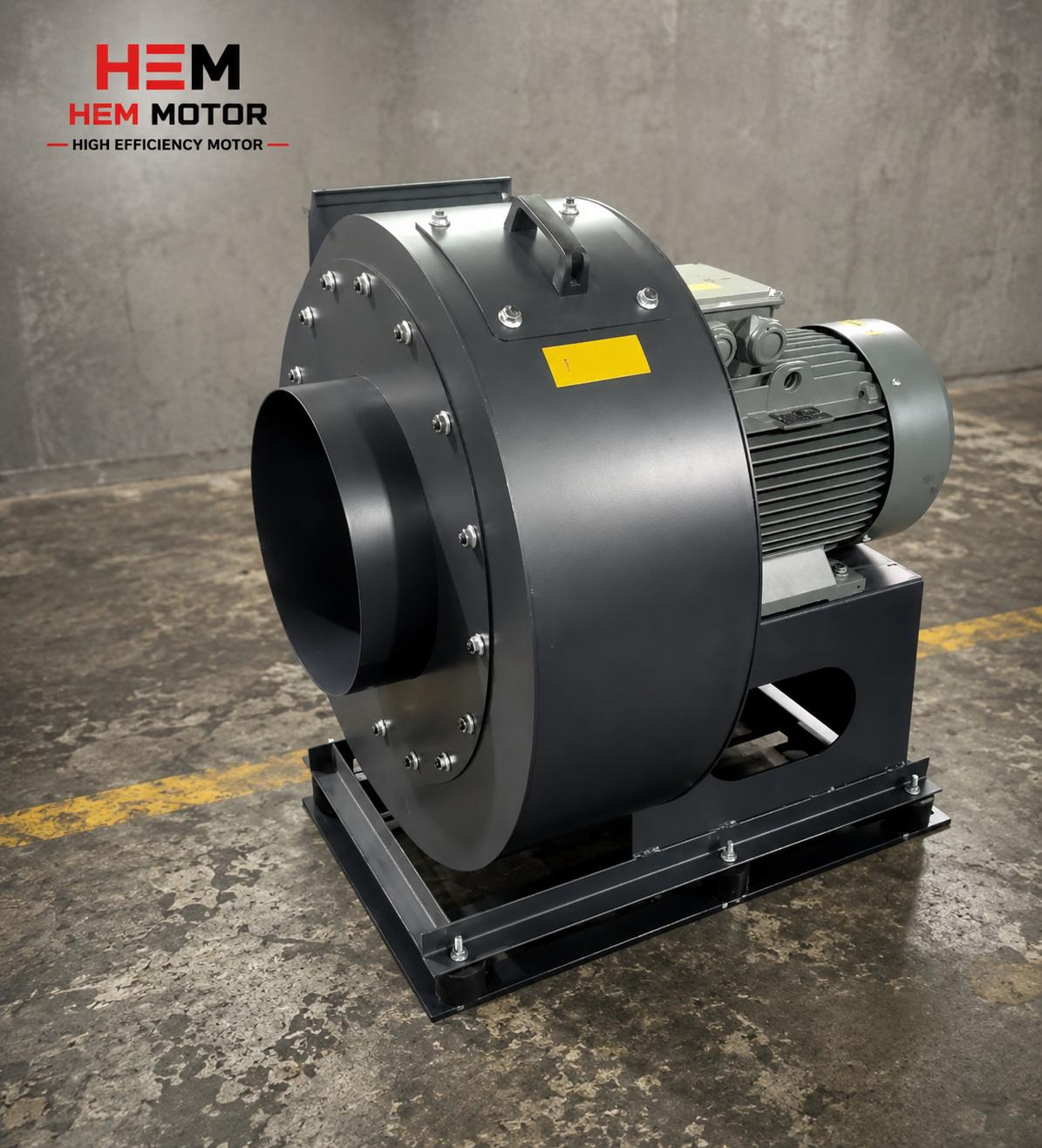
Cast iron (grey cast iron) stands out for motor frames thanks to its high mass, high rigidity and relatively low thermal expansion coefficient. These three properties deliver decisive advantages where cyclic thermal load is intense:
- Low expansion coefficient: Cast iron's thermal expansion coefficient is roughly half that of aluminum. For the same temperature rise the cast iron frame expands less, so critical geometries such as bearing housings, foot surfaces and flanges shift dimensionally less. This keeps tolerances and fits more stable across the cycle.
- High rigidity and mass: A thick-walled, heavy cast iron frame deforms less under thermal stress and damps vibration. Its high thermal mass lets temperature changes spread more slowly and evenly, reducing sharp gradients and local hot spots. Uniform temperature distribution is one of the most important factors in reducing stress concentration.
- Thermal shock resistance: The graphite structure of grey cast iron helps distribute stress and slow crack propagation, an advantage in sudden cooling events (cold air or water splash on a hot motor). For motors working outdoors or in washdown environments this property is especially valuable.
These properties also make the cast iron frame superior for preserving bearing alignment. Bearing housings open up as they heat; the less the frame expands and the more uniformly it heats, the better the concentricity between front and rear bearings is maintained. Lost concentricity adds extra load on the bearings and directly shortens their life. The high thermal mass of the cast iron frame also makes the motor cool slowly after sudden stops, reducing the risk of condensation and thermal shock. In short, cast iron is preferred not only for single-event mechanical strength but for its capacity to maintain dimensional stability across many cycles.
Thermal Expansion and Cycle Behavior by Material
The table below compares the thermal behavior of the main frame materials. Values are typical engineering ranges given not as absolutes but to illustrate the selection logic. What matters is the proportional difference between the two materials.
| Property | Cast Iron (Grey) | Aluminum Alloy |
|---|---|---|
| Thermal expansion coefficient (approx.) | ~11 µm/m·K | ~23 µm/m·K |
| Expansion at same ΔT | Low | About 2x higher |
| Rigidity (elastic modulus) | High (~110 GPa) | Low (~70 GPa) |
| Thermal mass / buffering | High | Low |
| Thermal conductivity | Medium | High |
| Vibration damping | Very good | Weak |
| Thermal fatigue resistance | High | Medium |
| Weight | Heavy | Light |
| Heavy process, high thermal cycle | Recommended | Limited |
As the table shows, aluminum is advantageous in some applications thanks to its light weight and fast heat dissipation (good conductivity); for low-power motors running continuously at a steady temperature an aluminum frame is a sensible choice. However its high expansion coefficient and low rigidity become drawbacks where cyclic thermal load is intense. Because an aluminum frame opens up more with each heating phase, bolt preloads and sealing surfaces can be affected more quickly over time; joint torque values see more swing across the cycle. In cast iron the same temperature rise causes a much smaller dimensional change, so these swings and therefore the tendency to loosen are smaller.
Where Do Thermal Stress, Cracks and Fatigue Originate?
Thermal-stress damage usually begins not at one point but in specific zones where stress concentrates. Recognizing these zones helps the designer and buyer make the right material and duty-type choice:
- Section changes: Where thick and thin walls meet they heat and cool at different rates, creating stress concentration, the most likely crack initiation point.
- Bolt and foot regions: As the frame expands, feet fixed to the floor restrain the motion; restrained expansion turns into stress. The flatness of the foot surface and the mounting base therefore matter.
- Bearing housings: Differential expansion between housing and shaft/bearing affects tight interference tolerances; cyclic opening and closing stresses the housing surface.
- Cooling fin roots: Thin fins heat quickly, the thick frame slowly; cyclic stress builds at the fin root.
- Flange and terminal box joints: Where different materials (frame, cover, gasket) come together, the expansion mismatch can affect sealing.
Cast iron's low expansion and high rigidity reduce the stress amplitude in these zones and therefore extend fatigue life. The smaller the stress amplitude, the higher the number of cycles the material can withstand; this is the fundamental principle of fatigue engineering. Still, no material is limitless; correct duty type selection, adequate power margin and, where needed, thermal protection (PTC/PT100) to keep the frame temperature within design limits are essential. Oversizing is not always the answer, but since a motor running constantly at its limit reaches a higher peak temperature each cycle, a reasonable power margin eases the cyclic thermal load.
Which Frame for Which Application? Decision Table
| Application / Operating Profile | Recommended Frame | Reason |
|---|---|---|
| Continuous, steady-temperature light load | Aluminum acceptable | Low cycling, weight advantage |
| Frequent start-stop conveyor / press | Cast iron | High thermal cycle, stress amplitude |
| Intermittent process (S3/S4/S6) | Cast iron | Cyclic heating-cooling |
| Heavy impact + thermal cycle combined | Cast iron | Rigidity + fatigue resistance |
| Highly fluctuating ambient temperature | Cast iron | High thermal mass, uniform spread |
| Outdoor / washdown environment | Cast iron | Thermal shock + corrosion resistance |
| Portable equipment moved often | Aluminum | Weight critical, cycling low |
Practical Checks for the Right Choice
Before purchasing, the following steps help you correctly assess the impact of cyclic thermal load on the motor:
- Determine the daily start-stop count and cycle time; above roughly 6-10 starts per hour, thermal cycling must be taken seriously.
- Define the duty type (S1-S9) correctly; for intermittent duties, frame material and power margin should follow it.
- Consider frame temperature monitoring (PT100 / PTC); seeing the cyclic temperature peaks prevents damage and supports the maintenance plan.
- Plan bearings and lubrication around the thermal cycle; frequent heating affects grease consistency and the lubrication interval.
- Leave adequate power margin in heavy processes; a motor running constantly at its limit reaches higher peak temperatures and expands more per cycle.
- Check the flatness of the mounting base and the foot bolt torques; restrained expansion creates stress.
These checks cover not only material selection but also how the motor is installed and monitored, because thermal cycling endurance arises not from the frame material alone but from a holistic design and application approach.
Frequently Asked Questions
Is a cast iron frame always better than aluminum?
No. For light applications that run continuously at a steady temperature and where weight is critical, an aluminum frame is a sensible choice. But in high thermal-cycle conditions such as frequent start-stop, intermittent processes and large temperature swings, cast iron's low expansion and high fatigue resistance provide a clear advantage. The decision should be based on the motor's operating profile, not on the material in isolation.
Does thermal cycling really shorten motor life?
Yes, indirectly. Cyclic expansion-contraction can cause thermal fatigue, loss of bearing alignment and loosened joints. A single cycle is harmless, but tens of thousands of cycles accumulate. With the right frame material, correct duty type selection and temperature monitoring, these effects are largely brought under control.
What should I watch for in a high thermal-cycle application?
Start-stop frequency, duty type, power margin and frame material must be assessed together. A cast iron frame, a thermal protection option and adequate power margin are the three main decisions that reduce the stress cyclic thermal load places on the motor. Correct mounting and a sound lubrication plan also directly affect service life.
Choose the Right Motor with Fast Delivery from Stock
To select a cast iron framed motor suited to your high thermal-cycle application, share your operating profile (start-stop frequency, duty type, ambient temperature) with us. As HEM Motor, with manufacturer stock advantage and fast delivery, let us determine together the best frame, power and protection option for your application. You can review our articles on cast iron vs aluminum frame, impact resistance and frame rigidity, bearing and housing life, frame size and power matching and duty type selection, then contact us to request a quote.