English
 Türkçe

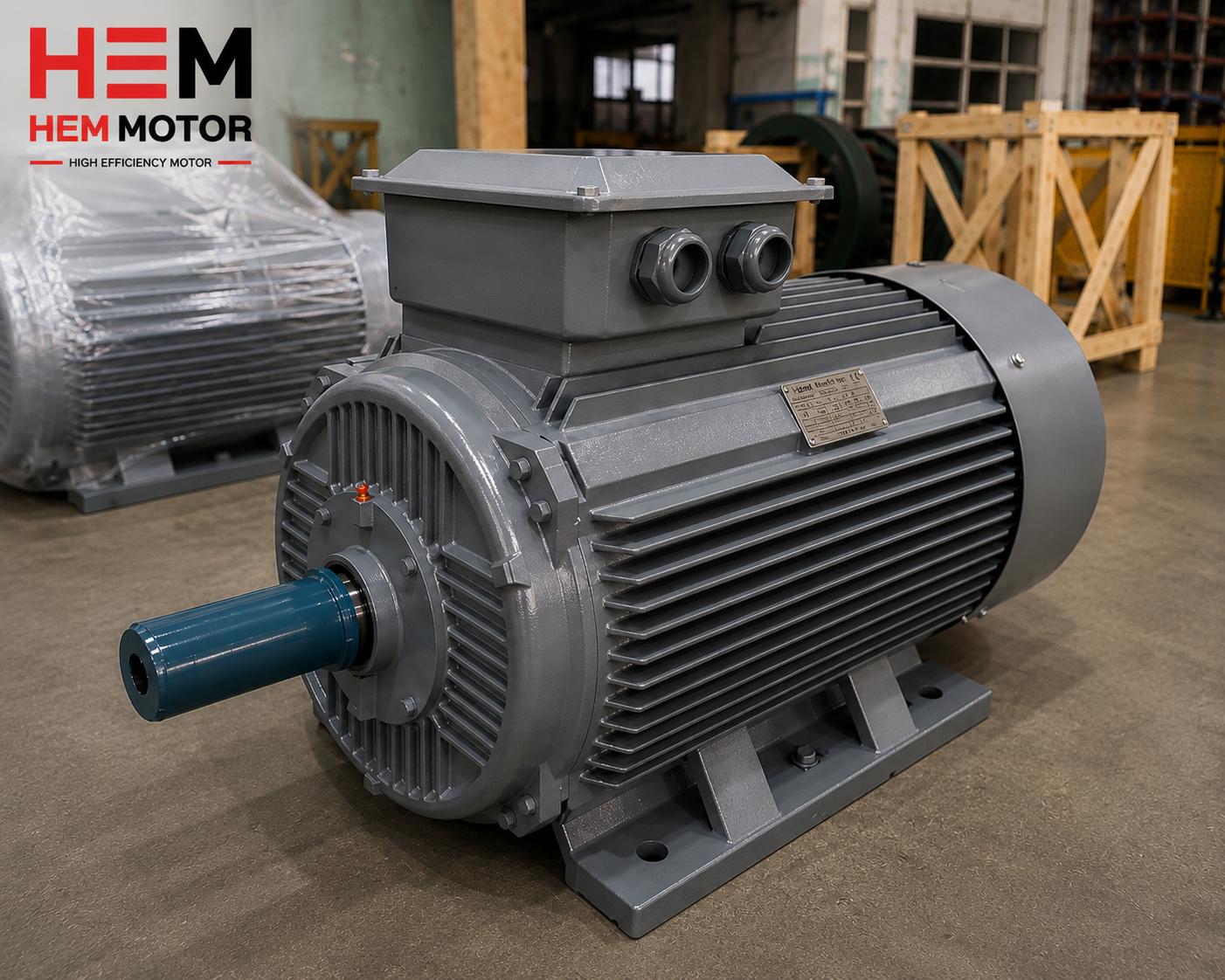

How many leads you see when you open the terminal box of an asynchronous motor directly determines what you can do with that motor. In three-phase asynchronous motors, the terminal lead count can be 3, 6, 9 or 12, and each means a different connection, voltage and starting flexibility. In a three-lead motor the connection is made internally and it runs at a single voltage with a single method; whereas a twelve-lead motor allows almost all combinations such as star-delta starting, dual voltage and part-winding. In this article we cover the 3, 6, 9 and 12-lead terminal arrangements in asynchronous motors one by one; we explain which voltage selection and which starting method each allows, how the terminal bridges are connected, and how to choose the correct lead count for your application. The correct terminal arrangement is a critical decision that determines both the motor's compatibility with the grid voltage and your ability to manage the starting current.
The Logic of Terminal Leads in an Asynchronous Motor
A three-phase asynchronous motor has three phase windings. Each winding has two ends; that is, theoretically six leads. How many of these six leads are brought out to the terminal determines the motor's flexibility. If the winding connection (star or delta) is made internally at the factory and only three leads are brought out, the motor runs fixed at a single voltage. If six leads are brought out, the user can select star or delta with bridges; this makes dual voltage and star-delta starting possible. In nine and twelve-lead motors, each phase winding is split in two (two half-windings), creating even more connection combinations.
As the terminal lead count increases, the motor's flexibility increases but so does the connection complexity. If the bridging is not done correctly, the motor runs at the wrong voltage, draws excess current or does not turn at all. That is why it is essential to know which connection and which voltage each lead count corresponds to.
It helps to clarify a basic concept here: star and delta are the ways the three phase windings are connected to each other. In star connection, one end of each of the three windings joins at a common point (the star point), and the other ends go to the grid. In delta connection, the windings are joined end to end to form a triangle. The same motor matches a lower line voltage in delta and about 1.73 times higher in star. If enough leads are brought out in the terminal box, switching between these two connections is in the user's hands; if not, you are limited to the factory setting. This is the essence of the difference between the 3, 6, 9 and 12-lead arrangements: how much control is left to the user.
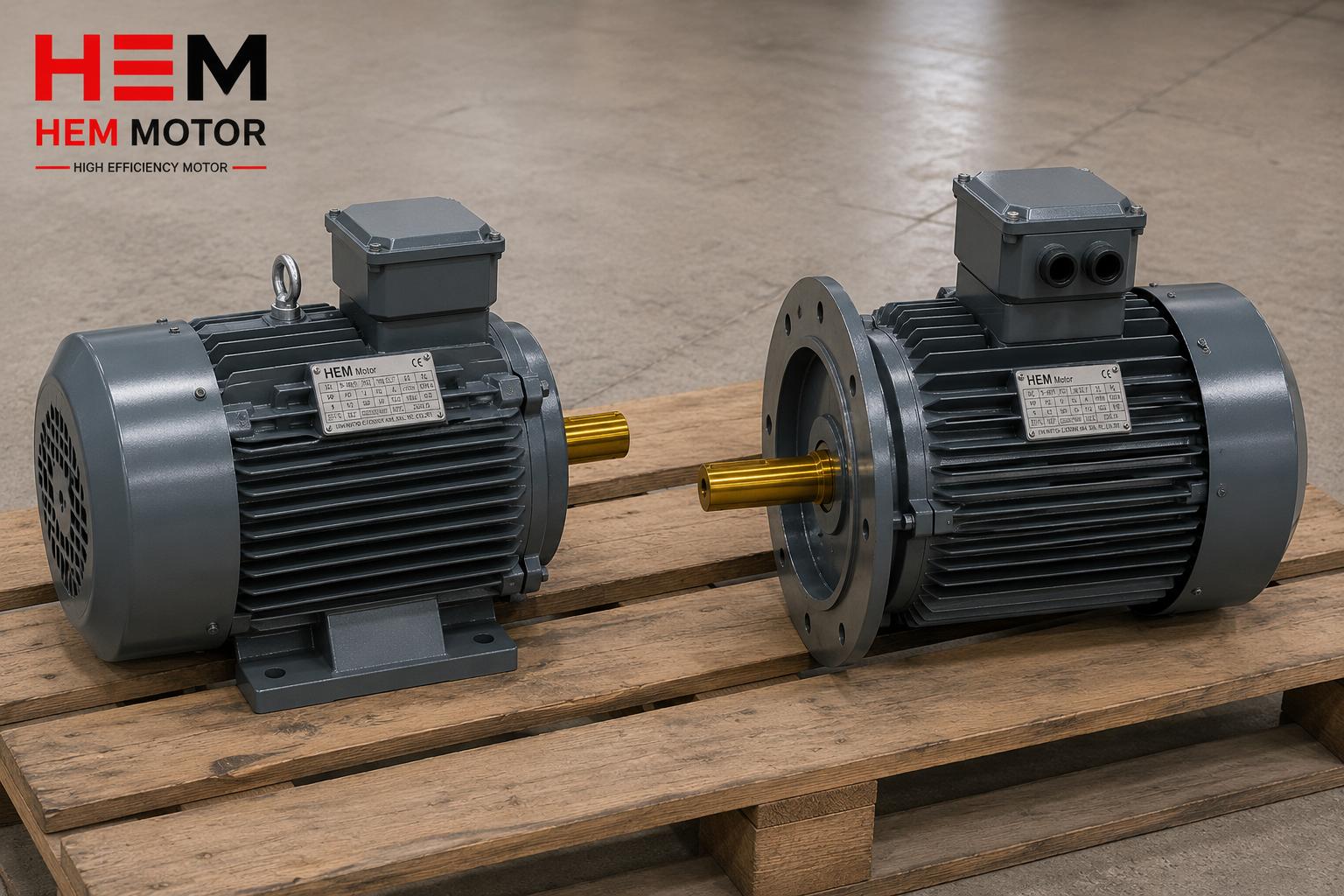
3, 6, 9 and 12-Lead Terminal Arrangements
The table below summarizes the four basic terminal arrangements, the options they offer and typical use.
| Lead Count | Connection Option | Voltage | Starting | Typical Use |
|---|---|---|---|---|
| 3-lead | Internal (star or delta fixed) | Single voltage | Direct (DOL) | Small power, fixed grid |
| 6-lead | Star or delta (via bridge) | Dual voltage (e.g. 400/690V) | Star-delta, DOL | General industry, most common |
| 9-lead | Part-winding / dual voltage | Dual voltage (e.g. 230/460V) | Part-winding, DOL | Export, 60 Hz markets |
| 12-lead | All combinations | Multiple voltage | Star-delta + part-winding | Large motors needing flexibility |
3-Lead Motor
This is the simplest structure. The winding connection (star or delta) is made at the factory and only three phase leads are brought to the terminal. It runs at a single rated voltage and generally allows only direct-on-line (DOL) starting. It is ideal for small-power applications with fixed voltage where starting current is not a problem. There is no flexibility, but the connection is the simplest and the error risk the lowest.
6-Lead Motor
This is the most common arrangement in industry. All six leads of the three windings are brought to the terminal (U1-V1-W1 and U2-V2-W2). The user can select star or delta connection with bridge plates. This allows the motor to run at two different voltages (for example delta 400V, star 690V) and, most importantly, star-delta starting can be applied. In star-delta starting the motor first starts in star (low current, low torque); once the speed settles it switches to delta; this reduces the starting current to about one third.
9-Lead Motor
Each phase winding is split into two halves and nine leads are brought to the terminal. This arrangement is used especially for dual voltage (for example 230/460V) and part-winding starting. In part-winding starting, first one half of the winding is energized (low starting current), and shortly afterwards the second half is engaged. 9-lead motors are common especially in 60 Hz export markets and in applications requiring dual-voltage compatibility.
12-Lead Motor
This is the most flexible structure. Both halves of each phase winding are brought separately to the terminal (twelve leads in total). This arrangement allows multiple voltage combinations (for example 230/400/460/690V) in addition to star-delta and part-winding starting. 12-lead motors are preferred in high-power, flexibility-demanding applications where the same motor must be used on different grids and with different starting methods. The complexity is highest; the connection diagram must always be applied correctly.
How Does the Terminal Lead Count Determine the Starting Method?
The choice of starting method depends largely on the terminal lead count. This is because methods such as star-delta and part-winding require the winding leads to be brought out.
- Direct-on-line (DOL) starting: Possible on every motor including 3-lead. The simplest but highest starting-current method.
- Star-delta starting: Requires at least 6 leads. Reduces starting current and torque to about one third.
- Part-winding starting: Requires 9 or 12 leads. Starting with part of the winding reduces the starting current.
- Soft starter / VFD: Generally used with 3 or 6-lead motors; relies on electronics rather than lead count.
So if you want to softly start a large motor with star-delta, a 6-lead (or 12-lead) motor is essential. For the details of star-delta starting, our terminal and star-delta voltage selection article is a basic reference. For part-winding (12-lead) starting, see our part-winding 12-lead starting article.
Voltage Selection and Terminal Relationship
The terminal arrangement also determines which grid voltage the motor will match. When a 6-lead motor is connected in delta it matches the low voltage; in star it matches root-3 (about 1.73) times that voltage. For example, a motor running at 400V in delta can be connected to a 690V grid in star. This dual-voltage flexibility allows the same motor to be used on different grids.
- Delta connection: Low voltage, full torque, high starting current.
- Star connection: High voltage, or low-current start in star-delta starting.
- Dual-voltage motor: Matches two different grids with correct bridging.
Voltage tolerance and grid fluctuation should also be considered during selection; our voltage tolerance and grid fluctuation article guides on this. For multi-voltage/frequency compatibility in export and multi-country plants, our multi-voltage and 50/60 Hz compatibility article is useful. For terminal cable connection and tightening torque, see our cable connection and cable lug selection article.
Choosing the Correct Terminal Lead Count
When determining the lead count suitable for your application, answer these questions:
- Which grid voltage? If single voltage is enough, 3 or 6 leads; if dual voltage is needed, 6, 9 or 12 leads.
- Is starting current a problem? If star-delta is needed, at least 6 leads; if part-winding is needed, 9 or 12 leads.
- Is there export/multi-country use? 9 or 12 leads provide flexibility for 50/60 Hz and dual voltage.
- Is connection simplicity important? The lowest sufficient lead count is chosen to minimize error risk.
- Is future flexibility needed? If the motor may later be used on a different grid or with a different starting method, a higher lead count protects the investment.
The general rule is this: unnecessarily many leads increase connection complexity and error risk; too few leads restrict you when a future need for star-delta or dual voltage arises. Therefore the lead count should be chosen according to the scenarios the motor may face over its life as much as today's need. The most common and balanced choice is the 6-lead arrangement, which covers the majority of industrial applications.
Commissioning and Connection Check
Whatever the terminal lead count, the checks to be made before commissioning determine the motor's safe operation. Incorrect bridging can cause the motor to burn in the first seconds. The following steps should be followed during commissioning:
- Nameplate voltage verification: The grid voltage is compared with the nameplate value; bridging is done accordingly.
- Bridge plate check: Whether it is connected in star or delta is confirmed against the diagram.
- Tightening torque: Terminal bolts are tightened with the correct torque; a loose connection causes heating and arcing.
- Phase order and rotation direction: The rotation direction is checked at the first start; if needed, two phases are swapped.
- Insulation measurement: Before connection, the winding insulation is checked with a megger.
These checks are the key to safely using the advantage of a correctly selected terminal arrangement in the field. The terminal box orientation and cable entry should also be determined at the ordering stage for ease of installation.
Frequently Asked Questions
Should I connect a 6-lead motor in star or delta?
This depends on your grid voltage and the motor nameplate. If the nameplate says "Δ400V / Y690V", connect in delta on a 400V grid and in star on a 690V grid. A wrong connection leads either to overcurrent and burnout, or to low torque and failure to turn. Bridging must always be done according to the nameplate value. If you want star-delta starting, the motor is set up to run in delta and the control starts it in star.
What is the difference between a 9-lead and a 12-lead motor?
Both offer more flexibility by splitting the winding. A 9-lead motor is generally optimized for a specific dual-voltage and part-winding combination. A 12-lead motor provides the widest flexibility by allowing star-delta, part-winding and multiple voltage combinations. 12-lead is preferred in large motors needing flexibility; 9-lead especially in 60 Hz export applications.
What happens if I connect the terminal leads wrong?
Incorrect bridging has serious consequences: if the motor runs at the wrong voltage it draws excess current and the winding can burn; with a reversed phase order it turns in the wrong direction; with a missing bridge it runs single-phase and is stressed. That is why the connection must always be made according to the diagram on the motor nameplate and checked before commissioning. In case of doubt, the manufacturer connection diagram should be the basis.
To be sure which terminal lead count (3, 6, 9 or 12) is correct for your asynchronous motor, tell us your grid voltage, starting method and application. Let the HEM Motor engineering team determine the correct terminal arrangement and connection diagram together; with our wide stock range and fast delivery advantage, contact us for a correctly optioned order and request a quote.