English
 Türkçe

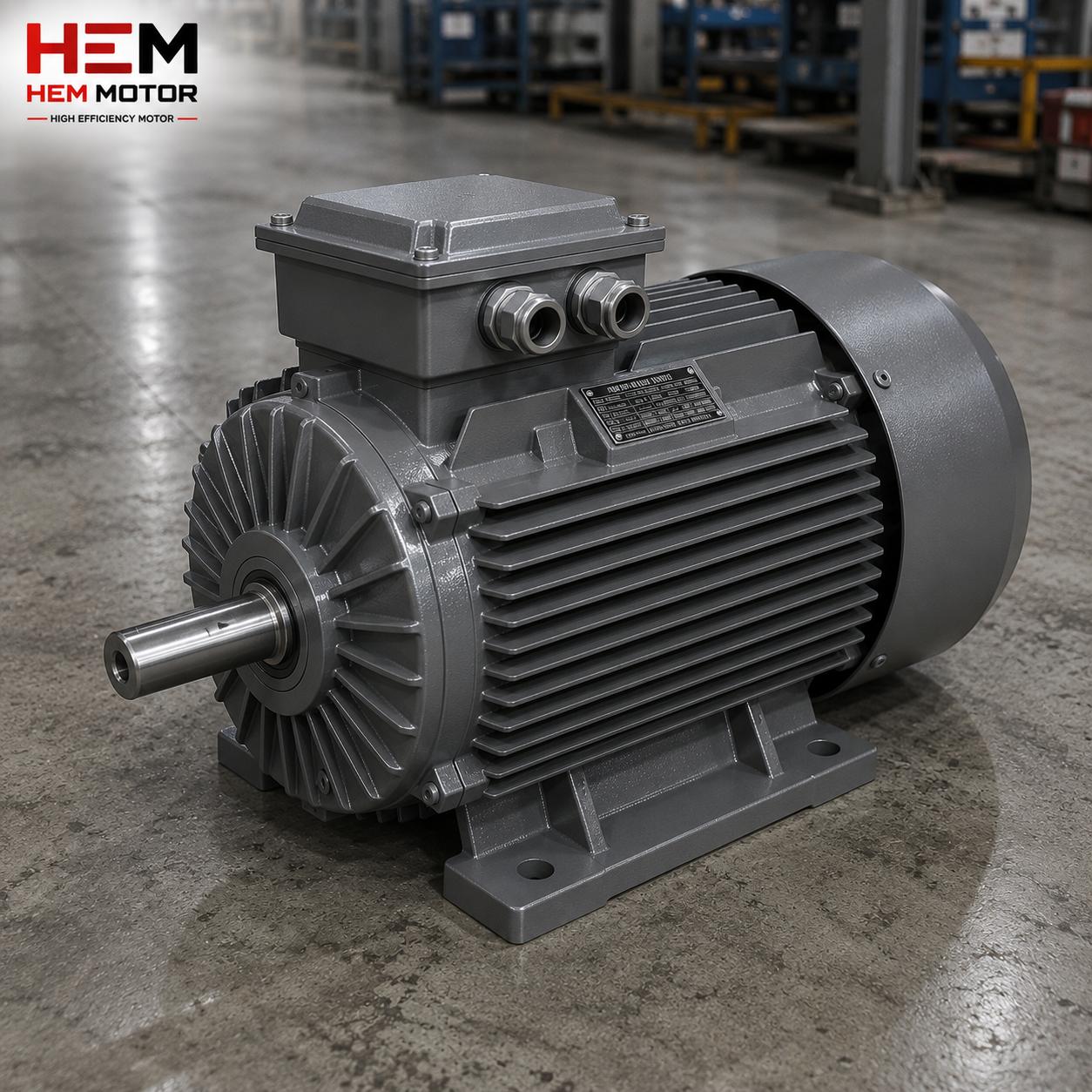

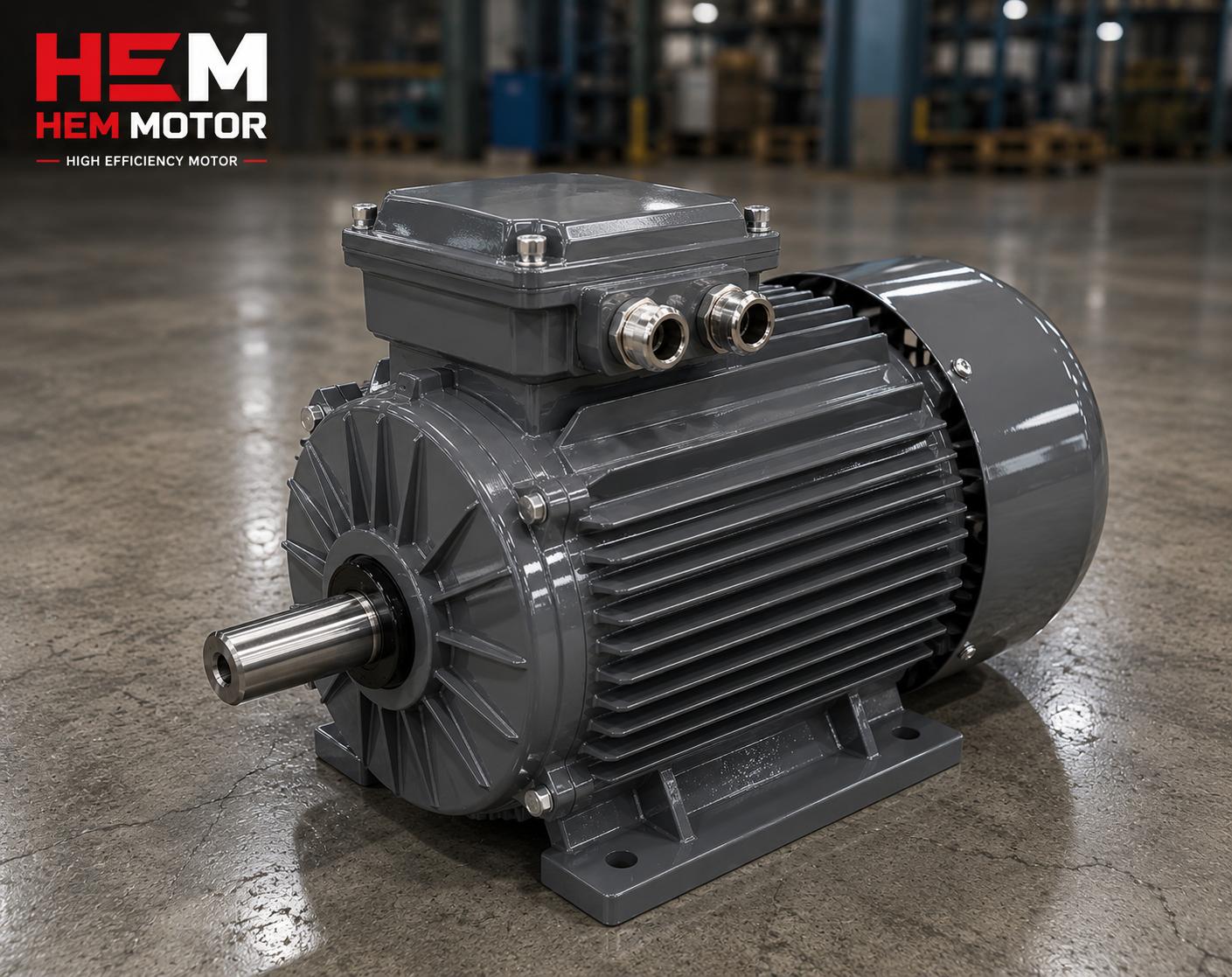
The first question buyers usually ask when sourcing an electric motor or gearbox is "how much does it cost?" The better question, however, is "which line items make up this price, and which configuration gives me the lowest total cost?" Two motors of the same power rating may carry the identical kW figure on the nameplate yet be priced very differently depending on efficiency class, body material, mounting type, origin, warranty scope and the accessories requested. This comprehensive guide does not quote a fixed price; instead it explains the factors that affect the price, the total cost of ownership (TCO) logic, how to read a proforma, and the steps to budget correctly. The goal is for you to understand what each line in a quote means and to build your budget around real need. At HEM Motor we supply IE3 and IE4 motors from 0.12 kW up to 355 kW, in aluminium and cast iron bodies, together with worm gear and K series bevel helical reducers, so we can explain each of these line items with concrete examples. This page is also the central reference for our other detailed articles on price and cost; in each section you will find links to in-depth guides on the related topic.
Factors Affecting Electric Motor Price
A motor's price depends not on a single variable but on the sum of a series of interrelated technical decisions. Knowing these line items individually lets you compare quotes fairly and avoid budgeting for features you do not need. If you want to study the subject in more depth, our detailed guide on the 9 factors that affect electric motor prices from a buyer's perspective is the natural continuation of this section.
Efficiency Class: IE3, IE4 and IE5
Efficiency class is the first line item that directly affects the purchase price. A higher efficiency class (IE3 Premium, IE4 Super Premium, IE5) means more and higher-quality copper winding, better electrical steel and more precise manufacturing, which pushes the purchase price up. To raise efficiency the manufacturer increases the amount of copper in the winding, uses special low-loss laminations and produces to tighter tolerances; all of this is reflected in material and labour cost. Consequently an IE4 motor appears more expensive on the nameplate than an IE3 motor of the same power. But efficiency class is not only a purchase item: as the motor runs continuously, the efficiency difference returns every hour on the energy bill. So an IE4 motor is bought at a higher price than IE3 but, over the years, lowers electricity consumption, closes the gap and then turns into net savings. The higher the operating hours, the faster this payback. This balance is at the heart of the lifecycle cost logic explained later and shows why the "expensive motor" perception is usually misleading.
Power (kW) and Speed
As power rises, motor price rises too; that is expected. But within the same kW, the choice of speed (number of poles) also affects price. Low-speed motors (e.g. 1000 rpm, 6-pole) are generally more expensive than their high-speed (3000 rpm, 2-pole) counterparts because they produce the same power in a larger frame. The reason is that delivering the same power at low speed requires greater torque and therefore a larger body, which means more casting, more copper and bigger bearings. So speed selection is not merely a technical preference but a direct cost decision. A common mistake is choosing a motor larger than needed; stepping up "just in case" raises both purchase price and energy consumption unnecessarily, because a motor running at partial load has lower efficiency and power factor. Correct power and speed selection determines both the initial price and whether the job is done properly. With HEM Motor's wide range from 0.12 kW to 355 kW and 1000/1500/3000 rpm speed options, it is possible to find a combination that fits your need exactly without paying for excess capacity.
Body Material: Cast Iron or Aluminium?
Body material is a critical choice that determines both price and durability. Aluminium-body motors are lighter and generally preferred at small to medium powers (such as 0.12-2.2 kW reducer inputs). Cast iron bodies, on the other hand, suit heavy duty, high mechanical strength and demanding environments and are usually more costly. At HEM Motor cast iron body options are offered as standard in the 0.55-355 kW range, while at small powers an aluminium body provides a cost advantage. The wrong material choice leads either to an unnecessarily expensive motor or to a short-lived solution.
Frame Size and Mounting Type
The same kW may come in different frame sizes, and cost increases as the frame grows. Mounting type also affects price: foot-mounted B3, flanged B5/B14 and combined B35/B34 mountings each require different machining and casting. Shaft diameter and key dimensions must match the coupling, pulley or reducer you connect to; to get this right from the start, be sure to review our guide that covers motor shaft diameter and key dimensions for coupling and pulley compatibility. A wrong shaft or flange renders a motor unusable and creates a loss independent of price.
Brand, Origin and Warranty
The most common reason two motors with the same kW on the nameplate are priced differently is the difference in brand, origin and warranty. Copper winding ratio (full copper or partly aluminium), bearing quality, manufacturing standards, certificates and the after-sales service network set the price. A full-copper motor with quality bearings and a wide service network may look more expensive in the short term but returns that difference through fewer faults and longer life. We detail why brand, origin and warranty cause motors of the same kW to be priced differently in a separate article; this comparison is a useful guide to seeing what a seemingly cheap quote costs you on the warranty and service side. Beyond the warranty period, what the warranty covers also matters; whether it includes only the motor or also transport and labour is a detail that determines the real cost.
Certificates, Protection Class and Accessories
Standard features such as IP55 protection class and class F insulation are present on most industrial motors; however, higher protection (e.g. IP65/IP66 for dusty, humid or wash-down environments), special paint/RAL colour, thermal protection (PTC/PT100), encoder, brake or forced cooling are separate line items added to the price. Each is valuable when added for a real need and merely cost-increasing when added unnecessarily. For instance, a pump motor that always turns the same way needs no encoder, whereas a drive performing precise positioning requires one. Questioning whether these accessories are truly needed when requesting a quote is the easiest way to direct the budget to the right place. Certificates (CE and application-specific documents) are mandatory in some sectors, so confirming up front whether they are included in the quote prevents surprise costs later.
Reducer and Geared Motor Cost
Your drive requirement is often not just a motor but a motor-reducer package. The line items that affect price on the reducer side differ partly from the motor and, if not understood correctly, are where the budget slips the most.
What Determines Geared Motor Price
The price of a geared motor is shaped by reduction ratio, reducer type (worm gear, bevel helical, etc.) and frame size. A high ratio does not always mean more expensive; the real driver is the required output torque and frame class. You can examine these line items systematically in our article on the factors that affect geared motor price in terms of ratio, type and frame size.
What Affects Worm Gear Reducer Price
In worm gear reducers the body type (HEM30-HEM130), reduction ratio, input flange and output shaft configuration set the price. Correct body selection is critical for both the capacity to carry the motor and the budget. Our detailed guide on the 7 factors affecting worm gear reducer prices and correct body selection (HEM30-HEM130) helps you avoid the most common mistakes at small powers.
Reducer Type Choice: Bevel Helical or Worm Gear?
In some applications a K series bevel helical reducer is more efficient and more economical in the long run than a worm gear; in others a worm gear is the more affordable initial investment. We clarify how this decision changes operating cost in our article on where a K series bevel helical reducer is more economical than a worm gear. In addition, the question of in which applications the self-locking feature offered by some worm gear reducers is required helps you choose the right type for both safety and cost.
Geared Motor or Separate Motor + Reducer?
Is a monoblock geared motor or coupling a separate motor with a separate reducer the better choice? This decision affects both purchase and maintenance cost. Our article comparing geared motor versus separate motor + reducer from a purchasing and maintenance perspective also determines your future spare parts and service cost. If you prefer separate parts, the motor must match the reducer correctly in terms of IEC frame and flange; our guide on which electric motor fits a worm gear and NMRV reducer by IEC frame and flange matching eliminates costs arising from wrong orders.
Mounting Position and Lubrication
The reducer's mounting position (M1-M6) determines the lubrication type and therefore the order detail; reporting the wrong position causes early wear and replacement cost in the field. Our article covering reducer mounting positions (M1-M6) and lubrication for correct ordering ensures you do not skip this detail at the quotation stage.
Reading Quotes and the Ordering Process
Once you have learned the line items that affect price, the next step is to read the proforma/quote correctly. A well-read quote reveals hidden costs and missing items.
How to Read a Proforma and Quote
In a proforma, power, efficiency class, frame, mounting, speed, accessories, warranty period, delivery time and delivery terms should each appear separately. A quote that says "X kW motor" on a single line is not enough for comparison. Our detailed guide on reading an electric motor proforma and quote: the line items that make up the price and what to watch for gives you the method to compare two quotes apple-to-apple.
Selecting the Right Model by Reading the Catalog
The accuracy of a quote begins with your ability to read the catalog. If you can extract the right model, shaft diameter, frame size and connection dimensions from the technical table, you speak precisely when requesting a quote and reduce the risk of incorrect items. Our article that answers, step by step, how to read an electric motor catalog and select the right model from the data table is the essential resource to read before ordering.
Stock Standard Motor or Special Manufacture?
Whether you meet the same need with a stock standard motor or with special manufacture changes both price and lead time. A stock motor is usually more affordable and faster; special manufacture brings additional cost and delivery time. Our article addressing stock standard motor versus special manufacture in terms of cost difference, lead time and the right choice helps you make the correct decision on urgent jobs.
Total Cost of Ownership (TCO) Logic
A motor's real cost is not its nameplate price. In a continuously running motor, energy consumption makes up by far the largest part of the lifecycle total cost; maintenance, spare parts and possible downtime add on top. As an industry rule of thumb, in a heavily used motor the lifetime energy cost far exceeds the purchase price; that is, the purchase item is only a small slice of the whole picture. For this reason "the cheapest purchase" often means "the most expensive ownership." To build total cost of ownership (TCO) correctly you must consider four items together: purchase price, lifetime energy consumption, planned maintenance expense and production loss caused by unplanned downtime. When these four are evaluated together, it becomes clear that a seemingly cheap motor can in fact be the most expensive option.
Balancing Purchase Price, Maintenance and Operation
The ratio of maintenance and operating cost to purchase price is an overlooked but decisive indicator in motor selection. A cheap, low-efficiency motor becomes expensive over time through a high electricity bill and frequent maintenance. Our guide on the ratio of maintenance and operating cost to purchase price and seeing the real lifecycle cost shows why building a budget on the first invoice alone is misleading.
Seeing Energy Savings in Numbers
To see concretely how much annual saving an efficiency class brings, you can use our electric motor energy savings calculator. By entering the motor power, operating hours and unit electricity price, you can see the payback time of the difference between IE3 and IE4. When you see how short this payback can be in a high-operating-hours facility, you realise that investing in efficiency class is in fact a savings decision. For other calculations, our electric motor calculation tools page also helps; you can quickly check values such as power, current, torque and reduction ratio there. These tools turn the "expensive motor" perception into a sound investment decision backed by real numbers and strengthen your hand when negotiating at the quotation stage.
Correct Budgeting and Requesting Quotes
Budgeting begins with ranking the price-affecting line items according to need and requesting the right quote. First clarify the application's real power and speed; then choose body material, mounting type and efficiency class based on the job's lifespan and operating duration. In a continuously running facility, investing in efficiency class usually pays for itself; in a short-duration, low-use application, the initial cost may be more decisive. Add accessories only if they are truly required. When you turn all of this into a clear request and ask for a quote, you get both a fast and an accurate price.
A practical budgeting approach follows this order: in the first step the drive power and speed required by the application are determined, taking exact measurements from the existing motor nameplate if necessary. In the second step the operating regime (how many hours, how many shifts, continuous or intermittent) is defined; this determines whether the efficiency-class investment makes sense. In the third step the ambient conditions (dust, humidity, temperature, chemicals) clarify the protection class and body material. In the fourth step the mechanical connection (shaft diameter, key, flange, mounting type) is matched so there is no loss from a wrong order. In the final step the delivery time and warranty expectation are communicated clearly to the supplier. Turning these five steps into a request form protects both your time and the supplier's and increases the accuracy of the incoming quote. If a geared drive is involved, the target output speed and output torque must also be added to this list, because the reducer-side price largely depends on these two values.
When building a budget, avoid three common mistakes: first, looking only at the lowest nameplate price and ignoring the warranty and service side; second, adding more power than needed or unnecessary accessories "just in case"; third, choosing the cheapest but latest-delivering option without accounting for lead time and halting production. A correct budget seeks not the lowest purchase price but the lowest total cost of ownership together with an acceptable delivery time.
At HEM Motor we supply IE3 and IE4 motors, in aluminium and cast iron bodies, together with worm gear and K series reducers, all from a single source. You can review the product range on our Products page and browse the guides in our price lists and catalogs category for a solution suited to your need. The starting point for correct budgeting is the broad product and content network you can reach from our HEM Motor homepage.
Frequently Asked Questions
Why are two motors of the same kW priced differently?
Because kW is only one line item. Efficiency class (IE3/IE4/IE5), body material (cast iron/aluminium), frame size, mounting type, brand and origin, warranty scope, certificates and added accessories all set the price. To compare two quotes fairly, ask that these line items appear separately in the proforma.
Does it make sense to buy a more expensive but high-efficiency motor?
If the motor runs continuously, usually yes. A higher efficiency class raises the purchase price but lowers the energy bill, closing the gap over time. To see the payback period, you can calculate the concrete saving by entering the motor power, operating hours and unit electricity price into the energy savings calculator.
How do I build my budget around the lowest total cost?
Look not only at the nameplate price but at the total cost of ownership (TCO): purchase + energy + maintenance + possible downtime. First clarify the real power and speed, choose the body and efficiency class based on operating duration, strip out unnecessary accessories and compare line items on an itemised proforma.
Request a Quote
If you want the right price and lead time for an electric motor or reducer suited to your need, share your application's power, speed, mounting and efficiency-class details with us. Our expert team clarifies all price-affecting line items with an itemised quote. You can call us at +90 (532) 345 49 86 or send your request via our contact page.