English
 Türkçe

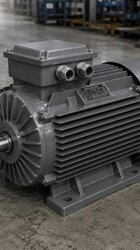
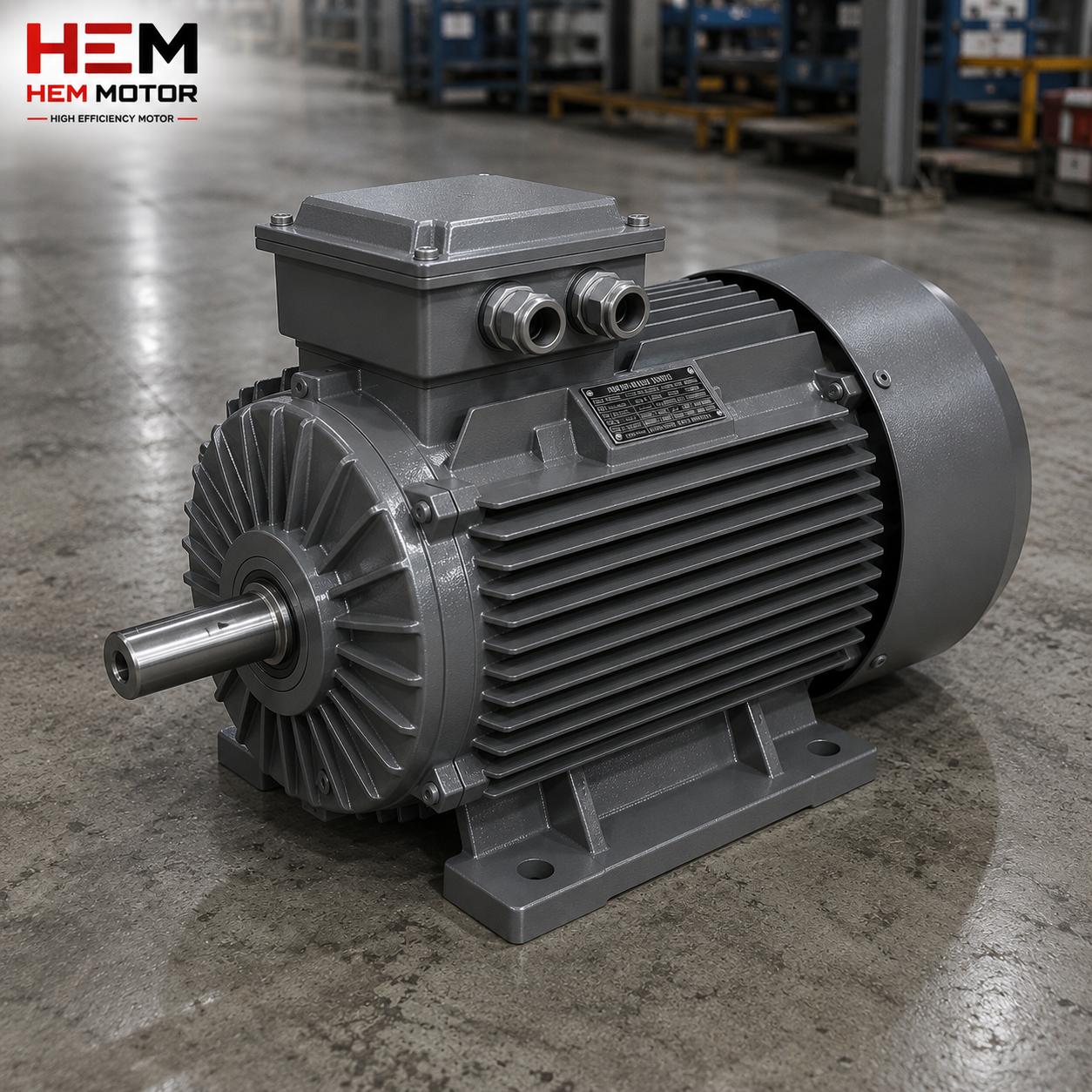

One of the first crossroads you face when buying an electric motor is this: should you take a ready standard motor from stock, or order a motor specially manufactured for your needs? This decision directly determines the cost, the lead time, and how well the motor will fit your machine. In most applications, a stock standard motor is both an economical and a fast solution; however, when needs such as a special voltage, special flange, special shaft or certification are involved, special manufacture becomes unavoidable. In this guide we compare the stock standard motor and the special-manufacture motor from every angle, clarifying the factors that affect cost, the difference in lead time, and which one is the right choice in which situation. In this article we do not give a fixed price or figure; our aim is to provide the framework that leads to the right decision.
At HEM Motor, with our wide stock range we offer fast solutions for standard needs, while also providing the right manufacturing guidance for special requirements. Our goal is to understand your need correctly and protect you from unnecessary cost and waiting time.
What Is a Stock Standard Motor?
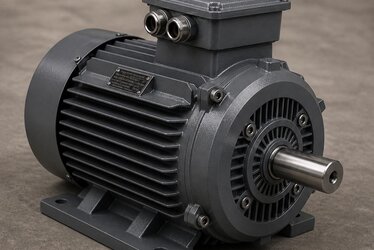
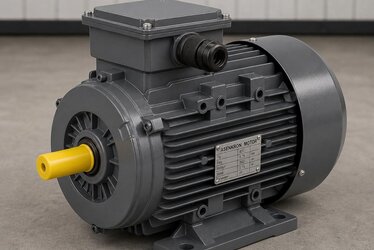
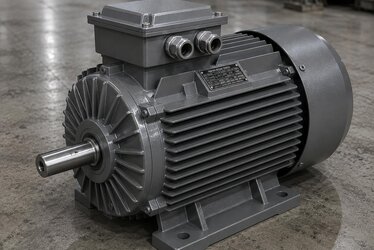
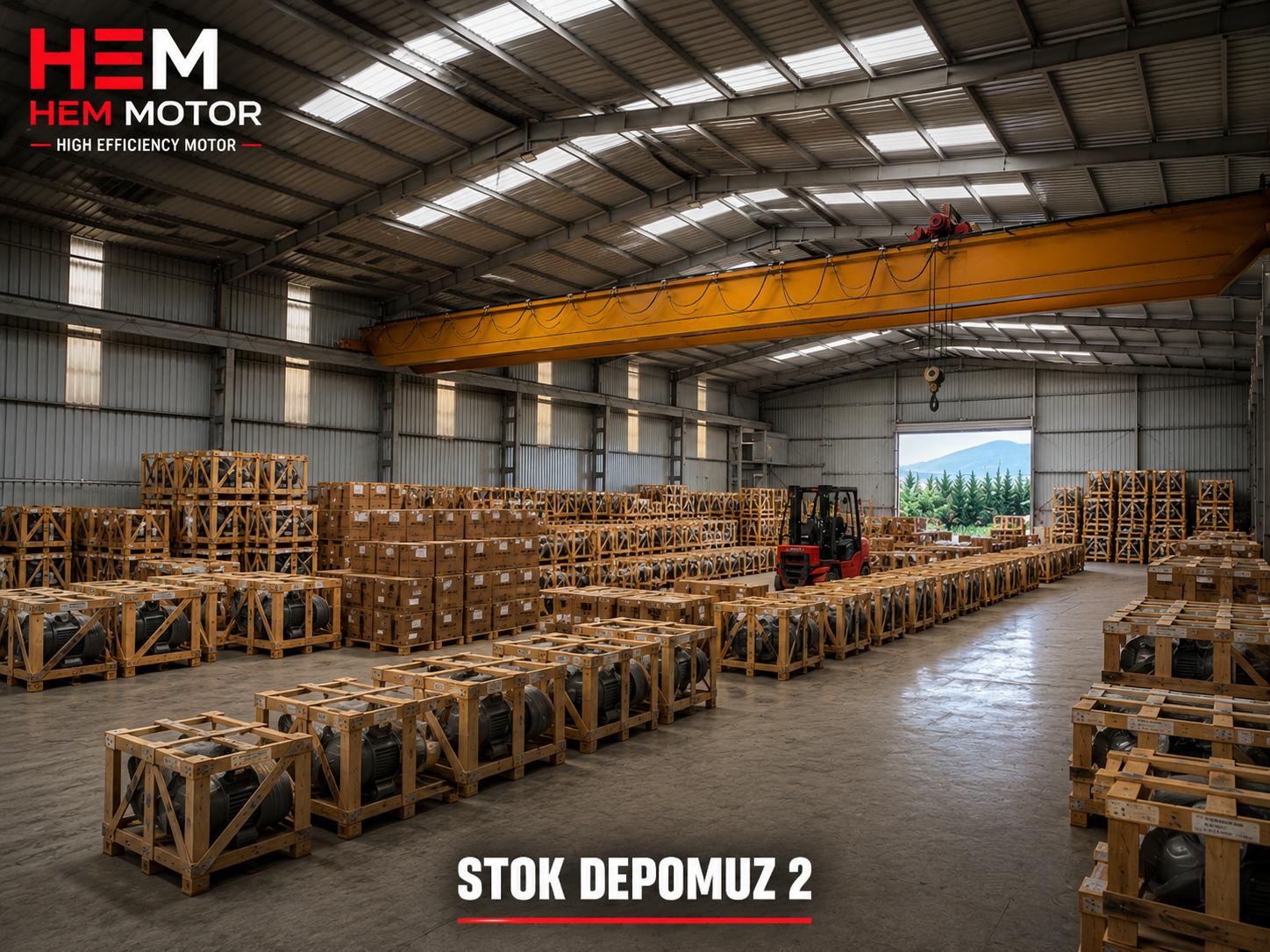
A stock standard motor is a series-production motor waiting ready in the warehouse, in commonly used combinations of power, speed, mounting type and voltage. The most sought-after values in the market (for example powers starting from 0.55 kW and going upward, 1500 and 3000 rpm speeds, B3/B5/B35 mounting types, 400V three-phase) are usually found in stock. These motors are produced as standard in the IE3/IE4 efficiency class, with IP55 protection and class F insulation.
The biggest advantage of a stock motor is speed and cost: because it is series-produced, its unit cost is low and it can be dispatched immediately. You can find which power-speed combinations are most sought after in our IE3 stock guide content. To select the right standard motor, our step-by-step selection guide shows the way.
When Is a Special-Manufacture Motor Needed?
Special manufacture comes into play for motors that are not in standard stock or that must meet a special requirement. Typical special-manufacture needs are:
- Special voltage/frequency: a non-standard voltage (for example a different grid voltage for export) or 60 Hz applications. Our multi-voltage and 50/60 Hz compatibility content is a guide on this.
- Special flange and mounting: a special connection surface or hole pattern outside standard B3/B5/B35. You can review mounting types in our B5 vs B14 selection guide.
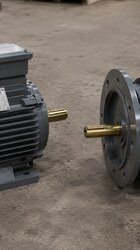
- Special shaft: non-standard shaft diameter, length, double shaft end or special key. For details, see shaft diameter and key dimensions.
- Special paint/coating: a special paint system or color for corrosive environments.
- High protection class: IP65/IP66 for dusty/wet environments; see IP protection class selection.
- Certification and special tests: a conformity certificate to certain standards, or specially certified motors such as explosion-proof (ATEX). We addressed the explosion-proof need in our when is an explosion-proof motor required content.
Factors That Affect Cost
There are many factors that determine motor cost, and most of them apply independently of the standard-special distinction. The main elements affecting cost are:
Power, Frame Size and Material
Higher power means a larger frame and more copper-steel material, which raises the cost. A cast-iron body is more durable but heavier and more costly than an aluminium body. A copper winding is more efficient and longer-lasting than an aluminium winding; we explained the copper-aluminium winding difference in our copper and aluminium winding difference content.
Efficiency Class
IE3 and IE4 motors may be more costly at the initial purchase because they require more active material and higher-quality production; however, in continuously running applications they pay back this difference over time through energy saving. The efficiency-class mandate also determines the choice; you can find which power requires which class in our IE3/IE4 efficiency mandate content.
Brand, Origin and Warranty
Two motors of the same kW value may be priced differently according to brand, manufacturing origin, warranty scope and quality level. We addressed the reasons for this difference in detail in our brand, origin and warranty difference content. We collected all factors affecting electric motor prices in general in our factors affecting prices article.
Quantity and Production Volume
In special manufacture, one of the most important factors determining the unit cost is quantity. Producing a single special motor means that all the setup and tooling costs fall on a single product; whereas when many motors of the same specification are ordered, these fixed costs are divided and the unit cost drops. For this reason, special manufacture can become economical for machine manufacturers (OEMs) at sufficient quantity. For a one-off need, adapting a stock standard motor with accessories is often more sensible. We addressed the cost advantage in bulk and project-based purchasing in our cost reduction in wholesale purchasing content.
Lead-Time Difference
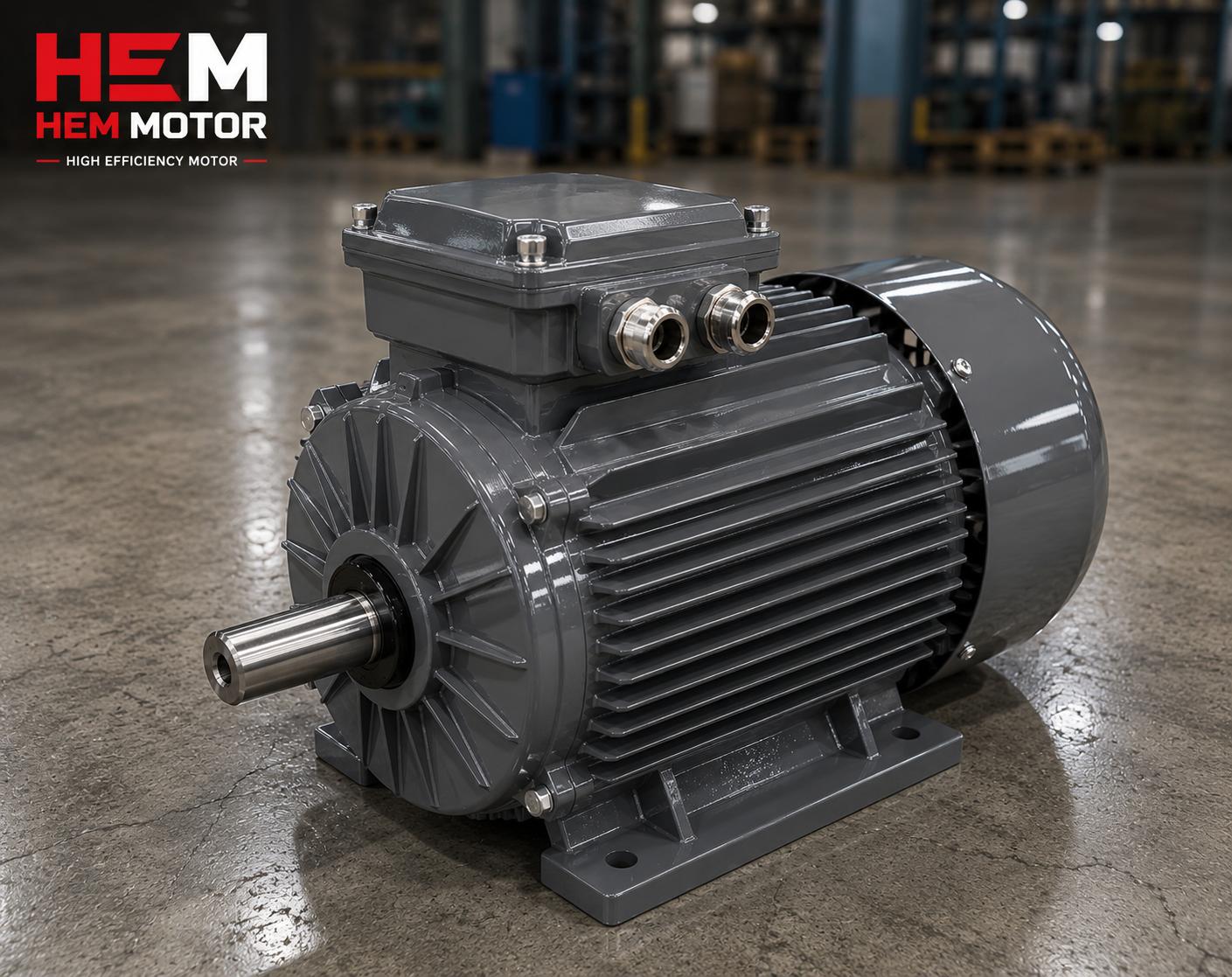
The most obvious practical difference between stock and special manufacture is the lead time. A stock motor, being ready in the warehouse, can be dispatched the same day or within a very short time; in urgent failure and downtime situations, this speed is critical. A special-manufacture motor, on the other hand, enters the production queue; special winding, special shaft machining, special paint and test processes are added to the lead time. For motors requiring a special voltage or certification, this time can extend further.
Therefore, in plannable projects the lead time of special manufacture should be accounted for from the start, while for urgent needs stock solutions should be preferred as much as possible. We explained the balance between delivery from stock and a production order in our from stock or production order content, and the fast-supply approach for urgent needs in our finding an emergency replacement motor article.
When Standard, When Special? A Decision Framework
A practical decision framework can be summarized as follows:
- Standard stock is enough: if your need is a common power-speed-mounting-voltage combination, if standard protection and insulation class do the job, and if urgent delivery is required, a stock motor is the most correct and economical choice. Most general industry, pump, fan and conveyor applications fall into this category.
- Special manufacture is required: if a non-standard voltage/frequency, special mechanical connection, special shaft, corrosive-environment paint, high protection class or special certification is needed, you must turn to special manufacture. In that case, lead time and cost should be planned from the start.
In many cases there is a third way: bringing a standard stock motor closer to the need by ordering it with some accessories (brake, encoder, PTC protection, special terminal box orientation). This can be faster and more economical than full special manufacture. If you are replacing an old motor, our direct replacement of an old-brand motor and nameplate matching guides are very helpful for finding an exact equivalent.
Total Cost of Ownership: Not Just the Sticker Price
Deciding between stock and special by looking only at the initial purchase price can be misleading. The real cost of a motor is the sum of the purchase price, installation and adaptation expenses, the energy it consumes over its working life, and maintenance costs. In a continuously running application, energy consumption often far exceeds the purchase price of the motor; therefore a slightly more costly but high-efficiency (IE3/IE4) motor can be more economical in the long run.
Similarly, forcing a wrongly selected standard motor to fit (adapter flange, coupling adaptation, speed correction with belt-pulley) can cause both extra part cost and efficiency loss. In that case, a motor with the right specifications from the start is more advantageous overall. You can find the decision to replace an old motor with a new one and the payback logic in our replacing an old motor with IE4 content, and at what load it is efficient to run the motor in our correct sizing article.
What Should You Provide for an Accurate Quote?
The best way to quickly determine whether stock or special is required is to define the need clearly from the start. When power, speed/poles, mounting type, voltage/frequency, protection and insulation class, and any special shaft/flange and certification need are stated, the seller can offer you the right solution (stock or special) and a realistic lead time. You can find the full list of information to provide when requesting a quote in our information to provide when requesting a quote content, and learn to read the incoming quote correctly in our proforma and quote reading article. You can review our entire motor range via the HEM Motor home page, and go over the whole purchasing process with our purchasing mistakes content.
Frequently Asked Questions
Will a standard motor fit my machine, or do I need a special one?
If your need is a common combination of power, speed, mounting type and voltage, a standard stock motor will most likely fit. By matching the nameplate data of your existing motor exactly, an equivalent can often be found from stock. However, if a special voltage, special shaft/flange or high protection class is needed, special manufacture comes onto the agenda. The healthiest way is to share your nameplate data and confirm suitability together.
Is special manufacture always more expensive?
Special manufacture is generally more costly than a stock motor because of the extra production steps and smaller production quantities; however, this varies by application. In some cases, forcing a wrong standard motor to fit (extra adapter, intermediate part, efficiency loss) can end up more expensive overall than special manufacture. The correct approach is to evaluate the total cost of ownership (motor + installation + energy + maintenance) as a whole.
What can I do for an urgent need without waiting for a special motor?
In an urgent failure and downtime situation, instead of waiting for a fully special motor, it is often possible to produce a temporary solution with the nearest equivalent motor from stock. You can bring a standard stock motor closer to the need by supporting it with the required accessories, and supply the permanent special solution later in a planned way. This approach minimizes the high cost of production stoppage.
Get a Quote
Let us clarify the standard-versus-special distinction for you and offer the fastest and most suitable solution. Share your need and let us determine the right motor and a realistic lead time together. Reach us now via our contact page or call +90 (532) 345 49 86.
Decision Checklist
- Are the power, speed/poles, mounting type and voltage/frequency needs clear?
- If the need is a common combination, has a stock motor been considered?
- Are a special shaft, special flange, special paint or high protection class required?
- Is there a special voltage/frequency or certification (e.g. explosion-proof) need?
- Is urgent delivery required, or can the lead time be planned?
- Does a standard motor + accessory solution meet the need?
- Has the total cost of ownership (motor + energy + maintenance) been evaluated as a whole?