English
 Türkçe

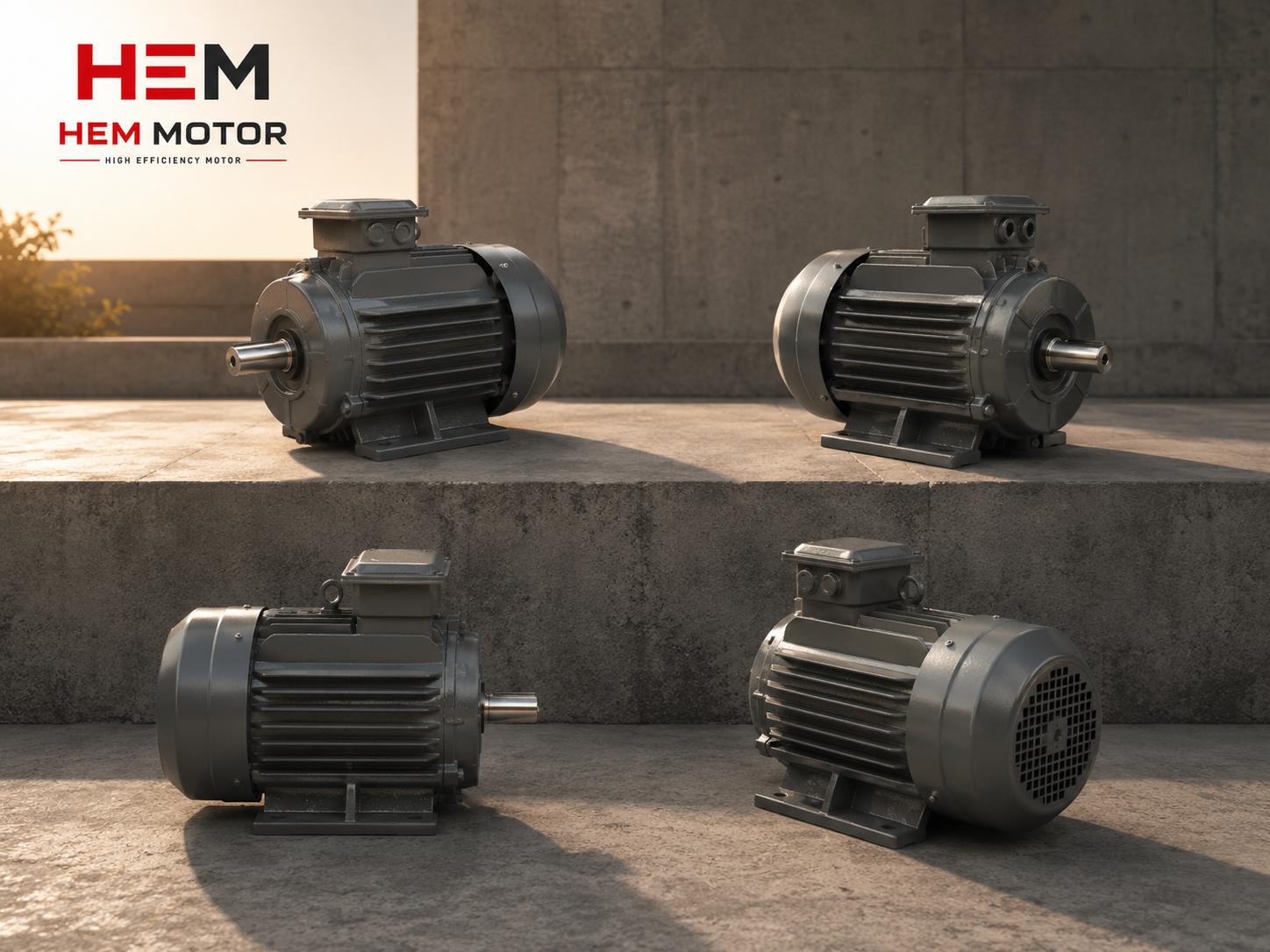

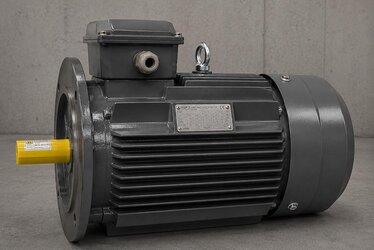
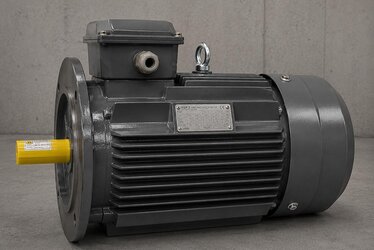
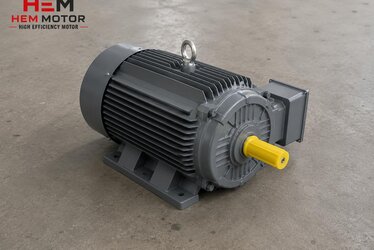
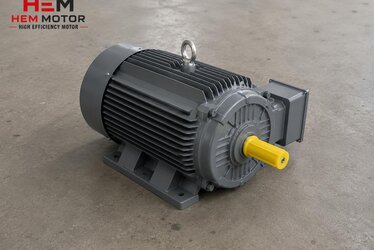
Getting two different speeds from a single motor is a direct purchasing advantage for many machine builders and plant operators. Dual-speed (Dahlander) asynchronous motors let you switch between high and low speed with a simple contactor group, without investing in a separate variable frequency drive. As both a manufacturer and supplier, HEM Motor provides dual-speed three-phase motors and asynchronous motors from stock and to order for fan, conveyor, crane and cooling applications. This guide looks at where a Dahlander connection makes sense, when to choose a VFD instead, and how to order the right product, all from a buyer's perspective.
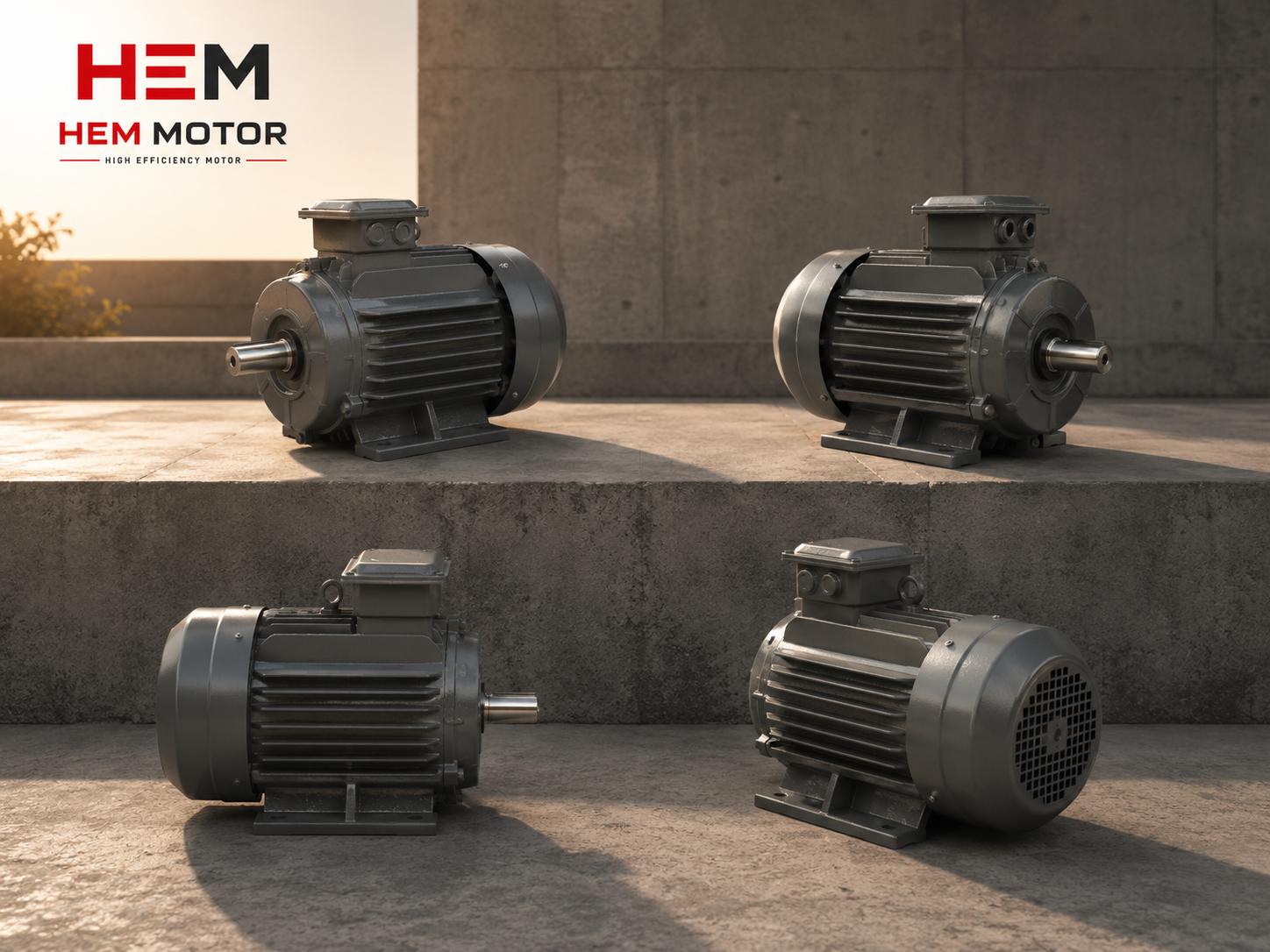
What Is a Dual-Speed (Dahlander) Motor and Why Choose One?
The Dahlander winding is a classic pole-changing method that obtains two synchronous speeds by changing the pole count of a single winding arrangement. The most common combination is 2/4 poles, around 3000/1500 rpm (roughly 2850/1420 rpm under load); variations such as 4/8 poles (1500/750 rpm) and 6/12 poles are produced depending on the application. The key point is that the ratio of the two speeds is always 1:2. When independent ratios are needed (for example 1500/1000), a two-separate-winding motor is required.
The appeal for a buyer is clear: you obtain two speed steps with only contactors and thermal protection, with no variable frequency drive (VFD) cost. Quiet, low-flow operation at low speed and full capacity at high speed: this duality gives operational flexibility especially on ventilation and material-handling lines. Depending on the speed selection, units can be supplied in IE3/IE4 motor efficiency classes, with a cast iron motor body and IP55 protection. If you are unsure which speed combination suits your job, our 2, 4, 6 pole selection guide explains the logic step by step.
Dahlander Connection Types: Constant Torque or Constant Power?
The key to ordering the right dual-speed product is choosing the connection type that matches your load characteristic. There are three basic Dahlander arrangements, each aimed at a different load profile:
Constant Torque Connection
Producing roughly the same torque at both speeds, this arrangement suits conveyors, screw augers and mixers that demand similar torque regardless of speed. Power roughly doubles at high speed. If you are considering a dual-speed replacement during a conveyor belt motor swap, this is the primary option.
Constant Power Connection
Delivering roughly the same power at both speeds, this arrangement suits machine tools and winding machines where less torque is sufficient at high speed. Torque increases at low speed.
Variable Torque (Fan-Pump) Connection
Aimed at fan and pump loads where required torque rises with the square of speed. It draws very low power at low speed, saving energy on ventilation and extraction lines. Our aspirator and dust-collection fan motor selection article details this load profile.
Which Application Needs a Dual-Speed Motor, Which Needs a VFD?
This is the most common purchasing question we hear. If two steps are enough and your speed ratio is 1:2, the Dahlander motor is the most economical solution: no drive cabinet, harmonic filter or cable screening concerns. But if you need stepless speed control, soft ramped starting or a ratio other than 1:2, you should move to a VFD with an asynchronous motor. For most plants the practical rule is: two clear operating points favor Dahlander, continuously varying process demand favors a VFD.
Typical dual-speed applications:
- Ventilation and smoke-exhaust fans: quiet low-speed operation normally, full flow at high speed when needed. Our smoke-exhaust fan motor supply guide helps clarify project requirements.
- Cranes and lifting systems: low speed for precise positioning, high speed for fast travel.
- Agitators and mixers: low speed at startup, high speed in production.
- Cooling towers: two-step fan operation by season.
Information to Provide When Ordering a Dual-Speed Motor
So we can supply the right product quickly, we recommend confirming the following at the quotation stage: required speed combination (e.g. 1500/750 rpm), load type (constant torque / constant power / fan-pump), power needed at each speed (kW), mounting type (B3 / B5 / B35), body material preference and efficiency class (IE3/IE4). If you are unsure about the connection type, simply share your machine's load profile; we recommend the correct Dahlander arrangement. If you are unsure of the mounting type, our electric motor mounting types page shows the differences between B3, B5 and B35.
A reducer is often requested alongside a dual-speed motor. For conveyor and mixer applications needing low output speed, we can pair the motor with a worm gear reducer or helical worm gear reducer and ship it as a geared motor assembly. Browse our full efficient electric motors range and other asynchronous motor selection content on our product pages and home page.
Advantages and Limits of Dual-Speed Motors
For realistic expectations, it is important to know the limits as a buyer. A Dahlander motor is more compact and economical than a two-separate-winding motor; however it offers only a 1:2 ratio and no stepless adjustment. There is brief mechanical and electrical stress during the transition from high to low speed, so proper control logic and thermal protection are essential at the switching stage. For applications that change speed frequently, we recommend temperature monitoring with PT100/PTC thermistors. When correctly engineered, our cast iron body, Class F insulated dual-speed motors serve reliably for many years.
Dual-Speed Motor or Two-Separate-Winding Motor?
When people say "dual-speed motor" they often confuse two different product categories, and this is the most common cause of wrong orders. A Dahlander motor has a single winding and offers only two speeds at a 1:2 ratio; it is economical, compact and wired through one winding. A two-separate-winding motor has two independent windings inside the body, which lets it deliver ratios other than 1:2 such as 1500/1000 or 1000/750. Separate-winding motors are more expensive and use a larger frame, but provide ratio flexibility.
Apply a simple filter in your purchasing decision: if your need is an exact 1:2 ratio such as 3000/1500, 1500/750 or 1000/500, the Dahlander motor is the most accurate and economical choice. If your ratio is not 1:2 (for example 1500/1000) you need a separate-winding motor. If you want three or more speed steps, even a two-winding motor is not enough; at that point stepless speed control with a VFD is the only sensible solution. At the quotation stage we clarify this distinction for you and prevent you from buying an unnecessarily large-frame motor.
Commissioning, Protection and Post-Order Considerations
The life and reliable operation of a dual-speed motor depend largely on the correct control and protection selection. A Dahlander connection uses separate contactor groups for high and low speed, and in most applications a two-step logic (low first, then high) when shifting up. Because an abrupt shift from high to low speed can push the motor into generator mode and draw braking current, the control logic must include appropriate timing relays and interlocks. To plan this equipment together with the motor, our motor protection devices purchasing guide offers direction.
Thermal protection must be sized separately for each speed, because rated currents differ at low and high speed. For plants that want to monitor winding temperature directly, a PTC thermistor or PT100 sensor can be factory-fitted. Checking the direction of rotation before commissioning is also important; an incorrect phase sequence reduces flow in fan and pump applications. Our motor rotation direction and phase sequence article explains this check. Ordering with correct nameplate data is the easiest way to avoid the wrong motor arriving; see our nameplate matching guide.
Efficiency and Energy Cost on Dual-Speed Motors
Efficiency on dual-speed motors is usually slightly lower than the single-speed equivalent, because one winding must be optimized for both pole arrangements. Even so, in the right application a Dahlander motor delivers significant energy savings: on fan and pump loads, power consumption falls with the square of speed, so running at low speed when full output is not needed brings a real energy gain. For processes that always need full capacity, a high-efficiency single-speed IE3/IE4 motor may make more sense. To assess the efficiency class against your operating profile, our IE3 vs IE4 investment article shows the payback logic. As HEM Motor, we supply both dual-speed and single-speed efficient motors from stock and help you determine the best total-cost solution for your plant.
Dual-Speed Motor Use by Industry
The real value of dual-speed motors shows up in specific lines of business in the field. Knowing how each industry uses them makes it easier to select the right power and speed combination:
- Elevators and escalators: low speed for approach and stopping precision, high speed for main travel; a classic Dahlander application.
- Cooling and air conditioning: two-step operation by ambient temperature on cooling-tower and condenser fans, giving both energy and noise advantages. If quiet operation matters, our quiet, low-vibration motor content helps.
- Wood and metalworking: speed change by material on band saws, planers and grinding machines.
- Textile and winding lines: low at startup, high in production; a constant-power connection is preferred to keep yarn tension.
- Food and mixing: gentle mixing at low speed during startup, high speed in production.
In most of these industries the motor works together with a reducer. Where low output speed and high torque are required, we pair the dual-speed motor with a suitable reducer housing and ship it as a single item.
Stock, Lead Time and Delivery: Practical Notes for Buyers
Dual-speed motors are more specialized products than standard single-speed motors, so planning the supply process in advance matters. We can supply frequently requested power and speed combinations quickly from stock, and produce and ship more special combinations on a short lead time. In emergency breakdowns, sharing your existing motor's nameplate data is the fastest route to a direct replacement. For project-based bulk purchases we plan lead time and shipping together and share the necessary pre-installation checks with you. As with standard single-speed motors, to reduce the risk of a wrong order on dual-speed motors we recommend using our information to provide when requesting a quote list. That way the right motor reaches you with the right connection type and the best possible delivery time.
Frequently Asked Questions
Is a dual-speed motor or a single-speed motor with a VFD more economical?
If two clear operating speeds are enough and the ratio is 1:2, a dual-speed (Dahlander) motor is usually more economical; it needs no drive cabinet or extra hardware. If you need stepless speed control or a ratio other than 1:2, a VFD is more suitable. Share your needs with us and we will quote both options.
Is the power the same at both speeds on a Dahlander motor?
No, it depends on the connection type. In a constant-torque arrangement power roughly doubles at high speed; in a constant-power arrangement power is similar at both speeds; in a fan-pump arrangement power is very low at low speed. Telling us your load profile is enough for us to select the right arrangement.
Can I buy a dual-speed motor together with a reducer?
Yes. For low output-speed applications such as conveyors and mixers, we pair the dual-speed motor with a worm or bevel-helical reducer and ship it as a single geared-motor assembly. We check IEC frame and flange compatibility for you.
Get a Quote
For a dual-speed (Dahlander) asynchronous motor, a dual-speed geared-motor assembly or a VFD alternative, share your requirements and we will offer the best solution with the correct connection type and efficiency class, along with stock and lead-time information. Reach us now via our contact page or call us at +90 (532) 345 49 86. As both manufacturer and supplier, HEM Motor delivers the right motor at the right price with fast shipment.