English
 Türkçe

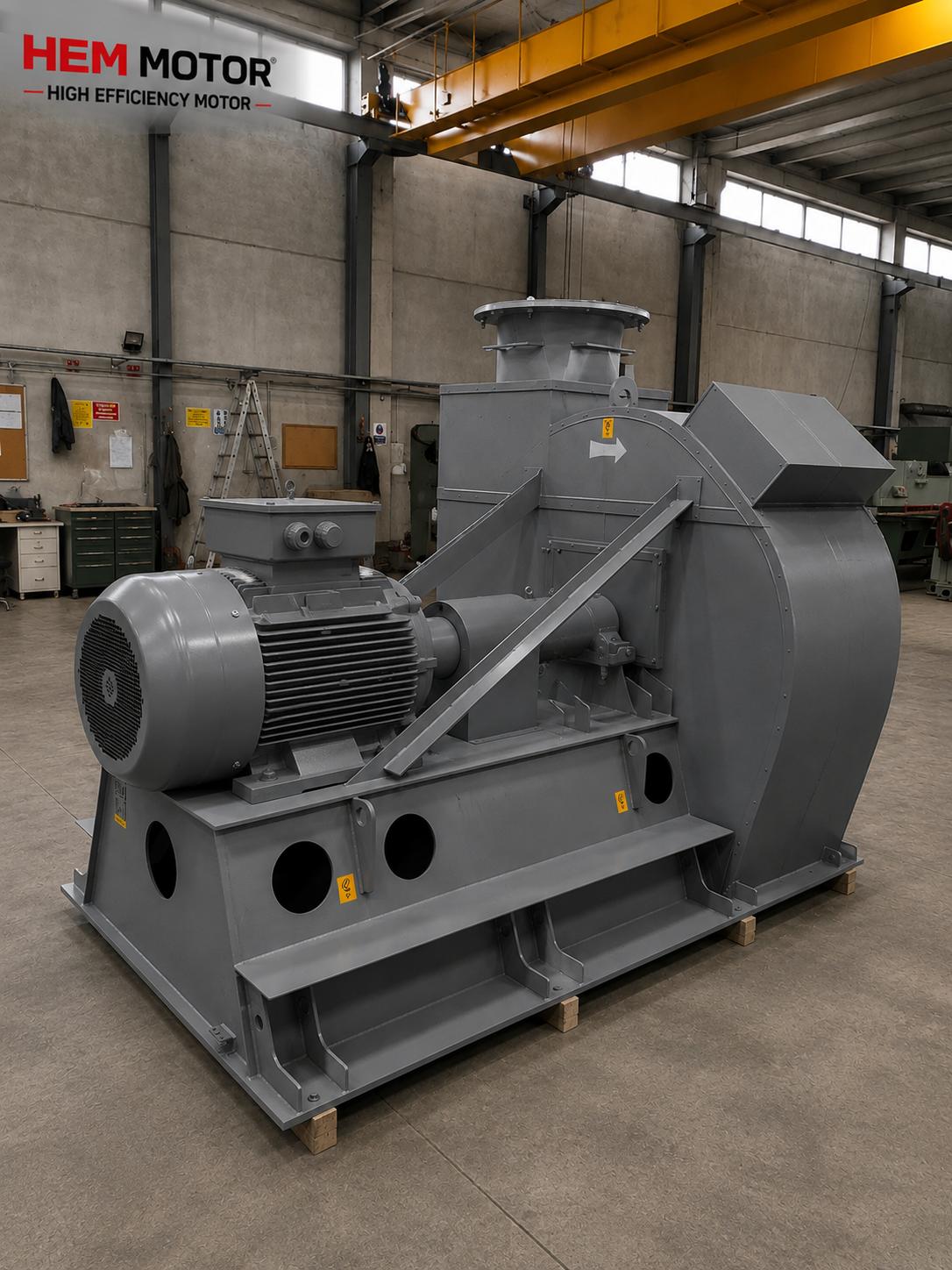

A 355 kW asynchronous motor sits at the point where industrial large-power class begins and supply planning becomes as important as the purchasing decision itself. At this power a motor is no longer something you grab off the shelf and walk away with; the frame size reaches the IEC 355 limit, weight climbs into the tons, transport needs special equipment, and the starting method directly concerns the grid infrastructure. A wrongly chosen starting method on a 355 kW motor can cause a serious voltage dip at the instant of start, trip protection relays and even overstress the transformer. Correct procurement therefore requires treating power and speed selection, frame and mounting compatibility, the starting strategy (star-delta, soft starter or variable frequency drive), the cooling method (IC411/IC416) and the transport-lead-time plan as one whole. This guide explains 355 kW asynchronous motor selection with all the dimensions specific to large power, with technical tables and correct procurement steps.
355 kW Asynchronous Motor: 2/4 Pole Speed and Frame Selection
At 355 kW the two most common speed options are 2-pole (about 2980 rpm) and 4-pole (about 1485 rpm) motors. The 2-pole motor is preferred in compressor, high-pressure pump and fan applications that need high speed; the 4-pole motor is preferred for general-purpose drives, mills, conveyors and medium-speed fans. As the number of poles rises (6, 8 pole) the speed drops, the frame grows and the motor at the same power gets heavier. At the 355 kW level the frame is usually between IEC 315 and 355; as the speed drops (more poles) the frame grows toward 355.
- 2-pole (3000 rpm): high-speed compressor and pump; smaller frame, high starting current demands attention.
- 4-pole (1500 rpm): the most common general-purpose choice; balanced torque and efficiency.
- 6/8-pole (1000/750 rpm): low speed, high torque; mills and heavy drives; the frame grows.
To see the effect of pole count on efficiency and torque in depth, read our efficiency and pole count article, and for slip and actual speed our slip and actual speed article. For frame-power matching, the shaft and frame table (IEC 56-355) is useful.
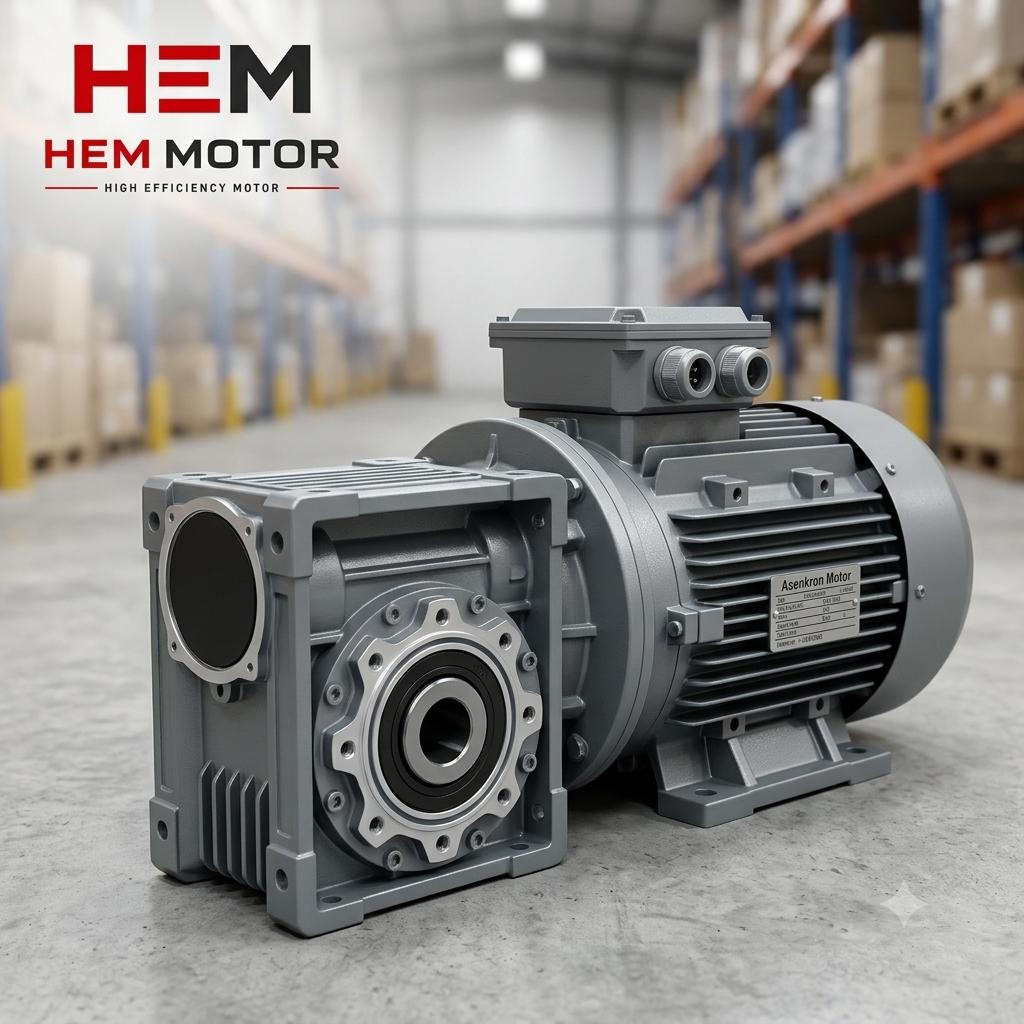
Starting at Large Power: The Inrush Current Problem
The rated current of a 355 kW motor is in the order of hundreds of amperes. In direct-on-line (DOL) starting the inrush current reaches 6-8 times the rated value, meaning a current surge of thousands of amperes is drawn from the grid. This surge causes voltage dip, affects other loads and overstresses the distribution transformer. For this reason DOL is almost never used at the 355 kW level; the starting method is always chosen to limit the inrush.
355 kW Starting Method Comparison
| Method | Inrush (x rated) | Starting Torque | Grid Impact | Application |
|---|---|---|---|---|
| Direct (DOL) | ~6-8 x | 100% | Very high surge | Not advised at 355 kW |
| Star-Delta | ~2-2.7 x | ~33% | Medium, surge at changeover | Low start load |
| Soft starter | ~3-4 x (adjustable) | Adjustable | Low, ramped | Pump, fan, compressor |
| Variable frequency drive (VFD) | ~1-1.5 x | Full control | Lowest, smooth | Speed control + savings |
Although star-delta is simple and economical at 355 kW, it gives low starting torque, so it only works in applications that start unloaded or lightly loaded. For pumps, fans and compressors a soft starter stands out; where speed control and energy savings are needed, a VFD. For starting, our star-delta vs soft starter and inrush (LRA) reduction articles are detailed resources.
Cooling: The IC411 vs IC416 Difference
A running 355 kW motor produces loss heat in the order of hundreds of kilowatts; removing this heat is critical for frame life. Large motors use two common cooling methods:
- IC411 (TEFC): totally enclosed, a fan on the shaft end cools the frame externally. Simple, common, easy to maintain. But at low speed (with a drive) the cooling weakens.
- IC416: the frame surface is cooled by an external (forced) fan driven independently of the motor. Preferred in motors running continuously at low speed on a drive; cooling is independent of motor speed.
If full torque will be produced continuously at low speed via a VFD, IC416 (forced cooling) is advised; otherwise the motor overheats because its own fan slows at low speed. On the forced cooling fan, our external forced cooling fan article goes deeper. For winding insulation on drive operation, our inverter-duty winding and du/dt article matters.
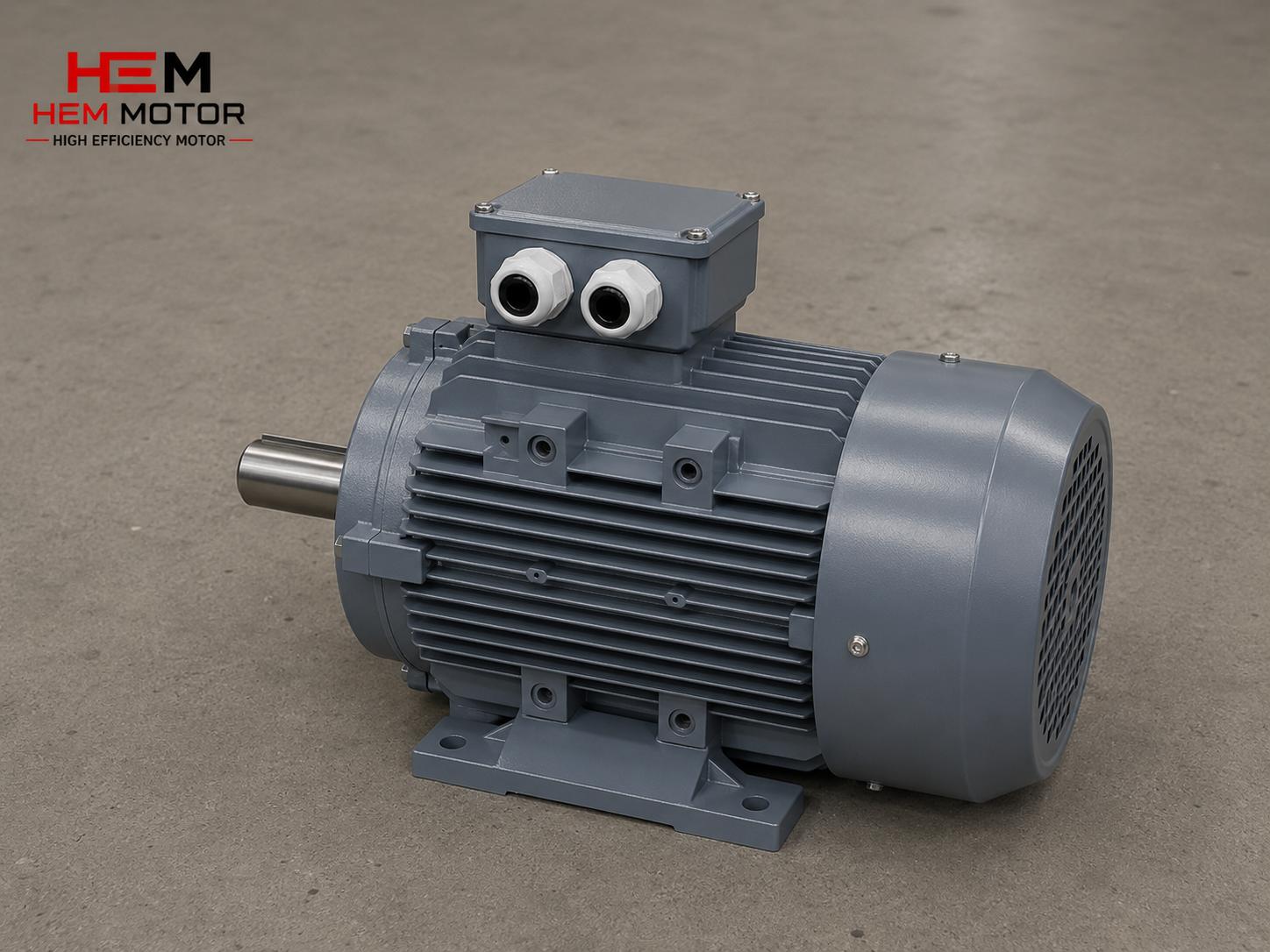
Transport, Weight and Lead Time: A Large-Power Supply Plan
The weight of a 355 kW motor varies with pole count and frame, but is in the order of tons. This directly affects transport and installation:
| Topic | Situation in the 355 kW Class |
|---|---|
| Weight | Order of tons (rises with more poles) |
| Lifting | Crane/forklift, certified eyebolt mandatory |
| Transport | Fixing, shock-resistant packaging |
| Lead time | If not in stock, a production/lead-time plan is needed |
| Commissioning | Alignment, grounding, protection setting |
For lifting and handling a motor of this weight, our lifting eyebolt and safe handling article, and for frame weight values our frame sizes and weight article, are important. For grounding and EMC in a large drive-fed plant, see our grounding and EMC article. If 690V is being weighed for the low-current advantage, our 690V asynchronous motor selection article guides you.
690V Connection and the Current Advantage
At large powers such as 355 kW, a 690V supply may be preferred over 400V. At the same power, when the voltage rises the current falls; this shrinks cable cross-section, contactor and protection device size, and reduces line losses. In many large-power plants a 690V grid is standard. When ordering the motor, the supply voltage and frequency (50/60 Hz) must be stated clearly; a wrong-voltage winding makes the motor deliver the wrong current and torque.
- 690V: lower current, thinner cable, smaller panel components.
- 400V: widespread infrastructure; but at large power the current rises a lot.
- 50/60 Hz: speed/power change on export and different grids; must be stated on the order.
355 kW with a Variable Frequency Drive: Speed Control and Savings
Driving a 355 kW motor with a variable frequency drive (VFD) provides both soft starting and large energy savings through speed control. In variable-load applications such as pumps and fans, adjusting flow by lowering speed rather than throttling cuts power consumption greatly by the affinity (cube) law; halving the speed theoretically reduces power to a much smaller value. But there are points to watch with large drives. The high-frequency pulses at the drive output (du/dt) create voltage spikes on long motor cables and stress the winding insulation; so inverter-duty insulation, an output reactor or a du/dt filter may be required. The drive also injects harmonics into the grid; at large power these harmonics can degrade power quality, and a harmonic filter or active front end (AFE) drive may be considered. If full torque is to be delivered continuously at low speed, IC416 forced cooling is essential as noted above.
- Speed control: adjusting pump/fan flow by speed yields large savings.
- du/dt and cable: inverter-duty winding and a filter for voltage spikes on long cable.
- Harmonics: a filter/AFE is considered for grid harmonics at large power.
- Cooling: IC416 forced cooling for continuous torque at low speed.
For when a VFD is needed and how it is selected, our VFD with asynchronous motor article is a comprehensive guide.
Efficiency Class and Energy Cost: The Price of One Percent at 355 kW
At large powers such as 355 kW, the efficiency class is one of the most important items in the investment decision. At this power, if the motor runs most of the year or even 24 hours a day, even a one-point difference in efficiency corresponds to a large figure on the annual energy bill. Because consumed energy is proportional to power, and a continuously running 355 kW motor draws millions of kilowatt-hours per year. A high-efficiency (IE3/IE4) motor may look like a higher upfront investment, but thanks to reduced losses it usually pays back the extra within a few years. So in large-power purchasing, not only the sticker price but the lifetime energy cost (total cost of ownership) must be evaluated.
- Efficiency point: on a continuously running 355 kW motor, a one-percent efficiency difference means serious annual savings.
- Power factor: a low cosφ can bring a reactive-power penalty; compensation should be planned.
- Part load: if the motor does not always run at full load, part-load efficiency also matters.
To see how efficiency changes at part load, our efficiency-load curve article is useful. For speed-torque characteristic and breakdown torque, see our speed-torque curve article.
Protection and Temperature Monitoring: Insurance at Large Power
A 355 kW motor failure stops not only the motor but the whole production line, bringing serious revenue loss. So in large motors protection and monitoring are standard. PT100 sensors embedded in the winding continuously monitor winding temperature; PTC thermistors stop the motor on overheating. PT100s are also placed in the bearing housings to monitor bearing temperature; a sudden rise is an early warning of bearing failure. In addition, large motors use an anti-condensation heater to prevent moisture build-up in the winding during standstill.
- PT100: measures winding and bearing temperature continuously and precisely (analog).
- PTC thermistor: stops the motor via a protection relay at a threshold temperature (digital threshold).
- Anti-condensation heater: prevents moisture and condensation during standstill.
- Vibration monitoring: on large motors, catches bearing and alignment issues early.
For temperature protection wiring, our PTC/PT100 wiring article is a detailed resource.
Mounting Type and Mechanical Compatibility
A 355 kW motor is usually offered in B3 (foot), B5 (flange) or B35 (foot + flange) mounting types. The right mounting must be chosen per the driven machine and foundation. Because a large motor is heavy, the foundation (base) must be designed to carry this load and vibration. In coupled drives, precise alignment between motor and machine shaft is essential; misalignment rapidly wears bearings and the coupling at large power. In belt-pulley drives, the radial force on the shaft and bearings must be computed, and a reinforced bearing requested if needed.
- B3: foot-mounted on a concrete base; the most common.
- B5/B35: flange-mounted, connected directly to the machine; in compressor and pump sets.
- Alignment: laser alignment on coupled drives extends life at large power.
Correct 355 kW Motor Purchase: A Checklist
- Determine the drive type and required speed (2/4/6 pole).
- Select the starting method per the load characteristic (soft starter/VFD usually needed).
- If running at low speed on a drive, consider IC416 forced cooling.
- Clarify the supply voltage (400/690V) and frequency (50/60 Hz).
- Choose the mounting type (B3 foot, B5/B35 flange) per the machine.
- Set IP rating, insulation class (F/H) and thermal protection (PT100).
- Plan weight, lifting points and transport packaging.
- Query stock; if absent, prepare a lead-time/production plan.
Frequently Asked Questions
Why is direct-on-line (DOL) starting not used on a 355 kW motor?
Because at this power the DOL inrush reaches 6-8 times the rated current, i.e. thousands of amperes. This surge causes serious voltage dip on the grid, trips protection relays and overstresses the distribution transformer. So at 355 kW a soft starter or VFD is almost always used; star-delta may rarely be chosen under low starting load.
How does IC411 vs IC416 affect the purchase?
IC411 is the standard TEFC motor cooled by a shaft-end fan; it is sufficient for fixed-speed applications. In IC416 a forced fan independent of the motor cools the frame. If the motor will deliver full torque at low speed on a VFD for long periods, IC411 cannot cool enough at low speed and overheats; IC416 should then be ordered. A wrong cooling choice shortens winding life.
What determines the lead time of a 355 kW motor?
If the right speed, voltage and mounting type are in stock, fast delivery is possible. If not in stock, or if special options (IC416, 690V, special paint, PT100) are needed, a production/lead-time plan applies. So in large-power projects the order should be placed early, and weight and transport logistics planned up front. Good planning prevents unexpected delays on site.
Let us set up your 355 kW project right from the start. We will evaluate your speed, starting, cooling, voltage, mounting and transport requirements together and produce the best fit with manufacturer stock, a clear lead time and fast delivery. To request a quote for your large-power motor need and confirm technical suitability, contact HEM Motor.