English
 Türkçe

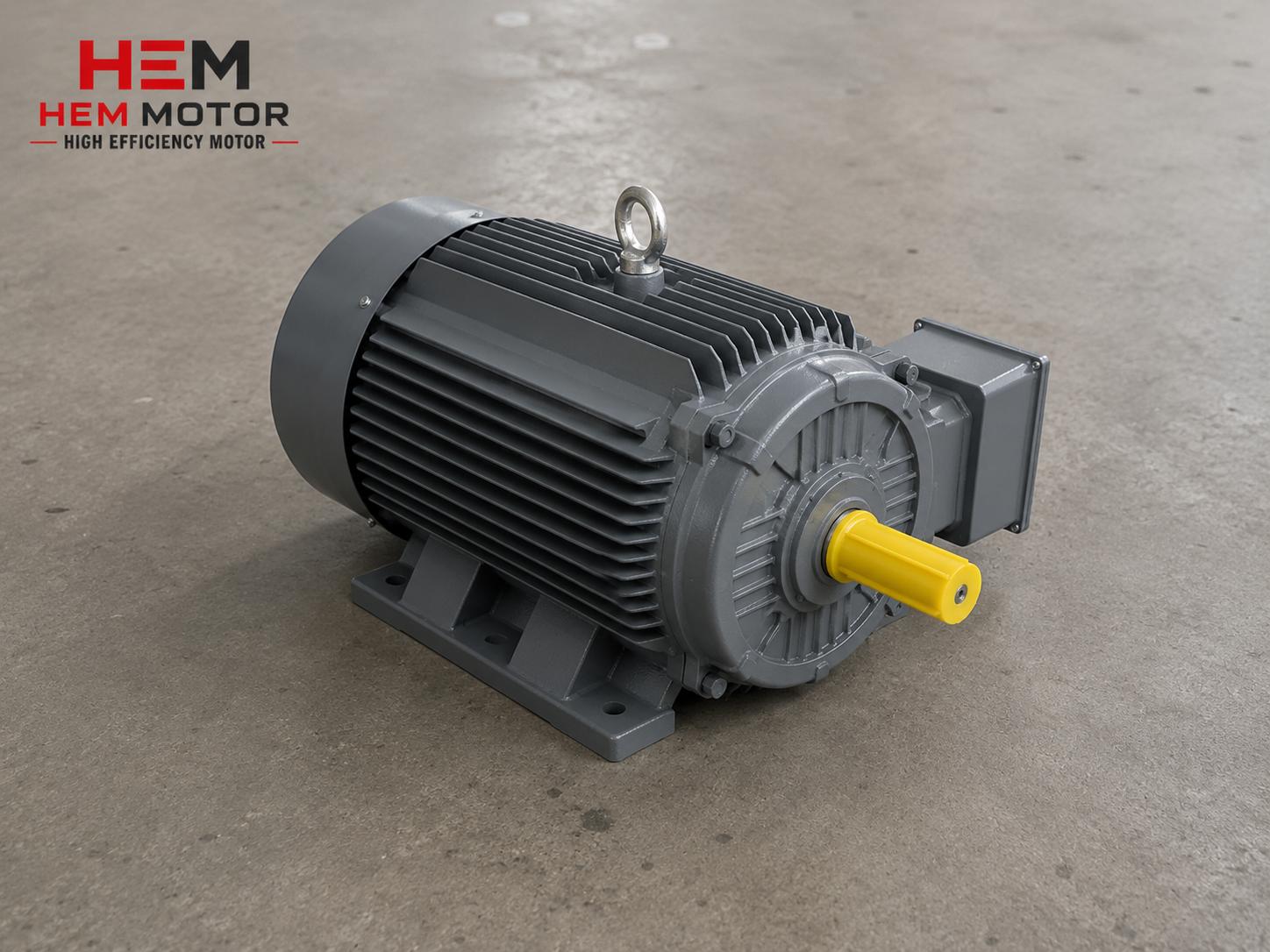

Small power electric motors rated 0.55, 0.75 and 1.1 kW are among the most widely used and fastest-moving items in industry. Small conveyors, pump and fan units, packaging machines, mixers, geared drives and countless machine elements operate in this power band. Precisely for this reason, correct selection and fast stock supply of small power motors are critical to production continuity. When a small motor fails on a machine, knowing the right pole-speed-frame combination and being able to source it the same day prevents days of downtime. In this guide we cover small power motors from 0.55 to 1.1 kW in terms of speed by pole count, IEC frame sizes (71/80/90), mounting types (B3/B5/B14), the single-phase vs three-phase distinction and stock logic, so you can order the right motor correctly the first time.
Why Is This Small Power Band So Important?
0.55, 0.75 and 1.1 kW correspond roughly to 0.75, 1 and 1.5 horsepower respectively. These three values form the backbone of small machine drives. Their advantages are:
- High stock turnover: Being the most sought-after ratings, they are the most sensible items to keep in stock and are supplied quickly.
- Standard frame sizes: Frames 71, 80 and 90 follow the IEC standard, so mechanical substitution between brands is easy.
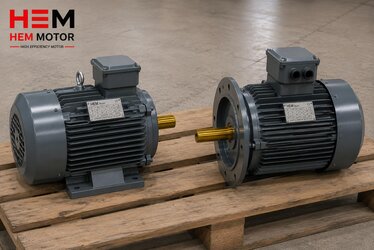
- Mounting variety: Foot (B3), flange (B5) and small flange (B14) versions are widely available and fit most machines directly.
- Single-phase option: This power band is one of the few that allows 220 V single-phase supply, usable even where three phase is unavailable.
Pole Count and Speed: 2/4/6 Pole
In an asynchronous motor, speed is set by the pole count and the line frequency (50 Hz). As pole count rises, speed falls and, at the same power, torque increases. In the small power band the most common choice is 4 pole (1500 rpm synchronous, about 1400-1450 rpm under load); however, 2 pole is preferred for high-speed pumps and fans, and 6 pole for low-speed mixers and conveyors.
| Poles | Synchronous Speed (rpm) | Loaded Speed (approx.) | Typical Application |
|---|---|---|---|
| 2 pole | 3000 | 2820-2900 | Pump, fan, high-speed shaft |
| 4 pole | 1500 | 1400-1450 | General purpose, conveyor, gearbox |
| 6 pole | 1000 | 910-950 | Mixer, low-speed drive |
Due to slip, actual speed is slightly below synchronous speed; we explained the reason in our article on slip and actual speed in asynchronous motors. For which pole count fits which job, see which of 2, 4, 6 pole for which job.
Frame Sizes (IEC): 71, 80, 90
The IEC frame number gives the height (mm) of the shaft centre above the foot base. Three core frames stand out in the small power band. The frame number also fixes shaft diameter, foot hole spacing and flange dimensions; therefore choosing the correct frame on a replacement motor is essential for mechanical compatibility.
| Power | 2 Pole Frame | 4 Pole Frame | 6 Pole Frame | Typical Shaft Dia. |
|---|---|---|---|---|
| 0.55 kW | 71 | 71 / 80 | 80 | 14 mm (71), 19 mm (80) |
| 0.75 kW | 71 / 80 | 80 | 90 | 19 mm (80), 24 mm (90) |
| 1.1 kW | 80 | 90 | 90 | 19 mm (80), 24 mm (90) |
The frame-power match can fall on a different frame for the same power at different pole counts; for example 0.75 kW is frame 80 at 4 pole but rises to frame 90 at 6 pole, because a larger frame is needed to deliver the same power at lower speed. You can find the shaft diameter and frame table logic in our article on shaft diameter and frame table.
Mounting Type: B3, B5, B14
Small power motors come in three core mounting types, and choosing the right one is critical for the motor to fit the machine cleanly:
- B3 (foot): The motor bolts to the floor or base through its feet. The most common general-purpose mounting.
- B5 (large flange): A large-hole flange on the shaft side; coupled directly to a gearbox or pump housing.
- B14 (small flange, threaded holes): A smaller flange with threaded mounting holes. Common on compact machines and small gearbox connections.
- B34 / B35 (foot + flange): Both foot and flange present, giving multi-mount flexibility.
To read mounting codes correctly, our article on reading the IM mounting code is a good reference before ordering.
Single-Phase or Three-Phase?
The 0.55-1.1 kW band is one of the rare bands available in both single-phase (220 V) and three-phase (380 V). Single-phase motors are preferred in small workshops, domestic-type facilities or single-phase supply points where three phase cannot be drawn; however, at the same power, single-phase motors have lower starting torque and slightly lower efficiency than three-phase. If you have three phase, three-phase should be preferred for performance and efficiency. We compared the two options in our article on single-phase vs three-phase.
Frequently Asked Questions
What frame is a 0.75 kW 4 pole motor?
A 0.75 kW 4 pole (1500 rpm) motor is typically frame 80 with a 19 mm shaft. The same power at 6 pole (1000 rpm) rises to frame 90, because a larger frame is needed to produce the same power at lower speed. When ordering, specify power, pole count and frame together.
Why is stock so important for small power motors?
Because 0.55-1.1 kW motors are used everywhere in a machine park, fast supply at the moment of failure means production does not stop. Keeping the most sought-after power-pole-frame combinations in stock removes days-long supply waits and enables same-day replacement.
Can I fit a different brand of motor at the same power?
If the frame number (71/80/90), mounting type (B3/B5/B14) and shaft diameter match, different brands are mechanically interchangeable thanks to the IEC standard. Even so, you should compare nameplate values (kW, speed, voltage, mounting) one-to-one with the replacement motor.
Efficiency Class: IE3 Matters Even at Small Power
Efficiency class is often overlooked in small power motors; yet for motors of 0.75 kW and above, the EU EcoDesign regulation imposes a minimum IE3 (premium efficiency) requirement. Although there are exceptions at lower limits such as 0.55 kW, choosing a high-efficiency motor even for continuously running small drives provides measurable savings throughout the year. While the difference may seem small at low power, the total effect reaches significant levels in a facility with hundreds of small motors.
- IE3 requirement: IE3 has become standard on 0.75 and 1.1 kW motors; it is expected on new purchases.
- Low losses: A high-efficiency motor does the same work with less energy; heating is also reduced and life extended.
- Total effect: In facilities with many small motors, the efficiency difference adds up significantly.
Correct Pole Selection by Application
The most common mistake with a small power motor is choosing the familiar 4 pole motor regardless of the speed the application requires. Yet speed should be determined by the machine's job. Here are common small power applications and the recommended pole approach:
| Application | Recommended Poles | Typical Speed | Note |
|---|---|---|---|
| Centrifugal pump | 2 pole | 2800-2900 rpm | High speed, high flow |
| Small fan/extractor | 2-4 pole | 2800 / 1400 rpm | Depending on impeller dia. |
| Conveyor belt | 4 pole | 1400-1450 rpm | Usually with a gearbox |
| Mixer/agitator | 6 pole | 900-950 rpm | Low speed, high torque |
| Packaging machine | 4 pole | 1400-1450 rpm | General-purpose drive |
Correct pole selection also affects the gearbox ratio and system efficiency. A wrong pole choice creates the need for an unnecessary gearbox stage or belt speed reduction, generating both cost and loss.
Ingress Protection (IP) and Operating Environment
Small power motors usually come with standard IP55 protection, which is adequate against dust and low-pressure water splashes. However, the protection class should be raised according to the operating environment:
- IP55: General industrial environment; standard, resistant to dust and water splashes.
- IP65/IP66: Dusty, wet or washdown environments; food, textile, chemical applications.
- Insulation class: In hot environments, class H insulation instead of F provides thermal margin.
Choosing protection suited to the environment prevents unexpected failures of the small motor and extends its life. Before ordering, the dust, moisture and temperature conditions of the operating environment should be clear.
Practical Tips for Stock and Replacement
Fast replacement of small power motors starts with the right information. When a motor fails, reading the following from the old motor's nameplate before ordering a new one saves time: power (kW), speed/poles, voltage and connection (220/380 V, star/delta), mounting code (B3/B5/B14), frame number and shaft diameter. When this information is complete, the correct replacement motor is supplied the first time.
- Photograph the nameplate: A clear photo of the nameplate at the moment of failure speeds up the ordering process.
- Keep spares for critical machines: It is wise to keep a spare motor in stock for machines where production must not stop.
- Prefer standard variants: The most common pole-frame-mounting combinations are always supplied faster.
Small Power Motors in Geared Drives
A significant share of 0.55-1.1 kW motors are used with a gearbox, because many small machines require low speed and high torque. In a geared drive, the motor's mounting type (usually a B5 or B14 flange) and shaft diameter must match the gearbox input exactly. Therefore in geared applications the motor selection should be planned together with the gearbox type.
- Flange compatibility: The gearbox input expects a B5 or B14 flange; the motor's flange size must seat exactly on the gearbox.
- Shaft compatibility: The motor shaft diameter and length must suit the gearbox bore.
- Speed selection: Since the output speed is set by the gearbox ratio, motor speed and gearbox ratio are calculated together.
- Torque check: The torque at the gearbox output must meet the application's need.
A common choice in geared drives is a 4 pole (1500 rpm) motor with a gearbox of the required ratio; however, where low output speed is needed, a 6 pole motor can ease the gearbox ratio. The right combination provides both energy efficiency and a compact drive.
Starting and Capacitors in Single-Phase Motors
Single-phase (220 V) small power motors cannot start rotating on their own from a single-phase supply; therefore an auxiliary winding and a capacitor are used. When choosing a single-phase motor, the capacitor type and starting method matter, because they directly affect starting torque.
- Start capacitor: In circuit only at start; provides high starting torque, preferred for heavy starts such as compressors.
- Run capacitor (permanent): Continuously in circuit; runs quieter and more balanced, suitable for light starts such as fans.
- Start + run capacitor: Both high starting torque and continuous balance; the widest application range.
When choosing a single-phase motor, the application's starting load must be evaluated; a light-start fan and a heavy-start compressor require different capacitor solutions. In facilities with three phase, a three-phase motor is always more advantageous for performance and efficiency; single-phase should be preferred only when single phase is mandatory.
Additional Frequently Asked Questions
What is the smallest frame for a 0.55 kW motor?
A 0.55 kW motor is usually frame 71 at 2 pole (3000 rpm); at 4 pole it may be frame 71 or 80. The frame varies with pole count and the manufacturer's design. The smallest frame is always obtained at the highest speed (2 pole), because delivering the same power at lower speed requires a larger frame.
What is the difference between B5 and B14 flanges?
B5 is a large flange bolted through holes; it provides a larger, stronger connection. B14 is a smaller flange with threaded (tapped) holes; it is used on compact machines and small gearbox connections. Which one is needed depends on the flange type of the machine the motor will connect to.
Can I use a drive for speed control on a small power motor?
Yes, 0.55-1.1 kW three-phase motors are suitable for speed control with a frequency drive, providing energy savings especially in pump and fan applications. If it will run at a wide speed range for long periods, attention must be paid to winding insulation and low-speed cooling. Single-phase motors cannot be controlled the same way with standard drives.
Common Application Areas at Small Power
0.55, 0.75 and 1.1 kW motors appear in almost every branch of industry. Seeing how wide a range of uses this power band has also guides correct selection. Common application areas include small dosing and transfer pumps, benchtop and inline conveyors, packaging and labelling machines, small ventilation and extractor fans, food-processing mixers, textile machine elements and countless workshop benches. The common feature of these applications is that they run continuously or frequently and quickly halt production on failure.
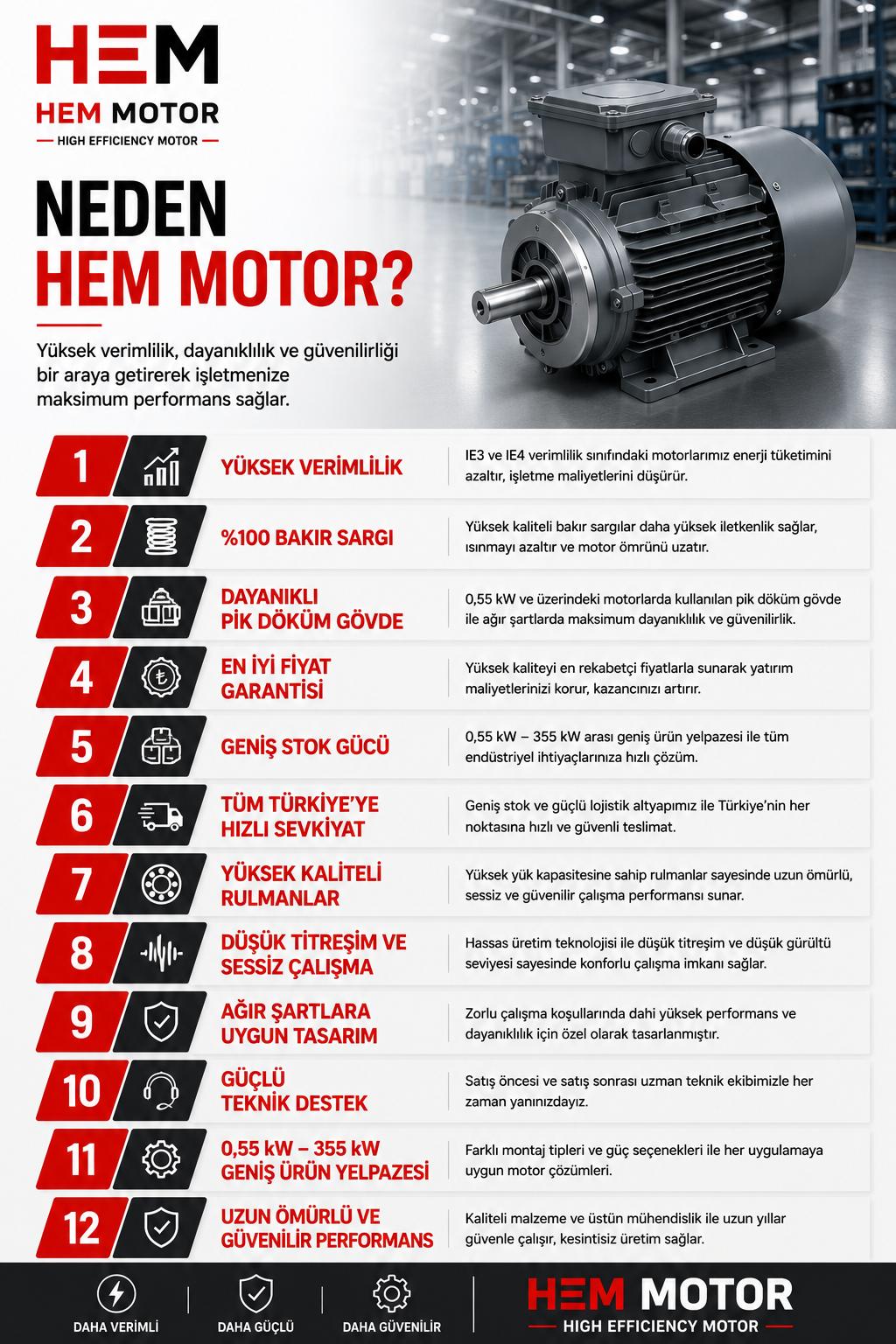
Source the Right Small Power Motor from Stock
Knowing the right pole count, frame and mounting for 0.55, 0.75 and 1.1 kW motors saves time on both replacements and new purchases. As HEM Motor we offer the most sought-after small power combinations from manufacturer stock with fast delivery. To determine the motor that fits your need and to request a tailored quote, get in touch; our team will clarify the right frame-pole-mounting combination for you.