English
 Türkçe

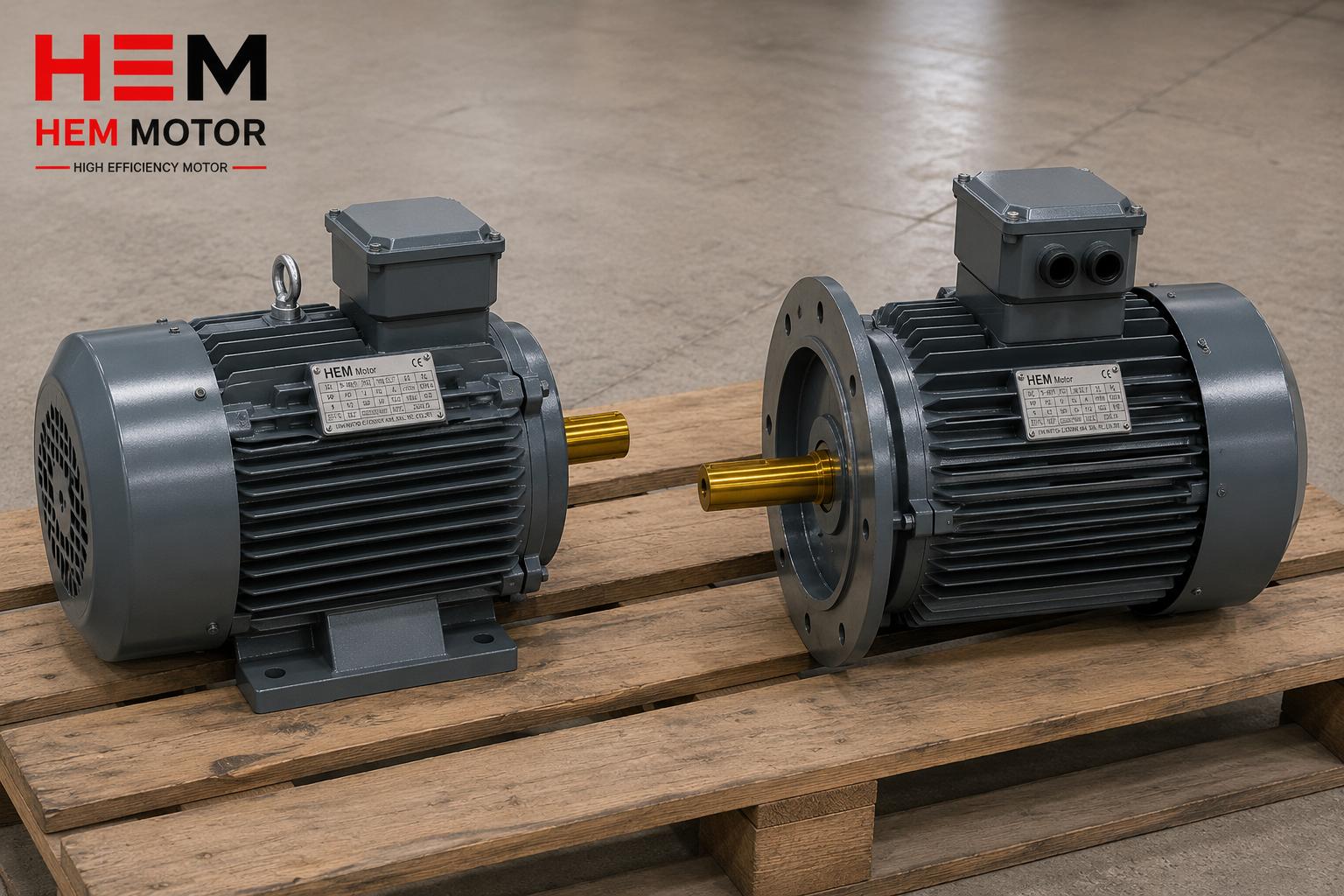

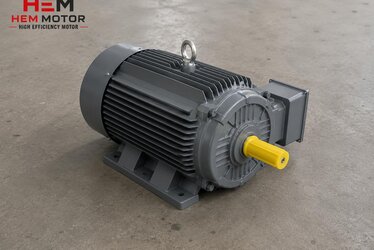
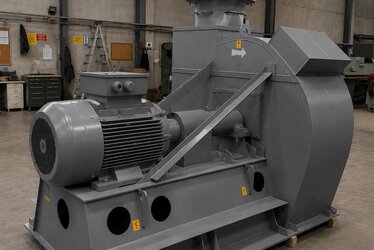
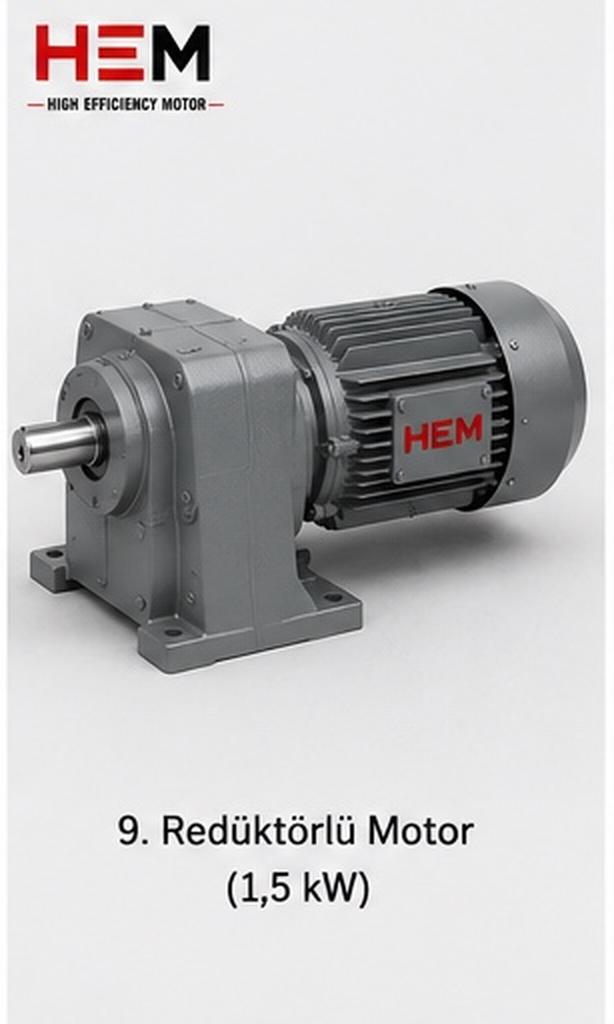
The 1.5 kW electric motor is one of the most sought-after and most frequently stocked small power classes in the market. It appears in countless applications, from small pumps to conveyors, fans to compressors, woodworking machines to packaging lines. Precisely because of this ubiquity, "a 1.5 kW motor" can actually mean several different motors: it may be 2, 4 or 6 pole (running near 3000, 1500 or 1000 rpm); single-phase (220V) or three-phase (380V); and supplied with foot (B3), large flange (B5) or small flange (B14) mounting. Correct procurement means consciously matching these options to the application. This article covers the pole-speed relationship of a 1.5 kW motor, its typical frame size, mounting options, the single-phase versus three-phase difference, and why this power class offers a stock advantage.
Pole and Speed Relationship in a 1.5 kW Motor
An asynchronous motor's speed is set by its pole count and the supply frequency. On a 50 Hz grid, synchronous speed is found by dividing by the pole pairs; the actual speed is slightly below this due to slip. The three most common options at 1.5 kW are:
- 2-pole (~3000 rpm): High speed; for small pumps, blowers and high-speed drives. The smallest frame and lowest torque at a given power.
- 4-pole (~1500 rpm): The most common "general-purpose" choice; balanced torque-speed for conveyors, fans, gearbox inputs and most machines.
- 6-pole (~1000 rpm): Low speed, high torque; for mixers, hard-starting and low-speed applications.
The same 1.5 kW produces different torque at different speeds: as speed falls (more poles), torque rises at the same power. So the answer to "is 1.5 kW enough" depends not only on power but on how much torque is needed at what speed. For the effect of pole choice on the application, our 2, 4, 6 pole - which for which job article is a detailed guide.
| Poles | Synchronous speed (50 Hz) | Full-load speed (approx.) | Typical application |
|---|---|---|---|
| 2 | 3000 rpm | ~2850-2900 rpm | Small pump, blower |
| 4 | 1500 rpm | ~1410-1450 rpm | Fan, conveyor, general purpose |
| 6 | 1000 rpm | ~930-960 rpm | Mixer, low speed |
If you wonder why actual speed is below synchronous speed (slip), our slip and actual speed article explains this difference.
Frame Size: Around 80 and 90
Depending on pole count, a 1.5 kW motor usually sits in an 80 or 90 IEC frame. At 2 poles the frame is smaller (usually 80), at 4 poles 90S, and at 6 poles again around 90; there may be small differences by manufacturer series. Frame size is critical in replacement (drop-in) purchases because it determines shaft diameter, foot holes, flange dimensions and weight. When replacing an existing motor, an exact match of frame, shaft diameter and mounting dimensions ensures a trouble-free mechanical connection.
- Frame 80: Usually 2-pole 1.5 kW; shaft diameter around 19 mm.
- Frame 90S/90L: 4- and 6-pole 1.5 kW; shaft diameter around 24 mm.
- Foot-hole spacing and shaft height are standardized with the frame (IEC).
For the role of the shaft-and-frame table in replacement orders, our shaft diameter and frame table article shows how to achieve an exact match.
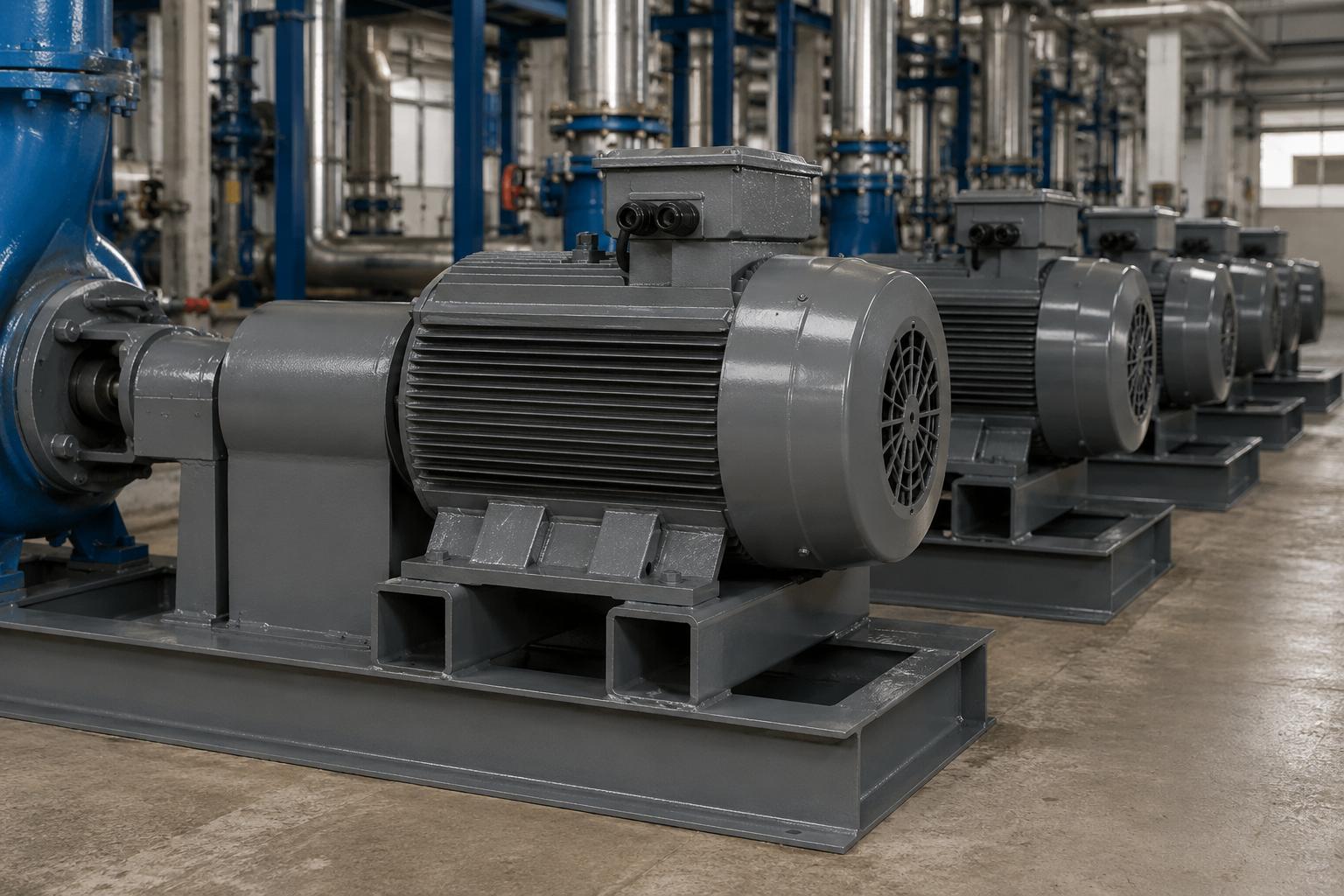
Mounting Options: B3, B5, B14
The same 1.5 kW motor can be ordered in different mounting forms. The mounting code defines how the motor attaches to the machine:
- B3 (foot): Classic foot mount; bolted to the floor or a base. The most common stock type.
- B5 (large flange): Large flange with holes on the front cover; bolts directly to a gearbox or pump.
- B14 (small flange): Threaded/small flange; for compact machine connections.
- B35: Both foot and flange (combined), for versatile mounting.
Reading the mounting code correctly eliminates the risk of a wrong order; our IM mounting code reading guide and our multi-mount article explaining the universal (B3/B5/B35) frame option are helpful here.
| Mounting code | Connection | Typical use |
|---|---|---|
| B3 | Foot, bolted to floor | Conveyor, general machine |
| B5 | Large flange, holed | Gearbox, pump input |
| B14 | Small threaded flange | Compact bench, small pump |
| B35 | Foot + flange combined | Versatile mounting |
Single-Phase or Three-Phase?
At the 1.5 kW limit both single-phase (220V) and three-phase (380V) options exist. A three-phase motor is more efficient, lower in vibration and longer lasting at the same power; if a three-phase supply is available it is always preferred. A single-phase motor is used in workshops, homes and small businesses without a three-phase supply; it needs an auxiliary winding and capacitor for starting. At 1.5 kW the single-phase option is still near a practical upper limit; at higher powers three-phase becomes almost mandatory.
For the single-phase versus three-phase decision, our single-phase or three-phase motor selection article, and for price and selection on the single-phase side, our single-phase asynchronous motor selection article offer deeper information. For the real answer to the common question of running a three-phase motor on 220V, see our running a three-phase motor on a 220V single-phase supply article.
Why Does 1.5 kW Offer a Stock Advantage?
Small and common power classes like 1.5 kW are usually kept on the shelf in their most-requested combinations (especially 4-pole B3). This shortens lead time for your project or for a failed-motor replacement. A stocked small-power motor is advantageous for both fast delivery and price predictability. For correct procurement, the application's speed (poles), mounting form and phase type must be clearly defined; where possible, take the existing motor's nameplate as a reference.
- Most stocked: 1.5 kW 4-pole B3 three-phase.
- In replacement purchases, verify frame, pole and mounting from the existing nameplate.
- Efficiency class (IE3 mandate) should be checked against power and application.
You can find the efficiency-class mandate at small powers and how to read the nameplate in our reading the IE3 motor nameplate article.
Efficiency Class and the IE3 Mandate
At common powers like 1.5 kW, efficiency class is now a criterion that can no longer be ignored in purchasing. In certain power ranges the IE3 (Premium efficiency) class is legally mandatory, and a motor that does the same job with less energy delivers significant savings on the energy bill as running hours rise. On a continuously running fan or pump, a low-efficiency motor, even if it looks cheap at first purchase, more than repays the difference over the years. So when buying a 1.5 kW motor, you should check the efficiency class (IE2/IE3) and the cosφ value on the nameplate.
You can find which efficiency class is mandatory at which power, in table form, in our IE3 efficiency class mandate article. For a stock, speed and selection guide at small powers, our 0.75 and 1.1 kW small-power motor stock article covers neighboring power classes and so allows comparison when selecting 1.5 kW.
Correct Selection from the Nameplate in Replacement Purchases
For a 1.5 kW motor that has failed or is to be replaced, the safest method is to take the existing motor's nameplate as reference. The nameplate states power (kW), speed/poles, voltage, frequency, frame, mounting code and efficiency class. Matching this information exactly guarantees that the new motor fits the machine mechanically and electrically. In particular, if frame and shaft diameter do not match, the coupling, pulley or flange will not fit; if the speed does not match, the machine runs at the wrong speed.
- Power (kW) and pole/speed must be exactly the same.
- Frame, shaft diameter and mounting code (B3/B5/B14) must match.
- Voltage and frequency must suit your supply.
- Efficiency class should be at least the same as the existing motor, preferably IE3.
Correct motor selection from the nameplate eliminates the loss of a wrong order and return; the fact that this power class is stocked also speeds up the replacement.
Torque and Current in a 1.5 kW Motor
A motor's rated torque is calculated from power and speed: the same 1.5 kW produces higher torque at 6 poles (low speed) than at 4 poles, and at 4 poles more than at 2 poles. In practice this can be summed up as "at the same power, a slower motor pulls harder." In a mixer, crusher or any application that starts under a high static load, a 6-pole 1.5 kW may be far more suitable than a 2-pole 1.5 kW. For calculating torque (Nm) from power and speed, our rated torque calculation article explains the formula and load-based selection.
On the current side, because the rated current of a 1.5 kW three-phase motor at 380V is small, cable cross-section, fuse and contactor selection are sized accordingly. Choosing the right protection device keeps both the motor and the installation safe. For cable, fuse and contactor selection by rated current, our rated current and protection devices article is a practical guide. To quickly see the HP-kW match between 220V and 380V, our HP-kW matching table article is useful.
| Poles | Speed (approx.) | Rated torque (1.5 kW, approx.) |
|---|---|---|
| 2 | 2900 rpm | ~4.9 Nm |
| 4 | 1440 rpm | ~9.9 Nm |
| 6 | 950 rpm | ~15.1 Nm |
The table shows how the same 1.5 kW delivers markedly higher torque at low speed. So speed selection is decisive not only for velocity but also for pulling power.
Starting and Duty Type
Because 1.5 kW is a small power, direct-on-line (DOL) starting is sufficient in most applications; starting methods such as star-delta or soft starters are generally needed at larger powers. Still, in a special application requiring high inertia or frequent starts, starting torque and duty type must be considered. The motor's duty type (S1 continuous, S3 intermittent, etc.) determines how long and how often the chosen 1.5 kW motor can run without overheating. This becomes critical in applications with frequent stop-starts.
- S1 (continuous): For uninterrupted loads such as fans and pumps.
- S3 (intermittent): For machines that run and stop at a given cyclic duration ratio.
- With frequent starts, starting current and heating must be considered.
You can find the importance of starting torque by load type and the torque classes in our torque classes (Design N/H) article.
Typical Applications of a 1.5 kW Motor
This power class is used across a very wide range in industry and commercial facilities. With the right pole and mounting choice, a 1.5 kW motor serves applications such as:
- Small centrifugal and circulation pumps (usually 2-pole).
- Ventilation, aspirator and exhaust fans (2- or 4-pole).
- Conveyor belts and geared drives (4-pole B5).
- Packaging, labeling and small production machines.
- Mixers and low-speed drives (6-pole).
- Woodworking benches and small compressors.
Even though the power is the same in every application, the speed, mounting and phase type change; the key to correct procurement is clarifying these three parameters per application. We compiled the common mistakes in buying a motor and the correct purchasing steps in our common mistakes when buying an electric motor article.
Frequently Asked Questions
How do I know the speed of a 1.5 kW motor?
Speed depends on the pole count: 2-pole around 3000, 4-pole around 1500, 6-pole around 1000 rpm. The actual speed is slightly below these values due to slip. You should determine the speed your application requires and choose the matching pole count.
What frame does a 1.5 kW motor come in?
Usually frame 80 at 2 poles and around 90 at 4 and 6 poles, per IEC. There may be small differences by manufacturer series; in a replacement purchase you must verify the existing motor's frame, shaft diameter and mounting dimensions exactly.
Can I buy a 1.5 kW motor as single-phase?
Yes, 1.5 kW is available in both single-phase (220V) and three-phase (380V). If you have a three-phase supply, three-phase is more efficient and longer lasting. If there is no three-phase, single-phase is chosen; it needs a capacitor for starting.
You can source the 1.5 kW motor suited to your application, with its pole/speed, frame, mounting (B3/B5/B14) and phase type, from the manufacturer with stock availability and fast delivery. Share your existing motor's nameplate or your application's speed and mounting details; we will determine the most suitable 1.5 kW motor and prepare a tailored quotation for you.